City Crime
We Are Not War-Like, Community Leader Asserts
To press down its peaceful nature, the Chairman, Oha Elimgbu Council, Chief Ben Enyidah Utchay has said that his community has never gone into war with its neighbours right from time immemorial.
Utchay made the assertion when he spoke with newsmen at Elimgbu in Obio/Akpor Local Government Area recently.
He recalled that even when some hoodlums and land grabbers attacked them sometime in the past, they remained resolute and never fought back.
The community leader, pointed out that they depend on divine intervention to maintain peace in the community and added that such was responsible for the peace they enjoy in their environment.
Another penecea to peace he said, was making judicious use of the security agents like the Police in the event of any security challenge.
“We don’t have guns or arms. We depend on God and security operatives for protection, that’s the only thing we do”, he said.
According to him, his people do not interfere with police investigation in case of any suspected criminal movement, thus the enhanced security situation of his community.
Concerning the youth, he revealed how they undergo routine lecture on peace, and hinted that it has over the years, yielded the needed result.
In his era as a Community Development Chairman (DCC), he pointed out that he waged war against cultism and maintained the education of the youth against crisis.
He also pointed out that crisis was bane of investment as no investor would invest in a crisis ridden environment.
To succeed in fight against crisis in communities, he said that governments must make efforts to recognize the CDC as the fourth tier of government to enable them nip crisis in the bud.
According to him, various communities’ leaders know those causing trouble in their localities and would fish out same, if empowered financially by the government.
He argued that it would be mission impossible to fight crisis without funds, thus the need to finance local authorities to aid them form and operate formidable vigilante groups.
However, he has called on his people to remain peaceful and supportive of the Wike-led administration to benefit maximally from the system.
By: King Onunwor
Continue Reading
City Crime
Nigeria Acquires 100 Warships, Boats In 70 Years – Navy Chief
The Nigerian Navy says it has acquired more than 100 warships and boats since its establishment 70 years ago.
Rear Adm. Ebiobowei Zipele, Flag Officer Commanding, Naval Training Command off (NAVTRAC), disclosed this during an interdenominational church service to mark the Nigerian Navy’s 70th anniversary in Onne, Rivers.
Zipele described the anniversary as significant, noting that the navy had demonstrated resilience, dedication and commitment to its constitutional responsibilities since its inception.
He said the navy, established in 1956, had grown into an elite fighting force that had effectively protected Nigeria’s territorial waters from both domestic and foreign threats.
According to him, the Nigerian navy started in 1956 with 11 ships bequeathed by the (British) Royal Navy, but today we have over 100 ships and boats in our fleet.
He added that in spite of the successes recorded over the years, the navy was still acquiring more platforms, including warships, helicopters and drones, to further strengthen maritime security.
The naval boss revealed that the navy had successfully curtailed piracy in Nigeria’s waters and the Gulf of Guinea (GoG) for more than three years.
“The achievement has restored investor’s confidence and improved commercial activities within the maritime sector”, he said.
Zipele noted that the navy had performed creditably with available resources in protecting Nigeria’s territorial waters and maritime interests.
He said the establishment of an air arm unit had further strengthened operations aimed at securing the nation and the GoG.
According to him, although the navy has recorded notable successes, it can not secure Nigeria’s vast territorial waters alone.
He explained that the size of the nation’s maritime domain necessitated collaboration with relevant stakeholders to enhance security operations.
“The government adopted a ‘whole-of-society’ approach because the Nigerian navy cannot be everywhere at the same time”, he said.
Zipele listed the Nigerian Maritime Administration and Safety Agency (NIMASA), Nigerian Ports Authority (NPA), Nigerian Customs Service (NCS), Nigerian Immigration Service (NIS), and Tantita Security Services among agencies supporting maritime security efforts.
He commended President Bola Tinubu for supporting the navy with improved operational resources and equipment, and lauded the Chief of Naval Staff, Vice Adm. Idi Abbas, for boosting morale within the service.
The naval boss advised prospective recruits willing to join the navy to understand that military service required sacrifice and patriotism.
“There is no greater sacrifice than laying down our lives for our country”, he said.
He added that the Armed Forces remained actively engaged in operations against banditry, terrorism, oil theft and illegal bunkering across the country.
Theresa Frederick & Charity Amiso
City Crime
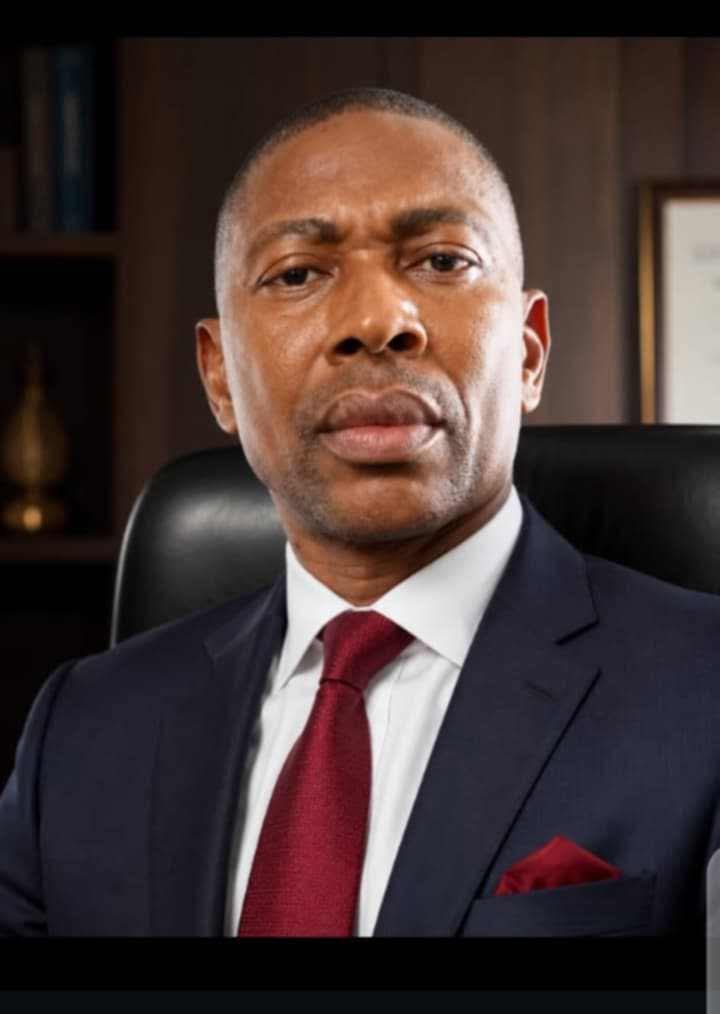
‘The Scholar of Evidence, Integrity and Community Leadership’
In legal philosophy, silence is often romanticized as wisdom. But within the law of evidence, silence may carry a very different implication — it can amount to an admission. This thought-provoking paradox forms part of the intellectual reflections of Professor Chris C. Wigwe, SAN, an accomplished legal scholar whose contributions to legal education and jurisprudence continue to shape conversations within Nigeria’s academic and professional legal circles.
Professor Christian Chizindu Wigwe stands among the distinguished figures produced by Nigeria’s legal academy. A Senior Advocate of Nigeria and seasoned scholar, he built a reputation for intellectual rigor, disciplined scholarship, and principled leadership in the study and teaching of law.
His academic journey reflects the making of a global legal mind. Wigwe obtained his Bachelor of Laws degree from Ahmadu Bello University, Zaria, before proceeding to the Nigerian Law School where he qualified for the Nigerian Bar. His quest for deeper scholarly engagement later took him to the United Kingdom, where he earned a Master of Laws degree from Middlesex University and subsequently a PhD in Public International and Economic Law from the University of Leeds.
These academic attainments did not merely decorate his curriculum vitae; they laid the intellectual foundation for a career that has consistently bridged theory and practice within the legal profession.
Over the years, Professor Wigwe has distinguished himself in the fields of jurisprudence, international law, criminal law and the law of evidence. His scholarship reflects a deep interest in how legal systems respond to economic realities, international cooperation and evolving global norms.
Within Nigeria’s university system, his name became closely associated with the Faculty of Law at Rivers State University in Port Harcourt, where he served as Dean from 2022 until November 2025. His tenure coincided with renewed conversations about strengthening legal education and positioning the faculty for global competitiveness.
Under his watch, the faculty intensified efforts to deepen research culture, strengthen postgraduate training and pursue partnerships capable of elevating the institution’s standing among law faculties in Africa.
Professor Wigwe also consistently emphasized the importance of institutional collaboration and alumni support in sustaining academic excellence. In public engagements, he urged graduates and stakeholders to support universities in building research centres and scholarship opportunities for students.
That perspective reflects his broader understanding that legal education must go beyond classroom instruction. For Wigwe, the development of law faculties must be anchored on strong research infrastructure, vibrant intellectual discourse and international engagement.
Beyond administrative leadership, he has remained an active contributor to legal scholarship through books and research publications. His works cover diverse aspects of legal theory, international institutions and corporate law practice.
Among his notable publications are texts such as Legal Research Methodology and Practice, Introduction to Company Law and Practice, and scholarly works exploring the economic dimensions of international institutions and monetary law.
These contributions have become reference materials for students and scholars seeking a deeper understanding of legal research and the dynamics of international economic law.
What distinguishes Wigwe’s scholarship is his ability to situate legal principles within the realities of global economic systems. His writings frequently interrogate how international institutions exercise power and how developing economies can navigate complex legal frameworks within global trade and finance.
Such perspectives have increasingly become relevant in a world where international law influences domestic economic policy, cross-border transactions and global governance.
Within the classroom, colleagues and students often describe him as a meticulous teacher who believes that legal reasoning must be sharpened through intellectual discipline and ethical responsibility.
His academic philosophy emphasizes the importance of integrity in the legal profession. For him, legal education must produce not only technically competent lawyers but individuals whose character can withstand the ethical demands of justice.
This emphasis on integrity resonates strongly within the Nigerian legal system, where the credibility of institutions often rests on the moral courage of those entrusted with authority.
Indeed, Wigwe’s professional life reflects the principle that law is not merely a technical craft but a moral enterprise aimed at preserving fairness and order in society.
His elevation to the prestigious rank of Senior Advocate of Nigeria further affirmed his standing within the legal profession. The SAN rank, often regarded as the pinnacle of legal practice in the country, is reserved for practitioners and scholars whose careers demonstrate excellence and integrity.
Yet, beyond titles and accolades, his legacy lies in the countless students he has mentored over decades of teaching.
Across courtrooms, law firms, government institutions and international organizations, former students continue to carry forward the intellectual and ethical lessons instilled during their time under his tutelage.
Mentorship remains one of the most enduring contributions of any academic. Through it, knowledge is transmitted across generations, shaping the legal culture of a society.
Professor Wigwe has consistently viewed mentorship as a responsibility rather than a privilege. For him, the success of students represents the true measure of a teacher’s impact.
His leadership style within academia reflects calm authority rather than flamboyance. Colleagues often describe him as a scholar who prefers substance over spectacle, focusing on institutional growth rather than personal acclaim.
This disposition aligns with his belief that universities must remain centres of reason, inquiry and ethical reflection.
Beyond the walls of academia, Professor Wigwe’s influence extends meaningfully into community life. His dedication to secular and communal activities has earned him admiration within his hometown of Isiokpo.
Recognizing his contributions to community development, leadership and social cohesion, the people of Isiokpo honoured him with a traditional chieftaincy title — a cultural recognition reserved for individuals whose lives exemplify service and integrity.
The honour reflects the deep respect he commands not only as a scholar but as a community figure committed to the welfare and progress of his people.
Traditional institutions in many African societies remain important custodians of culture, identity and moral leadership. When communities confer chieftaincy titles, they are often acknowledging a life lived in service to collective advancement.
For Professor Wigwe, this recognition underscores a broader philosophy that scholarship should not exist in isolation from society.
Rather, knowledge must translate into service — guiding communities, strengthening institutions and inspiring future generations.
The influence of scholars like Wigwe becomes even more significant in societies navigating complex governance challenges. Legal scholars provide the intellectual frameworks through which institutions interpret constitutions, enforce rights and resolve disputes.
In this regard, the Nigerian legal system continues to benefit from the contributions of academics who combine scholarship with practical insight.
Figures such as Professor Wigwe represent a bridge between legal theory and real-world governance.
Such individuals are invaluable to both national and international institutions that require legal minds capable of navigating complex regulatory and diplomatic environments.
The global legal community increasingly recognizes that expertise in international economic law, institutional governance and evidence law is essential for addressing contemporary challenges.
From trade negotiations to international arbitration and human rights enforcement, the need for scholars with strong analytical foundations has never been greater.
Nigeria, like many developing nations, possesses a reservoir of intellectual talent within its universities. However, such expertise is often underutilized in global governance spaces.
Scholars with the depth of experience and credibility of Professor Wigwe deserve broader platforms where their insights can contribute to shaping international legal discourse.
Positions within multilateral organizations, international arbitration panels, global academic networks and legal reform commissions could greatly benefit from the perspectives of scholars who understand both local realities and global legal frameworks.
The strength of any legal system ultimately depends on the integrity and intellectual courage of those entrusted with responsibility.
When individuals who embody these virtues are elevated to positions of trust, institutions become stronger and public confidence grows.
Professor Chris C. Wigwe’s career illustrates the enduring relevance of scholarship grounded in integrity, intellectual discipline, community service and responsible leadership.
In a time when public institutions require credible voices capable of guiding policy with wisdom and ethical clarity, figures of his calibre stand out as valuable assets not only to Nigeria but to the wider international community.
Ultimately, the story of Professor Wigwe is not merely about academic achievements or professional titles. It is about the quiet but powerful influence of a scholar committed to the ideals of justice, knowledge, community service and ethical leadership.
And in the long arc of legal history, it is often such scholars — patient builders of institutions, mentors of generations, and respected sons of their communities who leave the most enduring imprint on the pursuit of justice.
King Onunwor
City Crime
Report Against Lecturer Mere Witch-Hunt – RSU Management
A top management official of Rivers State University has described the recent allegations against a lecturer of the institution as a calculated witch-hunt aimed at tarnishing the image of both the academic and the university.
The management source, who spoke on condition of anonymity, maintained that the allegations bordering on the purported use of a forged appointment letter were misleading and failed to reflect the true circumstances surrounding the lecturer’s employment history.
According to the official, the university has an established administrative structure for recruitment, documentation and confirmation of staff appointments, stressing that no employee could remain in service for years without due verification by relevant departments.
The source explained that the matter had already attracted internal scrutiny and preliminary findings did not support claims being circulated in some quarters against the lecturer identified as Dr. Dike Harcourt Whyte.
He noted that the lecturer had continued to discharge his academic responsibilities diligently and had not been indicted by any panel or court of competent jurisdiction over the allegations.
The management official further alleged that certain individuals were sponsoring petitions against the lecturer due to personal disagreements and internal rivalries unrelated to the university’s academic standards.
He expressed concern that attempts were being made to drag the name of the university into avoidable controversy, especially at a time the institution was making significant progress in academic development, research and infrastructural expansion.
The source reiterated that the university administration under the Vice Chancellor remained committed to fairness, due process and the protection of staff members from harassment, intimidation and malicious attacks.
He stated that the institution would not act based on public sentiment or social media pressure, but would instead rely on verifiable records and official procedures in addressing any matter involving members of staff.
The official also warned against the spread of unverified information capable of causing reputational damage to individuals and the university, noting that such actions could undermine public confidence in the institution.
Meanwhile, some staff members who spoke in defence of the lecturer described him as a committed academic who had contributed positively to teaching, research and mentorship within the university community.
They therefore called on the public to disregard what they termed a smear campaign against the lecturer and allow the university authorities to handle the matter professionally and in accordance with established regulations.
When contacted, Whyte declined comment, but said on the University authority has the legal right to speak on the matter.
Meanwhile, the Vice chancellor of the University, Prof Isaac Zeb-Obipi, in his response said he was not the VC when Dr. Whyte was appointed.
“I wasn’t the VC when he was appointed. He was appointed several years ago; and I am not aware of any petition against his appointment”, he said.
Prof. Zeb-Obipi stressed that he had requested a meeting with the petitioners as part of efforts to investigate the allegations.
“How come I just became Vice Chancellor and they are writing a petition? To investigate the petition, I have requested to meet with the petitioners,” he said.
King Onunwor
-
News16 hours ago
Obuah’s Victory Excites Former Lawmaker as APC Primaries Conclude in Rivers West
-
Politics3 days agoAPC PRIMARIES: FUBARA’S WITHDRAWAL, HISTORIC SACRIFICE FOR NATIONAL STABILITY ……. GROUP
-
News3 days agoCourt Sentences Seven To Death Over Murder Of Cleric In Rivers
-
News17 hours ago
105 Nigerians Killed In S/Africa In Seven Years
-
Sports3 days agoPH Arsenal Community Set For Streets Procession, Saturday
-
Politics3 days agoIPAC Flays INEC Over Election Guidelines Judgement
-
Politics3 days agoNDC To Adopt Electronic Voting For Future Primaries
-
Politics3 days agoOtu Vows To Recall Indolent, Arrogant Cross River Legislators