
City Crime
‘We Will Resist Impersonation Attempt’

The ONELGA Security Planning and Advisory Committee (OSPAC) has warned against attempts by criminals to rubbish its achievements in restoring peace in the area.
In a press briefing at Omoku at the weekend, the Commander General, Ogwu-mike Kingsley, said ONELGA OSPAC had to a large extent succeeded because it worked in synergy with conventional security agencies to fight crimes.
Ogwumike restated the commitment of the vigilante group to sanitise and dislodge criminals who were bent on frustrating their untiring sacrifices in maintaining calm and orderliness in the neighbourhood.
The Commander General pledged the group’s allegiance to traditional institutions, CDCs, youths, women groups as well as all relevant stakeholders and noted their moral and financial support towards sustaining the existing peace would boost their activities.
He said plans were underway to organise training programmes for OSPAC personnel within the area and pointed that the training exercise had become imperative to educate his men on the best approaches to handle issues and sustain public confidence.
Ogwumike also called on the authorities of Emohua Local Government Council to have a rethink on the disbandment of the vigilante groups in their domain and described the action as hasty.
The Commander General vowed never to allow the criminals take Rivers communities to the Egypt again.
Ogwumike opined that the greatest gift the group could give to communities were peace and sanity and remarked that in due time criminals who impersonate OS-PAC would be fished out and dealt with accordingly.
He described OSPAC impersonators as enemies of the existing peace and pro-gress and noted that they would never succeed in pulling OSPAC down.
The General Commander said the group was a child of necessity hence the need for all hands to be on deck to encourage OSPAC across board to do the needful.
He, however, said if OSPAC was not doing well, other communities would have sought their assistance.
The General Commander hinted that in the past residents would not sleep well, open shops or walk freely but today through the effort of the local vigilante the past is history.
“Security is everyone’s business. We can only succeed when government and relevant stakeholders give us their maximum supports. In military, police, we have criminal elements that are bent on destabilizing their system, but with collective efforts they would be detected,” he said.
In a related development, Aluu Divisional headquarters has new Divisional police officer.
She is a Chief Superintendent of Police Deborah Thaddeus.
CSP Deborah succeeded CSP Isa Deboa whom we learnt has retired. The new DPO, CSP Deborah said she had concluded plans to meet with relevant stakeholders in a bid to collaborate with them for effective policing.
The DPO assured of his preparedness to complement the efforts of his predecessor in the fight against crime.
She called on residents of the area to support the Division with useful information capable of sustaining the existing peace.
Debora vowed that the war against crime would be taken to criminal hideouts and said she expected the remaining criminal elements to surrender and embrace peace rather than allow the law to catch up with them.
By: Chidi Enyie



Team Nigeria recorded its best-ever appearance at the Youth Olympic Games, winning three gold medals at Dakar 2026 in Senegal to surpass the country’s previous best performance at the competition since its debut.
It was a remarkable campaign defined by historic victories, record-breaking performances and the emergence of a new generation of Nigerian sporting talents, with three athletes etching their names into the country’s sporting history.
According to a press statement from the Special Assistant, SA to the Director -General of the National Sports Commission, Kola Daniel, Nigeria’s gold-medal haul came through Bright Gift, Rosemary Nwankwo and Praise Ugoh, whose outstanding performances in athletics delivered an unprecedented sprint double and a landmark victory in the women’s 400m.
Bright Gift made history by becoming the first Nigerian to win the men’s 100m title at the Youth Olympic Games, clocking an impressive 10.28 seconds to claim gold and set a new Games record.
Rosemary Nwankwo’s victory in the women’s 100m, completing Nigeria’s historic sprint double. Her 11.16-second performance made Nigeria the first country to win both the men’s and women’s 100m titles at the same edition of the Youth Olympic Games.
Praise Ugoh completed Nigeria’s golden campaign by winning the women’s 400m in a personal best of 52.76 seconds, becoming the first Nigerian to claim the event’s title at the Youth Olympic Games.
The three victories represent a new high for Nigeria at the competition, surpassing the two gold medals won at the inaugural edition in Singapore in 2010.
The National Sports Commission (NSC) has attributed the progress of Nigerian youth sports to sustained efforts in grassroots development, talent identification and the creation of competitive platforms through which young athletes can be discovered, nurtured and prepared for international competition.
The two technocrats, Mallam Shehu Dikko, and Hon. Bukola Olopade’s commitment to grassroots sports development has continued to drive initiatives aimed at building a strong pipeline of future champions.
A major component of this strategy is the Commission’s Invited Junior Athletes Initiative, alongside the National Sports Festival and the hosting of the CAA Africa U18/U20 Athletics Championships in Abeokuta. These platforms have provided opportunities for emerging talents to compete, gain exposure and progress towards representing Nigeria on the international stage.
The Director of Grassroots Sports Development at the Commission, Prince Niyi Beyeku, and other key players including Lekan Alabi epitomize the dedicated team behind implementing programmes and initiatives that strengthen talent discovery and development across the country.
The Nigeria Olympic Committee, under the leadership of its President, Engr. Habu Gumel, remained consistent in its support and leadership in coordinating Nigeria’s participation at the Games.
The Commission applauds all athletes’ coaches, technical officials, medical personnel and backroom staff whose hard work, preparation and dedication contributed to the team’s historic outing.
Beyond the medals, Nigeria’s performance in Dakar represents a significant statement about the country’s sporting future. The emergence of these young champions reinforces the importance of sustained grassroots investment and provides renewed optimism about Nigeria’s capacity to produce world-class athletes.
President Bola Tinubu on Wednesday announced the award of a ?100 million Federal Government Savings Bond to each player on Nigeria’s victorious U-17 women’s football team, the Flamingos.
The bonds attract an annual interest rate of 14 per cent. The investment by the government for the players is for five years.
President Tinubu also announced a cash gift of ?100 million for the coach and ?50 million for each member of the technical crew.
The President announced the rewards during a reception at the Presidential Villa in Abuja for the Flamingos, who reportedly won the U-17 Women’s World Cup in Morocco.
The Flamingos defeated Japan to become the first African team to win the tournament.
President Tinubu was represented at the reception by the First Lady, Senator Oluremi Tinubu.

-
News1 day ago
Parents Protest Scholarship Scheme Suspension At PAMO Varsity
-
 News1 day ago
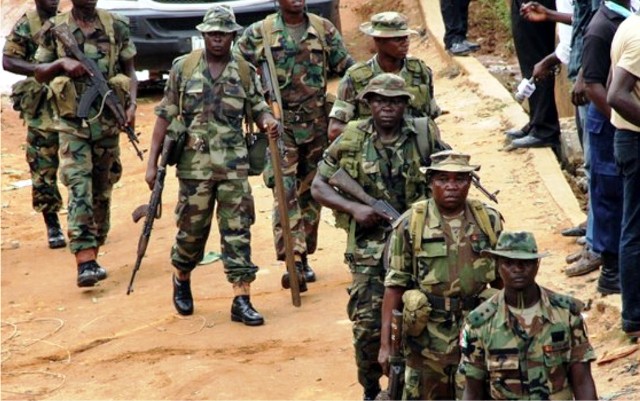
US Hails Nigerian Military For Rescuing 125 Kidnap Victims
-
Sports5 days ago
Fernandes Turns Down Man Utd Offer
-
Sports5 days ago
Rivers To Host National Table Tennis Championship
-
 Sports5 days ago
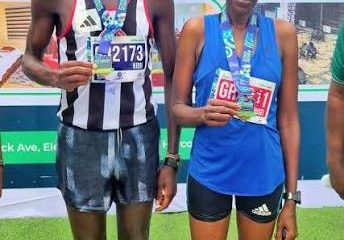
Kenyans Win PH International Marathon, Cart Home $10,000
-
 Sports5 days ago
AFCON qualification non-negotiable – Awoniyi
-
Sports5 days ago
‘Spain’ll Host 2030 World Cup Final’
-

 Sports5 days ago
I’ll bring more than power to Fury fight – Joshua