
Business
BPE To Raise N267bn From Privatisation Of 20 Firms

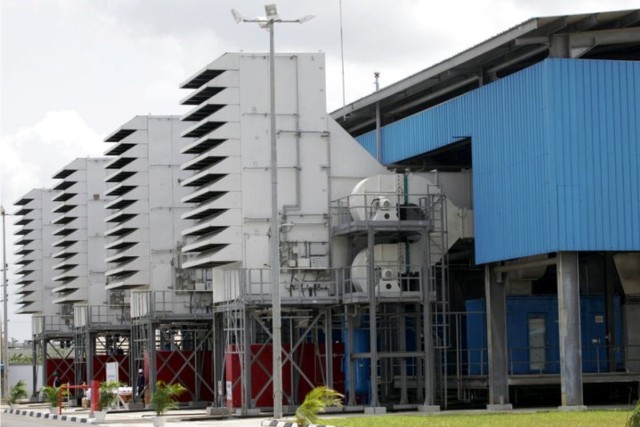
The Director-General of the Bureau of Public Enterprises, (BPE) Mr. Alex Okoh,says the bureau is posied to raise N266.9 billion from privatization of 20 companies in order to fund the 2020 federal government budget. has advised against re-nationalisation of the nation’s electricity power assets.
He spoke at a breakfast meeting where he presented the bureau’s 2020 Work Plan, Revenue and Expenditure Projections to the media in Abuja, last Saturday.
Responding to concerns over the fate of the privatised power companies, as the National Economic Council, NEC, committee on the review of the sector’s privatization commenced work, Okoh stated: “What I will not advocate, as an individual, is the re-nationalisation of the power sector. I think it will be a fundamental error to go in that direction.”
He added, “The problem, as far as I am concerned, is not the privatization of the DisCos (Electricity Distribution Companies) or the entire value chain. The problem essentially is in the design of the reform of the power sector for privatization. Recapitalising the DisCos, will it solve the problem? Maybe, maybe not. He said that the electricity sector had to be taken more seriously, as according to him, Nigeria, the largest economy in Africa has a mere Electricity per capita of about 150 KWh, compared to South Africa, the continent’s second largest economy,with a record of Electricity per Capita of 4,437 KWh.
He said: “We have not started to even scratch the issue of resolving the problem of power in Nigeria and if we don’t resolve the problem of power, then we are not going anywhere in terms of economic growth in the country. I think we have to be more concerted on resolving the power issue.”
Okoh said that the major problem with the sector was the transmission and distribution, as there was excess capacity in the generation segment of the industry.
He projected that the bureau would raise N266.9 billion from the privatization of 20 companies in order to fund the 2020 federal government budget. The sum of N3.9 billion is expected to be spent on the privatization exercise this year.
He projected a revenue of N268 billion from nine power enterprises including the Yola Electricity Distribution Company; Afam Power Plant; and the Nigeria Integrated Power Plants (NIPPs).
The BPE boss said Post Transaction management unit of the bureau is expected to yield the sum of N1. 987 billion; while Infrastructure and Public Private Partnership sector would be expected to generate N626. 2 million.
According to him, the Development Institutions and Natural Resources sector would yield N440 million; while another N220. 136 million would come from the Industries and Communications sector.





-

 Niger Delta5 hours ago
Diri Restates Stance On Lagos-Calabar Coastal Highway
-

 Niger Delta5 hours ago
C’River, NUJ Pay Tribute To Late Guardian Editor
-

 News6 hours ago
NDLEA Recovers Tons Of Illicit Drug Consignments In Nine States
-

 Opinion5 hours ago
Checking Voter Apathy In Nigeria’s Electoral Process
-
 Oil & Energy6 hours ago
S&P Global Warns Hormuz Energy Shock Could Become A Global Food Crisis
-

 Oil & Energy6 hours ago
Gas Reserves Hit 215 Trillion Cubic Feet
-

 Rivers5 hours ago
Education Ministry Condemns Female Virginity Testing In CHS, Taabaa
-

 Maritime4 hours ago
Association Debunks Alleged Extortion Report Against Lagos Commissioners, Others