Connect with us

Business

Transport Workers No Longer Political Thugs -NURTW

Published

on

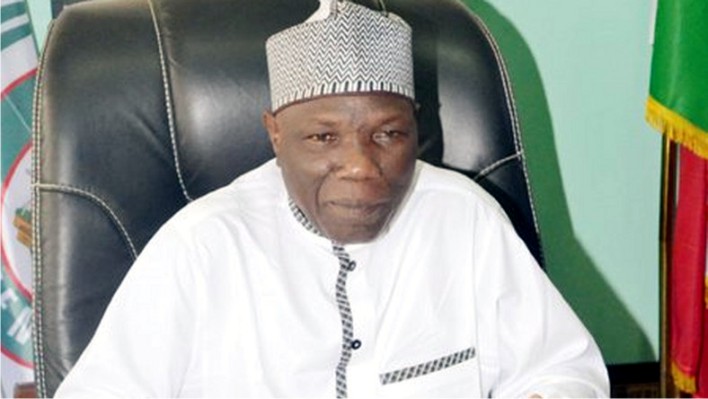
The outgoing President, National Union of Road Transport Workers (NURTW), Alh. Najeem Yasin, has urged members to desist from political thuggery and other vices capable of bringing the union to disrepute.
Yasin, who made this call at the 9th Quadrennial National Delegates Conference in Abuja yesterday, urged members to rise up to their responsibilities with the aim of moving the union forward.
According to him, the notion that road transport workers are political thugs, sponsored for violence, is now a thing of the past, calling for the spirit of teamwork to promote improved welfare and industrial harmony.
He said the proposed amendment of the constitution would essentially centre on the leadership, saying nobody in the union would serve more than two terms in office.
“The union is going global; we must not behave as touts and must be known as responsible.
“ In the past years, if you are looking for thuggery, they will tell you to go to the motor parks, but not anymore, people controlling millions of naira cannot be called thugs, not anymore,’’ he said.
Yasin urged its members to give necessary support to the incoming president and other executives, saying this was the only way the union would move forward and contribute its quota to national development.
The NURTW leader urged state delegates to avoid violence and ensure peaceful transition, as state councils planned elections.
He reiterated that executives of state councils would not be dissolved until the coming of new leadership.
Yasim thanked all partners and stakeholders for the conference, and called for same support for the new leadership of the union.
He said there was the need for older members to create opportunities for younger persons, saying the issue of sit-tight leadership would not be tolerated.
“I urge the new leadership to carry all their predecessors along, they should forget bickering and sentiments, we must sound this warning to them that only two consecutive terms are allowed.
“On no account should you change the constitution in your favour, at the end of your tenure, step aside for the new person and you can now act as the chairman, board of the union.
“Allow young ones to grow, I notice what always causes problems is the leadership having to change the constitution for their benefit, we must change the narrative of sit-tight syndrome.’’
The Secretary to the Government of the Federation (SGF), Mr Boss Mustapha, urged transport workers to continue to do their best in nation-building.
Represented by Sen. Donald Alasoadura, Mustapha commended transport workers for their efforts towards the success of the 2019 general elections, saying President Muhammadu Buhari, was proud of them.
The SGF noted that the NURTW had contributed immensely to the country’s development through its activities and empowerment of transport workers.
He called for strengthened collaboration between the NURTW and the Federal Road Safety Corps on compliance with traffic laws by transport workers to ensure safety on the roads.
The new president of the union, Alhaji Ibikunle Baruwa, was officially inaugurated along with other new executives at the event.


Continue Reading

Transport

Nigeria Rates 7th For Visa Application To France —–Schengen Visa

Published

on

Nigeria was the 7th country in 2024, which filed the most schenghen visa to France, with a total of 111,201 of schenghen visa applications made in 2025, out of which 55,833, about 50.2 percent submitted to France
Although 2025 data is unavailable, these figures from Schengen Visa Info implies that France is not merely a preferred destination, but has been a dominant access point for Nigerian short-stay travel into Europe.
France itself has received more than three million Schengen visa applications, making it the most sought-after Schengen destination globally and a leading gateway for long-haul and third-country travellers. It was the top destination for applicants from 51 countries that same year, including many without visa-exemption arrangements with the Schengen Zone, and the sole destination for applicants from seven countries.
Alison Reed, a senior analyst at the European Migration Observatory said, “France’s administrative reach shapes applicant strategy, but it also concentrates risk. If processing times lengthen or documentation standards tighten in Paris, the effects ripple quickly back to capitals such as Abuja.”
The figures underline that this pattern is not unique to Nigeria. In neighbouring West and Central African states such as Gabon, Benin, Togo and Madagascar, more than 90 per cent of Schengen visas were sought via French authorities in 2024, with Chad, Djibouti, the Central African Republic and Comoros submitting applications exclusively to France.
“France acts as the central enumeration point for many African and Asian applicants,” said Manish Khandelwal, founder of Travelobiz.com, which reported the consolidated statistics. “Historical ties, language networks and established diaspora communities all play into that concentration. But volume inevitably invites scrutiny, and that affects refusal rates and processing rigour.”
That scrutiny is visible in the rejection statistics. Of the more than three million French applications in 2024, approximately 481,139 were denied, a rejection rate of about 15.7 per cent. While this rate is lower than in some smaller Schengen states, the sheer volume of applications means France contributes significantly to the total number of refusals within the zone.
For Nigerian applicants and policymakers, one implication is the need to broaden engagement with other Schengen consular hubs. “Over-reliance on a single consulate creates what one might call administrative bottleneck effects,” said Jean-Luc Martin, a professor and expert in European integration and mobility law at Leiden University. “If applicants from Nigeria default to France without exploring legitimate alternatives in countries like Spain, Germany or the Netherlands, they expose themselves to systemic risk
Martin added that the broader context of Schengen visa policy is evolving, with the European Commission’s preparing roll-out of the European Travel Information and Authorisation System (ETIAS) aimed at harmonising pre-travel screening across member states.
For Nigerians seeking leisure, business or educational travel to Europe, these trends suggest that strategic planning and consular diversification could become as important as the completeness of documentation and financial proof. Governments and travel consultancies in Abuja, Lagos and beyond are already advising clients to explore alternative consular pathways and to prepare for more rigorous screening criteria across all Schengen states
By: Enoch Epelle
Continue Reading

Transport

West Zone Aviation: Adibade Olaleye Sets For NANTA President

Published

on

Prince Abiodun Ajibade Olaleye, a former Welfare Officer and Public Relations Officer of the National Association of Nigeria Travel Agencies (NANTA), has formally declared his intention to contest for the position of Vice President of NANTA Western Zone, ahead of the zonal elections scheduled for Thursday, February 26, 2026.
In a New Year message to members of the association, Olaleye expressed optimism about the prospects of the travel and tourism industry in 2026, despite the economic headwinds and migration policy challenges that affected operations in the previous year.
He acknowledged that reduced patronage and declining trade volumes had placed significant financial pressure on many travel agencies, but urged members to remain resilient and forward-looking.
According to him, the challenges confronting the industry should be seen as opportunities for growth, innovation and institutional strengthening.
He stressed the need for unity and collective action among members of the association, noting that collaboration remains critical to navigating the evolving global travel environment.
Unveiling his vision for the NANTA Western Zone, Olaleye said his aspiration is to consolidate on the achievements of past leaders while expanding the zone’s relevance, influence and impact “beyond imagination.” He promised a leadership focused on commanding excellence, improved member welfare and stronger stakeholder engagement.
Drawing from his experience in previous executive roles within NANTA, the vice-presidential aspirant said he is well-positioned to make meaningful contributions to the association, particularly in areas of member support, public engagement and institutional growth.
“I believe that together, we can take our association to greater heights and build a stronger, more prosperous NANTA Western Zone that benefits all members,” he said, while appealing to delegates for their support and votes.
Olaleye concluded by offering prayers for good health, peace and prosperity for members in 2026, expressing confidence that the new year would usher in renewed opportunities for the travel industry and the association at large.
By: Enoch Epelle
Continue Reading

Business

Sugar Tax ‘ll Threaten Manufacturing Sector, Says CPPE

Published

on

The Centre for the Promotion of Private Enterprise (CPPE) has warned that renewed calls for a sugar tax on non-alcoholic beverages could hurt Nigeria’s manufacturing sector, threaten jobs and slow the country’s fragile economic recovery.

In a statement, the Chief Executive Officer, CPPE, Muda Yusuf, said while public health concerns such as diabetes and cardiovascular diseases deserve attention, imposing an additional sugar-specific tax was economically risky and poorly suited to Nigeria’s current realities of high inflation, weak consumer purchasing power and rising production costs.

Yusuf who insisted that the food and beverage sector remains the backbone of Nigeria’s manufacturing industry, said the industry supports millions of livelihoods across farming, processing, packaging, logistics, wholesale and retail trade, and hospitality.
He remarked that any policy that weakens this ecosystem could have far-reaching consequences, including job losses, lower household incomes and reduced investment.
Yusuf argued that proposals for sugar taxation in Nigeria are often influenced by global policy templates that do not adequately reflect local conditions.

According to him, manufacturers in the non-alcoholic beverage segment are already facing heavy fiscal and cost pressures.

“The proposition of a sugar-specific tax is misplaced, economically risky, and weakly supported by empirical evidence, especially when viewed against Nigeria’s prevailing structural and macroeconomic realities.

“Existing obligations include company income tax, value-added tax, excise duties, levies on profits and imports, and multiple state and local government charges. These are compounded by high energy costs, exchange-rate volatility, elevated interest rates and expensive logistics,” he said.

The CPPE boss noted that retail prices of many non-alcoholic beverages have risen by about 50 per cent over the past two years, even without the introduction of new taxes, further squeezing consumers.

Yusuf further expressed reservation on the effectiveness of sugar taxes in addressing the root causes of non-communicable diseases in Nigeria.

By: Lady Godknows Ogbulu
Continue Reading

Trending