
Oil & Energy
Mojec, Banks Collaborate On Meter Provision For Customers

As the date for the take off of the Meter Asset Provider (MAP) scheme draws nearer, Mojec Meter Assets Management Company, a subsidiary of Mojec International Limited, and also one of the selected MAP operators, is partnering some banks to ease the roll out of meters to customers next month.
Mojec with the banks: First Bank, Wema Bank, Unity Bank, Keystone Bank, Zenith Bank, Sterling Bank, Polaris Bank and First Option Micro Finance Bank, entered into a deal to provide retail financing to electricity customers to ease their acquisition of prepaid meters.
The banks have signed memoranda of understanding (MoU) with Mojec in Lagos with a view to providing finance to customers within the coverage area of Mojec’s partner-electricity distribution companies (DisCos) across the country. MAP is a scheme that was initiated by the Ministry of Power, Works and Housing and approved by the Nigerian Electricity Regulatory Commission (NERC).
The MAPs will provide, install and maintain customers’ meters and fast-track the closure of the metering gap, which is five million and end estimated billing.
According to the regulation guiding MAP operation, a MAP must install a customer’s meter within 10 days of payment for such meter and the operators of the scheme must meter unmetered electricity users in Nigeria within three years from the time they start work next month.
Mojec International Limited Managing Director/Chief Executive Officer, Ms. Chantelle Abdul, said at a summit of the partnering banks and DisCos in Lagos that the company was determined to bridge the metering gap in the sector by ensuring provision of top quality electricity meters to customers in Nigeria.
Abdul said: “Now that MAP is here, Mojec is once again blazing the trail in the provision of high-end quality prepaid meters to customers, helping to reduce the financial burden estimated billing is putting on electricity consumers. Mojec as a company has invested a lot of resources positioning it as best suited to meet the metering needs of all customers within the coverage of its partner DisCos.
“Mojec would be partnering eight DisCos, including, Ikeja Electric, Eko DsCo, Abuja DisCo, Kano DisCo, Enugu DisCo, Jos DisCo, Ibadan DisCo and Kaduna DisCo, covering about 20 states of the federation.”
The General Manager, Finance and Management Services, NERC, Abdulkadir Shettima, commended Mojec for its leadership in the metering subsector as demonstrated by its efforts towards the full scale implementation of the MAP scheme, which allows customers easy and direct access to meter assets.
“This MoU signing between Mojec and these banks as well as the announcement of the company’s readiness to implement the MAP scheme is very commendable. It goes to show that Mojec is a real leader in this business and it is committed to industry’s mission of ensuring that every household in this country is metered,” he said.



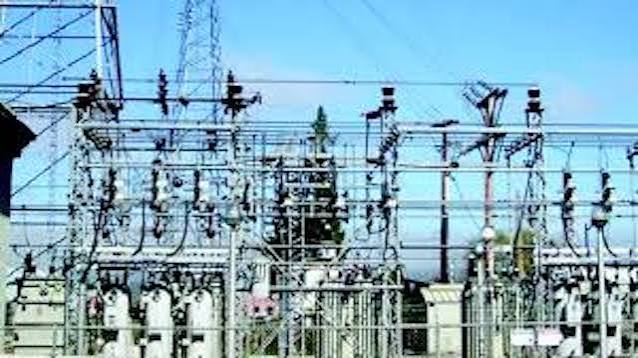
Utilities built a total of over 21,000 km of new transmission lines last year, the International Renewable Energy Agency reported this week at COP31, citing data from a group called the Utilities for Net Zero Alliance. This is 50% more than the new transmission lines installed during the previous year, IRENA noted in its report.
“Power grids will make or break not only the energy transition but also the world’s ambition to raise global electrification to 35% by 2035, as championed by the Turkish COP31 Presidency,” said the director-general of IRENA, Francesco La Camera. “IRENA’s analysis shows that global grid investment must more than double, reaching a cumulative USD 10 trillion by 2035,” he added, noting that ambition would not be enough and that “We must move from targets to implementation, from individual projects to system-wide transformation, and from commitments to delivery at scale.”
Transmission line capacity has become one of the biggest obstacles in the path of the energy transition. Due to their weather-dependent, variable output nature, wind and solar installations generate electricity intermittently. Because the best locations for such installations are often far from electricity demand centers, having to waste output in times of low demand is a frequent occurrence with both. Called curtailment, wind and solar electricity waste increases costs for the alternative energy sources.
The solution, net-zero proponents such as the International Energy Agency believe, is to expand the grid by building new transmission lines connecting wind and solar installations with demand centers. Back in 2023, the IEA said utilities needed to add or replace some 50 million km of transmission lines by 2040 if Paris Agreement signatories were to meet their commitments.
Forecasting how many millions of kilometers of cable need to be built or replaced, however, is one thing, while paying for it is quite another. Last year, the European Commission estimated that the European Union alone needs to cough up between $2 trillion and $2.3 trillion on grid upgrades by 2050 to achieve the Commission’s climate goals. For context, EU investment in the grid in 2024 stood at $90.5 billion. This would need to rise to over $100 billion annually, according to energy think tank Bruegel.
$100 billion in grid buildout investment is no small potatoes, yet some believe this investment would be inevitable as energy security takes priority over climate change concerns. Wood Mackenzie said this week that countries that prioritize energy security over emission-reduction plans could achieve lower emissions through faster electrification, replacing hydrocarbon import dependence.
“The energy transition has arrived at a genuine crossroads,” Prakash Sharma, Wood Mackenzie’s head of scenarios and technologies, said. “The world is no longer moving in one direction. Nations are making fundamentally different choices about how to power their economies, and those choices are producing outcomes that confound conventional wisdom.”
Energy security has indeed come to the fore since February, with emission reduction taking the back seat as governments struggle to keep energy relatively affordable without emptying state coffers and slipping into a recession. This has proven hard for many that depend on imports of oil and gas, with the effects of this dependence especially obvious in most of Asia and the European Union.
Reducing this dependence on imports has become an obvious path for many of these governments, as much as it is possible. And the most obvious way of reducing this dependence has been electrification, wherever possible. According to Wood Mackenzie, the impact of the war in Iran on energy prices would drive a shift to electrification, a wind and solar buildout, and nuclear generation expansion to produce more energy locally. This, in turn, would inevitably lead to lower emissions, even though, ironically, these lower emissions are not the priority.
COP31 host Turkey has proposed that participants commit to electrification, aiming for electricity to account for 35% of final energy. That would be up from some 20% today, with most of the world’s final energy still coming from hydrocarbons despite the net-zero rush from the last ten years. What is interesting, however, is that the proposal does not include a stipulation for reducing the use of hydrocarbons. Based on Wood Mackenzie’s scenario for inadvertent emission reduction, the lower use of hydrocarbons would happen organically rather than by means of government regulation enforcement.
Such developments would be an interesting departure from what has become the standard modus operandi of pro-transition governments: regulation, emission-cutting mandates, and penalties for using hydrocarbons, such as credit offsets. Instead, the energy ramifications of geopolitical events could lead to what one could describe as an organic shift away from imported hydrocarbons, while countries with their own mineral resources exploit those more fully. Whether such an organic shift would indeed reduce the consumption of oil, gas, and coal, however, remains to be seen.
By: Irina Slav
-
News4 days ago
RSG Reaffirms Commitment To STEM Education, Technological Advancement
-
Business5 days ago
‘NUJ, NPA’s Partnership Would Boost Port Producrivity, Economic Growth’
-

 News4 days ago
IGP Warns Police Officers Against Partisanship …Directs Regular Engagement With Journalists
-

 Oil & Energy1 day ago
FG To Double Oil, Gas Reserves, Moves To Intensified fresh Exploration
-
Business5 days ago
Fire Threat Interrupts Asaba Air Peace Flight
-
 News4 days ago
Customs To Deploy AI, Scanners Against Snuggling
-
Business1 day ago
BSG Partiner American Coy To Invest $100m In Gas Processing
-
Business1 day ago
Seme Customs Intercepts Live Pacific Ridley Sea Turtle