
Featured
Tony Anenih Dies At 85 …RSG, Atiku, PDP, Saraki, Others Extol His Virtues

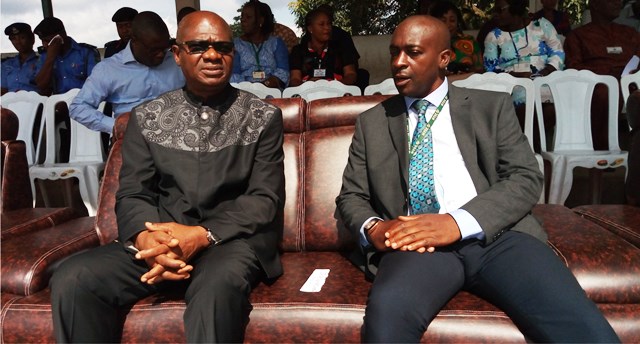
Former Minister of Works and chieftain of the Peoples Democratic Party (PDP), Chief Tony Anenih is dead. Mr Anenih, 85, died yesterday evening at Cedarcrest Hospital, Abuja, where he was receiving treatment for an undisclosed ailment.
Reacting to his death, President Muhammadu Buhari extended his condolences to the Anenih family and attested to the fact that the deceased lived a life of service.
PresidentMuhammadu Buhari has extended his heartfelt condolences to the Anenih family on the death of its beloved patriarch and elder statesman, Chief Anthony Anenih. President Buhari has also commiserated with the government and people of Edo State and the Peoples Democratic Party, PDP, on the passing of their illustrious son and former Chairman, Board of Trustees.
The President in a statement by his Special Adviser on Media and Publicity, Chief Femi Adesina in Abuja last night, said, “As a frontline figure in the annals of our country’s political history, the President attests that Chief Anenih lived a life of service, as State Chairman of the National Party of Nigeria (NPN), National Chairman of the Social Democratic Party (SDP), chieftain of the PDP, and a former Minister of Works.
“President Buhari affirms that across the political spectrum of Nigeria, Chief Anenih was known for his strong views on issues pertaining to the unity and stability of the nation.”
He prayed Almighty God to grant Chief Anenih’s soul eternal rest and comfort all who mourn the octogenarian.
In his reactions, the presidential candidate of the Peoples Democratic Party, PDP, Alhaji Atiku Abubakar, has reacted to the death of the party’s chieftain, Chief Tony Anenih.
Anenih, a former minister of Works, reportedly died after battling with an undisclosed illness.
Reacting to the passing, Atiku took to his Twitter handle, to express condolences to the friends and family of the late chieftain.
He tweeted, “The passing away of Chief Tony Anenih, one of the founding fathers and elder statesmen of @OfficialPDPNig is a sad news to me and everyone who had a close & personal relationship with him.
“I pray for strength and comfort for his family. May God grant his soul a peaceful repose.”
President of the Senate, Bukola Saraki and Deputy Senate President, Ike Ekweremadu, have expressed grief over the death of a former Chairman of the Board of Trustees of the Peoples Democratic Party, Chief Tony Anenih.
Saraki, while reacting to Anenih’s death via his social media accounts, said the PDP chieftain would be dearly missed.
He wrote, “Chief Tony Anenih was a consummate leader statesman who played several defining roles throughout Nigeria’s democracy. He will be remembered for his great patriotism. And his insight into national issues. He will be dearly missed. Rest in peace, Chief.”
Ekweremadu also expressed “deep grief” over the demise of Anenih, describing him as a pan-Nigerian and patriot who served the nation to the best of his ability.
On his Facebook page and Twitter handle, @iamekweremadu, he said, “Chief Anineh contributed so much to deepening our democracy and setting the nation on the path of progress at the end of many decades of military rule.
“He was a humble leader, fine public administrator, political kingmaker, a colossus, master strategist, and a political oracle who was very vast in political engineering.
“Iyasele was a courageous man, and a man of few words, who meant whatever he said and said only what he meant. He will be sorely missed.”
Rivers State Government has commisserated with the Government and people of Edo State as well as the entire Anenih family on the death of Elder Statesman Chief Tony Anenih at the age of 85.
A statement issued by the State Commissioner for Information and Communications Emma Okah says Chief Tony Anenih contributed immensely to the growth and development of the Country, noting that the history of Nigeria’s democracy cannot be complete without mentioning his patriotic roles.
While describing his demise as a huge loss to the Nation, the Rivers State Government prayed the Almighty God to grant his soul eternal rest and comfort his family, political associates as well as the Government and people of Edo state on this calamity” the statement added.
Reacting to the death of its former chairman, Board of Trustees, Chief Tony Anenih, the Peoples Democratic Party said the man they fondly called Mr. Fix It lived a fulfilled life, expressing regrets that his death had robbed the party and the nation of “an experienced man whose love for the country was beyond description.”
National Chairman of the party, Uche Secondus, who spoke with our correspondent on the telephone, said that the nation would miss the late politician.
He said, “His death came to me as a rude shock. Though he was advanced in age, as human beings, we wanted him to be around us for a longer period.
“This is because we loved him. He was a nationalist who wanted the best for the country. We would miss him. We pray to God almighty to grant him eternal peace.”
Secondus said that the PDP would immortalise him.
Born on August 4, 1933 in Uzenema-Arue in Uromi, Anenih joined the Nigeria Police Force in 1951 in Benin City.
He attended the Police College in Ikeja, and was selected for further training in the Bramshill Police College, Basingstoke, England, in 1966; and the International Police Academy, Washington DC in 1970.
He served as a Police orderly to the first Governor General of Nigeria, Dr. Nnamdi Azikiwe.
He worked as an instructor in various Police colleges, and in 1975 was assigned to the Administrative Staff College, Lagos. He retired from the Police as a Commissioner, after which he joined politics.
He was State Chairman of the National Party of Nigeria between 1981 and 1983.
He was National Chairman of the Social Democratic Party from 1992 and 1993, and was also a member of the Constitutional Conference in 1994.
Anenih was a member of the then unregistered Peoples Democratic Movement founded by the late former Chief of General Staff, late General Musa Yar’Adua.
He later later joined the People’s Democratic Party, and was a minister under the regime of former President Olusegun Obasanjo.
Anenih, who was better known as “Mr. Fix it “ because of his closeness to the corridors of power and his political dexterity, was later made the chairman of the Board of Trustees of the PDP.
In his reaction, the Edo State Governor, Godwin Obaseki yesterday described the death of elderstatesman and a former chairman Board of Trustees(BoT) Chief Tony as shocking g even as he acknowledged that he lived a fulfilled life.
Chief Anenih was also a former Minister of Works and former National Chairman of the defunct Social Democratic Party reportedly died at Cidacrest Hospital in Abuja.
Obaseki through his Special Adviser, Media and Communication Strategy, Crusoe Osage, said the people of the State are consoled by the fact the Chief Anenih lived a long and fruitful life.
“While we agree that he lived a fulfilled life, we are pained that his wealth of experience and advise which are needed as we move towards 2019 will be missed.
He was a father to all in the state. Governor Obaseki said the state would mourn his demise and missed his fatherly role in bringing people together.
Candidate of the All Progressives Congress for Ovia Constituency in the House of Representatives, Mr. Dennis Idahosa, said Chief Anenih contribution to the country’s political development cannot be forgotten easily.
Idahosa said Chief Anenih played fatherly role to all politicians in the state.
Former President of the National Association of Nigeria Students, Comrade Jude Imagwe, said his heart is heavy with the passing of Chief Anenih. “The wind is blowing and the root of an iroko has shaken.
The lion has gone into sleep and the leopard is heading into the savannah. The san in his hour has poured out. My. heart is heavy but God is God.”
The Action Democratic Party (ADP) Edo south senatorial district, Dr Ese Owe described him as “A devoted husband, kind father, a devout catholic, and a fine gentleman, his loss is indeed painful. A humanitarian per excellence, a peace maker and bridge builder.
He will be sorely missed, but I am consoled by the fact that he lived a long and fruitful life. May he rest peacefully in the bossom of our Lord and may perpetual light shine upon his soul” All was quiet at his house on Delta Crescent in the Government Reserved Area (GRA) Benin as the massive gate was under lock and key.
At his resident in Delta Crescent in GRA Benin City The two security guards said that they were not aware of the death of the Iyasele of Esanland, adding that the younger son who drove in shortly before The Nigerian Tribune visited at about 6 pm was inside and not disposed to talking to the press.
The situation was also the same at the residence of his wife, Iyom Josephine Anenih on Liberty Avenue, GRA as the gate was under lock and key. In a telephone interview, Mrs. Anenih, a former Minister of Women Affairs said that she would only speak after the family issue a statement.
Another of his son, Mr. Usolo Anenih confirmed the demise of the former Minister of Works in a private hospital in Abuja after a brief illness, adding that the eldest son, Mr. Tony Anenih, jnr flew to Abuja from his base in Lagos and would issue a statement after a family meeting.
Speaking in the same vein, the Edo state Chaired of the PDP, Chief Dan Orbih said that the party will only come out with a statement after the family officially broke the news of the death of the politician.
Delta State Governor, Senator Ifeanyi Okowa has commiserated with the family members, the government and the people of Edo State on the death of former Minister of Works, Chief Tony Anenih (CFR), who died yesterday at 85 years. Governor Okowa also conveyed his condolences to the family of the late Iyasele of Esanland, describing him as a committed patriot who served our nation at the highest levels with an uncommon sense of patriotism and unwavering dedication.
In a statement by his Chief Press Secretary, Charles Aniagwu, in Asaba on Sunday, the Governor said he was saddened by the demise of the former Chairman of the Board of Trustees of the People’s Democratic Party (PDP). Mr Charles Aniagwu,
The statement read: “I am deeply saddened by the death of elder statesman and former Chairman Board of Trustees of the PDP, Chief Tony Anenih (CFR), who passed on at the age of 85 years”.
“He was a committed patriot, an astute politician and a former Minister of Works who worked to better the lots of his people and Nigerians in general, adding “through his purposeful leadership and development strides, the late Anenih influenced the dualisation of the Benin Asaba road, Benin Warri Road and the Benin bypass road which brought about unprecedented development to the Niger Delta region”.
Governor Okowa remarked that as a democrat, the late Anenih etched his name in the annals of Nigeria’s democratic advancement by working courageously for the emergence and consolidation of the Fourth Republic in 1999 when he joined forces with other leaders to form the Peoples Democratic Party, PDP.
“Before venturing into politics, Chief Anenih retired from the Nigeria Police Force as a Commissioner of Police and bestrode Nigeria’s political landscape like a collossus where he mentored several succesfull politicians across the country.
“His good works as a dedicated family man, selfless politician and great philanthropist as well as his ability to consistently, at every turn, resolve knotty political puzzles would later earn him the sobriquet – “Mr. Fix It” which would continue to live after him”. “On behalf of my family, the government and people of Delta State, I convey our deepest sympathy to the Anenih family, the people of Uromi and Esan Land, Edo State, and the rest of the country. “May his soul find eternal repose in the bosom of the Almighty God.” the Governor wrote.
Also, former Delta State Governor, Chief James Ibori has described the death of former Works Minister, Chief Tony Anenih as the end of a remarkable era in Nigerian politics.
Ibori added that Anenih’s life should be studied like a book by anyone desirous of going far not just in politics, but in life generally, because “he pulled himself up by his bootstraps and remained almost unequalled as a political leader and pathfinder since the 1970s till his retirement after the last general elections.”
The statement continued: “Anenih was a self-made man who did not have the benefit of attending a secondary school but studied at home for his West African School Certificate while he was already in the Police Force.“With that certificate in his pockets, the sky was his limit as he attended the Police College in Ikeja.
, and merited to be selected for further training in the Bramshill Police College, Basingstoke, England in 1966 and the International Police Academy, Washington DC in 1970. “Perhaps as a sign of what was to come, he served as a Police Orderly to the first Governor-General of Nigeria, Dr. Nnamdi Azikiwe.
He retired as a Commissioner of Police in 1975.” Ibori noted that Anenih first served notice that he was a master political tactician as State Chairman of the National Party of Nigeria ,NPN, from 1981 to 1983, when he spearheaded the late Dr. Samuel Ogbemudia’s election as civilian Governor of Bendel State.
When democracy returned, he was National Chairman of the Social Democratic Party (SDP) in 1992 and 1993, and masterminded the election of Chief M. K. O. Abiola as President.
Yet, it was in the Peoples Democratic Party ,PDP, that he earned the sobriquet “Mr. Fix It”. He prayed God to grant the soul of the departed eternal repose and the family the fortitude to bear the loss.
Following the death of former Chairman, Board of Trustees, BoT, of the Peoples Democratic Party (PDP) and erstwhile Minister of Works, Chief Tony Anenih, family, friends and political associates flocked his Abuja residence located at Sunrise Hills, Asokoro, Abuja opposite the Mogadishu Barracks to commiserate with his family few minutes after his death became public knowledge.
The Iyasele of Esanland, fondly referred to as “Mr. Fix it,” owing largely to his dexterity in fetching his party electoral victories died of an undisclosed ailment at the Cedar Crest Hospital, Abuja on Sunday, Vanguard gathered. Anenih Anenih, a former Police officer, was born on August 4, 1933 in Uzenema-Arue in Uromi, Esan North East Local Government Area of Edo state.
He attended the police college in Ikeja, and was selected for further training in the Bramshill Police College, Basingstoke, England in 1966 and the International Police Academy, Washington DC in 1970.
He served as a police orderly to the first Governor General of Nigeria, Dr. Nnamdi Azikiwe (also of blessed memory). He worked as an instructor in various police colleges, and in 1975 was assigned to the Administrative Staff College (ASCON), Lagos and retired as Police Commissioner.
He was State Chairman of the National Party of Nigeria (NPN) between 1981 and 1983, and played a huge role in the election of Samuel Ogbemudia as governor of Bendel state (now defunct). However, the governorship was cut short by the military takeover of December 1983.
He was National Chairman of the Social Democratic Party, SDP, (1992-1993) whose Presidential candidate, Chief Moshood Kashimawo Olawale, M.K.O Abiola was elected, only for same to be annulled by the military regime of General Ibrahim Babangida (retd).
Anenih was a member of the Constitutional Conference in 1994 as well as a member of the Peoples Democratic Movement, PDM, until April 2002, when he joined the PDP.
He was said to have played a pivotal role in the emergence of Olusegun Obasanjo as the presidential candidate of the PDP In 1999 and national coordinator of his campaign organization in 1999 and 2003. Chief Anenih announced his disengagement from active politics in November 2016 during the presentation of his autobiography,



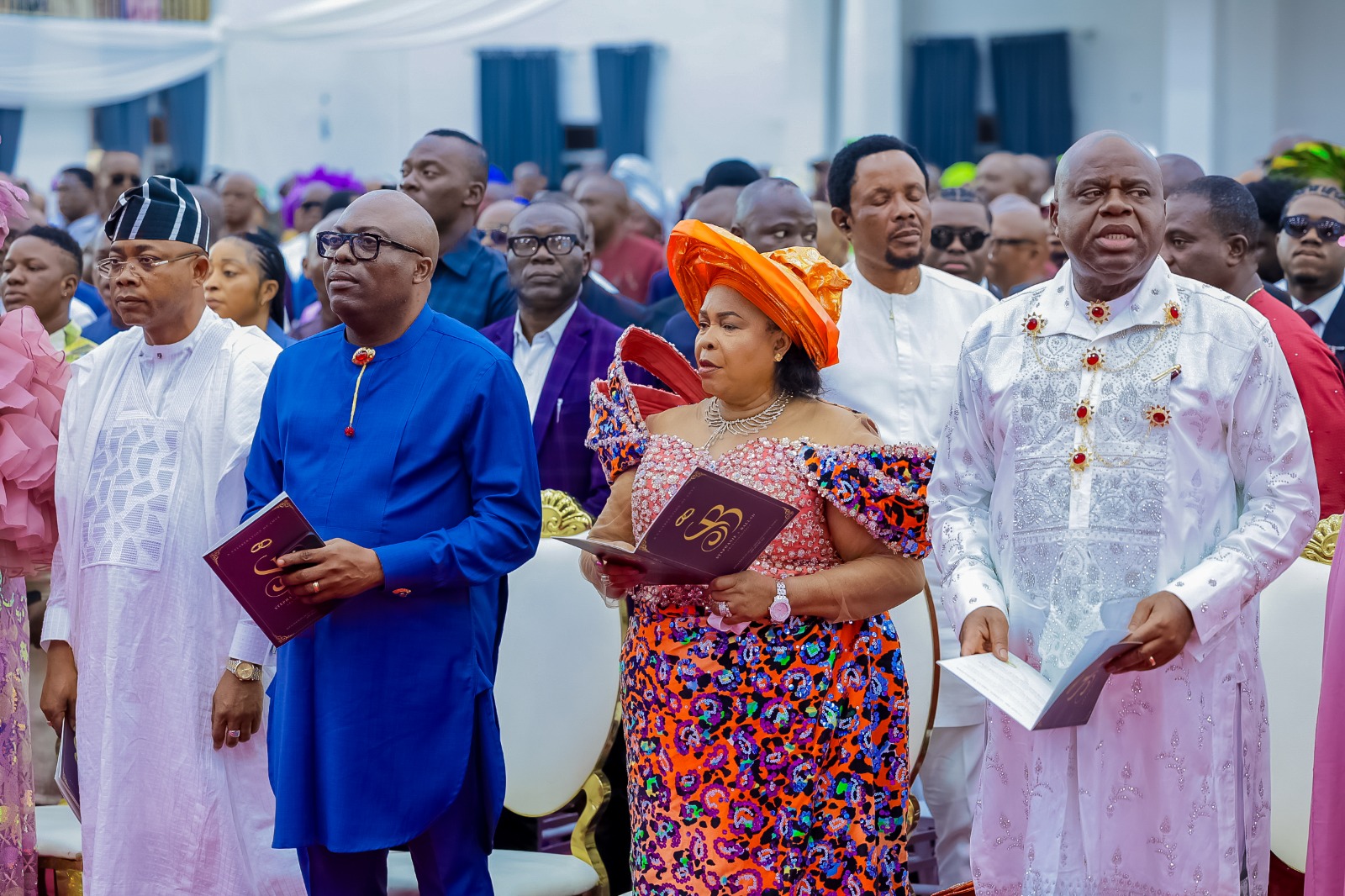
Rivers State, Sir Siminalayi Fubara, has assured members of the National Youth Service Corps (NYSC) of his administration’s commitment to supporting and strengthening the scheme in the State.
Fubara gave the assurance last Friday at the NYSC permanent orientation camp, Nonwa-Gbam, Tai Local Government Area in the State, during the swearing-in ceremony of 2026 Batch B Stream II orientation course.
Represented by the Permanent Secretary, Cabinet Bureau, Office of the Secretary to the State Government, Dr. Promise Oguzie, the governor said the State Government would remain intentional in providing the necessary support to improve the NYSC scheme and enhance the experiences of corps members deployed to the state.
He charged the corps members to be role models and quality nation-builders in their service to the good people of Rivers State in particular, and Nigeria at large.
“I charge you to be exemplary, dedicated and committed in all you do. Take full advantage of all the camp programmes and activities to enrich yourselves”, he said.
In his welcome address, the State Coordinator of NYSC in Rivers State, Mr. Moses Oleghe, urged corps members to see their deployment to Rivers State as a “veritable opportunity to make meaningful contribution to the growth of the State in particular and Nigeria at large.”
He further charged them to serve with all sense of “integrity, discipline, and the fear of God, especially when they will be engaged as INEC ad-hoc staff that will conduct the 2027 general elections.”
A total of 3,584 corps members composed of 1,421 males and 2,163 females were sworn in by the Chief Judge of Rivers State, who was represented by Justice Godspower Aguma.

Governor of Rivers State, Sir Siminalayi Fubara, says Nigeria needs God-fearing leaders for the nation to move in the right direction and make meaningful progress.
The Governor stated this yesterday when he received in audience, the World President of the Seventh Day Adventist Church, Pastor Erton Kohler; his wife, Andriene Marques Kohler; daughter Mariana Marques Kohler and a retinue of ministers of the church at Government House, Port Harcourt.
Fubara who hailed the Seventh Day Adventist Church for its contributions to education and the grooming of future leaders in Nigeria, expressed delight that the Church had over the years, been investing in education at various levels and currently runs two universities in the country.
He commended the church for not only using its institutions to spread the gospel of Christianity but to groom future leaders for the country.
According to him, religion should not be just about defending one’s faith, but also making meaningful impact on the lives of the people.
He said that by floating these educational institutions, the church has demonstrated capacity to support Nigeria in the task of producing not only educated people but a breed of God-fearing leaders.
“Our country is where it is today because we lack the fear of God. If you have the fear of God, there should be a limit to what you can do because you understand the supremacy of God. But when God is not in your equation, you’ll go beyond the line and that is what has brought us to where we are today.
“So, I feel very happy that you are contributing to the development of our future leaders in this country. We need the right people being in the right place; prepared properly with good minds; that is what we need, not just in Nigeria but round the whole world.,” he said.
Governor Fubara further observed that the absence of God-fearing people in high places to take the right decisions that could impact positively on the society, has also given rise to other problems such as social inequality, poverty, corruption and criminality. According to him, Nigeria needs a system where the average parent could afford quality education for their children and a guarantee that upon graduation, the average child will have the capacity to compete favourably with anybody, anywhere in the world.
“If we have a situation where the little money that you’re being paid as wage can also afford you quality healthcare and after working at least for 15-20 years, you have a roof over your head, tell me why you should be involved in any kind of crime? At that point, you’ll feel secured and this attitude of insecurity about the future that leads to all the social vices we have today won’t be there,” he said.
Governor Fubara expressed appreciation to the delegation for the visit and for their prayers for Rivers State, assuring them of his continued support for their programmes in the state.
Leader of the delegation and World President of the Seventh Day Adventist Church, Pastor Erton Kohler said he was in Nigeria for a special conference of the church during which thousands of the church’s ministers will be undergoing an empowerment programme to further equip them for the task of herding their flocks and serving the society.
He expressed gratitude to the Governor for the warm reception accorded his entourage, saying the memory of the visit will linger in his mind for a lifetime.
Kohler disclosed that the Church has over twenty -four million (24,000,000) members and more than 182,000 places of worship, spread across 212 countries of the world.

The Rivers State House of Assembly has approved the 2026–2028 Medium Term Expenditure Framework (MTEF) submitted by Governor Siminalayi Fubara.
This reaffirms the lawmakers’ commitment to enacting laws and taking legislative actions geared towards the overall development of the State.
The Assembly gave the approval during its Second Legislative Sitting of the Fourth Session held last Friday.
Speaking on the MTEF document during plenary, the House Speaker, Rt. Hon. Martin Amaewhule, noted that by the provision of Section 10(1)(b) of the Rivers State Fiscal Responsibility Law No. 8 of 2010, the MTEF ought to have been laid before the House in September 2025.
Amaewhule explained that traditionally, the document is expected to be presented four months before the commencement of the next financial year and immediately after the expiration of every three-year fiscal cycle.
He, however, stated that in the interest of the State and its people, the House considered it necessary to deliberate on the document, describing it as a precursor to the 2026 Budget Estimates.
The Speaker expressed concern that the year had already progressed significantly before the presentation of the framework.
During deliberations on the document, members examined the assumptions and projections contained in the MTEF and observed that strict adherence to the outlined fiscal parameters would ultimately serve the interest of Rivers people.
The lawmakers maintained that effective implementation of the framework would promote prudent financial management and enhance developmental planning across the State.
Following the debate and positive consideration by members, the Speaker put the question to the House and members voted overwhelmingly in support of the approval of the MTEF.
Meanwhile, during the same sitting last Friday, the House also received a petition from the Chairman of Obio/Akpor Local Government Council, Dr. Gift Worlu.
The petition was presented by the member representing Obio/Akpor Constituency II, Hon. Emilia Amadi.
According to the petition, concerns were raised over an imminent security breach, threats to lives, destruction of property and alleged forceful takeover of property by some lawless persons within parts of the Local Government Area.
Presenting the petition before the House, Hon. Amadi appealed to the lawmakers to revisit the matter and take necessary steps aimed at safeguarding lives and property in the affected communities.
The House is expected to further deliberate on the petition and consider measures to address the concerns raised in order to sustain peace and security in the area.
King Onunwor
-

 News2 days ago
RSG Targets Nine Million Residents in Mosquito Net Distribution Campaign
-

 Oil & Energy2 days ago
Aiyedatiwa Signs New Electricity Bill
-

 Maritime2 days ago
Marine Minister Commends President Tinubu On NPERA Bill Assent
-

 Oil & Energy2 days ago
NLNG Commissions Research And Innovation Centre In RSU
-

 News2 days ago
KenPoly Holds Eight Convocations, August 29
-

 News2 days ago
RSG Begins Another Phase of Projects Commissioning Today
-

 News2 days ago
RMAFC Completes Revenue Sharing Review, Proposes New Pay
-

 Maritime2 days ago
NAGAFF Petitions IGP Over Alleged Maritime Police Harassment