
Nation
Middle East Crisis Worries FG

The Federal Government has expressed great concern about the situation in many parts of the Middle East, and called for the peaceful resolution of the protracted conflicts between Israel and Palestine.
“Obviously, the current situation does not offer a sustainable solution to the question of Palestine.
“Indeed, it is creating despair among the people of Palestine, and causing anxiety among the people of Israel,’’ Permanent Secretary, Ministry of Foreign Affairs, Amb Olukunle Bamgbose, has said.
He delivered Nigeria’s statement at the UN General Assembly ‘Debate on Question of Palestine and the Situation in the Middle East.’
“Nigeria calls on all parties to make genuine efforts to find peaceful solutions and to cooperate closely with the UN and its relevant agencies accompanying them to realise this objective.
“As the international community continues to seek avenues to advance peaceful settlement of the Palestinian question, international efforts remain focused on paving the way for Israel and Palestine to return to meaningful negotiations.
“It is a situation that has reverberation around the region and even beyond.
“Nigeria believes that achieving a just, lasting and comprehensive settlement of the question of Palestine is imperative for the attainment of durable peace and stability in the Middle East”.
Nigeria expressed pleasure at the statement by the Quartet envoys of September 28, 2017, which welcomed the efforts of the Palestinians to create the conditions for the Palestinian Authority to assume its responsibilities in Gaza.
The Quartet stressed the importance of close and continuing coordination of all efforts to achieve the common goal of the two-state solution in line with UN resolutions and international laws.
“We also acknowledge the outcome of the Paris Conference held on January 15, 2017, at which 70 countries and international organisations reaffirmed their support for the two-state solution.”
Nigeria said the international community must remain undaunted in its commitment towards finding lasting and sustainable solutions as the conflict continued to pose a threat to international peace and security.
The country also urged all parties to show more commitment to making peace a reality.
Nigeria warned that “all unilateral actions that have turned hope into confrontation, including settlement activities, violence and inciting violencea must stop”.
“Nigeria would like to see a genuine effort on the part of Israeli and Palestinian leaders to return to the negotiating table.
“We believe that there are numerous specific actions that are necessary to foster mutual respect and compromise, build confidence and pave the way for the realisation of the two-state solution.
“In this regard, Nigeria encourages Israel to take concrete measures to freeze all settlement-related activities in the West Bank and East Jerusalem.
“On their part, Palestinian leaders must also signal their readiness to return to the negotiating table by making enhanced efforts to forge unity and deal with militancy and other internal security challenges.”
Nigeria said it was beyond doubt that neither military might nor militancy would resolve the protracted conflict.
“We encourage both sides to take concrete steps to return to negotiations on the basis of the relevant UN resolutions, the Quartet road map, the Madrid principles, the Arab Peace Initiative and the relevant agreements between them.
“Nigeria supports the efforts of the international community towards establishing an environment conducive to a return to meaningful negotiations to end the occupation and resolve the long-running conflict.”
It would be recalled that United States President, Donald Trump’s recent recognition of Jerusalem as Israel’s capital has further heightened tensions between the two nations and in the Middle East.



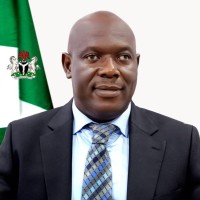
The Hydrocarbon Pollution Remediation Project (HYPREP) has commemorated the 15th anniversary of the release of the United Nations Environment Programme (UNEP) Environmental Assessment Report on Ogoniland, reaffirming its commitment to restoring the environment and improving the livelihoods of affected communities.
In a statement signed by the Project Coordinator, Prof Nenibarini Zabbey, to commemorate the anniversary, HYPREP described the anniversary as a significant milestone in Nigeria’s environmental restoration efforts, noting that the project has made remarkable progress in implementing the recommendations of the landmark UNEP report released on August 4, 2011.
The UNEP report had revealed extensive oil pollution across Ogoniland, severe environmental degradation, and serious public health risks resulting from decades of petroleum operations. It also recommended an initial $1 billion fund to commence the cleanup of the affected communities.
According to HYPREP, the Federal Government formally launched the Ogoni clean-up in 2016, while the Project Coordination Office was established in 2017 to drive the implementation of UNEP’s recommendations.
Zabbey said the current administration has continued to prioritise the project under the Renewed Hope Agenda.
Providing an update on the cleanup, the Project Coordinator disclosed that 30 of the 65 contaminated sites identified by UNEP have been fully remediated, while work is ongoing at several medium- and high-risk locations. It also stated that more than 1.5 million mangrove seedlings have been planted as part of what it described as the world’s largest restoration of oil-degraded mangroves, with over 1,000 hectares of shoreline already rehabilitated.
Zabbey further revealed that 49 Ogoni communities have been connected to potable water schemes through multiple water projects and booster stations aimed at providing safe drinking water across the region.
In the health sector, he said the 100-bed Ogoni Specialist Hospital in Kpite and the 43-bed Cottage Hospital in Buan are nearing completion, adding that several existing health facilities have been upgraded with modern medical equipment, while five ambulances have been donated to improve emergency healthcare services. The Project Coordinator also disclosed that a three-year human health biomonitoring study is being conducted in collaboration with the World Health Organization’s International Agency for Research on Cancer (IARC).
On economic empowerment, Zabbey stated that the Project has created more than 8,000 direct jobs and trained thousands of Ogoni youths and women in various vocational and technical skills, including software development, cybersecurity, aviation, commercial diving, seafaring, mechatronics, and creative arts. The project also reported awarding scholarships to more than 1,000 students, providing grants to small businesses, and supporting persons living with special needs through skills acquisition programmes.
The statement further highlighted ongoing legacy projects, including the Ogoni Power Project and the Centre of Excellence for Environmental Restoration, which it said is about 96 per cent complete. HYPREP also welcomed the recent designation of the Ogoni Wetland as a Ramsar Site of International Importance and pledged to continue promoting biodiversity conservation and sustainable management of the ecosystem.
Marking the anniversary, Zabbey said the progress achieved over the past 15 years demonstrates the collective commitment of government, development partners, stakeholders, and local communities to restoring Ogoniland. He called for renewed collaboration to sustain the cleanup effort, promote environmental sustainability, and support the long-term development of the region. 3
-

 News2 days ago
RSG Targets Nine Million Residents in Mosquito Net Distribution Campaign
-

 Oil & Energy2 days ago
Aiyedatiwa Signs New Electricity Bill
-

 Maritime2 days ago
Marine Minister Commends President Tinubu On NPERA Bill Assent
-

 Oil & Energy2 days ago
NLNG Commissions Research And Innovation Centre In RSU
-

 News2 days ago
KenPoly Holds Eight Convocations, August 29
-

 News2 days ago
RSG Begins Another Phase of Projects Commissioning Today
-

 News2 days ago
RMAFC Completes Revenue Sharing Review, Proposes New Pay
-

 Maritime2 days ago
NAGAFF Petitions IGP Over Alleged Maritime Police Harassment