
Featured
11 Govs Storm PDP Confab ’Morrow – As Rivers Delegates Back Secondus For Chairman

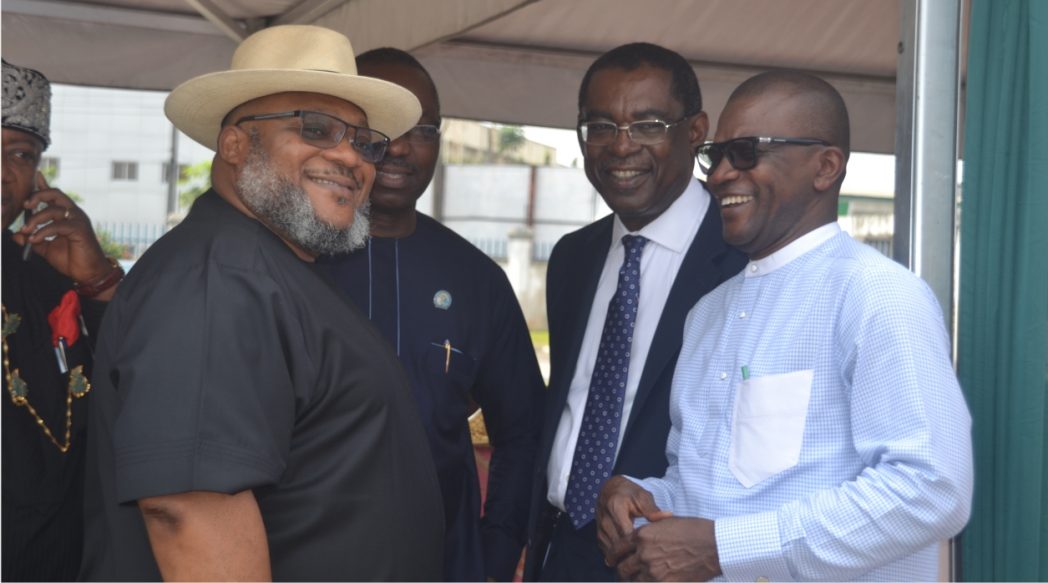
Less than 24 hours to the national convention of the Peoples Democratic Party (PDP), the Chairman of the organising committee for the event, Dr. Ifeanyi Okowa saysd everything has been put in place to ensure a successful outing.
Speaking to a cross section of journalists at the Wadata Plaza, National Secretariat of the PDP in Abuja, yesterday, Okowa, who is also the Governor of Delta State, said after the committee meetings that lasted more than four hours, the committees for the event have submitted their reports, assuring that all was set for the convention.
According to the governor, “We are not having challenges as it concerns the convention, we are working to ensure that everything is set, today, we took committee reports, and I can tell you that everything is going on smoothly.”
Asked specifically if paucity of funds will not affect the convention, Okowa said, “We don’t have too much fund, we don’t need too much fund but, we have enough to take care of the convention.
“Everything is set for us to have a successful convention on Saturday,” the governor emphasized.
At the PDP secretariat, many PDP chieftains were seen going in and out of the secretariat with business picking up in the area.
Ninety-two aspirants have signified their intention to run for 23 offices in the Saturday’s national convention of the Peoples Democratic Party.
Some of the offices to be contested are national chairman, deputy national chairman (South), deputy national chairman (North), secretary, deputy national secretary, national legal adviser, deputy national legal adviser, national organising secretary, national youth leader, and national publicity secretary.
A list of the aspirants obtained by one of our correspondents in Abuja yesterday night showed that nine of the aspirants were running for the office of the national chairman.
The aspirants are Uche Secondus, Gbenga Daniel, Jimi Agbaje, Rashidi Ladoja, Taoheed Adedoja, Tunde Adeniran, Olabode George, Raymond Dokpesi and Aderemi Olusegun.
Ninety-two aspirants have signified their intention to run for 23 offices in the Saturday’s national convention of the Peoples Democratic Party.
A list of the aspirants obtained by our correspondents in Abuja yesterday night showed that nine of the aspirants were running for the office of the national chairman.
The aspirants are Uche Secondus, Gbenga Daniel, Jimi Agbaje, Rashidi Ladoja, Taoheed Adedoja, Tunde Adeniran, Olabode George, Raymond Dokpesi and Aderemi Olusegun.
All the chairmanship aspirants had been screened by a screening panel headed by a former governorship candidate of the party in Edo State, Mr. Osagie Ize-Iyamu.
The screening took place at the Presidential Campaign office of the party, popularly known as Legacy Building, which is located at Maitama District in Abuja.
Seven out of the nine aspirants are from the South-West. Secondus and Dokpesi are from the South-South.
There were surprises on the list of those competing for the position of Deputy National Chairman (South), as some names from the South-West featured prominently on the list.
They are a former Deputy Governor of Oyo State, Alhaji Hazeem Gbolarumi, and a former Minister of Solid Minerals, Chief Sarafa Isola.
Also in the race for the office of the deputy national chairman are Yemi Akinwonmi, Adisa Oladapo and Sterling Ellis
Six candidates are vying for the position of the deputy national chairman (North).
They are a former Minister of Women Affairs, Hajia Inna Ciroma; Alhaji Musa Usman, Nuhu Poloma, Senator Babayo Garmawa, Bala Ilela and Abdulmalik Mahmud.
Aspirants for the position of NPS are a former Minister of National Planning, Prof. Abubakar Suleiman; Faruk Adejoh-Audu, Mohammed Usman, Kola Ologbodiyan and Ben Duntoye.
Only three people are however vying for the position of National Organising Secretary.
They are Emeka Donald, Godwin Duru and Austin Akobundu.
Meanwhile, 11 governors elected on the platform of the party are said to be angry with the reported move of a former military dictator, Gen. Ibrahim Babangida, to impose his front as the chairman of the party.
Babangida, who is being accused of contributing nothing to the party when it was in crisis, is alleged to be attempting to impose a candidate on the party as its national chairman.
A governor, who spoke on condition of anonymity, said rather than help in building the party, Babangida had been holding clandestine meetings aimed at disorganising the party.
The source said, “He wants to impose someone on the party because he has a candidate for the presidential slot of the party in 2019. We won’t agree to that.
“He has not identified with us. We didn’t see him during our trying times and all that. Now, because he has seen that there is a prospect for the party in 2019, he wants to plant his stooge here. It will fail.”
A former National Publicity Secretary of the party, Chief Olisa Metuh, who arrived at the party’s national secretariat with some PDP stakeholders in Anambra State, alleged that the list of delegates, sent from the state, had been fraudulently altered.
They accused a national officer of the party of being the brains behind the action and specifically urged the national leadership of the PDP to be wary of the said fake list by rejecting it.
The stakeholders made their position known in a communique at the end of a meeting on Wednesday night in Abuja, which they submitted to the Chairman of the PDP National Caretaker Committee, Senator Ahmed Makarfi.
Signatories to the communique include Metuh, Chris Ubah and Okey Ezenwa.
Another group of protesters equally submitted a petition to the national caretaker committee asking it to disqualify one of the aspirants for the position of the NOS.
The petition, which was signed by Onyebuchi Nwosu, alleged that the aspirant had engaged in acts of misappropriation and misconduct in running the party affairs in the past.
Meanwhile, at a press briefing in Abuja, Adeniran declared that he was satisfied with responses to his petitions ahead of the convention, adding that he was ready for the convention.
Speaking through the director-general of his campaign organisation, Shehu Gabam, Adeniran said the governors elected on the platform of the party had agreed that the election would be transparent.
“We don’t have much to complain about. Most issues have been taken care of. We raised issues on the chairmanship of the electoral committee and the party responded. We now want to allow everything to lie,” he said.
Ahead of Saturday’s national convention of the Peoples Democratic Party, the Senator representing Ogun East Senatorial District in the National Assembly, Buruji Kashamu, has called on delegates, leaders and stakeholders of the party not to elect any aspirants undergoing corruption trial.
He said the delegates should discard anyone being tried for corruption by the Economic and Financial Crimes Commission, stressing that the anti-corruption agency was also planning to re-arrest some aspirants accused of corruption.
In a statement in Abuja on Thursday, Kashamu said, “While it is true that an accused person is presumed innocent until proven guilty, our great party cannot afford to close its eyes to this potential threat.
“It is a no-brainer that if a national chairman with a corruption case is elected, the party will literally be put on trial with him.
“This is one avoidable risk that is too much to take. You can be sure that a corruption trial of the national chairman of an opposition party will come with a lot of bad publicity that will sound the death knell for the party.”
Kashamu urged the delegates and stakeholders, especially those from the South-East, to support the quest of the South-West to produce the national chairman in the interest of equity and justice.
While calling on the South-East to learn from the Northern Elders Forum in supporting the South-West in its aspiration, Kashamu said, “Our brothers and sisters from the South-East need to be categorical now in support of the South-West on the ongoing national chairmanship tussle between the South-West and the South-South.
“The implication of this avoidable tussle is to make uncertain the settled South-East vice-presidential quest in 2019. If the South-East expectedly takes a principled stance in support of the South-West, naturally as a reliable race in adhering to agreements, the Yoruba people will reciprocate without any prompting.
“What is currently happening is glaringly an orchestrated assault on the South-West to end up with nothing in 2019, just like we did when our party was in power. This is a dangerously illogical political permutation for 2019 national elections.”
Although the lawmaker acknowledged the right of others to seek election, he was of the view that it should not be done at the expense of established norms and agreements.
“It was because of this that the other positions zoned to the South-West are innocuous deputies to substantive offices except the National Treasurer.
“All these are because the vital national chairmanship had already been conceded to the South-West.’’
A former President of the Senate, Senator David Mark, has told delegates to the Saturday’s PDP elective national convention to allow the will of the people to prevail and restore the dignity of the party.
Mark, in a message to the delegates, urged them to shun imposition of candidates and impunity, which he said, ruined the chances of the party in the previous elections.
“I am sure we have learnt some useful lessons from our electoral misfortune in 2015. We now have the opportunity to right the wrongs of the past by allowing the will of the people to prevail at the convention.”
Meanwhile, the Rivers State Chapter of the Peoples Democratic Party (PDP) has endorsed Prince Uche Secondus as the new national chairman of the party ahead of tomorrow’s National Convention of the party in Abuja.
The state Chairman, Bro. Felix Obuah, announced the endorsement, last Wednesday, during a press briefing in the state capital, Port Harcourt.
He described Secondus as the best among the candidates, saying that he has all it takes to return PDP to power at the centre in 2019.
Obuah said: “As you are aware, our great party, the Peoples Democratic Party, the largest of its kind in the whole of the African continent will again, be making history as it convenes in Abuja, the Federal Capital Territory (FCT) for its National Convention on Saturday, December 9, 2017.
“The journey to this point, as you are all aware, has been tortuous, but interestingly, we were able to surmount all the challenges, winning our opponents and detractors roundly up to the apex court of the country, the Supreme Court.
“We’ll ever remain grateful for a strong, virile and fearless judiciary that despite all manner of political undercurrents that threatened to sway it from the path of justice, not only insisted on the truth, but also saw to it that justice was done.
“This is a victory for our democracy, and we will continue to salute its courage as well as the efforts of you, the gentlemen of the press, that painstakingly followed and reported the struggle and legal proceedings to the very end.
“It is all these efforts that facilitated this great National Convention due on Saturday during which our great party hopes to choose, most democratically, leaders that will pilot its affairs, tested and impeccable men and women from across the length and breadth of this nation that have the intellectual capacity, political dexterity and administrative ingenuity to redirect and lead our party to victory come 2019.
“The need for this is self explanatory. Our dear nation is currently in a state of social decadence, economic strangulation and political quagmire for the singular reason that those presently in charge of her affairs are a bunch of incompetent, visionless and self-seeking people who do not have what it takes to lead a great nation and a great people like Nigeria.
“Consequently, the PDP is poised and more prepared than it has ever been to take power back from the All Progressives Congress (APC), and redirect the country on the path of progress, development, economic recovery and social justice for all Nigerians irrespective of tribe, party affiliations, religion or creed, etc.
“To achieve this great feat, we of the Rivers State chapter of the PDP have resolved to ensure that only men and women who have the intellect, the acumen, the leadership qualities, tested technocrats and most importantly, honest and God-fearing people are elected as its new executive that will deliver and lead the party to victory come 2019 so that Nigerians will once again be happy in the midst of God-given abundant resources.
“In this regard, we are pleased to inform you that the PDP has fairly and democratically zoned its national offices according to geo-political zones.
“Here, in the whole of the Southern part, we are to produce the national chairman.
“Unlike other zones, ours is easy because we are lucky to have as one of our own, a tested and seasoned personality, with the requisite experience not only to occupy the office of the National chairman but also capable of carrying out the onerous tasks with relative ease and satisfaction.
“He is a pioneer member of the PDP, has served in different capacities including a onetime state chairman, national organizing secretary, deputy national chairman, acting national chairman and a member of BOT, among others.
“He is no other than our very own, Prince Uche Secondus. He needs no introduction to you. For want of a better language, he is a bulldozer whose contributions to the victories recorded by the PDP in the state and at the national level can hardly be quantified.
“We are solidly behind him and those in his camp because Nigerians need him, the PDP needs him, and the nation’s democracy also needs him, if it must endure to redeem the dying Nigerian people.
“We are, therefore, calling on our supporters and members in the state and across the country to see beyond their nose and rise above primordial sentiments; political manoeuvring, and vote for Prince Uche Secondus for PDP National Chairman come Saturday, December 9, 2017.
“We believe in him, we trust in him, we are for him. The voice of the people is the voice of God’, Obuah added



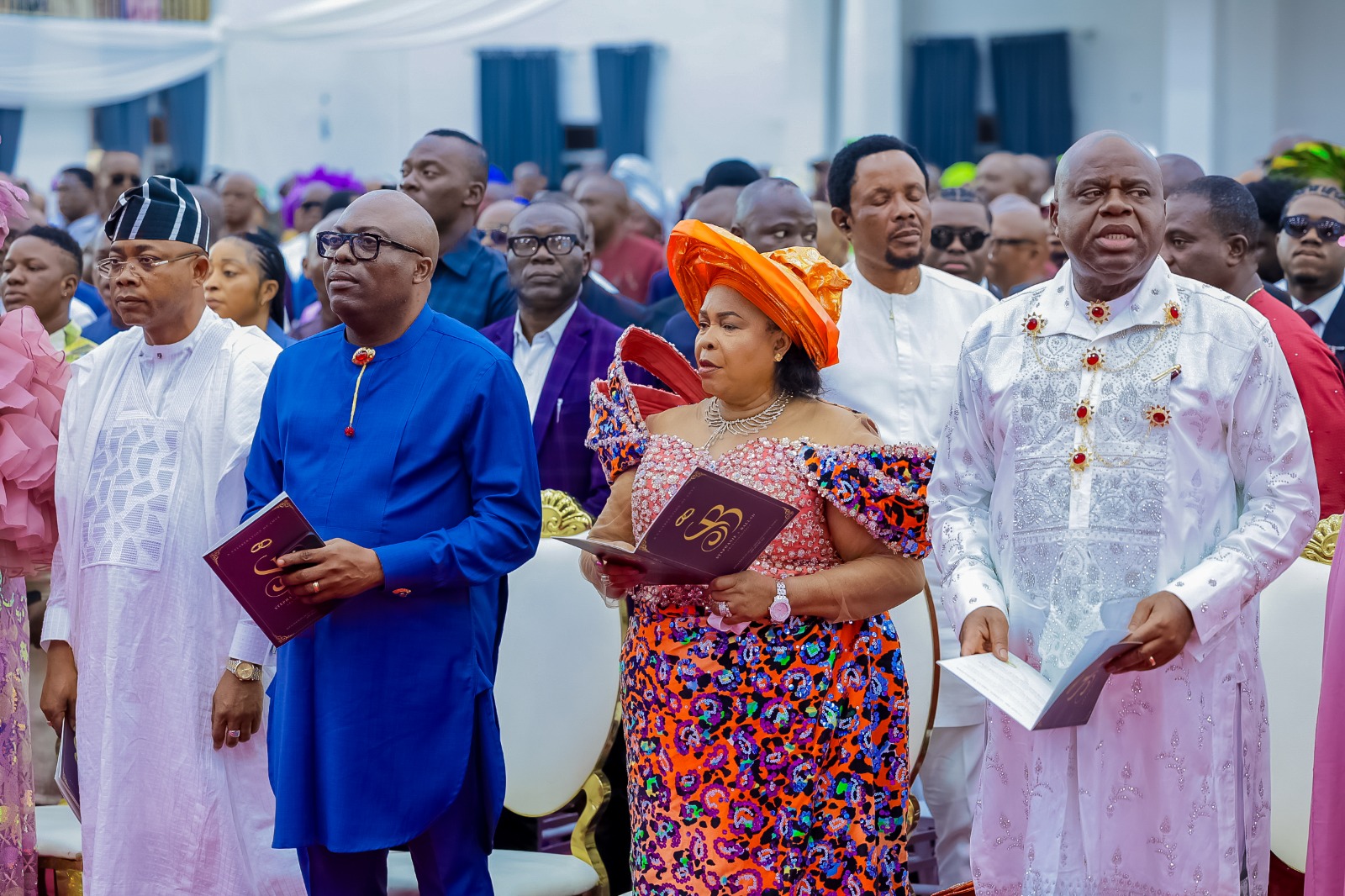
Rivers State, Sir Siminalayi Fubara, has assured members of the National Youth Service Corps (NYSC) of his administration’s commitment to supporting and strengthening the scheme in the State.
Fubara gave the assurance last Friday at the NYSC permanent orientation camp, Nonwa-Gbam, Tai Local Government Area in the State, during the swearing-in ceremony of 2026 Batch B Stream II orientation course.
Represented by the Permanent Secretary, Cabinet Bureau, Office of the Secretary to the State Government, Dr. Promise Oguzie, the governor said the State Government would remain intentional in providing the necessary support to improve the NYSC scheme and enhance the experiences of corps members deployed to the state.
He charged the corps members to be role models and quality nation-builders in their service to the good people of Rivers State in particular, and Nigeria at large.
“I charge you to be exemplary, dedicated and committed in all you do. Take full advantage of all the camp programmes and activities to enrich yourselves”, he said.
In his welcome address, the State Coordinator of NYSC in Rivers State, Mr. Moses Oleghe, urged corps members to see their deployment to Rivers State as a “veritable opportunity to make meaningful contribution to the growth of the State in particular and Nigeria at large.”
He further charged them to serve with all sense of “integrity, discipline, and the fear of God, especially when they will be engaged as INEC ad-hoc staff that will conduct the 2027 general elections.”
A total of 3,584 corps members composed of 1,421 males and 2,163 females were sworn in by the Chief Judge of Rivers State, who was represented by Justice Godspower Aguma.

Governor of Rivers State, Sir Siminalayi Fubara, says Nigeria needs God-fearing leaders for the nation to move in the right direction and make meaningful progress.
The Governor stated this yesterday when he received in audience, the World President of the Seventh Day Adventist Church, Pastor Erton Kohler; his wife, Andriene Marques Kohler; daughter Mariana Marques Kohler and a retinue of ministers of the church at Government House, Port Harcourt.
Fubara who hailed the Seventh Day Adventist Church for its contributions to education and the grooming of future leaders in Nigeria, expressed delight that the Church had over the years, been investing in education at various levels and currently runs two universities in the country.
He commended the church for not only using its institutions to spread the gospel of Christianity but to groom future leaders for the country.
According to him, religion should not be just about defending one’s faith, but also making meaningful impact on the lives of the people.
He said that by floating these educational institutions, the church has demonstrated capacity to support Nigeria in the task of producing not only educated people but a breed of God-fearing leaders.
“Our country is where it is today because we lack the fear of God. If you have the fear of God, there should be a limit to what you can do because you understand the supremacy of God. But when God is not in your equation, you’ll go beyond the line and that is what has brought us to where we are today.
“So, I feel very happy that you are contributing to the development of our future leaders in this country. We need the right people being in the right place; prepared properly with good minds; that is what we need, not just in Nigeria but round the whole world.,” he said.
Governor Fubara further observed that the absence of God-fearing people in high places to take the right decisions that could impact positively on the society, has also given rise to other problems such as social inequality, poverty, corruption and criminality. According to him, Nigeria needs a system where the average parent could afford quality education for their children and a guarantee that upon graduation, the average child will have the capacity to compete favourably with anybody, anywhere in the world.
“If we have a situation where the little money that you’re being paid as wage can also afford you quality healthcare and after working at least for 15-20 years, you have a roof over your head, tell me why you should be involved in any kind of crime? At that point, you’ll feel secured and this attitude of insecurity about the future that leads to all the social vices we have today won’t be there,” he said.
Governor Fubara expressed appreciation to the delegation for the visit and for their prayers for Rivers State, assuring them of his continued support for their programmes in the state.
Leader of the delegation and World President of the Seventh Day Adventist Church, Pastor Erton Kohler said he was in Nigeria for a special conference of the church during which thousands of the church’s ministers will be undergoing an empowerment programme to further equip them for the task of herding their flocks and serving the society.
He expressed gratitude to the Governor for the warm reception accorded his entourage, saying the memory of the visit will linger in his mind for a lifetime.
Kohler disclosed that the Church has over twenty -four million (24,000,000) members and more than 182,000 places of worship, spread across 212 countries of the world.

The Rivers State House of Assembly has approved the 2026–2028 Medium Term Expenditure Framework (MTEF) submitted by Governor Siminalayi Fubara.
This reaffirms the lawmakers’ commitment to enacting laws and taking legislative actions geared towards the overall development of the State.
The Assembly gave the approval during its Second Legislative Sitting of the Fourth Session held last Friday.
Speaking on the MTEF document during plenary, the House Speaker, Rt. Hon. Martin Amaewhule, noted that by the provision of Section 10(1)(b) of the Rivers State Fiscal Responsibility Law No. 8 of 2010, the MTEF ought to have been laid before the House in September 2025.
Amaewhule explained that traditionally, the document is expected to be presented four months before the commencement of the next financial year and immediately after the expiration of every three-year fiscal cycle.
He, however, stated that in the interest of the State and its people, the House considered it necessary to deliberate on the document, describing it as a precursor to the 2026 Budget Estimates.
The Speaker expressed concern that the year had already progressed significantly before the presentation of the framework.
During deliberations on the document, members examined the assumptions and projections contained in the MTEF and observed that strict adherence to the outlined fiscal parameters would ultimately serve the interest of Rivers people.
The lawmakers maintained that effective implementation of the framework would promote prudent financial management and enhance developmental planning across the State.
Following the debate and positive consideration by members, the Speaker put the question to the House and members voted overwhelmingly in support of the approval of the MTEF.
Meanwhile, during the same sitting last Friday, the House also received a petition from the Chairman of Obio/Akpor Local Government Council, Dr. Gift Worlu.
The petition was presented by the member representing Obio/Akpor Constituency II, Hon. Emilia Amadi.
According to the petition, concerns were raised over an imminent security breach, threats to lives, destruction of property and alleged forceful takeover of property by some lawless persons within parts of the Local Government Area.
Presenting the petition before the House, Hon. Amadi appealed to the lawmakers to revisit the matter and take necessary steps aimed at safeguarding lives and property in the affected communities.
The House is expected to further deliberate on the petition and consider measures to address the concerns raised in order to sustain peace and security in the area.
King Onunwor
-

 News2 days ago
RSG Targets Nine Million Residents in Mosquito Net Distribution Campaign
-

 Oil & Energy2 days ago
Aiyedatiwa Signs New Electricity Bill
-

 Oil & Energy2 days ago
NLNG Commissions Research And Innovation Centre In RSU
-

 Maritime2 days ago
Marine Minister Commends President Tinubu On NPERA Bill Assent
-

 News2 days ago
KenPoly Holds Eight Convocations, August 29
-

 News2 days ago
RSG Begins Another Phase of Projects Commissioning Today
-

 News2 days ago
RMAFC Completes Revenue Sharing Review, Proposes New Pay
-

 Maritime2 days ago
NAGAFF Petitions IGP Over Alleged Maritime Police Harassment