
News
NLNG Funds, Not For Salaries -Ahmed

Kwara State Governor, Dr Abdulfatah Ahmed, has said that the Federal Government had not given money to any state government to pay backlog of workers’ salaries.
Ahmed made the clarification on Thursday during a live radio programme, “Governor explains” of Kwara State Broadcasting Corporation, in Ilorin.
He said that what Kwara got from the Federal Government was its share of dividend from Nigerian Liquified and Natural Gas (NLNG).
He said this money that ought to have been shared during the tenure of former President Goodluck Jonathan was only released by President Muhammadu Buhari at a meeting with the governors.
Ahmed said that contrary to claim in some quarters, the Federal Government would not give money to any state to pay workers’ salaries.
He disclosed that Kwara received N2.1 billion from the NLNG funds while the 16 local government councils in the state received N1.4 billion.
He said that the ‘’NLNG dividend’’ was not supposed to be used to pay salary, but should be kept to augment federal allocations to meet government’s obligations to the people.
“But in Kwara State, we used part of the money to pay workers’ salaries, especially as the Sallah celebration was drawing nearer,’’ he said.
The governor said that during the meeting, three crucial issues were discussed with the president which included refund of money spent on federal roads in the state.
He said the governors also discussed sharing of all monies accruing to the federation account and bailout on the payment of existing loans taken by the state governments.
According to him, virtually all states in the country have incurred a lot of debt through bonds and bank loans.
This, he said, had really affected allocations coming to the states as loan repayments were deducted at source.
Ahmed explained that the Federal Government only offered to take over all loans taken by the states, adding that Buhari did not give them money as bailout.
According to him, the Federal Government decided to take over the loans to allow state governments to have more money for salaries and other projects.
He said that instead of paying back the loan in four years, it had been spread over 20 years, to give the state governments temporary respite.
“State Governments will now have to pay less on the loan monthly, and have enough fund to pay workers’ salaries and execute other projects,” he added.
The governor reiterated his administration’s commitment not to retrench any worker in the state even as the state planned to introduce new internal revenue generation system.
He also assured the people of the state that government would not introduce any new form of taxation, adding that what the government wanted from the people was total compliance to the new system.



The Socio-Economic Rights and Accountability Project (SERAP) has sued the Federal Government at the ECOWAS Community Court of Justice over alleged diversion, irregular expenditure and failure to account for N78.8bn allocated to cash-transfer and social-protection programmes.
SERAP, in a statement released by its Deputy Director, Kolawole Oluwadare, yesterday, said the allegations involved the Ministry of Humanitarian Affairs and Poverty Reduction, the National Cash Transfer Office and the National Social Safety Nets Coordinating Office.
The allegations were documented in the Auditor-General of the Federation’s 2024 Annual Report, published on August 7, 2026.
According to the report, the findings covered various periods between January 2023 and December 31, 2024.
In the suit, marked ECW/CCJ/APP/42/26 and filed last week, SERAP is seeking a declaration that the government’s failure to account for the funds violates Nigeria’s international human rights obligations.
The organisation is also asking the court to order the government to provide a comprehensive account of the questioned funds, investigate the alleged irregularities, recover any money improperly spent or diverted where established, and strengthen financial oversight of social-protection programmes.
SERAP argued that the alleged financial irregularities could undermine the rights of vulnerable Nigerians to social security and an adequate standard of living, including access to food, clothing and housing.
The statement party read, “The funds were intended to benefit over 3.2 million households across 35 states, whose access to financial assistance has been affected by the allegations made by the Auditor-General.”
The suit, filed by SERAP’s lawyers, Kolawole Oluwadare and Kehinde Oyewumi, stated that the government’s failure to investigate the allegations and recover any improperly spent funds violated its obligations to protect vulnerable households.
“The failure to investigate the N78.8 billion cash-transfer scandal, account for the questioned funds and recover any unlawfully spent amounts violates Nigeria’s obligations to protect the human rights of vulnerable households,” the suit partly read.
The organisation said it instituted the case to protect affected households and ensure accountability for public funds allocated for their benefit.
“SERAP brings this public-interest case to protect the interests of affected households and ensure accountability for public funds allocated for their benefit,” it stated.
The organisation maintained that cash-transfer programmes could help address extreme poverty and enable vulnerable people to meet their basic needs, but argued that the government had a duty to ensure the funds were properly managed.
“The right to social security cannot be effectively realised merely by establishing a formal cash-transfer programme where the State fails to maintain reasonable systems for identifying beneficiaries, maintaining records, reconciling disbursements, monitoring expenditure, investigating irregularities and remedying losses,” the statement further stated.
According to SERAP, the Auditor-General questioned approximately N33.751bn reportedly transferred to more than 3.2 million households across 35 states in 2023, noting that adequate records to verify the payments and reconcile beneficiary records were not provided.
The report also identified N36.744bn in payments allegedly made without prepayment audits, N4.616bn in unsupported expenditures, N350.182m for enrolment, N89.511m for store purchases and N17.422m in diesel advances.
SERAP said the suit was brought under Article 9(4) of the ECOWAS Court Protocol to protect affected households and ensure accountability for public funds intended for social protection.
“The issue is whether the government has discharged its obligations under applicable human-rights treaties to safeguard resources allocated for social protection, investigate documented financial irregularities, provide effective remedies and ensure that those resources are applied for their intended purposes,” it stated.
The organisation also cited the constitutional responsibility of the Auditor-General to audit and report on the public accounts of the Federation and the offices and agencies of the Federal Government, describing the findings in the annual report as important official records of public expenditure.
It relied on Articles 1 and 2 of the African Charter on Human and Peoples’ Rights, arguing that the government had obligations to give effect to protected rights and ensure that failures in administering social-protection programmes did not result in discriminatory exclusion or unequal access to benefits.
“The Nigerian government has the obligation to take effective measures to prevent and address corruption and related misuse of public resources. The government has failed to take appropriate measures in response to the allegations made by the Auditor-General”, the statement added.
SERAP said it had previously urged President Bola Tinubu and relevant authorities to account for the questioned funds, publish audit records, investigate irregular expenditures, recover any funds unlawfully spent or diverted and take appropriate action against those responsible.
Following the publication of the Auditor-General’s report, the organisation issued a public statement and sent a letter dated September 5, 2026, requesting action on the findings. It also sought payment and beneficiary records, verification documents and an explanation for the missing REMITA records.
“The deadline given to the government to address the Auditor-General’s findings had elapsed without adequate action,” it stated.
The organisation further cited Articles 1 and 21 of the African Charter, alongside Article 9 of the United Nations Convention against Corruption, as requiring effective measures to protect rights and resources, promote transparent public financial management, investigate irregularities and recover public funds where losses or improper expenditure were established.
SERAP also relied on the works of legal scholar Kolawole Olaniyan, including Corruption and Human Rights Law in Africa, published by Hart Publishing in 2014, and Ownership of Proceeds of Corruption in International Law, published by Oxford University Press in 2023. It said the publications provided persuasive academic authority on corruption’s effects on human rights, public resources, accountability and international legal remedies.
“SERAP accordingly submits that the Auditor-General’s findings cannot be treated merely as administrative irregularities where public funds allocated for social protection may have been lost, improperly spent or left unaccounted for, and the government fails to take effective corrective action,” the statement added.
SERAP is asking the court to direct the government to conduct an independent, prompt and effective investigation into the identified irregularities, recover public funds improperly spent, diverted or lost where established, and take appropriate legal or administrative action against those found responsible, in accordance with due process.
It also wants the government to strengthen financial accountability, beneficiary verification, auditing, reconciliation and oversight mechanisms to prevent a recurrence of the alleged irregularities and ensure that eligible vulnerable households receive their intended benefits.
The organisation is further seeking an order restraining the government from administering or disbursing cash-transfer and social-protection funds without adequate accountability and oversight mechanisms, as well as appropriate remedies for any established adverse effects on beneficiaries’ protected rights.
No date has, however, been fixed for the hearing of the suit.
The Federal Government has released N38.93bn to 166 public tertiary institutions nationwide under the Needs Assessment Revitalisation Fund to address infrastructure deficits and improve teaching and learning facilities.
The intervention covers 79 universities, 46 polytechnics and 41 colleges of education, with universities receiving the largest share of the allocation.
The Federal Ministry of Finance disclosed this in a statement issued on Sunday by its Head of Media, Efe Ovuakporie, explaining that the funds would support approved projects in beneficiary institutions.
The statement read, “The Federal Government has disbursed N38.93bn to 166 public tertiary institutions nationwide under the Needs Assessment Revitalisation Fund.”
According to the ministry, the university component accounts for N28.5bn, while N5.8bn has been allocated to polytechnics and N4.7bn to colleges of education.
According to the ministry, the university component accounts for N28.5bn, while N5.8bn has been allocated to polytechnics and N4.7bn to colleges of education.
An analysis of the allocations by PUNCH Online showed that universities would receive approximately 73.2 per cent of the announced N38.93bn intervention, making them the largest beneficiaries.
Polytechnics would account for about 14.9 per cent, while colleges of education would receive approximately 12.1 per cent.
The ministry explained that the intervention was intended to address longstanding infrastructure challenges in public tertiary institutions and support the implementation of agreements reached between the Federal Government and the Academic Staff Union of Universities.
It stated, “The intervention forms part of the Federal Government’s efforts to address the needs of public universities and support the implementation of agreed measures under the Memorandum of Understanding between the Federal Government and the Academic Staff Union of Universities.”
The Needs Assessment Revitalisation Fund is designed to support improvements in institutional infrastructure and other identified needs, particularly in public universities, where inadequate facilities have remained a recurring concern in negotiations between the government and academic unions.
The ministry said the latest disbursement would enable beneficiary institutions to begin new projects or continue previously approved interventions aimed at improving their operational capacity.
“The funds are expected to enable beneficiary institutions to commence or advance approved projects addressing critical infrastructure and other identified institutional needs, with the overall objective of strengthening the quality of tertiary education in Nigeria,” it added.
The government also emphasised the need for coordination among the Federal Ministry of Finance, Federal Ministry of Education and beneficiary institutions to ensure that the released funds produced measurable improvements.
It noted that effective collaboration would be necessary to translate the financial intervention into improved infrastructure, institutional capacity and learning conditions.
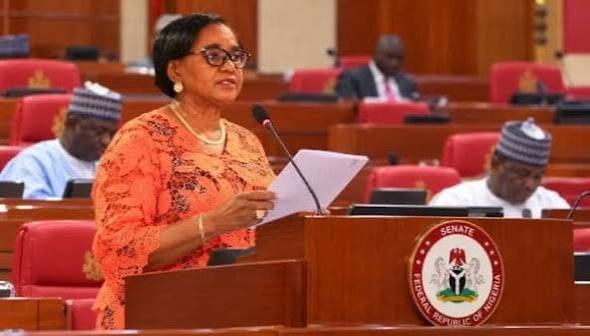
The bill to approve the establishment of the Federal University of Agriculture, Emughan, Abua-Odual Local Government Area of Rivers State has passed third reading.
The Bill, titled “A Bill for an Act to Amend the Federal Universities of Agriculture Act, Cap. F22, Laws of the Federation of Nigeria, 2024” was sponsored by Senator Ipalibo Harry Banigo representing Rivers West Senatorial District.
The bill seeks to amend the existing Federal Universities of Agriculture Act to provide for the establishment of the proposed institution in Emughan community in Rivers State.
The passage of the bill by the Senate marks a significant legislative milestone towards the establishment of the proposed university.
When established, the institution is expected to expand access to higher education, promote agricultural research and innovation, develop skilled manpower, and contribute to the economic growth of Rivers State and Nigeria at large.
According to a statement made available to The Tide, the bill, having passed the Third Reading in the Senate, will now proceed to the House of Representatives for concurrence as part of the legislative process towards its enactment into law.
The bill underscores Senator Banigo’s commitment to advancing educational opportunities and strengthening agricultural development in Rivers State.
By: Kevin Nengia
-

 Education1 day ago
FCE Yola Graduates 3,555 Teachers , Seeks Upgrade to University
-

 Sports1 day ago
Nigerian Trio Target Titles At PFL Africa Finals
-

 Niger Delta1 day ago
Diri Restates Stance On Lagos-Calabar Coastal Highway
-

 Niger Delta1 day ago
C’River, NUJ Pay Tribute To Late Guardian Editor
-

 News1 day ago
NDLEA Recovers Tons Of Illicit Drug Consignments In Nine States
-

 Opinion1 day ago
Checking Voter Apathy In Nigeria’s Electoral Process
-

 Politics1 day ago
2027: DICKSON’S EX-ALLY VOWS TO WORK AGAINST NDC INTEREST IN BAYELSA
-

 Politics1 day ago
2027: GROUP PLEDGES 40,000 SUPPORTERS FOR COALITION CANDIDATES IN RIVERS