Connect with us

Oil & Energy

Firm Restates Commitment To Communities

Published

on

The Managing Director
of Midwestern Oil and Gas Company, Mr Chrles Odita, has urged Nigerian youths to actualise every available opportunity to better their lives and become economically viable especially now that opportunities for white collar jobs were slimmer.
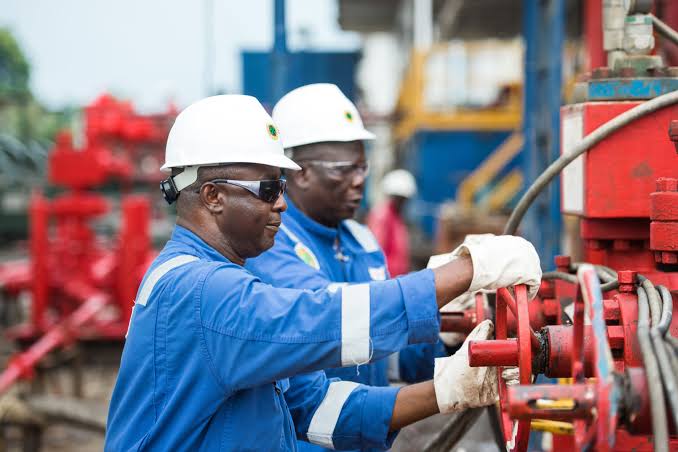
Odita gave the advice during the presentation of starter-packs to 26 youths who successfully completed the two-year skills acquisition training organised by the company as part of its Corporate Social Responsible (CSR) programme Saturday in Kwale, Ndokwa West local government area of Delta State.
He stressed the company’s commitment to the development of its host communities through establishment of functional infrastructure and human capacity development.
Several amenities provided by the indigenous oil company for the three host communities in the area, including two health centres and blocks of classrooms in some primary schools in the area were also commissioned.
The managing director who also chaired the starter-packs and merit award ceremony noted that Midwestern had embarked on the training scheme in order to afford unemployed but determined youths in its host communities the opportunity to be lifted out of poverty to another level.
He stressed the determination of the company to sustain the scheme and urged youths in the communities to remain peaceful and shun all forms of vices.
The managing director urged the youths to embrace skills acquisition and education.

Continue Reading

Oil & Energy

What’s Next for Global Natural Gas Demand?

Published

on

The Iran war and the lack of LNG supply from the Middle East have upended forecasts of near-term natural gas demand and import costs.
So far this year, economies in Europe and Asia have relied more on renewables and coal for power generation to offset reduced gas supplies procured at very high prices.
This year’s crisis has prompted governments to rethink energy policies with energy security the top priority, again, after the 2022-2023 energy crisis.
After the decline in global gas demand this year, due to prices at four-year highs, the obvious question for gas market participants is where demand is going after the current crisis ends. Has the second gas crisis in four years permanently undermined expectations of long-term gas demand growth?
Gas cannot be replaced in many industrial processes, yet. Electricity-generating systems in major economies that have relied on gas for power cannot have a reliable electricity supply without gas.
Still, this year and over the past four years, key gas markets in Europe and Asia have seen the share of gas in their electricity mix decline.
The UK, the Netherlands, and Turkey, and major Asian economies China, Japan, and South Korea, have all seen the share of gas-fired electricity drop, according to data from think tank Ember cited by Reuters columnist Gavin Maguire.
The spike in natural gas prices has accelerated Europe’s renewables rollout, which took off in earnest earlier this decade when Russia invaded Ukraine in 2022 and cut off pipeline gas supply to most of Europe. The share of renewables has surged in the EU and the UK in recent years, gradually sidelining gas as the reliable backup fuel rather than the one meeting growing electricity demand.
Globally, “Gas is losing its share in the global power mix as renewables increasingly meet rising electricity demand,” Ember said in a report earlier this year. The analysis found that the share of gas in the global power mix declined for the fifth consecutive year in 2025, despite a small rise in absolute gas generation. Strong growth in clean power, led by solar and wind, met around 68% of global electricity demand growth over the five years to 2025, reducing the need for a significant rise in gas power generation
Related: Mexico’s Richest Man Sells $1.15 Billion in Oil Stocks
According to Ember, 61 out of 124 economies generating electricity from gas had passed their gas generation peak.
However, these countries accounted for around one-fifth of global gas-fired electricity generation in 2025. So the large gas-generating economies, albeit a smaller group, haven’t seen their peak in gas power generation.
The biggest emerging economies, China, India, and Brazil, have actually met their surging electricity demand without turning to gas, Ember noted.
China’s gas share remained close to 3% of the electricity mix in 2025 despite rapid demand growth, while gas power generation in India and Brazil plays a more limited balancing role, the think tank said.
“The economics and energy security case for electricity are increasingly moving in the same direction,” said Malgorzata Wiatros-Motyka, ?Senior Electricity Analyst at Ember.
“As renewables lower costs and reduce exposure to fuel price shocks and geopolitical disruptions, gas is steadily losing the advantages that once made it the default fuel for power system growth.”
The writing may have been on the wall for natural gas producers and exporters if natural gas was only used in power generation.
But natural gas key uses include as feedstock in industrial manufacturing, including cement and steel, as a chemical feedstock for fertilizer, or as the start of the supply chain of manufacturing plastics, paints, synthetic fabrics, and medicine, to name a few.
And then comes the biggest twist in energy and electricity demand forecasts in recent years—the AI boom. Data centers will drive a large part of the rise in global electricity demand, which has returned to growth even in the U.S. and Europe after a decade or so of flatlining. Renewable energy alone will not meet the surge in power demand, and gas will play a key role in America and in most of Asia, where many countries are positioning to become AI and data center hubs.
The biggest LNG producers, exporters, and traders see long-term gas demand growth intact despite this year’s supply shock that is reducing consumption amid spiking prices.
For example, Shell, the world’s biggest LNG trader, said in its annual LNG Outlook 2026 this summer that surging gas demand in South and Southeast Asia would push global LNG demand up by 65% by 2050 from 2025 levels, although growth this year has been stalled by the Strait of Hormuz crisis.
Shell sees global LNG demand increasing to nearly 700 million tons annually by 2050, up by around 65% from the 2025 levels of 422 million tons.
“The conflict created a system-wide shock with disruption cascading across all segments of the economy, but the LNG industry has proved resilient and able to adapt to changing market conditions,” Cederic Cremers, President of Integrated Gas at Shell, commented in the outlook.
“While more investment in both supply and demand infrastructure is needed, the long-term outlook remains strong and LNG will continue to be a stabilising force in the global energy system.”
The International Gas Union (IGU) said in its 2026 World LNG Report in July that “while LNG industry is not immune from the challenges of operating in an era of heightened geopolitical uncertainty, its unique ability to re-distribute large quantities of clean-burning energy from a broadening supply base only enhance LNG’s role as a ‘shock absorber’ to the global economy.”
By; Tsvetana Paraskova

Continue Reading

Oil & Energy

Seplat Discovers 19m Barrels of Oil, 157 Bcf of Gas In Imo

Published

on

Seplat Energy has made a new oil find in commercial quantities through its Aku-01 exploration in onshore Imo State under Oil Mining Lease (OML) 53.
The accidental discovery was not part of its original exploration programme, Seplat said in its latest unaudited earnings report on Thursday, adding that its preliminary estimates put the gas deposit at 157 bcf and the oil resource at 19 mmbbls.
“The well is currently being completed as a potential future production well, that will be tied-back to existing infrastructure, supporting early monetisation of the hydrocarbon resources,” Seplat stated.
“The discovery also de-risks four adjacent prospects,” it noted, adding that it expects to test one of the four prospects during the next exploration stage
Encouraged by this initial success, Seplat now looks to commence the second phase of exploration in the oilfield as early as next year, with five reservoir intervals already uncovered during the discovery.
Seplat holds a 40 per cent participating interest in OML 53, a stake it acquired from Chevron in 2015. NNPC Limited, its joint venture partner, owns the remaining shares.
The discovery comes as the federal plans to scale up oil production to 3 million barrels per day by 2030 from current production level of 1.72 million (including condensates) as the government steps up efforts to attract more foreign capital to the energy sector.
Africa’s largest crude producer has been pursuing a series of reforms, including deep offshore tax incentives, more transparent block licencing rounds and implementation of drill-or-drop policy, among others to achieve its oil output expansion.
According to the chief executive of the Nigerian Upstream Petroleum Regulatory Commission, Oritsemeyiwa Eyesan, the upstream regulator has granted approval to field development plans worth over $57 billion in the past two years to enable such projects to advance to final investment decisions.
Continue Reading

Oil & Energy

Remove Illegal Structures on  Right Of Way, Reps Warns Residents

Published

on

The House of Representatives has threatened to demolish churches, hotels, private residences and other structures illegally erected on the Federal Government rights of way designated for power transmission projects.
The house, while warning that continued encroachment and vandalism are putting billions of naira in public investments at risk insisted that it would take decisive action against illegal occupants of government land to prevent further delays to electricity infrastructure projects across the country.
The Chairman, House Committee on Public Assets, Kuye Ademorin, gave the warning during an inspection of the 132kV New Haven-Ninth Mile-Nsukka Double Circuit Transmission Line in Enugu State and the Egbu 330/132/33kV substation in Owerri, Imo State.
According to a statement issued by the General Manager, Corporate Communication and External Relations of the Niger Delta Power Holding Company, Nazo Agim, at the weekend, the committee discovered several buildings constructed along designated transmission routes, raising concerns about the safety and timely completion of the projects.
The statement said “The House of Representatives Committee on Public Assets has threatened to remove illegal structures erected on Federal Government rights of way for power transmission projects being executed by the Niger Delta Power Holding Company, warning that encroachment and vandalism are undermining investments in the power sector.”
The committee chairman expressed disappointment that individuals and institutions continued to erect structures on land reserved for critical national infrastructure, despite the existence of Federal Government rights-of-way.
He questioned how state authorities could approve buildings on such locations, warning that the developments were undermining efforts to expand electricity supply and support industrial growth.
“We observed the magnitude of investment by the Federal Government in building a sustainable power system for the country, particularly in our states, to help them develop their industrial base through adequate power supply.
“However, to our chagrin and disappointment, we saw a people who are not totally buying into the vision of a greater country for all of us,” Ademorin said.
He said the committee would work with relevant authorities to address the encroachment and protect public assets, adding that the National Assembly would not allow illegal occupation of government land to continue unchecked.
Ademorin urged the government to prioritise the completion of ongoing power infrastructure, ensure contractors received prompt payments and compensate landowners whose properties were acquired for public projects.
The lawmaker commended the quality of work at the Egbu substation, which the NDPHC said was about 85 per cent completed and expected to be delivered around March 2027.
The facility is projected to add approximately 250 megawatts
to electricity supply in Imo State and significantly improve power delivery to communities in the Orlu area.
The project, which was first awarded in 2006, has received renewed attention under the leadership of the NDPHC Managing Director and Chief Executive Officer, Jennifer Adighije.
Ademorin expressed optimism that its completion would improve electricity supply, stimulate industrial activities and create employment opportunities across the South-East.
By: Lady Godknows Ogbulu
Continue Reading

Trending