Environment
Flood Victims Want Probe Of N500m Fund

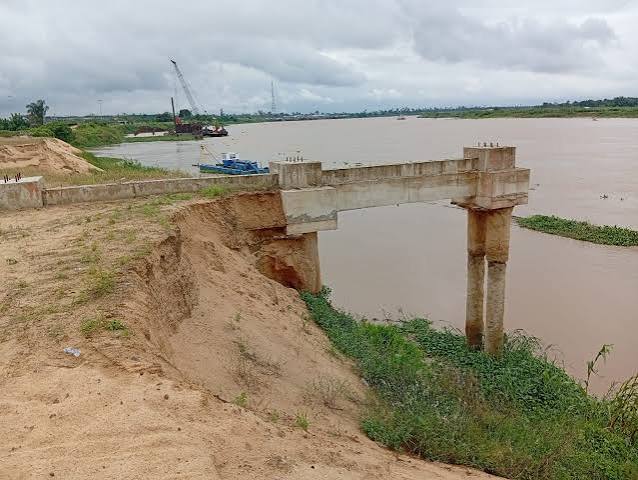
Victims of the 2012 flood disaster in Demsa Local Government Area of Adamawa on Tuesday called on the Federal Government to investigate the disbursement of the N500 million flood relief assistance given to the state.
A cross-section of the victims, who spoke with newsmen in the area, said that many of them had yet to receive any form of monetary assistance from the authorities while a few of them received between N200 and N240.
The victims said in Gindin-Kuka ward, one of the areas worst hit by the disaster, that the investigation was necessary in order to ensure accountability, justice and fairness in the management of the Federal Government intervention fund.
Mr Moses Ginam, one of the victims, said he only learnt about the N500 million in the media.
Gidam said he was told that N90, 000 was allocated to the flood victims in his area and that each victim was to receive N250.
“To be candid, I only heard that the Federal Government has released N500 million to Adamawa State Government on the pages of newspapers. We were told that we were given N93,000 and when you divide the money each household will get N240.
“The Federal Government should investigate this matter because the genuine victims were not the actual people benefiting from the Federal Government intervention.”
Another victim, Mr Francis Emmanuel, who also called for a probe, said that the affected people of his community in Mbula chiefdom had rejected the N1.5 million given to them because the amount could not go round.
“I went down to the village and I was told that they only sent about N1.8 million to the entire Mbula chiefdom and the people rejected it because if you are going to share this money to the people, each person will get just two hundred and something naira.
“Imagine somebody that lost his house, farm and you are giving the person just N200 to help himself or herself.
‘’The affected people decided to reject the assistance because they could not imagine what the N200 would do for them.’’
Mallam Abdullahi Gindin-Kuka, another victim, said he was asked to go and collect N240 from the ward head as assistance but he rejected the offer.
Commenting on how the N500 million was disbursed, the Secretary to Adamawa Government, Mr Kobis Thimnu, said the state government used the funds to purchase 60 trucks of fertiliser and improved seeds for distribution to farmers in the state.
Thimnu, who is also the chairman of Quick Response Committee in the state, said that the state government had decided to procure fertilisers and seeds with the money because most of the affected flood victims were farmers.
“You are aware that the state is an agrarian state and that is why we decided to give priority to food security by providing fertiliser and seedlings to farmers. ’’
He also said that cash was given to affected local governments based on the level of destruction, adding that Lamurde Local Government, being the area worst hit by the disaster, was given N29 million.
Thimnu said that the state government had set up committees in each of the affected local government areas to handle the disbursement of the N500 million Federal Government’s intervention fund.
The committees, he said, were chaired by commissioners from the affected local government areas.
It will be recalled that many lives were lost while property worth over N20 billion was reportedly destroyed during the 2012 flood disaster in the state.
The disaster has been described by experts as the worst in 40 years.



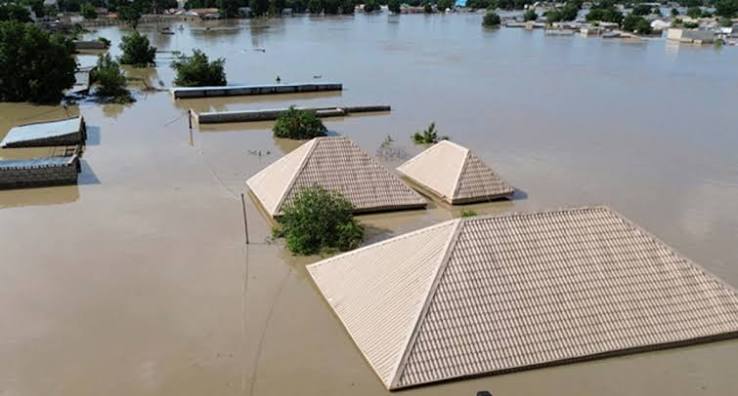
The Nigeria Hydrological Services Agency (NIHSA) has issued a seven-day flood advisory, warning of a medium flood risk in 17 states between July 21 and July 27.
The agency said the alert followed rising water levels at key river monitoring stations, increasing the likelihood of localised flooding along river channels and floodplains.
NIHSA Director-General, Umar Mohammed, disclosed this in National Flood Advisory (Alert No. NFA-2026-200) issued on Tuesday.
He said the affected states are Adamawa, Bauchi, Benue, Borno, Edo, Gombe, Imo, Jigawa, Kaduna, Kano, Kebbi, Nasarawa, Niger, Plateau, Taraba, Yobe and Zamfara.
According to Mohammed, river levels at Saminara on the Karam River, Waya Dam Site on the Waya River and Amber on the Amber River had exceeded watch and warning thresholds.
He said 16 gauging stations nationwide were recording elevated river stages, placing nearby communities at risk of localised flooding.
Mohammed urged state governments, local authorities and residents of flood-prone communities to take precautionary measures immediately.
NIHSA said Bauchi had the highest exposure, with 1,841 communities, 145 schools, 101 health facilities and eight markets identified as vulnerable.
The agency also identified vulnerable communities and public facilities in Edo, Imo, Kaduna, Plateau and Benue states.
Mohammed urged the National Emergency Management Agency (NEMA), State Emergency Management Agencies (SEMAs), local governments and community leaders to activate emergency response plans.
He recommended relocating residents, livestock and valuables from floodplains to safer locations
He also advised emergency agencies to pre-position food, medical supplies and water treatment materials in areas likely to be affected.
“The NIHSA boss called for community mobilisation through early warning volunteers and local communication channels to ensure timely dissemination of flood alerts.
He cautioned residents against walking, driving or riding through flooded roads, bridges and fast-flowing waterway.
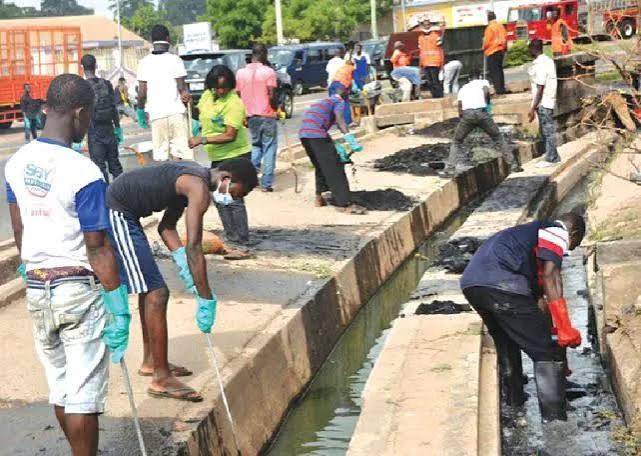
A cleaner environment begins with collective responsibility. That commitment was evident across Umuahia on Saturday as thousands of residents turned out to participate in the July monthly environmental sanitation exercise, with officials describing the compliance level as one of the most encouraging in recent months.
The impressive turnout has renewed hope that Abia’s campaign for a cleaner and healthier environment is steadily becoming a culture rather than a routine exercise.
The July monthly environmental sanitation exercise in Umuahia recorded about 80% compliance.
The Abia State Ministry of Environment described the turnout as a strong indication that residents are embracing Governor Alex Otti’s vision for a cleaner, healthier and more sustainable environment, while calling for the establishment of Neighbourhood Environmental Watch groups to sustain the momentum.
The Abia State Government has commended residents of Umuahia for their impressive participation in the July monthly environmental sanitation exercise, describing the turnout as a strong indication that citizens are embracing the state’s campaign for a cleaner and healthier environment.
Speaking after monitoring the exercise across major parts of the Umuahia metropolis, the Permanent Secretary, Abia State Ministry of Environment, Mr. Ikechukwu Oriuwa, expressed satisfaction with the level of compliance and urged residents to sustain the momentum.
According to him, the success recorded during the exercise reflects growing public support for the environmental agenda of the Labour Party-led administration.
“I think, so far, so good. At this point, what we need to do is sustain the momentum. We should move forward with establishing a Neighbourhood Environmental Watch so that residents can monitor compliance and ensure the initiative is sustained,” he said.
Mr. Oriuwa further applauded both residents and the organisers for the success of the exercise.
“Well, I must say I am very impressed. I appreciate the organisers for putting this programme together. It has been highly impressive, and I believe participants have learnt a great deal. From what I have observed so far, everything has been well organised, and I think they are doing an excellent job. I encourage them to keep up the good work because programmes like this are beneficial to everyone,” he added.
The Permanent Secretary stressed that environmental sanitation should become a daily culture rather than an activity observed only on designated sanitation days.
Drawing from an Igbo proverb, he explained why communities must collectively protect their environment.
“An Igbo proverb says that a goat owned by the public often goes hungry. That is why establishing a Neighbourhood Environmental Watch is important. It will encourage residents to take collective responsibility for keeping their surroundings clean and ensuring that sanitation efforts are sustained.”
He also urged government agencies to strengthen enforcement by deploying environmental health officers to carry out routine inspections and ensure compliance with sanitation laws.