
News
HOS Advises SPDC On Corporate Social Responsibility

The Management of Shell Petroleum Development Company (SPDC) has been called upon to fulfill its corporate social responsibility in its area of operation.
The Head of Service, Mrs. Esther Anucha, made the call at a one-day Relationship Building Workshop between SPDC and the Rivers State Civil Service held at the Presidential Hotel in Port Harcourt.
Mrs. Anucha decried the non-implementation of SPDC’s Corporate Social Responsibility, specially in the area of the employment policy, stipulating the recruitment of staff from Grade level 01-06 exclusively from indigenes of the community they operate, stressing that strict adherence to this policy would greatly reduce the high unemployment rate in the state as well as check youth restiveness.
She, however, commended the Management of SPDC for its cooperation with the state government in developing the state in the area of power generation and distribution and urged other oil companies in the State to emulate them.
The head of service who used the forum to explain the role of the civil service in governance, called on Shell to partner with the state civil service in its capacity building programmes in order to boost performance as well as sponsor some of its activities in the annual celebration of the Civil Service Week.
She lauded the state Governor, Rt. Hon. Chibuike Rotimi Amaechi, for his unprecedented development strides and for approving the workshop, expressing the hope that the outcome of the interface would enhance the relationship between SPDC and the State Civil Service.
Earlier in his welcome address, the Manager, Government and Community Relations, East of SPDC, Mr. California Fufeyin, said the workshop was organised to foster understanding and improve relationship between the company and the State Civil Service.
Mr. Fufeyin who also pre
In another development, brand new cars have been handed over to some permanent Secretaries and former members of the civil service commission who are yet to get official cars.
Presenting the keys to them in her office in Port Harcourt, the Head of Service, Mrs Esther Anucha, said the gesture was in fulfillment of Governor Amaechi’s promise to provide vehicles to all permanent secretaries and other senior staff in the civil service and advised them to use the cars optimally in the discharge of their duties.
Responding on behalf of the recipients, a former commissioner in the state civil service commission, Chief T.J. Krukrubo thanked the governor for his benevolence, adding that the gesture would greatly assist them in rendering effective service.



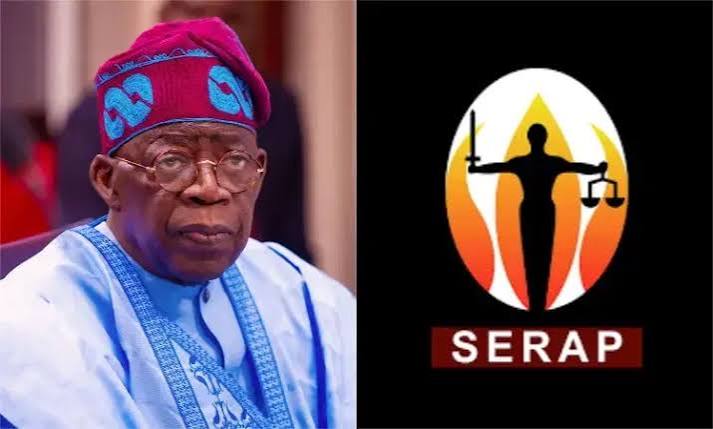
The Socio-Economic Rights and Accountability Project (SERAP) has sued the Federal Government at the ECOWAS Community Court of Justice over alleged diversion, irregular expenditure and failure to account for N78.8bn allocated to cash-transfer and social-protection programmes.
SERAP, in a statement released by its Deputy Director, Kolawole Oluwadare, yesterday, said the allegations involved the Ministry of Humanitarian Affairs and Poverty Reduction, the National Cash Transfer Office and the National Social Safety Nets Coordinating Office.
The allegations were documented in the Auditor-General of the Federation’s 2024 Annual Report, published on August 7, 2026.
According to the report, the findings covered various periods between January 2023 and December 31, 2024.
In the suit, marked ECW/CCJ/APP/42/26 and filed last week, SERAP is seeking a declaration that the government’s failure to account for the funds violates Nigeria’s international human rights obligations.
The organisation is also asking the court to order the government to provide a comprehensive account of the questioned funds, investigate the alleged irregularities, recover any money improperly spent or diverted where established, and strengthen financial oversight of social-protection programmes.
SERAP argued that the alleged financial irregularities could undermine the rights of vulnerable Nigerians to social security and an adequate standard of living, including access to food, clothing and housing.
The statement party read, “The funds were intended to benefit over 3.2 million households across 35 states, whose access to financial assistance has been affected by the allegations made by the Auditor-General.”
The suit, filed by SERAP’s lawyers, Kolawole Oluwadare and Kehinde Oyewumi, stated that the government’s failure to investigate the allegations and recover any improperly spent funds violated its obligations to protect vulnerable households.
“The failure to investigate the N78.8 billion cash-transfer scandal, account for the questioned funds and recover any unlawfully spent amounts violates Nigeria’s obligations to protect the human rights of vulnerable households,” the suit partly read.
The organisation said it instituted the case to protect affected households and ensure accountability for public funds allocated for their benefit.
“SERAP brings this public-interest case to protect the interests of affected households and ensure accountability for public funds allocated for their benefit,” it stated.
The organisation maintained that cash-transfer programmes could help address extreme poverty and enable vulnerable people to meet their basic needs, but argued that the government had a duty to ensure the funds were properly managed.
“The right to social security cannot be effectively realised merely by establishing a formal cash-transfer programme where the State fails to maintain reasonable systems for identifying beneficiaries, maintaining records, reconciling disbursements, monitoring expenditure, investigating irregularities and remedying losses,” the statement further stated.
According to SERAP, the Auditor-General questioned approximately N33.751bn reportedly transferred to more than 3.2 million households across 35 states in 2023, noting that adequate records to verify the payments and reconcile beneficiary records were not provided.
The report also identified N36.744bn in payments allegedly made without prepayment audits, N4.616bn in unsupported expenditures, N350.182m for enrolment, N89.511m for store purchases and N17.422m in diesel advances.
SERAP said the suit was brought under Article 9(4) of the ECOWAS Court Protocol to protect affected households and ensure accountability for public funds intended for social protection.
“The issue is whether the government has discharged its obligations under applicable human-rights treaties to safeguard resources allocated for social protection, investigate documented financial irregularities, provide effective remedies and ensure that those resources are applied for their intended purposes,” it stated.
The organisation also cited the constitutional responsibility of the Auditor-General to audit and report on the public accounts of the Federation and the offices and agencies of the Federal Government, describing the findings in the annual report as important official records of public expenditure.
It relied on Articles 1 and 2 of the African Charter on Human and Peoples’ Rights, arguing that the government had obligations to give effect to protected rights and ensure that failures in administering social-protection programmes did not result in discriminatory exclusion or unequal access to benefits.
“The Nigerian government has the obligation to take effective measures to prevent and address corruption and related misuse of public resources. The government has failed to take appropriate measures in response to the allegations made by the Auditor-General”, the statement added.
SERAP said it had previously urged President Bola Tinubu and relevant authorities to account for the questioned funds, publish audit records, investigate irregular expenditures, recover any funds unlawfully spent or diverted and take appropriate action against those responsible.
Following the publication of the Auditor-General’s report, the organisation issued a public statement and sent a letter dated September 5, 2026, requesting action on the findings. It also sought payment and beneficiary records, verification documents and an explanation for the missing REMITA records.
“The deadline given to the government to address the Auditor-General’s findings had elapsed without adequate action,” it stated.
The organisation further cited Articles 1 and 21 of the African Charter, alongside Article 9 of the United Nations Convention against Corruption, as requiring effective measures to protect rights and resources, promote transparent public financial management, investigate irregularities and recover public funds where losses or improper expenditure were established.
SERAP also relied on the works of legal scholar Kolawole Olaniyan, including Corruption and Human Rights Law in Africa, published by Hart Publishing in 2014, and Ownership of Proceeds of Corruption in International Law, published by Oxford University Press in 2023. It said the publications provided persuasive academic authority on corruption’s effects on human rights, public resources, accountability and international legal remedies.
“SERAP accordingly submits that the Auditor-General’s findings cannot be treated merely as administrative irregularities where public funds allocated for social protection may have been lost, improperly spent or left unaccounted for, and the government fails to take effective corrective action,” the statement added.
SERAP is asking the court to direct the government to conduct an independent, prompt and effective investigation into the identified irregularities, recover public funds improperly spent, diverted or lost where established, and take appropriate legal or administrative action against those found responsible, in accordance with due process.
It also wants the government to strengthen financial accountability, beneficiary verification, auditing, reconciliation and oversight mechanisms to prevent a recurrence of the alleged irregularities and ensure that eligible vulnerable households receive their intended benefits.
The organisation is further seeking an order restraining the government from administering or disbursing cash-transfer and social-protection funds without adequate accountability and oversight mechanisms, as well as appropriate remedies for any established adverse effects on beneficiaries’ protected rights.
No date has, however, been fixed for the hearing of the suit.
The Federal Government has released N38.93bn to 166 public tertiary institutions nationwide under the Needs Assessment Revitalisation Fund to address infrastructure deficits and improve teaching and learning facilities.
The intervention covers 79 universities, 46 polytechnics and 41 colleges of education, with universities receiving the largest share of the allocation.
The Federal Ministry of Finance disclosed this in a statement issued on Sunday by its Head of Media, Efe Ovuakporie, explaining that the funds would support approved projects in beneficiary institutions.
The statement read, “The Federal Government has disbursed N38.93bn to 166 public tertiary institutions nationwide under the Needs Assessment Revitalisation Fund.”
According to the ministry, the university component accounts for N28.5bn, while N5.8bn has been allocated to polytechnics and N4.7bn to colleges of education.
According to the ministry, the university component accounts for N28.5bn, while N5.8bn has been allocated to polytechnics and N4.7bn to colleges of education.
An analysis of the allocations by PUNCH Online showed that universities would receive approximately 73.2 per cent of the announced N38.93bn intervention, making them the largest beneficiaries.
Polytechnics would account for about 14.9 per cent, while colleges of education would receive approximately 12.1 per cent.
The ministry explained that the intervention was intended to address longstanding infrastructure challenges in public tertiary institutions and support the implementation of agreements reached between the Federal Government and the Academic Staff Union of Universities.
It stated, “The intervention forms part of the Federal Government’s efforts to address the needs of public universities and support the implementation of agreed measures under the Memorandum of Understanding between the Federal Government and the Academic Staff Union of Universities.”
The Needs Assessment Revitalisation Fund is designed to support improvements in institutional infrastructure and other identified needs, particularly in public universities, where inadequate facilities have remained a recurring concern in negotiations between the government and academic unions.
The ministry said the latest disbursement would enable beneficiary institutions to begin new projects or continue previously approved interventions aimed at improving their operational capacity.
“The funds are expected to enable beneficiary institutions to commence or advance approved projects addressing critical infrastructure and other identified institutional needs, with the overall objective of strengthening the quality of tertiary education in Nigeria,” it added.
The government also emphasised the need for coordination among the Federal Ministry of Finance, Federal Ministry of Education and beneficiary institutions to ensure that the released funds produced measurable improvements.
It noted that effective collaboration would be necessary to translate the financial intervention into improved infrastructure, institutional capacity and learning conditions.
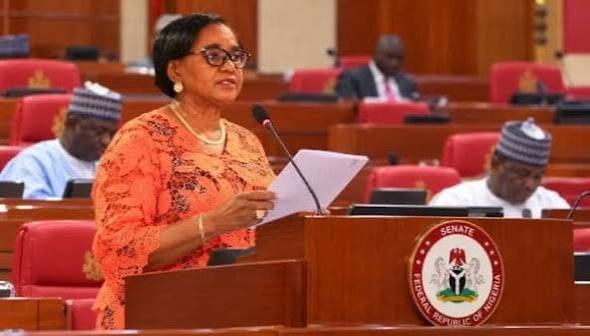
The bill to approve the establishment of the Federal University of Agriculture, Emughan, Abua-Odual Local Government Area of Rivers State has passed third reading.
The Bill, titled “A Bill for an Act to Amend the Federal Universities of Agriculture Act, Cap. F22, Laws of the Federation of Nigeria, 2024” was sponsored by Senator Ipalibo Harry Banigo representing Rivers West Senatorial District.
The bill seeks to amend the existing Federal Universities of Agriculture Act to provide for the establishment of the proposed institution in Emughan community in Rivers State.
The passage of the bill by the Senate marks a significant legislative milestone towards the establishment of the proposed university.
When established, the institution is expected to expand access to higher education, promote agricultural research and innovation, develop skilled manpower, and contribute to the economic growth of Rivers State and Nigeria at large.
According to a statement made available to The Tide, the bill, having passed the Third Reading in the Senate, will now proceed to the House of Representatives for concurrence as part of the legislative process towards its enactment into law.
The bill underscores Senator Banigo’s commitment to advancing educational opportunities and strengthening agricultural development in Rivers State.
By: Kevin Nengia
-

 Education1 day ago
FCE Yola Graduates 3,555 Teachers , Seeks Upgrade to University
-

 Sports1 day ago
Nigerian Trio Target Titles At PFL Africa Finals
-

 Niger Delta1 day ago
Diri Restates Stance On Lagos-Calabar Coastal Highway
-

 Niger Delta1 day ago
C’River, NUJ Pay Tribute To Late Guardian Editor
-

 News1 day ago
NDLEA Recovers Tons Of Illicit Drug Consignments In Nine States
-

 Opinion1 day ago
Checking Voter Apathy In Nigeria’s Electoral Process
-

 Politics1 day ago
2027: DICKSON’S EX-ALLY VOWS TO WORK AGAINST NDC INTEREST IN BAYELSA
-

 Politics1 day ago
2027: GROUP PLEDGES 40,000 SUPPORTERS FOR COALITION CANDIDATES IN RIVERS