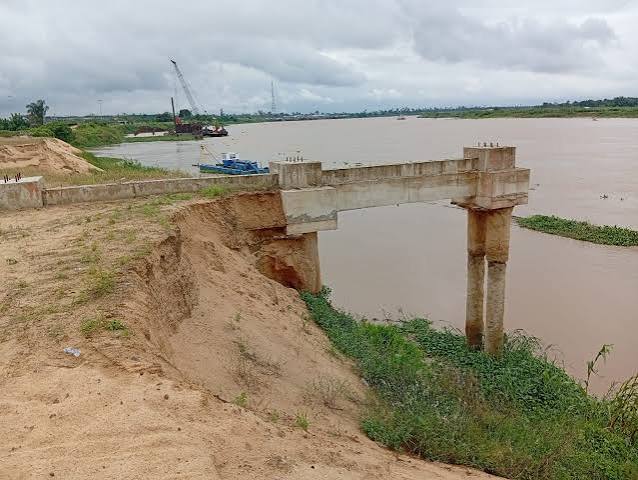
Environment
NEMA Advises On Better Attitude To Environment

The National Emergency Management Agency (NEMA), has stressed the need for people to understand their environment and do all they could to protect it.
NEMA South-South Zonal Coordinator, Mr. Umesi Emenike, who made the call in an interview with The Tide in his office last week, said both individual and collective efforts were needed to solve the environmental problems facing the country like flooding.
He emphasised that every individual should be able to know the kind of environmental challenges of the area where he lives and contribute to solving them.
“Each one of us lives in an area. We know what the challenges in our areas are. If you live in some parts of Mgbuoba, you know that every year the place is flooded. The question you should ask yourself is what have I done five months before the flooding started. Did we come together to think of a solution to this issues? Do we need a drain? Do we need to clear the existing drain? Is the existing drain too small? Is there something we can do about it? And so on?.
According to him, NEMA had carried out series of sensitisation campaign and advocacy since February 2011, when Nigeria Meteorological Agency NIMET) came out with the rainfall predictions for the year which indicated that there would be maximal rainfall this year.
He said people were asked to clean their drainages, stop dumping refuse carelessly, desist from building on canals and drainage channels, create ways for water to flow in anticipation of the heavy rainfalls “but unfortunately, in this country people wait till disaster happens before they will begin to listen”.
Umesi regretted that even when the state government made arrangement to relocate people living in flood prone areas like the watersides, to avoid the imminent danger, they refused to move, claiming that those places were their home lands.
On the level of the agency’s preparedness to tackle flood disasters in the zone, he said, NEMA has the skill, the facilities and the personnel to rescue flood victims but would want people to prevent flooding.
“I’m not interested in going to rescue people. I want people to behave in such a way that there will be no need for me to come to rescue them”, he said.
He observed that naturally the South-South states are the coastal states and the water levels in these states are higher than other areas, so it is expected that there will be some level of flooding, whenever it rains heavily and people should be ready to adapt to the situation.
He advised that whenever there is heavy rainfall, people should begin to look out for their family members to avoid being victims of the flooding.
The zonal coordinator commended the Rivers State Government for the precautionary measures taken towards the prevention of flooding in the state and asked other South-South governors to follow suit.
He however, appealed to local government authorities in the state and other bodies in charge of approving building plans to always take a careful look at the plans before approving them so as to minimise the cases of people building on canals and drainage channels.
Calista Ezeaku



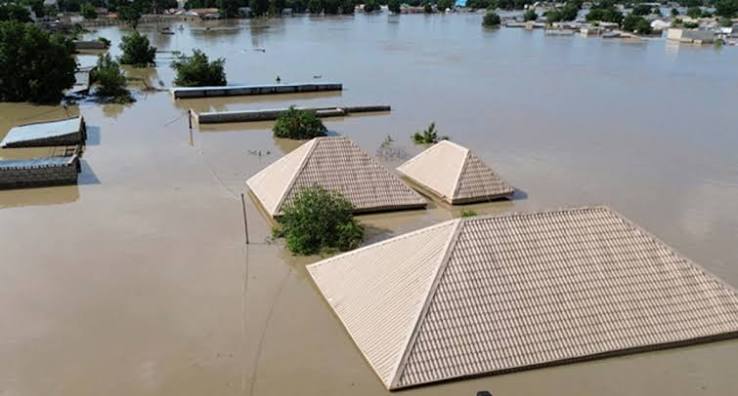
The Nigeria Hydrological Services Agency (NIHSA) has issued a seven-day flood advisory, warning of a medium flood risk in 17 states between July 21 and July 27.
The agency said the alert followed rising water levels at key river monitoring stations, increasing the likelihood of localised flooding along river channels and floodplains.
NIHSA Director-General, Umar Mohammed, disclosed this in National Flood Advisory (Alert No. NFA-2026-200) issued on Tuesday.
He said the affected states are Adamawa, Bauchi, Benue, Borno, Edo, Gombe, Imo, Jigawa, Kaduna, Kano, Kebbi, Nasarawa, Niger, Plateau, Taraba, Yobe and Zamfara.
According to Mohammed, river levels at Saminara on the Karam River, Waya Dam Site on the Waya River and Amber on the Amber River had exceeded watch and warning thresholds.
He said 16 gauging stations nationwide were recording elevated river stages, placing nearby communities at risk of localised flooding.
Mohammed urged state governments, local authorities and residents of flood-prone communities to take precautionary measures immediately.
NIHSA said Bauchi had the highest exposure, with 1,841 communities, 145 schools, 101 health facilities and eight markets identified as vulnerable.
The agency also identified vulnerable communities and public facilities in Edo, Imo, Kaduna, Plateau and Benue states.
Mohammed urged the National Emergency Management Agency (NEMA), State Emergency Management Agencies (SEMAs), local governments and community leaders to activate emergency response plans.
He recommended relocating residents, livestock and valuables from floodplains to safer locations
He also advised emergency agencies to pre-position food, medical supplies and water treatment materials in areas likely to be affected.
“The NIHSA boss called for community mobilisation through early warning volunteers and local communication channels to ensure timely dissemination of flood alerts.
He cautioned residents against walking, driving or riding through flooded roads, bridges and fast-flowing waterway.
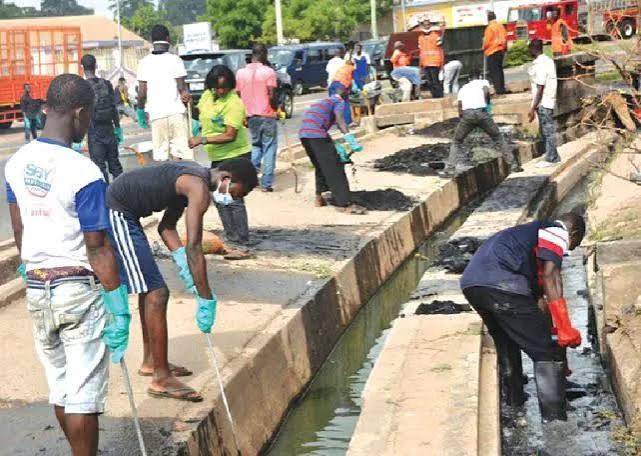
A cleaner environment begins with collective responsibility. That commitment was evident across Umuahia on Saturday as thousands of residents turned out to participate in the July monthly environmental sanitation exercise, with officials describing the compliance level as one of the most encouraging in recent months.
The impressive turnout has renewed hope that Abia’s campaign for a cleaner and healthier environment is steadily becoming a culture rather than a routine exercise.
The July monthly environmental sanitation exercise in Umuahia recorded about 80% compliance.
The Abia State Ministry of Environment described the turnout as a strong indication that residents are embracing Governor Alex Otti’s vision for a cleaner, healthier and more sustainable environment, while calling for the establishment of Neighbourhood Environmental Watch groups to sustain the momentum.
The Abia State Government has commended residents of Umuahia for their impressive participation in the July monthly environmental sanitation exercise, describing the turnout as a strong indication that citizens are embracing the state’s campaign for a cleaner and healthier environment.
Speaking after monitoring the exercise across major parts of the Umuahia metropolis, the Permanent Secretary, Abia State Ministry of Environment, Mr. Ikechukwu Oriuwa, expressed satisfaction with the level of compliance and urged residents to sustain the momentum.
According to him, the success recorded during the exercise reflects growing public support for the environmental agenda of the Labour Party-led administration.
“I think, so far, so good. At this point, what we need to do is sustain the momentum. We should move forward with establishing a Neighbourhood Environmental Watch so that residents can monitor compliance and ensure the initiative is sustained,” he said.
Mr. Oriuwa further applauded both residents and the organisers for the success of the exercise.
“Well, I must say I am very impressed. I appreciate the organisers for putting this programme together. It has been highly impressive, and I believe participants have learnt a great deal. From what I have observed so far, everything has been well organised, and I think they are doing an excellent job. I encourage them to keep up the good work because programmes like this are beneficial to everyone,” he added.
The Permanent Secretary stressed that environmental sanitation should become a daily culture rather than an activity observed only on designated sanitation days.
Drawing from an Igbo proverb, he explained why communities must collectively protect their environment.
“An Igbo proverb says that a goat owned by the public often goes hungry. That is why establishing a Neighbourhood Environmental Watch is important. It will encourage residents to take collective responsibility for keeping their surroundings clean and ensuring that sanitation efforts are sustained.”
He also urged government agencies to strengthen enforcement by deploying environmental health officers to carry out routine inspections and ensure compliance with sanitation laws.