
Business
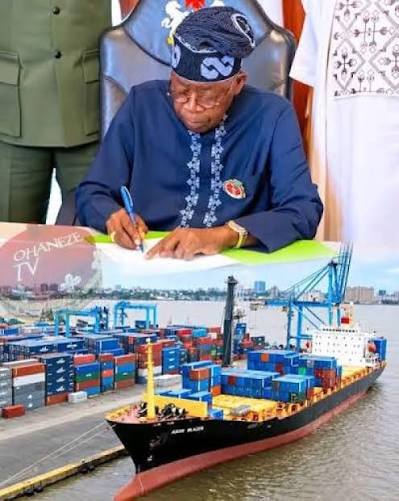
Senate Tackles NIMASA’s N45bn Budget Proposal

The Nigerian Maritime Administration and Safety Agency (NIMASA), on Friday presented a 2011 budget proposal to the Senate, showing a revenue projection of N45.233 billion as against a total expenditure package of N45.232 billion, indicating a surplus of N956,985.
The budget, which allocated 23 per cent or N10.26 billion to capital expenditure, however, also allocated over N70.9 million as yearly salary and emolument to the director general alone.
A breakdown of the budget proposal showed that personnel cost would gulp 19 per cent or N8.6 billion; recurrent expenditure N10.7 billion or 24 per cent; capital expenditure N10.3 billion or 23 per cent; maritime funds N10.8 billion or 25 per cent; while the lacklustre performing Maritime Academy of Nigeria was allocated N2.2 billion or five per cent of the budget proposal.
The agency also told the law makers that it intended to spend not less than N41.3 million for the establishment of new canteens; and a whooping N438.6 million on fuelling and lubrication of its 29 generating sets.
The Senate Committee on Marine Transport rattled the Agency when it demanded an explain as why the sum of N282.65 million should again this year be for office maintenance, when that of last year could not be satisfactorily accounted for yet.
Senator Ahmed Maccido, who noticed the amount in the 2011 budget, was worried about the amount allocated to the Director General of the Agency, Mr. Patrick Akpobolokemi, who was represented by the Executive Director, Administration and Finance, Mr. Adeniran Aderogba. He was requested to shed more light on the amount, which he was unable to do.
The director general also in the budget earmarked a total of N70.9 million for himself and the sum of N151.902 million to the three executive directors of the agency. Each executive director is to take home the sum of N50.63 million out of the Agency’s 2011 salaries and allowances estimated at N8.5 billion.
Ibelema Jumbo



-
 Education2 days ago
FCE Yola Graduates 3,555 Teachers , Seeks Upgrade to University
-

 Sports2 days ago
Nigerian Trio Target Titles At PFL Africa Finals
-
 Niger Delta2 days ago
Diri Restates Stance On Lagos-Calabar Coastal Highway
-
 Niger Delta2 days ago
C’River, NUJ Pay Tribute To Late Guardian Editor
-

 News2 days ago
NDLEA Recovers Tons Of Illicit Drug Consignments In Nine States
-
 Opinion2 days ago
Checking Voter Apathy In Nigeria’s Electoral Process
-
 Politics2 days ago
2027: DICKSON’S EX-ALLY VOWS TO WORK AGAINST NDC INTEREST IN BAYELSA
-
 Politics2 days ago
2027: GROUP PLEDGES 40,000 SUPPORTERS FOR COALITION CANDIDATES IN RIVERS