
Nation
THE STATES

Abuja
The Minister of Agriculture of Egypt, Mr Amin Abaza, said the just concluded Agri-business and Agro-industries conference in Africa would pave way for a more effective South-South cooperation.
Abaza said such cooperation would place Africa as a global player in agriculture during an interview with The Tide’s source in Abuja.
He said that Africa had potential in untapped natural resources and if well harnessed with the proper cooperation, would result to “tremendous’’ benefits for Africa.
“I am a great believer in Africa and I think that this century is going to be Africa’s century. We have plenty of potential, plenty of untapped resources.
“And really by working together and having a south-south cooperation we will just reap the benefits of all the potential in Africa that we have not yet been able to use effectively,’’ Abaza said.
He noted that the main challenge for Africa was infrastructure, such as power, roads, ports and lack of funding.
Ekiti
The Ekiti State House of Assembly has promised to ensure efficient and full implementation of the N69.6 billion 2010 budget.
Mr Ayodele Michael, Chairman, House Committee on Finance and Appropriation, made the promise on Thursday in Abuja in an interview with the newsmen
He said the House would re-invigorate its oversight functions to achieve the objective.
Michael noted with regret that the implementation of the 2009 budget fell bellow expectation.
“The House will on quarterly basis, summon the state Ministry of Finance and Board of Internal Revenue to give detailed analysis of the implementation of the budget.
“We will also embark on budget tracking to ensure full implementation of the budget.
“Last year’s revised budget of N58 billion was averagely implemented, but I can assure you that this year, the budget will be closely monitored to ensure full implementation,” he added.
The House had on Feb. 23 passed the budget.
Kaduna
A Sanitation Consultant, Dr Comfort Olayiwola, has called on Water, Sanitation and Hygiene (WASH) officers to engage in purposeful data-gathering to address the challenges facing the sector.
Olayiwola made the call in Kaduna while fielding questions after her presentation on the “Draft WASH Communication Strategy in Nigeria’’ at the three-day zonal stakeholders’ workshop.
“The communities keep more data better than all of us. Go and ask ‘WASH’ committees, they will show you a book containing dates, times and what they have done.
“But when you go to the office, you forget to do the same. How do we get the data back?
“You should keep records properly; you should package the data and present it to your local government chairmen and governors.
“This will serve as evidence. When you have concrete evidence; you can tell them to go and see the progress of work and challenges in the communities,’’ she said.
Olayiwola said that the development of the communication strategy remained a collective effort.
Kebbi
The Joint World Bank Assisted/Kebbi Community and Social Development Project (KBSCDP), will spend N1 billion on community micro- development projects in 2010.
The KBSCDP General Manager, Malam Usman Abubakar, told The Tide’s source in Birnin Kebbi on Friday that the World Bank granted N750 million as loan, while the state government released N300 million.
He said “we recieved N100 million out of N300 million expected from the state.”
He added that the project development plans comprised three micro-projects to be identified by benefitting communities.
According to him, each benefitting community is to contribute 10 per cent in cash or project execution materials.
Kogi
The Police Command in Kogi had arrested a bus driver with 16 bags of dried leaves suspected to be Indian hemp.
The Police Public Relations Officer (PPRO) for the command, Mr Mohammed Abubakar, announced this while parading 14 suspects arrested from different parts of the state for different offences at the command headquarters in Lokoja on Thursday.
Abubakar, an employee of Olamaboro Local Government, said the driver was arrested at Ogori-Magongo.
He said the bus driver claimed that a man (not named) hired his vehicle marked Kogi: LG 86 LAM, to convey the substance from Alayere-Akure, Ondo State, to Anyigba in Kogi.
In an interview with The Tide’s source, the suspect said the man hired him from the park to carry gari but he later discovered that the bags contained Indian hemp.
The suspect said that he decided to go back but the man assured him that he would settle policemen on the road.
Lagos
The Lagos chapter of Nigerian Association of Small Scale Industrialists (NASSI) has urged Acting President Goodluck Jonathan to find lasting solution to the problem of power supply.
Mr Duro Kuteyi, the Chairman of the association in Lagos State, told The Tide’s source that improvement in power generation and distribution would enhance the growth of small and medium scale businesses.
He urged the acting president to make the power sector his priority, saying the sector appeared to be one of the greatest challenges facing the growth of the nation’s economy.
“Stable and regular electricity supply will boost the economy and eliminate all the risks including health hazards, associated with other sources of power, such as pollution, suffocation and environmental degradation,’’ he added.
Kuteyi said constant power supply would reduce substantially, the cost of production being incurred by the small and medium scale businesses.
He also advised the acting president to take decisive action on the issue of security and deteriorating state of the Nigerian roads.
Ogun
The Ogun Government says it will no longer absorb beneficiaries of the Federal Teachers Scheme (FTS) in its teaching service.
Chief Sina Adejobi, Chairman, Ogun Universal Basic Education Board (SUBEB), made the announcement recently in Abeokuta in an interview The Tide’s source.
The scheme was introduced in 2006 by the Federal Government to address the dearth of qualified teachers in the nation’s primary schools.
Under the scheme, fresh graduates of NCE and degree holders are engaged on two years teaching service in public primary schools in all the 36 states and FCT, after which state governments are encouraged to absorb them with full employment.
Adejobi, however, explained that the state government already had 21,000 teachers who were NCE and degree certificate holders, considered to be adequate for its teaching service.
Oyo
There must be transparency in governance and business for the creation of jobs in Nigeria, .
Prof. Dafe Otobo of the University of Lagos said in Ibadan on Thursday.
Otobo, a professor of business, made the call at a two-day seminar organised by Labour Writers’ Association (LAWAN) on the topic, “‘the impact of Economic Crisis on Employment”.
He said the unemployment rate would increase if effective management was not incorporated in governance and in the workplaces.
“‘There will be declining turnover and more people will be laid off if managers of various organisations do not help to shape the already bad economy,’’ he said.
Otobo said it was regrettable that the impact of globalisation had taken its toll on organisations which had no choice but to retrench workers to remain in business.
Otobo urged the government to embark on measures that would create jobs to improve the economy and make life better for the people.
Sokoto
Alhaji Abdullahi Maigwandu, the Special Adviser to Sokoto state Governor on Pilgrims Affairs, says that woman, who are three months pregnant, will not be allowed to perform the 2010 Hajj.
Maigwandu also says that intending pilgrims, aged 65 and above, or 15 years and below, will not be allowed to perform the Hajj.
The Tide’s source reports that Maigwandu gave this directive on Wednesday in Sokoto at a meeting with the officials of the agency and those of the 23 local governments of the state .
The meeting was convened as part of the preparations for the 2010 Hajj exercise in the Holy land.
“We shall no longer tolerate a situation where any of our pilgrims will violate the laid down principles guiding the conduct of Hajj exercise,” he said.



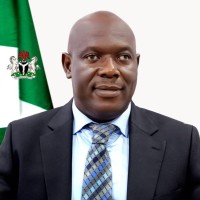
The Hydrocarbon Pollution Remediation Project (HYPREP) has commemorated the 15th anniversary of the release of the United Nations Environment Programme (UNEP) Environmental Assessment Report on Ogoniland, reaffirming its commitment to restoring the environment and improving the livelihoods of affected communities.
In a statement signed by the Project Coordinator, Prof Nenibarini Zabbey, to commemorate the anniversary, HYPREP described the anniversary as a significant milestone in Nigeria’s environmental restoration efforts, noting that the project has made remarkable progress in implementing the recommendations of the landmark UNEP report released on August 4, 2011.
The UNEP report had revealed extensive oil pollution across Ogoniland, severe environmental degradation, and serious public health risks resulting from decades of petroleum operations. It also recommended an initial $1 billion fund to commence the cleanup of the affected communities.
According to HYPREP, the Federal Government formally launched the Ogoni clean-up in 2016, while the Project Coordination Office was established in 2017 to drive the implementation of UNEP’s recommendations.
Zabbey said the current administration has continued to prioritise the project under the Renewed Hope Agenda.
Providing an update on the cleanup, the Project Coordinator disclosed that 30 of the 65 contaminated sites identified by UNEP have been fully remediated, while work is ongoing at several medium- and high-risk locations. It also stated that more than 1.5 million mangrove seedlings have been planted as part of what it described as the world’s largest restoration of oil-degraded mangroves, with over 1,000 hectares of shoreline already rehabilitated.
Zabbey further revealed that 49 Ogoni communities have been connected to potable water schemes through multiple water projects and booster stations aimed at providing safe drinking water across the region.
In the health sector, he said the 100-bed Ogoni Specialist Hospital in Kpite and the 43-bed Cottage Hospital in Buan are nearing completion, adding that several existing health facilities have been upgraded with modern medical equipment, while five ambulances have been donated to improve emergency healthcare services. The Project Coordinator also disclosed that a three-year human health biomonitoring study is being conducted in collaboration with the World Health Organization’s International Agency for Research on Cancer (IARC).
On economic empowerment, Zabbey stated that the Project has created more than 8,000 direct jobs and trained thousands of Ogoni youths and women in various vocational and technical skills, including software development, cybersecurity, aviation, commercial diving, seafaring, mechatronics, and creative arts. The project also reported awarding scholarships to more than 1,000 students, providing grants to small businesses, and supporting persons living with special needs through skills acquisition programmes.
The statement further highlighted ongoing legacy projects, including the Ogoni Power Project and the Centre of Excellence for Environmental Restoration, which it said is about 96 per cent complete. HYPREP also welcomed the recent designation of the Ogoni Wetland as a Ramsar Site of International Importance and pledged to continue promoting biodiversity conservation and sustainable management of the ecosystem.
Marking the anniversary, Zabbey said the progress achieved over the past 15 years demonstrates the collective commitment of government, development partners, stakeholders, and local communities to restoring Ogoniland. He called for renewed collaboration to sustain the cleanup effort, promote environmental sustainability, and support the long-term development of the region. 3
-

 News2 days ago
RSG Targets Nine Million Residents in Mosquito Net Distribution Campaign
-

 Oil & Energy2 days ago
Aiyedatiwa Signs New Electricity Bill
-

 Maritime2 days ago
Marine Minister Commends President Tinubu On NPERA Bill Assent
-

 Oil & Energy2 days ago
NLNG Commissions Research And Innovation Centre In RSU
-

 News2 days ago
KenPoly Holds Eight Convocations, August 29
-

 News2 days ago
RSG Begins Another Phase of Projects Commissioning Today
-

 News2 days ago
RMAFC Completes Revenue Sharing Review, Proposes New Pay
-

 Maritime2 days ago
NAGAFF Petitions IGP Over Alleged Maritime Police Harassment