


Quote: “Privilege should never silence principle, influence should never replace integrity, and personal gain should never outweigh the public good.” There is an old saying that truth does not fear investigation. Genuine truth neither depends on applause nor seeks permission to exist. It remains constant whether celebrated or rejected, defended or ignored. Yet, in today’s society, truth often competes with comfort, convenience, loyalty and personal interest. This raises an important question: Can a person remain objective after beginning to benefit from the very system he once criticised? Throughout history, reform movements have been driven by courageous individuals willing to challenge injustice despite personal risks. Their commitment to truth sometimes cost them popularity, comfort, freedom and even their lives. History has also recorded instances where influential voices became quieter after receiving appointments, promotions, contracts, political favours or other advantages. While motivations cannot always be known, such patterns remind us that personal benefit can sometimes influence public conviction. Human beings naturally seek security, stability and opportunities for themselves and their families. There is nothing wrong with success or advancement. The concern arises when personal comfort replaces public responsibility, or privilege becomes a reason to ignore problems affecting others. One of the greatest dangers facing society is not only corruption or poor governance but the normalisation of silence. Systems rarely collapse overnight. They deteriorate gradually when people who know better decide that speaking the truth is no longer worth the personal cost. Every society therefore depends on citizens willing to ask difficult questions, demand accountability and defend justice, regardless of who benefits or feels uncomfortable. A person who benefits from a broken system may become less inclined to challenge it. This is not true of everyone, and individuals should not be judged without evidence. Many principled people continue to advocate reform while working within imperfect institutions. Nevertheless, personal interests can sometimes soften criticism, dilute conviction or redirect attention from uncomfortable realities.Perhaps the greatest threat to truth is not open opposition but quiet compromise. Censorship is easy to recognise; silence purchased through convenience is harder to detect. When people gradually stop asking questions, demanding transparency or defending principles they once considered important, society should ask whether something has changed. Perspectives may genuinely evolve with new information, but incentives can also influence what people say—or choose not to say. This is why citizens should not place blind trust in personalities. Ideas, principles and actions should be examined independently. Loyalty to individuals must never exceed loyalty to truth. Political affiliation, professional status, financial success or social influence should not exempt anyone from accountability. A healthy democracy depends on independent thinking, not unquestioning allegiance.The responsibility to speak truth does not belong only to journalists, activists, judges, religious leaders or opposition politicians. It belongs to every citizen. The teacher who refuses to manipulate facts, the public servant who rejects corruption, the business owner who acts with integrity, the parent who teaches honesty and the young person who chooses principle over popularity all contribute to a more just society. However, defending truth also requires humility. We must not assume that everyone who disagrees with us has been compromised. By: Michael Abraham
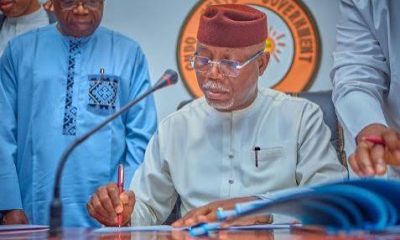

Ondo State Governor, Lucky Aiyedatiwa has signed the State Electric Power Sector (Amendment) Law, 2026, aimed at strengthening regulation and attracting investment into electricity generation, transmission...


The Nigeria Liquified Natural Gas (NLNG) has launched the Research and Innovation Centre for Computer and Electrical Engineering (RICCEE), in the Rivers State University, a major...
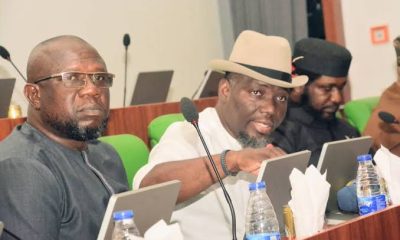

The House of Representatives Committee on South-South Development Commission has demanded urgent and concrete measures to resolve the prolonged gas seepage in Bille Community, Rivers State,...


Batteries have been a hot topic for years amid the energy transition rush of many governments, but now, it has become even hotter as the search...
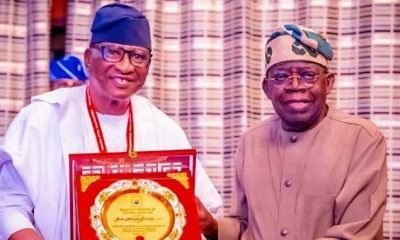

President Bola Ahmed Tinubu has assured Nigerians that government-owned refineries will return to operation after ongoing reforms aimed at making them commercially viable and sustainable. Tinubu...
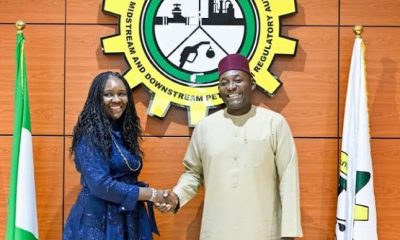

The Nigerian Upstream Petroleum Regulatory Commission (NUPRC) says it has begun consultations with relevant industry stakeholders on a domestic crude oil and gas swap arrangement aimed...


The 100% Compliance Team of the National Association of Government Approved Freight Forwarders (NAGAFF) has petitioned the Inspector-General of Police (IGP) Tunji Disu over alleged unlawful...
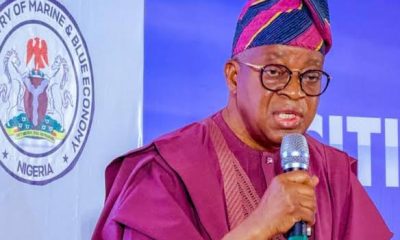

The Minister of Marine and Blue Economy Adegboyega Oyetola, has commended President Bola Ahmed Tinubu for assenting to the Nigerian Ports Economic Regulatory Agency (NPERA) Bill,...


The Nigerian Ports Authority (NPA), Lagos Ports Complex Manager, Mr. Debo Lawal, has urged participants at the 6th annual Maritime Writes Project (MWP) Creative Writing Bootcamp...