
Nation
THE STATES

Borno
The Defence Headquarters said last Thursday that all the terrorism suspects in the custody of the Joint Task Force (JTF) in Maiduguri would soon be screened.
The Deputy Director, Civil-Military Relations’ at the Defence Headquarters Abuja, Air Commodore Ademola Onitiju, made this known at a town hall meeting with religious and political leaders in Maiduguri.
He said the screening by an investigative panel had become necessary to determine the level of their complicity in the charges against them.
Onitiju added that the military would collaborate with the civil authorities toward the speedy trial of those found wanting. “We are going to require the assistance of the political authorities toward trying the suspects in law courts,’’ he said.
FCT
Justice Oluseun Shogbola of the National Industrial Court, Abuja, last Thursday advised the parties in a suit to respect court order to avoid contempt of court.
Shogbola said this during hearing in a case of unlawful termination of employment filed by Mr Espedis Omo-Osagie against Loyola Jesuit College and Fr Ehi Omoragbon, the President of the collage.
The Judge noted that the counsel was bringing the issue to the notice of the court for the first time and cautioned the defendant to reconnect the light and water.
She also noted that such behaviour should not emanate from a Christian institution and warned the defendants not to take laws into their hands.
The defense counsel, Mr Gbenga Adesina, told the court that effort to settle the matter out of court had proved abortive and that defense was ready to open its case.
Jigawa
Governor Sule Lamido of Jigawa State said that the alliance between the major opposition political parties in the country would not succeed.
Lamido, who said this in Dutse when he spoke at the Jigawa chapter of the PDP stakeholders meeting, also dismissed the alliance as “political jamboree perfected to deceive the electorate”.
He added that the alliance posed no potential threat to the PDP.
Lamido observed that the opposition parties had divergent interests, ideologies and manifestoes, which could jeopardise their effort to work as a single political entity.
The governor, who said that the architects of the alliance were former PDP members, explained that the development would promote PDP and make it more relevant in the country.
The state’s PDP Chairman, Alhaji Salisu Mamuda, said that the meeting was designed to appraise the party’s performance and fashion out ways to move it forward.
Mamuda said the party had conducted congresses, elected new officials to run its affairs in the state and concluded plans to construct a permanent office complex in the area.
Kano
The Police Command in Kano State, has declared three persons wanted in connection with the recent attempt to assassinate the Emir of Kano, Alhaji Ado Bayero, and series of armed robbery operations in the state.
The Commissioner of Police in the state, Mr Ibrahim Idris, made the announcement while briefing newsmen at the command’s headquarters in Kano last Thursday.
He gave the names of the wanted persons as Na Allah, a shopkeeper at Sabon Gari Market implicated in the attack on the Emir and Babangida Salihu of Sauna Kawaji, a Jigawa State indigene, suspected of being the gang leader of armed robbers and an associate of Na Allah.
The third person, Adamu Safiyanu, also known as Adamsy of Kafur in Katsina State, was declared wanted in connection with the recovery of arms, ammunition and Improvised Explosive Devices (IEDs) abandoned at Sauna Kawaji quarters.
Kebbi
Governor Saidu Dakingari of Kebbi State last Thursday assented to the amended budget of N125 billion passed by the state legislature.
Dakingari had in November 2012 presented a budget proposal of N114 billion to the state House of Assembly.
The budget comprised a recurrent expenditure that was reduced from N34 billion to N30 billion, while the capital expenditure increased from N85 billion to N95 billion.
The Acting Speaker of the house, Alhaji Garba Bena, who presented the amended budget to the governor at a ceremony in Birnin Kebbi, said the increase was sequel to under estimations in many aspects of the budget.
He said the SURE-P and Oil revenue to the state were not captured in the proposals, stressing that the anomalies were rectified with the support of officials of the state Ministries of Finance and Budget and Planning, respectively.
Assenting to the bill, Dakingari said he would ensure that 80 per cent implementation was recorded in 2013.
Kwara
The Kwara State Government is to spend a total of N810 million to build a College of Engineering Technology at the state- owned university at Malete to boost youth empowerment.
Governor Abdulfatah Ahmed said last Thursday during the foundation laying ceremony of the college, said that the amount was for phase one of the project.
He said his administration was determined to ensure that the university produced, “highly skilled engineers, equipped to become entrepreneurs in the competitive global economy of the 21st century”.
Ahmed said that this was also in line with the vision of his administration in establishing an International Vocational Centre in Ajasse-Ipo, designed to produce middle-level manpower.
Lagos
The X-Squad at the Police Command in the Lagos last Thursday arrested two suspected fake policemen operating illegally on highways and extorting unsuspected members of the public.
The suspects, a fake corporal and a dismissed sergeant, were arrested separately while terrorising motorists and other road users in Lagos. The fake corporal claimed that he was attached to the Railways Police Command in Lagos.
During interrogation he could not name his immediate past Commissioner of Police and the present one as well as other principal officers he was working with.
He could neither remember the duty post assigned to him in the acclaimed Railway Divisional Police Office at Iddo, nor remember the name of his Divisional Police Officer.
The corporal was caught in police black uniform with the service written on his left side and his names on the right side of the uniform as against the opposite at Oshodi, Lagos.
Oyo
The National Centre for Genetic Resources and Biotechnology (NACGRAB) has appealed to the Federal Government to ensure uninterrupted power supply at the centre to prevent the extinction of Nigerian crops.
The Director of the centre, said in Ibadan recently that the major constraint of the Ibadan-based centre was power.
He said that some of the germplasm or living organisms of both crops and animals inherent in Nigeria, had spent about 20 years in the centre’s gene bank.
Odofin said that the conservation was possible, in spite of the erratic power supply in the country, because the centre had no choice but to resort to the use of electricity generating sets, adding that the centre was the only government institution that had the mandate for germplasm conservation.
“God forbid for instance, if all the yams of our farmers are eaten by rodents, they must come to us to get new varieties or replacement from our gene bank to plant or else yam will become extinct,” he said.
Plateau
The Plateau State Government says it would achieve 40 per cent of the MDG on sanitation by 2015.
The Commissioner for Water Resources and Rural Development, Malam Idi Waziri, gave this indication while inaugurating the State Task Group on Sanitation (STGS) in Jos.
He said that the issue of water, sanitation and hygiene (WASH) required urgent action so as not to truncate development and accelerate poverty in the state and disclosed that inaugural ceremony was aimed at establishing the State’s Sanitation Task Group, noting that the national body had been in existence since 2002.
“The role of the task group is to have a manpower that will strengthen the sanitation transformation and will serve as a backup to the existing sanitation service delivery in the state.
Sokoto
The Sokoto State Government has earmarked N1.3 billion for the environment sector in 2013, Dr Jabbi Kilgori, the state Commissioner, has disclosed.
Kilgori said in Sokoto on Thursday that some of the projects earmarked for the year included the provision of adequate facilities for modern refuse collection and disposal.
According to him, the ministry has developed programmes to “intensively’’
sensitise the people of the state on best practice in waste disposal, with a view to curbing the menace of indiscriminate waste disposal.
The commissioner said that the state government would expend N6 million on the establishment of 30kms shelterbelts in the frontline local governments of Sabon-birni, Isa, Gada, Illela, Tangaza and Gwadabawa.



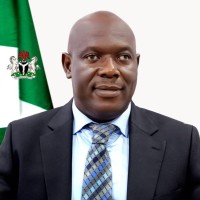
The Hydrocarbon Pollution Remediation Project (HYPREP) has commemorated the 15th anniversary of the release of the United Nations Environment Programme (UNEP) Environmental Assessment Report on Ogoniland, reaffirming its commitment to restoring the environment and improving the livelihoods of affected communities.
In a statement signed by the Project Coordinator, Prof Nenibarini Zabbey, to commemorate the anniversary, HYPREP described the anniversary as a significant milestone in Nigeria’s environmental restoration efforts, noting that the project has made remarkable progress in implementing the recommendations of the landmark UNEP report released on August 4, 2011.
The UNEP report had revealed extensive oil pollution across Ogoniland, severe environmental degradation, and serious public health risks resulting from decades of petroleum operations. It also recommended an initial $1 billion fund to commence the cleanup of the affected communities.
According to HYPREP, the Federal Government formally launched the Ogoni clean-up in 2016, while the Project Coordination Office was established in 2017 to drive the implementation of UNEP’s recommendations.
Zabbey said the current administration has continued to prioritise the project under the Renewed Hope Agenda.
Providing an update on the cleanup, the Project Coordinator disclosed that 30 of the 65 contaminated sites identified by UNEP have been fully remediated, while work is ongoing at several medium- and high-risk locations. It also stated that more than 1.5 million mangrove seedlings have been planted as part of what it described as the world’s largest restoration of oil-degraded mangroves, with over 1,000 hectares of shoreline already rehabilitated.
Zabbey further revealed that 49 Ogoni communities have been connected to potable water schemes through multiple water projects and booster stations aimed at providing safe drinking water across the region.
In the health sector, he said the 100-bed Ogoni Specialist Hospital in Kpite and the 43-bed Cottage Hospital in Buan are nearing completion, adding that several existing health facilities have been upgraded with modern medical equipment, while five ambulances have been donated to improve emergency healthcare services. The Project Coordinator also disclosed that a three-year human health biomonitoring study is being conducted in collaboration with the World Health Organization’s International Agency for Research on Cancer (IARC).
On economic empowerment, Zabbey stated that the Project has created more than 8,000 direct jobs and trained thousands of Ogoni youths and women in various vocational and technical skills, including software development, cybersecurity, aviation, commercial diving, seafaring, mechatronics, and creative arts. The project also reported awarding scholarships to more than 1,000 students, providing grants to small businesses, and supporting persons living with special needs through skills acquisition programmes.
The statement further highlighted ongoing legacy projects, including the Ogoni Power Project and the Centre of Excellence for Environmental Restoration, which it said is about 96 per cent complete. HYPREP also welcomed the recent designation of the Ogoni Wetland as a Ramsar Site of International Importance and pledged to continue promoting biodiversity conservation and sustainable management of the ecosystem.
Marking the anniversary, Zabbey said the progress achieved over the past 15 years demonstrates the collective commitment of government, development partners, stakeholders, and local communities to restoring Ogoniland. He called for renewed collaboration to sustain the cleanup effort, promote environmental sustainability, and support the long-term development of the region. 3
-

 News2 days ago
RSG Targets Nine Million Residents in Mosquito Net Distribution Campaign
-

 Oil & Energy2 days ago
Aiyedatiwa Signs New Electricity Bill
-

 Oil & Energy2 days ago
NLNG Commissions Research And Innovation Centre In RSU
-

 Maritime2 days ago
Marine Minister Commends President Tinubu On NPERA Bill Assent
-

 News2 days ago
KenPoly Holds Eight Convocations, August 29
-

 News2 days ago
RSG Begins Another Phase of Projects Commissioning Today
-

 News2 days ago
RMAFC Completes Revenue Sharing Review, Proposes New Pay
-

 Maritime2 days ago
NAGAFF Petitions IGP Over Alleged Maritime Police Harassment