
Nation
THE STATES

Benue
Governor Gabriel Suswam of Benue State says his
administration has worked out modalities to reduce poverty in the state to the
barest minimum.
He said this in Makurdi while inaugurating 42 units of buses
acquired by Benue Links Transport Company Limited.
The governor said he intended to achieve poverty reduction
through collaborative efforts with relevant agencies such as National Poverty
Eradication Programme (NAPEP) among others, pointing out that the acquisition
of the buses was also a move toward poverty reduction as they would ply all the
routes in the state and beyond at very reduced cost.
He urged the management of the company to handle the buses
with care in order to continue to serve the people for years.
Gombe
Gombe State Government will introduce a new method to screen
out pregnant intending pilgrims to this year’s Hajj, Dr Ya’u Kashere, Head of
the state Hajj Medical Team, has said.
Kashere said this during a sensitisation tour to Balanga and
Deba Local Government areas of the state by the state Amirul Hajj, Alhaji Usman
Baba-Liman.
He said the method would help to detect pregnant pilgrims
through scanning to void any more problems for the state during Hajj operations.
According to him, the Saudi Arabian Government had reduced
10 Hajj seats for the state this year as penalty for allowing a pregnant
pilgrim, who delivered in the Holy land, to travel for the Hajj last year.
Jigawa
The Jigawa Agricultural and Rural Development Authority
(JARDA) has introduced new farming techniques to farmers in the state, Alhaji
Rabiu Taura, the Commissioner for Agriculture and Natural Resources, has said.
Taura told The Tide on Friday in Dutse that the development
would boost crop yields during the next farming season adding that the measure
was aimed at transforming farming from subsistence to commercial venture for
economic growth and sustainability.
The commissioner pledged that the government would continue
to support agriculture in line with the Federal Government’s Agricultural
Transformation Agenda.
‘’It is in view of this that the state government has
provided tractors, fertiliser and other farm inputs toward boosting agriculture
not only in the state, but also in the country in general, ‘’ he said.
Lagos
An Environmentalist, Mr Godwin Ategwasi, has commended the
Federal Government for setting up the Presidential Committee on Flooding to
ascertain the level of devastation and proffer solution.
Ategwasi, the Deputy Director, Land Resources and Watershed
Monitoring in the Federal Ministry of Environment, gave the commendation in an
interview with our correspondent in Lagos.
He said that the committee, chaired by the Minister of
Environment, Mrs Hadiza Mailafia, would carry out vulnerability study on flood
test and proffer solutions to the perennial disasters
“The Federal Government is doing everything possible to
address flooding but Nigerians too must put up a good attitude towards the
environment,’’ he said.
Kano
The National Assembly has received 10 requests for creation
of new states from various communities in the North-West geo-political zone, a
member of the assembly has said.
Rep. Kawu Sumaila (ANPP-Kano) said in Kano while answering
questions from newsmen that two of the requests were from Kano State.
“There are a number of parameters to be considered before
creating a state such as landmass, population and Federal Constituencies.
“And in addition to that, 24 state assemblies must back or
support the requests,’’ he said, and advised the communities agitating for new
states to come up with reasonable demands in order to realise their dream.
On the issue of state police, the legislator who represents
Sumaila/Takai Federal Constituency, said he did not support the move in view of
the complex nature of the country.
Katsina
The Kebbi State Government has invested N1.6 billion in the
IFAD-assisted Community-Based Agricultural and Rural Development Programme
(CBARDP) in the last three years, an official said.
The programme is being financed by the International Fund
for Agricultural Development (IFAD), with the federal, states and local
governments providing counterpart contribution.
The seven benefitting states in the northern part of the
country are Borno, Jigawa, Katsina, Kebbi, Sokoto, Yobe and Zamfara.
Alhaji Garuba Hassan, the Kebbi State Project Officer told
The Tide in Katsina that the government had also disbursed N1 million to each
political ward to execute projects of their choices.
Kebbi
The Fityanul Islam of Nigeria group has pledged to sustain
the forum to foster peaceful co-existence between Muslims and non Muslims as
part of efforts to ensure national development.
Dr Muhammadu Abdulfathi, the group’s National President made
the pledge recently at the 2012 annual executive meeting of the group in Birnin
Kebbi.
He said that the forum was aimed at ensuring that youths
were united as bedrock of society and leaders of tomorrow.
“Our organisation is an advocate of peace and progress
through maximum support for the youth to imbibe global trends and contribute
towards rapid development and tolerance for one another devoid of tribal,
religious and ethnic sentiments.
Kogi
Governor Idris Wada of Kogi has reiterated the commitment of
the state government to render essential support to people displaced by flood
in the state.
Wada made the pledge on Saturday in Lokoja when he received
a 21-member presidential committee on flooding, who were in the state to assess
the level of damage caused by the disaster.
Represented by his Deputy, Arc. Yomi Awoniyi, the governor
said he had taken the issue of the disaster very personal, adding: “the government is on top the situation.’’
He said several measures aimed at granting relief to the
victims had been taken by the government while efforts were ongoing to relocate
and rehabilitate them.
Kwara
Governor Abdulfatai Ahmed of Kwara State, has described the
death of Ahaji Kehinde Abdulrahaman, who died in a flood disaster last Thursday
in Akerebiata, Ilorin as a great loss.
The governor stated this in a condolence message to the
family of the deceased on Saturday.
Represented by his Special Adviser, Relief and Emergency,
Alhaji Musa Abdullahi, the governor said he was deeply touched by the death of
the deceased, describing death as a necessary end that every human being would
taste and urged the family of the deceased to see it as the wish of God.
Ahmed donated the sum of N200, 000 to the family of the
deceased to provide immediate succour to them.
Nasarawa
The Nasarawa State government on Saturday in Rinze, near
Akwanga promised to release more funds for the development of the 13 local
governments in the state.
Mr Dameshi Luka, the state’s Deputy Governor, made the
promise at the ceremony accompanying the distribution of materials for development
projects in the Akwanga West Local Government Area.
“The state government is ready to release more funds to
local governments and development areas which show commitment to quality
service delivery,’’ Luka, represented by Mr Samuel Meshi, the Commissioner for
Science and Technology, said.
He said the distribution of materials was to make life more
meaningful as well as bring development to the people at the grass roots.
The Tide reports that materials distributed included
transformers, an ambulance, a car, zinc and beds among others.
Niger
The Niger State Government is discussing with United Nations
Industrial Development Organisation (UNIDO) and the Bank of Industry to
establish a Shea butter factory, an official has said.
Alhaji Ahmed Kontagora, Director General, Niger State Export
Promotion Council, said at a press briefing on Saturday in Minna that the
discussions had reached advanced stage.
“Niger State Government is talking with UNIDO and Bank of
Industry with a view to establishing a Shea butter refinery in the state; this
is because in the whole of Africa there is no Shea refinery.
The Director General did not say when and where the refinery
would be sited in the state but said that discussions with UNIDO and the bank
was on.
He said that the world market value of Shea nuts stands at
$3.8 billion, adding that one tone of Shea nut in the state now sells for
between 250, 000 and N300, 000.
Ondo
Ondo State Government spent N2.5 billion on rural
electrification projects in the last three and a half years, Mr. Sola
Akinsanmi, Chairman, Ondo State Electricity Board, said.
Akinsanmi told The Tide in Akure that the current state
administration completed 110 electrification projects in the 18 Local
Government areas during the period.
He said the administration inherited 43 uncompleted
electrification projects from its predecessor but had completed them, adding
that the board was currently executing 16 projects out of which eight would be
connected to the national grid in one week.
He, however, said that inadequate funding was a major
challenge to the activities of the board, in addition to acts of vandalism on
equipment by miscreants, which had slowed the pace of work by the agency.
Plateau
Fish farmers in Plateau State will access facilities offered
by the National Agricultural Credit Guarantee Scheme (NACS) only if they
organise themselves into groups.
Mr. Badmus Olanrewaju, the Deputy National Secretary of the
Fishery Society of Nigeria (FISON) and spokesman of the body in Jos, told The
Tide that all necessary steps had been taken to ease access to such facilities.



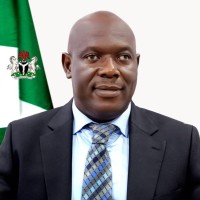
The Hydrocarbon Pollution Remediation Project (HYPREP) has commemorated the 15th anniversary of the release of the United Nations Environment Programme (UNEP) Environmental Assessment Report on Ogoniland, reaffirming its commitment to restoring the environment and improving the livelihoods of affected communities.
In a statement signed by the Project Coordinator, Prof Nenibarini Zabbey, to commemorate the anniversary, HYPREP described the anniversary as a significant milestone in Nigeria’s environmental restoration efforts, noting that the project has made remarkable progress in implementing the recommendations of the landmark UNEP report released on August 4, 2011.
The UNEP report had revealed extensive oil pollution across Ogoniland, severe environmental degradation, and serious public health risks resulting from decades of petroleum operations. It also recommended an initial $1 billion fund to commence the cleanup of the affected communities.
According to HYPREP, the Federal Government formally launched the Ogoni clean-up in 2016, while the Project Coordination Office was established in 2017 to drive the implementation of UNEP’s recommendations.
Zabbey said the current administration has continued to prioritise the project under the Renewed Hope Agenda.
Providing an update on the cleanup, the Project Coordinator disclosed that 30 of the 65 contaminated sites identified by UNEP have been fully remediated, while work is ongoing at several medium- and high-risk locations. It also stated that more than 1.5 million mangrove seedlings have been planted as part of what it described as the world’s largest restoration of oil-degraded mangroves, with over 1,000 hectares of shoreline already rehabilitated.
Zabbey further revealed that 49 Ogoni communities have been connected to potable water schemes through multiple water projects and booster stations aimed at providing safe drinking water across the region.
In the health sector, he said the 100-bed Ogoni Specialist Hospital in Kpite and the 43-bed Cottage Hospital in Buan are nearing completion, adding that several existing health facilities have been upgraded with modern medical equipment, while five ambulances have been donated to improve emergency healthcare services. The Project Coordinator also disclosed that a three-year human health biomonitoring study is being conducted in collaboration with the World Health Organization’s International Agency for Research on Cancer (IARC).
On economic empowerment, Zabbey stated that the Project has created more than 8,000 direct jobs and trained thousands of Ogoni youths and women in various vocational and technical skills, including software development, cybersecurity, aviation, commercial diving, seafaring, mechatronics, and creative arts. The project also reported awarding scholarships to more than 1,000 students, providing grants to small businesses, and supporting persons living with special needs through skills acquisition programmes.
The statement further highlighted ongoing legacy projects, including the Ogoni Power Project and the Centre of Excellence for Environmental Restoration, which it said is about 96 per cent complete. HYPREP also welcomed the recent designation of the Ogoni Wetland as a Ramsar Site of International Importance and pledged to continue promoting biodiversity conservation and sustainable management of the ecosystem.
Marking the anniversary, Zabbey said the progress achieved over the past 15 years demonstrates the collective commitment of government, development partners, stakeholders, and local communities to restoring Ogoniland. He called for renewed collaboration to sustain the cleanup effort, promote environmental sustainability, and support the long-term development of the region. 3
-

 News2 days ago
RSG Targets Nine Million Residents in Mosquito Net Distribution Campaign
-

 Oil & Energy2 days ago
Aiyedatiwa Signs New Electricity Bill
-

 Oil & Energy2 days ago
NLNG Commissions Research And Innovation Centre In RSU
-

 Maritime2 days ago
Marine Minister Commends President Tinubu On NPERA Bill Assent
-

 News2 days ago
KenPoly Holds Eight Convocations, August 29
-

 News2 days ago
RSG Begins Another Phase of Projects Commissioning Today
-

 News2 days ago
RMAFC Completes Revenue Sharing Review, Proposes New Pay
-

 Maritime2 days ago
NAGAFF Petitions IGP Over Alleged Maritime Police Harassment