Connect with us

Business

UN Plans Tax On Carbon Dioxide Emission

Published

on

The United Nations has proposed tax on carbon dioxide emissions in developed countries and currency transaction tax to raise 400 billion U.S dollars annually for development needs.

Rob Vos, lead author of “World Economic and Social Survey 2012: In Search of New Development Finance’’, disclosed this at a press conference at the UN Headquarters in New York last Thursday.

He said the proposal was part of series of financial mechanism to help the organisation.

According to him, these measures will yield substantial revenues of 250 billion dollars, 40 billion dollars and 71 billion dollars per year, respectively, for international co-operation.

“Such taxes also make economic sense, as they help stimulate green growth and mitigate financial market instability.

“In short, such new financing mechanisms will help donor-countries overcome their record of broken promises to benefit the world at large,” Vos who serves as the Director of DESA’s Development Policy and Analysis Division said.

He added that DESA, a financial transaction tax (FTT), would also help to reduce the profitability, and thus the volume, of computer-operated high-frequency trades.

Vos pointed out that these trades could be disruptive to equity markets.

He stated that, in addition, the tax would not be felt by non-financial customers and would fall on a sector that was not heavily taxed already.

Vos, however, disclosed that the financial mechanism became necessary as many donor-countries have cut back their assistance funding due to the global economic crisis.

“Donor-countries have fallen well short of their aid commitments, and development assistance declined last year because of budget cuts, thus increasing the shortfall to 167 billion dollars.

“Although donors must meet their commitments, it is time to look for other ways to find resources to finance development needs and address growing global challenges, such as combating climate change.

“We are suggesting various ways to tap resources through international mechanisms, such as co-ordinated taxes on carbon emissions, air traffic, and financial and currency transactions,” he said.

Vos stated that the global body found out that development aid declined in real terms in 2011, thus highlighting the need for additional and more predictable financing from new sources.

He explained that while existing initiatives to fund programmes in the developing world have been successful, the scope for scaling them up or replicating them.

Vos said this was too limited to meet the needs for developments financing in the next coming decades, emphasising that new funding sources needed to be tapped into.

“The FTT is a progressive tax in as much as poor people engage in relatively few transaction with financial institutions and the rich engage in many,” DESA states in a briefing note on the potential of FTTs.

“Financial and currency transaction taxes are technically feasible and economically sensible. They could readily provide the means of meeting global development financing needs,” he said.

According to him, the current financing resources in many low-income countries have focused on allocating funds to fight specific diseases such as HIV, tuberculosis and malaria.


Continue Reading

Business

FG Approves 4 New Channel Management Firms For Seaports

Published

on

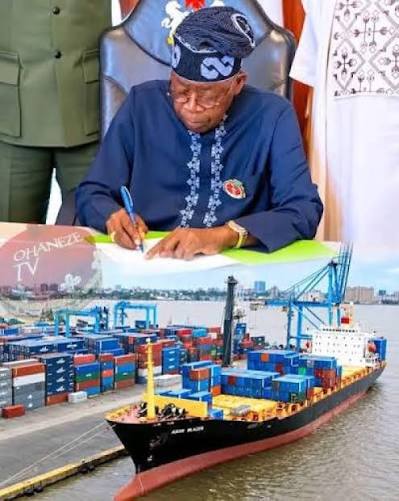
The Federal Executive Council (FEC) has approved four new channel management companies for seaports across the country in a move aimed at improving vessel navigation and port operations.
Speaking at the recently concluded Annual General Meeting of the Nigerian Association of Master Mariners (NAMM), former General Manager, Marine and Operations, Capt. Ebubeogu Ihenacho, disclosed that there would be changes in the ownership of the Lagos Channel Management Company Limited and the Bonny Channel Management Company.
According to Ihenacho, the four channels serving Nigeria’s major port clusters will have different channel management companies as approved by the FEC.
He said a new company had been approved to manage the Lagos port channel, with a change of name, while the Calabar Channel would be managed by the Calabar Channel Management Company.
He added that Bonny Channel Management Company had also undergone a change of ownership.
On the Warri Channel, Ihenacho said the Federal Government had approved China Harbour Engineering Company (CHEC) and two other companies to form a consortium to manage the Escravos Channel.
He said: “For Warri, it was approved for China Harbour Engineering Company, CHEC, and two other companies, who would now form a consortium.
That consortium will now form a Special Purpose Vehicle (SPV) with the Nigerian Ports Authority to manage the Escravos Channel.”
Recall that the management of the NPA had declined to renew the concessions of the Lagos Channel Management Company Limited and the Bonny Channel Management Company, opting instead for six-month extensions of the existing arrangements.
By; Enoch Epelle
Continue Reading

Business

RIRS Warns Against Unauthorised Tax Collection

Published

on

The Rivers State Internal Revenue Service (RIRS) has warned motorists, transport operators and business owners against paying taxes, levies or charges to Unauthorised persons and organisations, insisting that only the Service and its duly appointed agents are legally empowered to collect taxes on behalf of the state government.
The Service gave the warning in a public notice dated October 21, 2026, signed by its Executive Chairman, Sir Israel O. Egbunefu, FCTI, in which it clarified that the Rivers State Ministry of Transport was not authorised by the state government to collect road tax or any other tax, levy or charge from motorists and transport operators.
RIRS also specifically disowned Explore Strategic Alliance Ltd, located at No. 7 Rumuodaolu Market Road, Port Harcourt, declaring the company had not been appointed or authorised by either the state government or the Service to collect Motor Vehicle Transport (MOT) tickets or any other tax on its behalf.
The revenue agency consequently cautioned members of the public against making payments to the company or any of its staff, stressing that anyone who ignored the warning would do so at their own risk.
It reaffirmed that only the legally authorised agency responsible for tax collection in Rivers State and the appointed agents that would carry out such duties in accordance with the law.
The Service urged taxpayers to demand official identification from anyone claiming to be its tax agent and verify the person’s credentials directly with RIRS before making payments.
It further warned that individuals or groups found impersonating tax consultants, agents or their representatives to collect Unauthorised taxes would be arrested and prosecuted in accordance with the law.
RIRS also called on members of the public to report suspicious persons and activities relating to Unauthorised tax collection to the Service for appropriate action.
The agency advised taxpayers seeking clarification or assistance to visit any of its offices or contact it through its official email address, info@riversbirs.gov.ng.
The Service reiterated its commitment to protecting taxpayers, promoting voluntary compliance and safeguarding the integrity of tax administration in Rivers State.
By: King Onunwor
Continue Reading

Business

Bayelsa consumers Groan  Over Inflation As Traders Remain Helpless Over Low Patronage 

Published

on

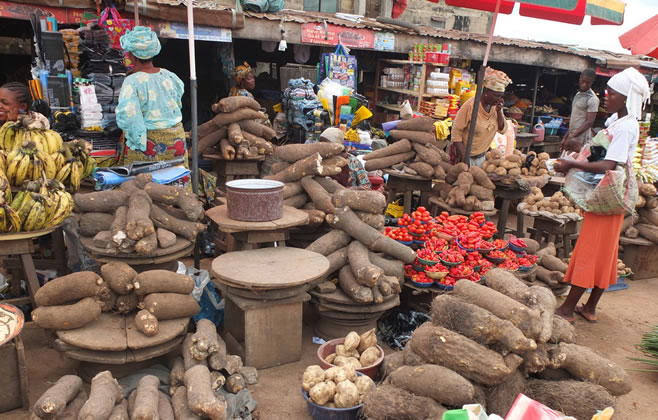
Consumers and traders at the Swali ultramodern market in Yenagoa, capital of Bayelsa State have continued to groan over high prices of commodities and poor Patronage due to cost-push inflation.
The Tide reports that in the past weeks prices of goods and services in Yenagoa metropolis has experienced increase.
Notable services like transportation have also increased  lately due to increase in the pump price of fuel that has recently further exacerbated inflation in the prices of staple foods like rice, beans, garri and others.
Speaking with The Tide on a market survey, a trader, Mrs Tovie Barakabo said a bag of bean which sold between N120,000-N130, 000 now goes for N140,000-N145,000.
Mrs Barakabo also hinted that the only commodities whose price has not gone up was price of millet which sells N60,000, while big bag of garri now sells for N30,000.
The Tide further gathered from other inside Source that 25 litres of Kings cooking oil currently sells N75,000 as against the former price of N57,000.
Other commodities such as delicious vegetable oil  now goes for N68,000, Pure vegetable oil currently goes for N66, 000, while spaghetti is now N18,800 per bag.
The market survey also discovered that Sonnia tomato mix sells N75,609, while a big and small basket of fresh tomatoes are sold for N30,000 and N6,500 respectively.
A disappointed custom, Mrs Juliet Domo who fielded questions from The Tide expressed her worries over the inflation, calling on government to take decisive stands against inflation.
By: Ariwera Ibibo-Howells, Yenagoa
Continue Reading

Trending