
Nation
THE STATES

Bauchi
The Bauchi State Rapid Response Team on Lassa Fever is to liaise with private and public health institutions in the state for quick identification of cases of lassa fever in the state.
The Chairman of the team, Dr Robinson Yusuf, told newsmen in Bauchi that there was the need to be proactive in combating the disease.
According to him, health personnel must be tutored on the signs and symptoms of the disease for easy identification and isolation of affected persons.
“We will use the primary healthcare units in all the local government areas to ensure that information on the disease are passed to the grassroots, just as we are doing in the case of wild polio virus.’’
Yusuf listed the symptoms of the disease to include fever, nausea, sore throat, back pain, abdominal pain and vomiting of blood.
Ekiti
Authorities of the Federal Polytechnic, Ado-Ekiti have announced fees payable by students of the institution for the 2011/2012 session.
The Public Relations Officer, Mr Adeyemi Adejolu, told newsmen in Ado-Ekiti on Tuesday that “the display of fees payable in the institution had become necessary in order to avoid misinformation and mutilation of facts by students”.
He said HND I and ND I students of the School of Business Studies, except Office Technology and Management, would pay N20,350.
He also said that HND I and ND I students of the Department of Office Technology and Management, including those in the schools of Engineering; Environmental Studies and the School of Science and Computer Studies would pay N21,350.
FCT
The Director General of the National Orientation Agency (NOA), Mr Mike Omeri, has described the current bombing in some parts of the country as the biggest threat to the nation’s security after the civil war, which ended in 1970.
He made observation on Tuesday in Abuja at a news conference organised by the Homeland Secure, a non-governmental organisation, on the strategy to combat and prevent terrorism in the country.
Omeri, who was represented by an official of the agency, Mr John Tagwai, said that since 1999 the country had passed through many crises, adding that no democracy could thrive in crises.
Omeri said dialogue was the best option to resolve contending issues, and described as timely, the proposed conference on how to combat and prevent terrorism scheduled to take place between May 28 and May 30.
Kaduna
Governor Patrick Yakowa of Kaduna State on Tuesday said the state government would work with Non Governmental Organisations (NGOs) towards maintaining peace and ensuring women and youth empowerment.
Receiving members of I-Care Women and Youth Initiative, led by the initiator and wife of the Vice-President, Hajiya Amina Sambo, Yakowa said the government would cooperate with other stakeholders to bring about permanent peace in the state.
The delegation was headed by the the wife of Kaduna State Governor, Mrs Amina Yakowa, representing the wife of the Vice president and the Initiator of the NGO.
The I-care NGO was established to complement government’s effort at empowering women and youths.
Katsina
The Katsina State Senior Magistrates’ Court III has fixed March 26 for mentioning of a charge of rape levelled against a former police corporal.
Abutu Joseph is alleged to have raped a cripple and her daughter inside the Katsina Central Market Police Post on December 16, 2011 while on night duty.
The prosecution said the woman and her daughter, who came from a nearby village, were lured by Joseph to spend the night at the station to avoid being harassed, while searching for accommodation in the town.
The accused person allegedly raped the duo in the night and appealed to them not to reveal the matter.
At today’s proceedings, the police prosecutor, Insp. Hashimu Musa, told the court that the accused person was charged for rape and act of indecency, offences contrary to Sections 283 and 285 of the Penal Code.
Lagos
Some clerics have voiced their concerns over the total removal of roadblocks on the nation’s highways, saying that criminals were already taking undue advantage of the situation.
In separate interviews with newsmen in Lagos, the clerics said that the checkpoints should not be removed completely for security reasons, in view of frequent robbery incidences on the highways.
Mr Femi Asiwaju, Lagos State Vice President, Pentecostal Fellowship of Nigeria, said that the Lagos-Ibadan expressway has recorded many armed robbery incidents in the past one week.
“The Inspector General of Police (IGP) meant well for Nigerians by dismantling the checkpoints, but that is not the solution; it is like abandoning the highways to the armed robbers again.
Nasarawa
The Branch Controller, Central Bank of Nigeria (CBN), Lafia, Alhaji Usman Bello, has identified Nasarawa as one of those with viable economy among the 36 states of the federation.
He stated this when members of the State House of Assembly Committee on Finance and Appropriation, led by its Chairman, Mr Philip Gyunka, paid him a courtesy visit in Lafia.
Bello said that “between May 2011 and this February, the Lafia branch of the apex bank has mobilised N16.4 billion from the bank deposits in the state”.
He said the branch has also paid N2.3 billion to 17 deposit banks, which translated to N69 million withdrawals per week.
According to the CBN Branch Controller, the deposits have grown to N480 million per week.
Ogun
The wife of Ogun Governor, Mrs Olufunso Amosun, has advocated a paradigm shift to entrepreneurship education as an essential ingredient in accelerating economic growth and national development.
Mrs Amosun made the call on Tuesday in Abeokuta at the launch of Nigeria’s chapter of the Federation of Business Women Entrepreneurs of the Economic Community of West African States (ECOWAS).
According to her, most developed countries always encourage small and medium scale enterprises leading to increase in their Gross Domestic Products (GDP).
“Our youths and women should be encouraged to acquire one vocational skill or the other, irrespective of their educational qualifications.”
“Most of our children and women may not necessarily hunt for white collar jobs if they can acquire a vocational skill in order to earn a living.
Sokoto
A lecturer in Usman Danfodio University, Sokoto, Dr Shehu Sidi, has called on the Federal Government to initiate policies and programmes that will modernise farming methods in the country.
Sidi told newsmen in Sokoto that the use of modern farming inputs would ensure massive food production in the country.
He said that the country was blessed with vast land needed to produce various crops for local consumption and export.
He pointed out that, the current security challenges facing the country would be a thing of the past if government invested in Agriculture.
Taraba
The National Agency for Food and Drugs Administra-tion and Control (NAFDAC) in Taraba says it will henceforth register water-sachet factories within 48 hours, its Coordinator, Mr Nnaja Nnaja, has said.
Nnaja said this in Jalingo on Tuesday at a news conference.
He said the accelerated registration was aimed at encouraging the people to invest in water manufacturing.
The coordinator explained that most of the brands of sachet water consumed in the state were manufactured outside Taraba, adding that the agency could only monitor the production of foods and drugs within the state.
“So, it is risky to buy sachet water produced in other states because we cannot monitor the production. Our mandate is Taraba and that is why we are encouraging citizens to produce water locally.”
Yobe
The Yobe State Governor, Alhaji Ibrahim Gaidam, said on Tuesday that his administration has awarded N19.7 billion worth of contracts for the construction of road networks across the state in the last nine months.
He made this known in Damaturu at an interactive meeting with state’s elders, saying that the session was to inform the stakeholders about government activities.
Gaidam said that government also awarded N1.1 billion contract for the completion of Damaturu Regional Water Scheme as a panacea to water scarcity in the metropolis.
“The construction of 200-bed hospital in Damaturu has been completed. Similarly, the construction of 40-bed capacity amenity ward at the Specialist’s Hospital, Damaturu, has been completed at the cost of N140 million.”
The governor said that N700 million had been expended on school fees while all outstanding bursary allowances have been settled.



The Hydrocarbon Pollution Remediation Project (HYPREP) has commemorated the 15th anniversary of the release of the United Nations Environment Programme (UNEP) Environmental Assessment Report on Ogoniland, reaffirming its commitment to restoring the environment and improving the livelihoods of affected communities.
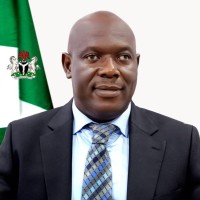
In a statement signed by the Project Coordinator, Prof Nenibarini Zabbey, to commemorate the anniversary, HYPREP described the anniversary as a significant milestone in Nigeria’s environmental restoration efforts, noting that the project has made remarkable progress in implementing the recommendations of the landmark UNEP report released on August 4, 2011.
The UNEP report had revealed extensive oil pollution across Ogoniland, severe environmental degradation, and serious public health risks resulting from decades of petroleum operations. It also recommended an initial $1 billion fund to commence the cleanup of the affected communities.
According to HYPREP, the Federal Government formally launched the Ogoni clean-up in 2016, while the Project Coordination Office was established in 2017 to drive the implementation of UNEP’s recommendations.
Zabbey said the current administration has continued to prioritise the project under the Renewed Hope Agenda.
Providing an update on the cleanup, the Project Coordinator disclosed that 30 of the 65 contaminated sites identified by UNEP have been fully remediated, while work is ongoing at several medium- and high-risk locations. It also stated that more than 1.5 million mangrove seedlings have been planted as part of what it described as the world’s largest restoration of oil-degraded mangroves, with over 1,000 hectares of shoreline already rehabilitated.
Zabbey further revealed that 49 Ogoni communities have been connected to potable water schemes through multiple water projects and booster stations aimed at providing safe drinking water across the region.
In the health sector, he said the 100-bed Ogoni Specialist Hospital in Kpite and the 43-bed Cottage Hospital in Buan are nearing completion, adding that several existing health facilities have been upgraded with modern medical equipment, while five ambulances have been donated to improve emergency healthcare services. The Project Coordinator also disclosed that a three-year human health biomonitoring study is being conducted in collaboration with the World Health Organization’s International Agency for Research on Cancer (IARC).
On economic empowerment, Zabbey stated that the Project has created more than 8,000 direct jobs and trained thousands of Ogoni youths and women in various vocational and technical skills, including software development, cybersecurity, aviation, commercial diving, seafaring, mechatronics, and creative arts. The project also reported awarding scholarships to more than 1,000 students, providing grants to small businesses, and supporting persons living with special needs through skills acquisition programmes.
The statement further highlighted ongoing legacy projects, including the Ogoni Power Project and the Centre of Excellence for Environmental Restoration, which it said is about 96 per cent complete. HYPREP also welcomed the recent designation of the Ogoni Wetland as a Ramsar Site of International Importance and pledged to continue promoting biodiversity conservation and sustainable management of the ecosystem.
Marking the anniversary, Zabbey said the progress achieved over the past 15 years demonstrates the collective commitment of government, development partners, stakeholders, and local communities to restoring Ogoniland. He called for renewed collaboration to sustain the cleanup effort, promote environmental sustainability, and support the long-term development of the region. 3
-

 News2 days ago
RSG Targets Nine Million Residents in Mosquito Net Distribution Campaign
-

 Oil & Energy2 days ago
Aiyedatiwa Signs New Electricity Bill
-

 Oil & Energy2 days ago
NLNG Commissions Research And Innovation Centre In RSU
-

 Maritime2 days ago
Marine Minister Commends President Tinubu On NPERA Bill Assent
-

 News2 days ago
KenPoly Holds Eight Convocations, August 29
-

 News2 days ago
RSG Begins Another Phase of Projects Commissioning Today
-

 News2 days ago
RMAFC Completes Revenue Sharing Review, Proposes New Pay
-

 Maritime2 days ago
NAGAFF Petitions IGP Over Alleged Maritime Police Harassment