
Nation
NDDC Building Regional Integration Through Inclusive Conflict Management – Ogbuku

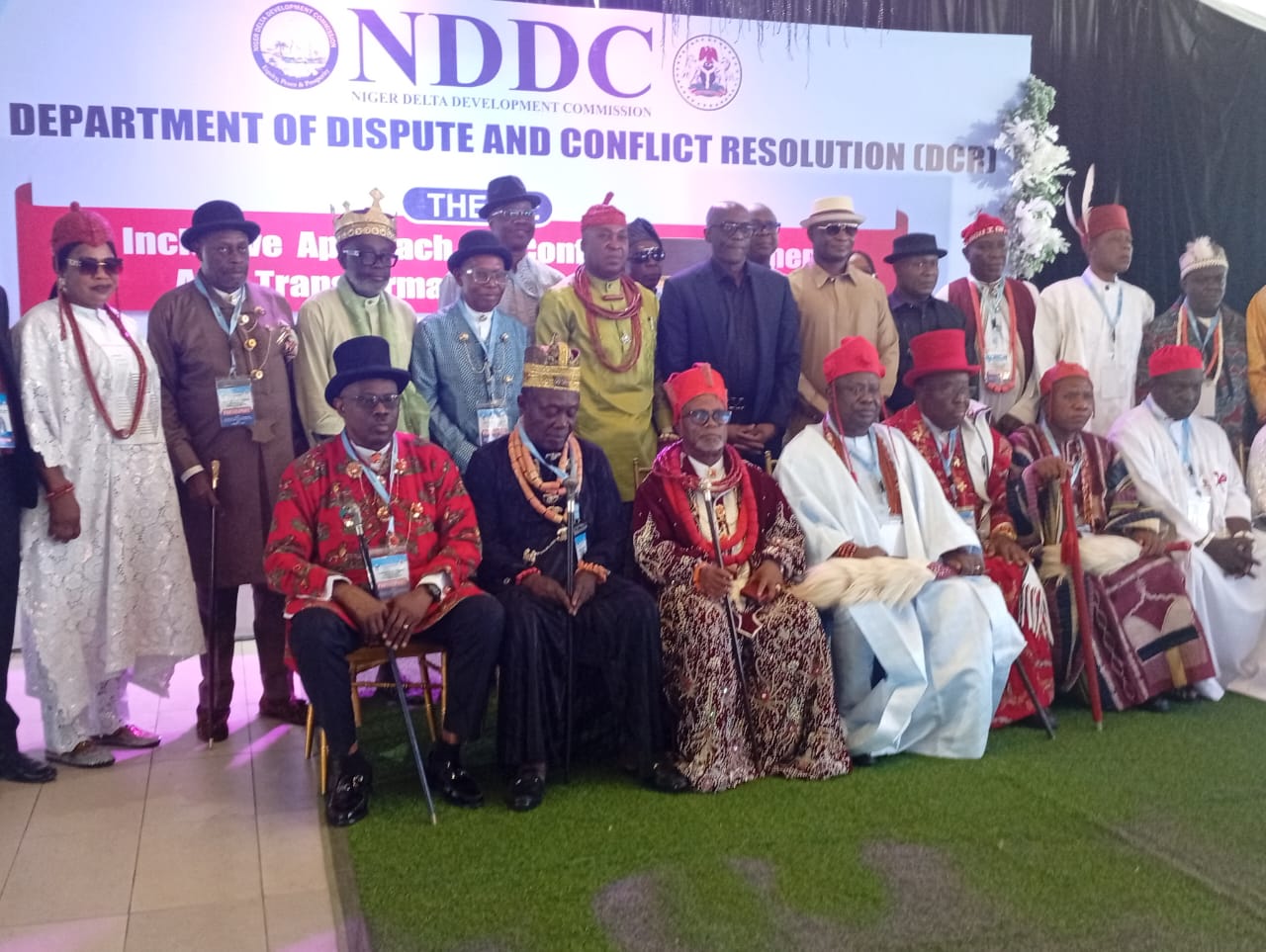
The Managing Director/Chief Executive Officer of Niger Delta Development Commission, (NDDC), Mr Samuel Ogbuku says the commission as an interventionist agency is building a regional integration among the Niger Delta states through inclusive approach to conflict management and Transformative Dispute Resolution.
Ogbuku stated this while speaking at a one _day capacity Building program organised by the Department of Conflict management and Dispute Resolution (DCR) of the Commission on inclusive conflict management and peace building mechanism organism for selected Niger Delta Stakeholders, Traditional Rulers , Religious leaders, Community leaders and women leaders held in port Harcourt, last Tuesday with the theme”Inclusive approach to conflict management and Transformative Dispute Resolution”
He disclosed that the essence of the workshop was to build the capacity of the traditional rulers and other community leaders who are custodians of the people so that they can be able to manage and resolve crisis in their various communities as the needs arises.
According to him,the essence of bringing together all the stakeholders from the Niger Delta states is because they have a common challenges confronting them in the region and the need to have an inclusive approach in resolving such issues even as he stressed the need for leaders in the region to close ranks together and collaborate to promote peace across the region.
He declared that the region is the most peaceful region across the country and attributed it to the various lessons learnt during the crisis period that engulfed the region which emanated from agitations for fair sharing and equitable distribution of natural resources to the region.
“We have learnt our lessons and some good , some also bad but we can not wait untill there is a problem and we must be proactive in handling the situation.we must be armed and equipped our community leaders and it must be all inclusive involving the traditional rulers, Religious leaders,CDCs and women leaders.Every body must synergise to bring peace to the region .
We know we have common challenges like Ecological degradation, Environmental challenges and under development.Although,our challenges may differ but we do have common crisis in the region.we can’t watch one part have crisis and others live in peace,so we must have a universal approach in solving them which is to embrace and preach peace.” he stated.
Ogbuku urged them to be inclusive in taking decisions in their various communities and ensure they people along, adding that the commission is looking at the micro level of engagement for peaceful stability in our region as custodians of the people and not the politicians .
” If our communities are peaceful, local, state and nation will be peaceful.we trust in your capacity to maintain peace in your various communities that informed the reason for choosing you all so as to equip and build your capacities”.he stated.
Also speaking ,the chairman of NDDC Governing Board, Chiedu Ebie harps on importantance of Alternative Dispute Resolution in resolving conflict, stressing that conflict is part of human existence but how to resolve it makes the difference.
He commended the managing Director and his team for giving approval for this workshop to train and build capacity of traditional leaders, religious leaders, community leaders, including women leaders and urged the participants to have a broader mindset during the training.
Earlier in his opening remarks,the Acting Director, DCR, NDDC, Barr Goodwin Ayewumi Ogedegbe averred that the program was designed to enhance their skills and knowledge in conflict management and peace building.
“The inclusive approaches that prioritise dialogue, empathy and collaboration enabling to address the root causes of conflict rather than merely symptoms.
The emphasis on inclusivity is particular important, it ensures that all voices are heard especially those marginalized group who are not part of decision making in the society ”
Amadi Akujobi



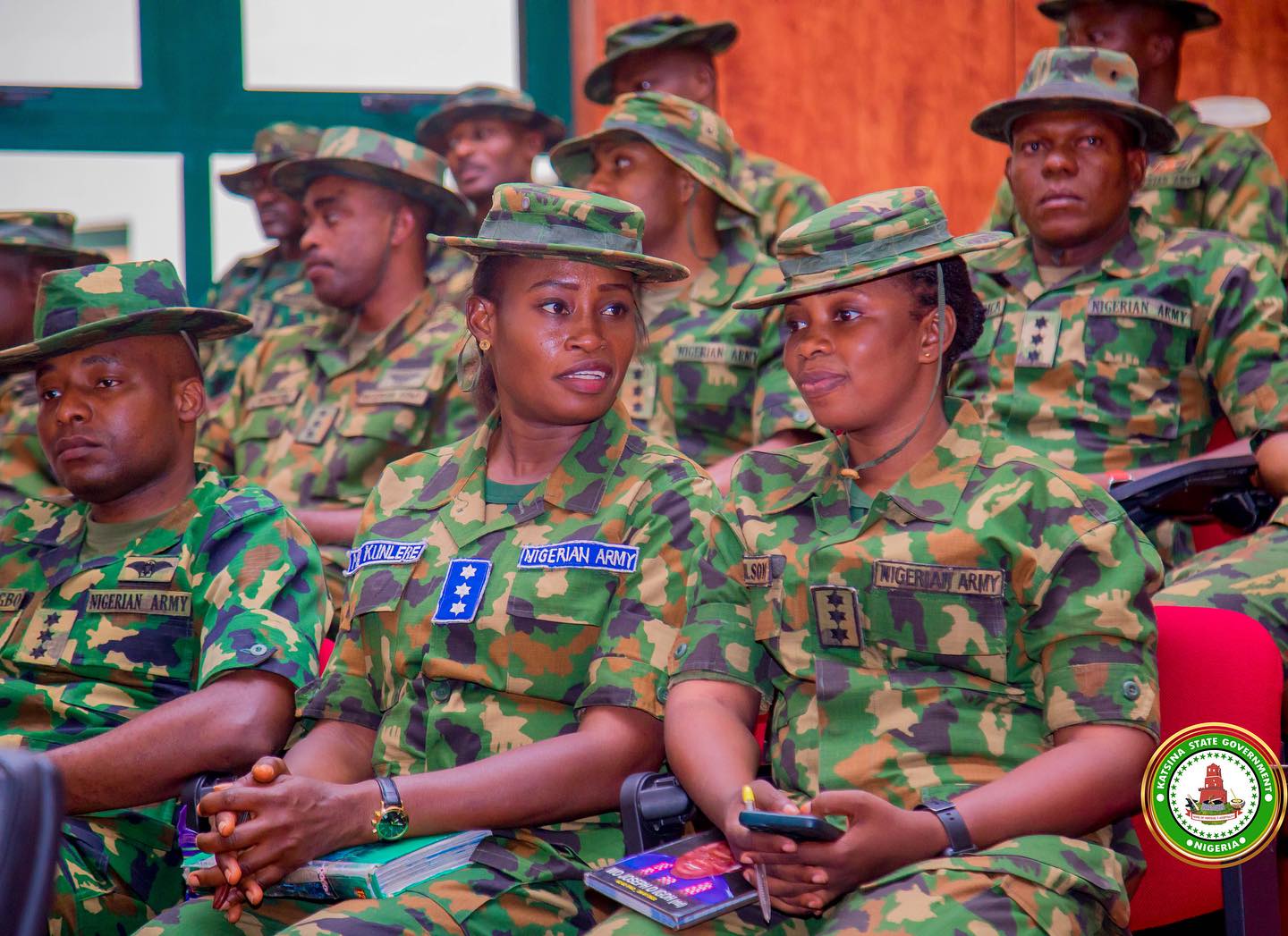
The Nigerian Army has passed out 384 female soldiers of the 90 Regular Recruit Intake (90 RRI) following the successful completion of Exercise SHINING STAR 2026 in Giri, Abuja.
In a post shared on the Nigerian Army’s X handle, yesterday, the Assistant Director, Army Public Relations, Nigerian Army Women Command, Giri, Abuja, Major Nsima Essien, said the passing-out ceremony was held on Wednesday, 28 October 2026, at the Nigerian Army School of Public Relations and Information (NASPRI), Giri, with the Chief of Army Staff (COAS), Lieutenant General W. Shaibu, represented by Major General Umar Gital Yusuf, as the Guest of Honour.
In his address, the Army Chief commended the female personnel for their dedication, resilience, discipline and commitment throughout the training exercise.
He described the successful completion of the exercise as an important milestone in their military careers and reaffirmed the Nigerian Army’s commitment to developing a professional, disciplined and combat-ready force.
He urged the newly trained soldiers to uphold the values of teamwork, courage, loyalty and professionalism, while applying the knowledge and skills acquired during the exercise to their military duties.
Shaibu emphasised the importance of continuous training, physical fitness and operational preparedness in addressing contemporary security challenges before declaring the exercise closed.
Earlier, the Acting Commander of the Nigerian Army Women Command (NAWC), Colonel S. M. Ahmed, welcomed the special guest and other dignitaries to the ceremony.
Ahmed highlighted the significance of Exercise SHINING STAR 2026 in enhancing the physical fitness, military competence, discipline and operational readiness of the female personnel.
He also acknowledged the contributions of the authorities, instructors and other personnel whose efforts ensured the successful conduct of the exercise.
Highlights of the ceremony included obstacle-crossing demonstrations and weapons-handling exercises, during which the female soldiers demonstrated their ability to strip and assemble AK-47 rifles while blindfolded.
The demonstrations showcased the personnel’s physical endurance, confidence, weapons-handling skills and proficiency in basic military tasks.
“A total of 384 female personnel of the 90 RRI participated in the exercise, alongside 14 male personnel from the Headquarters, Directorate of Army Physical Training (HQ DAPT), and 70 male personnel from the 167 Special Forces Battalion, “ Ahmed said.
The ceremony attracted senior military officers from various units and formations, representatives of paramilitary agencies and other invited guests.
Eight male and female personnel who distinguished themselves during the exercise received awards presented by the Acting Commander of NAWC.
The event also featured a vote of thanks delivered by one of the beneficiaries, the presentation of souvenirs and a group photograph to commemorate the successful completion of the exercise.
The exercise forms part of the Nigerian Army’s efforts to strengthen personnel development, improve military competence and enhance operational readiness in response to the country’s evolving security challenges.
As the world marked the 2026 International Day of the Girl Child on Sunday, October 11, 2026, a non-governmental organisation, Stand Up for Women Society (SWS) has intensified its campaign against child marriage, urging schoolgirls to prioritise education, protect their rights and develop skills for a better future.
The organisation joined the global observance of the day under the theme, “International Day of the Girl Child: End Child Marriage and Invest in Girls’ Rights,” with a sensitisation programme at Government Girls Secondary School, Oromenike, D-Line, Port Harcourt, Rivers State.
Led by its Vice Chairperson, Daba Benebo, the group engaged the students in discussions on the dangers of early marriage, teenage pregnancy, sexual abuse and other challenges that threaten the education, safety and development of the girl child.
Speaking during the programme, Benebo urged the students to reject early marriage and remain focused on their studies, stressing that education would empower them to make informed decisions about their lives and future.
She cautioned the girls against allowing anyone to deprive them of their right to education and dignity, advising them to report cases of harassment, abuse and other violations of their rights to the appropriate authorities.
Benebo assured the students that SWS remained available to support them whenever they encountered violations of their rights.
She also encouraged them to maintain discipline and responsible conduct while avoiding behaviours that could expose them to negative influences and jeopardise their future.
Beyond formal education, the SWS vice chairperson urged the students to acquire vocational skills that could provide additional opportunities for economic independence and help them navigate future challenges.
The sensitisation programme, enlivened by singing, dancing and to share their views and experiences on issues affecting the girl child interactive sessions, provided an opportunity for the students to share their views and experiences on issues affecting the girl child.
One of the major issues raised during the discussion was the appropriate age for marriage. While some participants maintained that 18 years was the constitutionally approved age, the discussion highlighted the need to consider not only age but also the maturity, preparedness and responsibilities associated with marriage.
The speaker stressed that marriage required adequate mental and emotional preparation, as well as the capacity to shoulder its responsibilities.
She therefore advised the students to concentrate on acquiring a sound education before considering marriage, noting that education would equip them with the knowledge and skills needed to make responsible decisions and manage family life.
The issue of teenage pregnancy also featured prominently during the question-and-answer session.
In addressing the subject, the speaker explained that pregnancy could occur even at the age of 12, using the example to underscore the vulnerability of young girls to the consequences of early sexual activity.
She advised the students to avoid sexual intercourse and prioritise their education, personal safety and future aspirations.
The discussion also examined the difficulties some girls encounter when living with hostile spouses, relatives or guardians.
Benebo encouraged the students to cultivate patience, humility and diligence, noting that these qualities could help them navigate difficult situations and build a brighter future.
However, she warned that patience and humility should never be interpreted as an obligation to endure violence, abuse or degrading treatment.
She urged girls experiencing hostile or abusive living conditions to seek help from their parents, trusted adults or appropriate support services rather than remain in environments that could expose them to physical or emotional trauma.
“When such happens, please return to your parents and engage in petty trade or learn a skill to support your education rather than stay in a hostile environment,” Benebo stressed.
The programme also underscored the importance of protecting girls from early marriage and other harmful practices that can disrupt their education, compromise their well-being and limit their opportunities in life.
It also reinforced the need for families, schools, communities and relevant organisations to work together to ensure that girls have access to education, vocational training, protection and the support they need to realise their potential.
For SWS, the message was clear: empowering the girl child begins with protecting her rights, investing in her education and equipping her with the confidence and skills to make informed choices about her future.
Stories by Kevin Nengia
The Egberipapa Foundation has unveiled a mass transit scheme aimed at easing transportation difficulties and improving connectivity among communities in the three Kalabari local government areas of Asari-Toru, Degema and Akuku-Toru in Rivers State.
The initiative, established by former Caretaker Committee Chairman of Akuku-Toru Local Government Council, High Chief Sobomabo Jackrich, popularly known as Egberipapa, is designed to make transportation more accessible and affordable for residents across the Kalabari area.
The scheme was launched on Monday, October 12, 2026, and is expected to address longstanding transportation challenges confronting residents, particularly those in riverine and hard-to-reach communities.
Communities expected to benefit from the initiative include Krakrama, Minama, Angulama, Sangama, Omekwe-Tariama and Omekwe-Ama.
The project is expected to ease movement within and beyond the Central Group area, while providing residents with a more convenient means of transportation for their daily activities.
For decades, transportation difficulties have posed significant challenges to several Kalabari communities, making movement between settlements both cumbersome and expensive. These challenges have also affected commercial activities, social interactions and access to essential services.
The introduction of the mass transit scheme is therefore expected to provide relief to residents, strengthen inter-community connections and stimulate economic activities across the benefiting communities.
Beyond improving mobility, the initiative could contribute to community development by facilitating the movement of people and goods, supporting local businesses and enhancing social and economic interactions within the Kalabari area.
As the scheme gets underway, attention will be focused on its implementation, accessibility and sustainability, as well as its capacity to deliver lasting transportation benefits to the target communities.
The initiative represents a potentially significant step towards addressing transportation challenges and promoting grassroots development across the Kalabari Kingdom.
-
Business2 days ago
PHICCIMA President Welcomes N60m BOI Micro, SMEs Initiatives
-
Business2 days ago
FG Commences N1.45trn Port Upgrade, Targets 20,000 Jobs
-
Politics2 days ago
Tinubu Hails Atiku For National Dev Efforts
-
Rivers2 days ago
Maritime Security: Expert Advocates Active Marine Surveillance, Coast Guard Agency Establishment …. Wants Presidential Endorsement for his group
-
News2 days ago
IG Suspends Wanted Declaration Against Obaigbena, Eight Others
-
Politics2 days ago
Political Killings: Consider Emergency Rule In Delta, Reps Tell Tinubu
-
Politics2 days ago
2027: 108 Rivers Groups Jostle To Work With Chinda’s Campaign
-
Business2 days ago
FAAN Reopens Owerri Airport … Limits Flight Operations To Daytime Services