Connect with us

Business

Refiners, Dangote Officials Oppose PMS Importation

Published

on

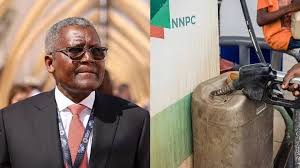
Domestic crude oil refiners and officials at the Dangote Petroleum Refinery have kicked against the commencement of the importation of Premium Motor Spirit (PMS), popularly called petrol, by major oil marketers in Nigeria.
The oil refiners alleged that some imported fuels were of low quality when compared with the ones produced by the Dangote refinery, a position that was reiterated by officials of the $20billion Lekki-based plant.
The Tide’s source had on Wednesday reportwd that three major oil marketers were expecting vessels of imported petrol this week, barring any unforeseen circumstances.
Dealers said about 141 million litres of PMS are being conveyed to Nigeria by oil vessels following the full deregulation of the downstream oil sector by the Federal Government.
They also noted that the recent hike in the pump prices of petrol produced by the Dangote refinery and released by the Nigerian National Petroleum Company Limited on Monday had allowed room for PMS imports.
Reacting to this on Thursday, officials at the Dangote refinery and the Crude Oil Refiners Association of Nigeria tackled the marketers, stressing that aside from the fact that the situation would increase the demand for United States dollars, the imported fuels were of low quality.
“These people (marketers) are importing dirty fuels that are toxic”, an impeccable source at the Dangote refinery who spoke to one of our correspondents in confidence, declared.
The source added. “They are importing substandard fuels and if allowed they will not stop importing such. We have more than enough, but these guys don’t want it. They want the game to continue, but the game will not continue”.
Another official at the plant stated that Nigerians should be concerned about the importation of substandard petroleum products into the country.
“You have to be concerned about the quality of the products they import. These are toxic fuels when you consider their blending process. All this is just to maximise profit”, the official stated.
Their positions were corroborated by the Publicity Secretary of CORAN, Eche Idoko, who alleged that some of the substandard fuels were blended in Malta or Togo.
He called for backward integration, saying some were afraid that Dangote would become a monopoly.
“The fear marketers are having is that Dangote will become a monopoly, but that has been taken care of by Dangote subscribing to our association. With the Petroleum Industry Act in place and all the agencies in play, there is no way that Dangote can become a monopoly.
“But for people who are used to a particular way, the fear of what the unknown holds keeps them back. I think that’s where a lot of marketers are now. They don’t know what to expect in this new regime and they are trying to struggle.
“So I would assure you this regime will pay them way better than the regime of importing petroleum products, where they sell to us, substandard products blended in Malta or Togo and imported into our country”, Idoko stated.
The domestic refiners’ association spokesperson condemned the continuous importation of fuel by marketers despite the coming on board of the Dangote refinery.
He said the focus at this time should be on how to export refined products instead of bringing substandard fuel into the country.
Idoko, however, recalled that some marketers who tried to import petroleum products could not do so after the removal of subsidies due to the foreign exchange crisis.
“For some people who are doing this import, at the end of the day, you import, and then you go back to CBN to give you ‘Form M’ to be able to access dollars.
“So, by importing, you are still not solving the problem because you still have to rely on dollars within Nigeria or use your naira to buy dollars from anywhere. And it will reduce the value of the naira. So you have not solved the problem.
“What enables the power of the currency is the level of its demand by other corresponding currencies. So, if you have dollars, francs, cefa, and other currencies chasing the naira because you want to buy a refined product of Nigeria, invariably, the value of the naira will appreciate”, he stated.
Responding to concerns about the quality of imported fuels, the Nigerian Midstream and Downstream Petroleum Regulatory Authority declared that all imported PMS would be subjected to at least three major tests by the agency before being allowed for sale across the country.
Its spokesperson, George Ene-Ita, earlier said marketers with approved import licenses were free to import PMS, but stressed that the products must be subjected to three major tests by the agency.
“The products must be subjected to our testing protocols at the ports. The products must conform to stipulated standards before we authorise them to move the fuels to their terminals.
“Also, before the smaller vessels bring it further inland to Nigeria our people will fly to the place to see the product and carry out some tests to ensure the right specification is upheld.
“Tests are also done at the products’ origins. And when the products come in, before they are released to the market, further tests would be conducted to ensure that they meet the specifications”, he said.


Continue Reading

Business

AFAN Unveils Plans To Boost Food Production In 2026

Published

on

The leadership of the All Farmers Association of Nigeria (AFAN) has set the tone for the new year with a renewed focus on food security, unity and long-term growth of the agricultural sector.
The association announced that its General Assembly of Farmers Congress will take place from January 15 to 17, 2026 at the Abuja Chamber of Commerce and Industries, along Lugbe Airport Road, in the Federal Capital Territory.
The gathering is expected to bring together farmers, policymakers, investors and development partners to shape a fresh direction for Nigerian agriculture.
In a New Year address to members and stakeholders, AFAN president, Dr Farouk Rabiu Mudi, said the congress would provide a strategic forum for reviewing past challenges and outlining practical solutions for the future.
He explained that the event would serve as a rallying point for innovation, collaboration and economic renewal within the sector.
Mudi commended farmers across the country for their determination and hard work, despite years of insecurity, climate-related pressures and economic uncertainty.
According to him, their resilience has kept food production alive and positioned agriculture as a stabilising force in the national economy.
He noted that AFAN intends to build on this strength by resetting agribusiness operations to improve productivity and sustainability.
The AFAN leader appealed to government institutions, private investors and development organisations to deepen their engagement with the association.
He stressed the need for collective action to confront persistent issues such as insecurity in farming communities, climate impacts and market instability.
He also urged members to put aside internal disputes and personal interests, encouraging cooperation and shared responsibility in pursuit of national development.
Mudi outlined key priorities that include increasing food output, expanding support for farmers at the grassroots and strengthening local manufacturing through partnerships with both domestic and international investors adding that reducing dependence on imports remains critical to protecting the economy and creating jobs.
He stated that the upcoming congress will feature the launch of AFAN’s twenty-five-year agricultural mechanisation roadmap, alongside the announcement of new partnerships designed to accelerate growth across the value chain.
Participants, he said wi also have opportunities for networking and knowledge exchange aimed at transforming agriculture into a more competitive and technology-driven sector.
As part of its modernisation drive, AFAN is further encouraging members nationwide to enrol for the newly introduced Digital ID Card.
Mudi said the initiative will improve transparency, ensure proper farmer identification and make it easier to access support programmes and services.
Reaffirming the association’s long-term goal, he said the vision of national food sufficiency by 2030 remains achievable if unity and collaboration are sustained.
He expressed optimism that with collective effort, Nigeria’s agricultural sector can overcome its challenges and deliver a more secure and prosperous future.
Lady Usendi
Continue Reading

Business

Industrialism, Agriculture To End Food Imports, ex-AfDB Adviser Tells FG

Published

on

Former Senior Special Adviser on Industrialisation to the President of the African Development Bank (AfDB), Professor Banji Oyelaran-Oyeyinka, has urged the Nigerian government to urgently industrialise the agricultural sector as a pathway to food security, economic diversification, and sustainable job creation.
Professor Oyelaran-Oyeyinka made the call while speaking at the Oyo State Economic Summit held at the International Institute of Tropical Agriculture (IITA), Ibadan, during a lecture titled “Industrialising Agriculture for Economic Development and Food Security: Enhancing National Economies and Sub-National Entities.”
He cautioned that despite Nigeria’s vast arable land and its position as a leading global producer of crops such as cassava and yams, the country remains food-deficient and heavily dependent on costly food imports.
He highlighted that Nigeria spends over one trillion naira annually importing wheat, rice, sugar, and fish, a persistent trend that drains foreign exchange, undermines local farmers, weakens industrial competitiveness, and fuels unemployment.
The development economist argued that the solution lay in transforming agriculture from a subsistence activity into a modern, industrial enterprise capable of producing surplus, supporting manufacturing, and driving broad-based economic growth.
He explained that industrialising agriculture does not mean replacing rural communities with factories, but rather empowering farmers with technology, skills, infrastructure, and market access to raise productivity and incomes.
According to Professor Oyelaran-Oyeyinka, Nigeria’s low agricultural productivity reflected deeper structural challenges, including weak education systems, limited skills, and inadequate investment in technology and infrastructure.
He noted that countries that successfully transitioned from low-income to middle-income status did so by modernising agriculture alongside industrial development, creating strong linkages between farms, processing industries, and markets.
Oyelaran-Oyeyinka highlighted stark yield disparities between Africa and Asia, noting that cereal yields across African countries remain less than a third of those achieved in East Asia.
This gap, he said, explains why African economies struggle to compete globally and why industrialisation efforts have stalled.
Professor Oyelaran-Oyeyinka outlined key pillars of agricultural industrialisation, including mechanisation, value addition, integrated supply chains, access to finance, improved seed systems, and targeted investment in human and technological capabilities.
He stressed that farms must be treated as “factories without roofs,” capable of feeding into agro-processing, manufacturing, and export industries.
The visiting professor at The Open University in Milton Keynes said the economic benefits of such a transformation would be far-reaching, including reduced dependence on oil, large-scale job creation, significant foreign exchange savings, and stronger national food security.
Drawing lessons from Vietnam, he described how deliberate agricultural modernisation helped transform the Southeast Asian country from a food importer into one of the world’s leading exporters of rice, coffee, cashew, and seafood.
Vietnam’s agribusiness exports, he said, now generate tens of billions of dollars annually and underpin the country’s wider industrial success.
He attributed Vietnam’s success to consistent policies, heavy investment in agro-processing, strong farmer–industry linkages, and the use of special economic zones to drive value addition and export competitiveness.
Oyelaran-Oyeyinka noted that similar models are emerging in Nigeria, including in Oyo State, but warned that they require reliable infrastructure, policy stability, and empowered governance to succeed.
The professor called on state governments to prioritise power, roads, and logistics, strengthen agricultural extension services, and create efficient special agro-industrial processing zones that attract major domestic and international investors.
He also urged the private sector to view agriculture as a profitable business frontier rather than a social obligation, noting that Nigeria’s future prosperity depended less on oil and more on harnessing the productive potential of its land and people.
“We are a nation that can feed itself and others, yet we remain food-insecure and overly dependent on imports. This paradox is holding back our economy.”
“Industrialising agriculture does not erase our rural roots; it transforms them into engines of productivity, wealth creation and national development.”
“Subsistence agriculture is both a cause and a consequence of technological backwardness, and no country has reached middle-income status without first modernising its agriculture.”
“A farm must be treated as a factory without a roof, connected to processing, logistics, finance and markets. Vietnam shows that agricultural transformation is not accidental; it is the result of deliberate policies that link farmers to industry and global markets.”
“The seeds of Nigeria’s prosperity are not buried in oil wells; they are sown in the fertile soils of our ecological zones,” he said.
Lady Usendi
Continue Reading

Business

Cashew Industry Can Generate $10bn Annually- Association

Published

on

The President of the National Cashew Association of Nigeria (NCAN), Dr Ojo Ajanaku, has said Nigeria could earn $10 billion annually from cashew production, with $3 billion coming from cashew sales alone.
Ajanaku made this known during a press conference organised ahead of the 4th National Cashew Day, scheduled to hold from Jan. 22 to Jan. 24 in Abuja, with the the theme: “Unlocking the Full Potential of Nigeria’s Cashew Industry”.
He said that poor export documentation and weak repatriation of proceeds were causing major losses to the Nigerian economy.
“A substantial volume of cashew exported from Nigeria leaves the country without proper export proceeds forms, as exporters allegedly avoid bringing earnings back into the country,” he said.
He said during the last export season alone, Nigeria reportedly exported over 400,000 tonnes of cashew valued at about $700 million.
Ajanaku noted that deliberate investments in production and processing could unlock far greater potentials.
“If Nigeria produces just two million tonnes of cashew annually, which is achievable in less than five years, and sells at an average of $1,500 per tonne, the country would earn about $3 billion yearly,” he said.
He added that beyond raw cashew exports, enormous value lies in processing and by-products such as Cashew Nut Shell Fluid (CNSF) and cashew cake, which are largely wasted locally.
“In Vietnam, cashew cake alone sells for about 95 cents per kilogram, while in Nigeria processors pay to dispose of it as waste,” he noted.
Ajanaku explained that full local processing of cashew and its by-products could generate not less than $10 billion annually for Nigeria while creating thousands of jobs across the value chain.
He stressed that Nigeria has the production capacity, while countries like Vietnam possess advanced processing technology.
The NCAN President further disclosed that the association is strengthening partnerships with key government institutions, including the Ministry of Finance, the Federal Ministry of Agriculture and Food Security, NEXIM Bank, and other agencies to reposition the sector.
He added that a landmark Memorandum of Understanding has been signed between Nigeria and Vietnam to facilitate technology transfer and deepen cooperation in cashew processing.
He expressed optimism that with sustained government support and effective regulation, the cashew industry could become a major driver of economic growth, foreign exchange earnings, and industrial development in Nigeria.
“Producing states should be given priority. For example, Kogi State, which has the highest cashew production in the country, has no factory. A lot of potentials can come from Kogi State for the country,” he said.
Also speaking, NCAN National Secretary, Augustine Edieme, said strategic plans are being made to showcase Nigeria’s potentials during the 4th National Cashew Day, which he described as a key opportunity to attract bigger investments and investors into the industry.
“We are not just talking about the cashew seeds. We need to crack the fruit shell and discover the value in cashew shells. Industrialisation of the cashew industry is key to driving the Nigerian economy,” he said.
The representative of the Federation of Agricultural Commodity Associations of Nigeria (FACAN), Sunday Ojonugwa, pledged that FACAN would optimally support the cashew association to ensure the sector reaches its full potential.
Lady Usendi
Continue Reading

Trending