
Health
Does Red Meat Have Health Benefits? (1)

For the past 40 years or so, red meat have has a bad press.
Many studies have indicated that red meat was responsible for many health malaise.
Of course, there are many conflicting claims about the impact of red meat on human health. Some believe it can cause harm, while others suggest it is not associated with disease or other ill effects.
Plus, there are ethical and environmental factors to consider (though this article does not delve into those conversations).
This article reviews the evidence on the health effects of red meat, including possible benefits and downsides of incorporating it into your regular diet.
Before discussing the health effects of red meat, it’s important to distinguish between different types of meat.
Red meat comes from mammals and is named such because it is red when raw.
Beef, pork, lamb, venison, and boar are examples of red meat. Chicken, turkey, and other meats from fowl (birds) are considered white meat. They are white when cooked.
Besides: what animal it came from, meat can be distinguished by how it is raised and processed. Here are some key terms to know:
· Conventional meat: Conventional meats are from animals that are usually raised in concentrated animal feeding operations (CAFOs) or “factory farms” that confine animals and provide them with grain-based feeds. Beef that is not labeled “organic” or “grass-fed” is likely conventional and from CAFO cows.
· Grass-fed meat: This meat comes from cows that graze on grass and forage for their feed. They are not raised in a CAFO.
· Organic meat. To have an organic label, meat must come from animals that are given 100 percent organic feed and forage and are raised in a way that accommodates grazing and other natural behaviours. They also do not receive antibiotics or hormones .
· Processed meats: These products are typically from conventionally raised animals and go through various processing methods, such as curing or smoking. Examples include sausages, hot dogs, and bacon.
· Unprocessed meats: Meat that are notcured, smoked, or otherwise heavily processed are typically referred to as unprocessed. That means ground beef and sirloin are considered unprocessed. However, since all meat is processed to some extent to be fit for consumer purchase, the term “unprocessed” really refers to minimally processed meats.
Nutritional value of red mea
Red meat provide a lot of nutrients.
For example, four ounces (113 grams) of 80 percent lean ground beef provides:
Calories: 287
Protein: 19 grams
Fat: 23 grams
Carbohydrates: 0 grams
Vitamin B12: 101% of the Daily Value (DV)
Zinc: 43% of the DV
Selenium: 31% of the DV
Niacin (Vitamin B3): 30% of the DV
Iron: 12% of the DV
The protein in beef is complete, meaning it contains all the essential amino acids that humans must get from food. Your body needs protein for muscle and tissue growth and maintenance.
Beef is also a great source of Vitamin B12 — a water-soluble nutrient necessary for nervous system functioning — and zinc, a mineral tat is vital for the immune system .
How meat is raised can affect nutritional composition. For example, grass-fed beef is typically lower in total and saturated fat and higher in omega-3 fatty acids compared with grain-fed beef.
However, all red meat is objectively nutritious in the sense that it provides protein, fat, and a variety of micronutrients. At the end of the day, the differences in nutritional composition between grass-fed and grain-fed beef are fairly small .
Highly processed meats like bacon and sausages, have a more notably different nutritional profile than less processed cuts of meat. In particular, they are often very high in salt and contain other preservatives.
So, when examining the health effects of meat, it is important to distinguish which kind of meat was included in any given study. Many studies on red meat may group together processed and unprocessed red meats making it more difficult to parse out differences.
To be Cont’d
Bottom of Form
Health effects of eating red meat
The effects of red meat on health have been heavily studied.
However, most of these studies are observational, meaning that they’re designed to detect associations but cannot prove causation (cause and effect).
Observational studies tend to have confounding variables — factors other than the ones being studied that might be influencing the outcome variable (10Trusted Source).
For example, an observational study may find that people who eat a lot of red meat have worse health outcomes.
However, perhaps this group of people may be more likely to smoke, drink alcohol frequently, or engage in other behaviors that contribute to undesirable health effects compared with those who don’t eat red meat.
It’s impossible to control for all of these factors and determine if red meat is a “cause” of any health outcome. That limitation is important to keep in mind when reviewing the research and determining if red meat is something you’d like to incorporate into your regular diet.
Red meat and heart disease
Several observational studies show that red meat is associated with a greater risk of death, including from heart disease
Nevertheless, it appears that not all red meat has the same health effects. Plus, it’s important to remember the limitations of observational studies.
A large study including 134,297 individuals found that high intake of processed meat (150 or more grams per week) was significantly associated with an increased risk of death and heart disease.
However, no association was found for unprocessed red meat consumption, even in amounts of 250 or more grams per week .
Randomized controlled trials — which are considered to be higher quality than observational studies — appear to support these results.
One review of controlled studies concluded that eating half a serving (1.25 ounces), or more of unprocessed red meat daily doesn’t adversely affect heart disease risk factors, such as blood lipids and blood pressure levels.
One of the reasons processed meats may be associated with heart disease risk is the high salt content. Excessive sodium intake has been linked to high blood pressure .
Overall, it’s unclear if, how, and why unprocessed or processed red meats are connected to heart disease. We need more high quality studies to help contextualize the data.
Red meat and cancer
Observational studies also show that red meat consumption is associated with an increased risk of certain cancers, especially colorectal and breast cancers .
Similar to the studies on heart disease, it appears that the type of meat makes a difference.
Consumption of processed red meats, like bacon and sausage, has been linked to an increased risk of colorectal cancer. This doesn’t appear to be true for unprocessed red meats.
What’s more, a review of studies found that high processed meat intake was associated with a larger increase in breast cancer risk compared with high unprocessed meat intake.
It’s not fully understood how processed meats increase the risk of certain cancers.
However, it’s thought that using nitrites to cure meat and smoking meats can produce carcinogenic (cancer-causing) compounds. High heat cooking, such as grilling, may also create cancer-promoting compounds.
The way red meat is cooked also affects how it influences your health. When meat is cooked at a high temperature, it can form harmful compounds.
These include heterocyclic amines (HCAs), polycyclic aromatic hydrocarbons (PAHs) and advanced glycation end-products (AGEs) .
According to the National Cancer Institute, lab experiments suggest these compounds may change DNA and promote cancer development.
More research is needed, though.
Here are some tips to minimize the formation of these substances when cooking red meat.
· Use gentler cooking methods, like stewing and steaming, instead of grilling and frying.
· Minimize cooking at high heats and don’t expose your meat directly to a flame.
· Limit charred and smoked food. If your meat is burnt, cut away the charred pieces.
· If you must cook at a high heat, flip your meat frequently to prevent it from burning.
· Soak your meat in a marinade, like one made with honey and herbs, before cooking. Marinating may help decrease the formation of HCAs.
Red meat appears to have health benefits and potential downsides.
Unprocessed red meat is highly nutritious and loaded with protein, vitamins, and minerals that support bodily functions. But processed red meats, such as bacon and sausage, tend to be higher in salt and may contain preservatives that could have negative health effects.
Some observational studies link red meat consumption to higher risks of heart disease, certain cancers, and death. However, research shows that the type of red meat — and how it’s prepared — seems to influence how it affects health.
Overall, more research is needed into the effects of red meats on human health.
At the end of the day, whether you should eat red meat is personal. Red meat, especially unprocessed red meat, can be incorporated into a balanced diet.
By: Kevin Nengia



The Federal Government has begun a scheme to battle malnutrition in children.
Tagged, “Nutrition 774 Initiative”, the programme was unveiled by Vice President Kashim Shettima as it falls within a framework for the Federal Government’s comprehensive vision for a nationwide nutrition programme to address malnutrition and food insecurity in Nigeria.
The proposed programme, “Nutrition 774 Initiative,” aims to improve nutritional outcomes across all 774 local government areas (LGAs) in the country.
Speaking yesterday during a roundtable with development partners at the Presidential Villa, Abuja, VP Shettima said the initiative aligns with President Bola Ahmed Tinubu’s broader focus on food security and availability across Nigeria.”The priority with which His Excellency, President Bola Ahmed Tinubu, has pursued food availability has gone hand-in-hand with our commitment to eradicating malnutrition.
“Our aspiration as a nation goes beyond the mere abundance of food in our barns and warehouses. We cannot claim victory unless there is certainty that each household across Nigeria has access to the preferred and prescribed diets essential for a healthy life,” the vice president stated.
It would be recalled that the 144th meeting of the National Economic Council (NEC) had in September endorsed the Nutrition 774 programme as a primary platform for combating malnutrition within Nigerian communities.
The council encouraged development partners to provide financial and technical assistance to support this initiative.
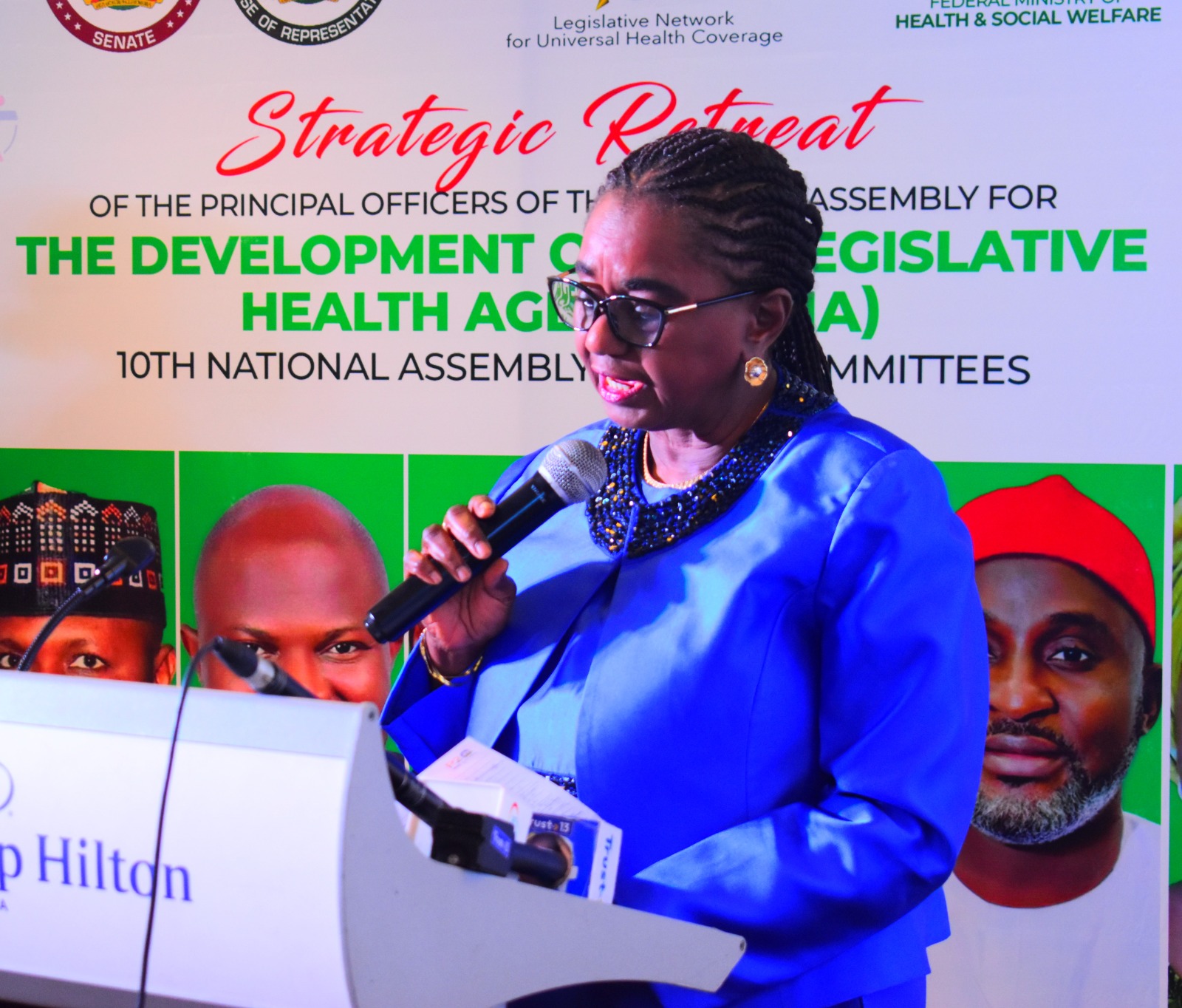
The importance of e-Health devices and digital health solutions in improving Nigeria’s healthcare system has been emphasised by Senator Ipalibo Harry Banigo, Chairman of the Senate Committee on Health, Secondary and Tertiary.
She also stressed that health is a multilayered activity and a multisectoral collaboration that requires legislators to work together to provide legislation, implement policies, and track funds effectively.
Banigo, who represents Rivers West Senatorial District in the National Assembly, made these remarks at the 5th Annual Legislative Summit on Health in Abuja, themed “Improving Legislative Stewardship and Accountability for Universal Health Coverage.”
She highlighted the potential of eHealth devices, especially given Nigeria’s large population and limited healthcare professionals.
“We can develop platforms that can be accessed through simple phones, even in remote villages, to provide health education and interventions,” she said.
“We are not talking about highfalutin things; we are talking about what will impact communities at the grassroots level, particularly pro-poor initiatives that will benefit vulnerable populations.”
Banigo also emphasized the importance of accountability and effective care, encouraging legislators to share knowledge, engage in peer reviews, and exchange information to achieve better health outcomes.
She recalled the cholera outbreak, where basic health education and interventions could have been delivered via mobile phones, preventing preventable deaths.
The 5th Annual Legislative Summit on Health brought together federal and state legislators, the Coordinating Minister of Health and Social Welfare, Prof. Muhammad Pate, the World Health Organisation’s representative in Nigeria, Dr. Walter Mulombo, and other dignitaries.
-

 News2 days ago
RSG Targets Nine Million Residents in Mosquito Net Distribution Campaign
-

 Oil & Energy2 days ago
Aiyedatiwa Signs New Electricity Bill
-

 Oil & Energy2 days ago
NLNG Commissions Research And Innovation Centre In RSU
-

 Maritime2 days ago
Marine Minister Commends President Tinubu On NPERA Bill Assent
-

 News2 days ago
KenPoly Holds Eight Convocations, August 29
-

 News2 days ago
RSG Begins Another Phase of Projects Commissioning Today
-

 News2 days ago
RMAFC Completes Revenue Sharing Review, Proposes New Pay
-

 Maritime2 days ago
NAGAFF Petitions IGP Over Alleged Maritime Police Harassment