
Nation
No Rehabilitated Ex-Boko Haram Fighter Recruited Into Military-CDS

The Chief of Defence Staff (CDS), Gen Lucky Irabor, says none of the over 1,000 rehabilitated ex-Boko Haram fighters have been recruited into the Nigerian military.
Irabor said at the Stakeholders’ Meeting of Operation Safe Corridor (OPSC) yesterday in Abuja, that Nigeria would never recruit any ex-fighter into its military.
The CDS, represented by the Chief of Defence Training and Operations, Maj.-Gen. Adeyemi Yekini, assured Nigerians that none of such ex-fighters would also be recruited into any of the sister security services in the country.
According to him, the concerns over alleged recruitment of rehabilitated ex-fighters into the military and paramilitary agencies were unfounded, as stringent safeguards had been put in place to prevent such.
The CDS disclosed that the Deradicalisation, Rehabilitation and Reintegration (DRR) programme of OPSC had so far graduated and reintegrated over 1,000 clients, including 16 foreign nationals.
He added that a total of 559 new clients were currently going through the DRR programme in Gombe State.
Irabor explained that OPSC had improved the programme’s principles, practices and procedures over the years, making the initiative a model that had been replicated in all the Lake Chad Basin countries.
According to him, it has also elicited the interest of both local and international bodies including the academia.
“The DRR Programme consists of psychological, humanitarian treatments that reassure and provide alternatives to low-profile combatants through psycho-social, psycho-spiritual therapies, recreations, vocational training, and introductory western education.
“The programme is countering Boko Haram and Islamic States of West African Province (ISWAP) ideologies and reducing their recruitment drive while depleting the critical mass of their fighting force.
“OPSC is not a purely military operation, as some have suggested, it is a peace building effort and its essential duties are carried out by relevant MDAS with the necessary expertise.
“The military and other security and law enforcement agencies are involved to the extent of creating an enabling environment and leadership for the DRR programme to function efficiently,” he said.
Irabor said the approaches, practices, procedures, strategies, and tactics of the military in its counter-insurgency operation had continued to evolve, to effectively tackle the amorphous nature of the threat.
According to him, the initial response was a single service operation that was limited to only the formations and units based in Adamawa, Borno, and Yobe States.
“However, as time passed, several task forces were formed, eventually leading to the formation of a Theatre Command with several components including a Naval Task Force and an Aviation Task Force to weaken the insurgents.
“In furtherance of this objective, we are committed to forging stronger synergy between the Services and other security agencies.
“All of these efforts have re-energised the fight against the insurgents, and the AFN has continuously made progress towards ending the war in favour of Nigerian government,” the CDS said.
The Coordinator of OPSC, Brig.-Gen. Joseph Maina, said the operation began in September 2015 to encourage willing and repentant Boko Haram members to surrender and go through a well-structured DRR programme.
He said that OPSC was a multi-agency, multi-national humanitarian scheme backed by Nigeria’s Constitution, as well as International Humanitarian and Human Right Laws.
According to him, OPSC has admitted over 1,070 clients comprising 1,064 Nigerians and 16 foreign nationals from Cameroon, Chad and Niger since 2016.
“All the foreign clients were transferred to their respective national authorities for reintegration.
“Presently, there are 559 clients undergoing the programme in the camp, out of which two clients are Chadian citizens.
“It is also important to mention that one client was repatriated to the University of Maiduguri Teaching Hospital for expert psychiatric management during the initial documentation stages of the programme,” he said.
Maina disclosed that OPSC and its partners had been conducting follow-up activities to assess the performance of the clients in the communities, adding that reports from these exercises had so far been encouraging.
The coordinator said the stakeholders’ meeting was convened to work out modalities for the smooth transfer of the 559 clients presently in the camp to their national and states authorities for re-integration after graduation in January 2022.
He said it was expected that the stakeholders would be fully abreast with activities of OPSC and DRR programme in particular, among other issues.



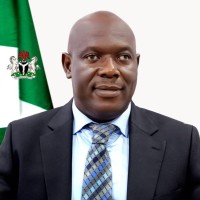
The Hydrocarbon Pollution Remediation Project (HYPREP) has commemorated the 15th anniversary of the release of the United Nations Environment Programme (UNEP) Environmental Assessment Report on Ogoniland, reaffirming its commitment to restoring the environment and improving the livelihoods of affected communities.
In a statement signed by the Project Coordinator, Prof Nenibarini Zabbey, to commemorate the anniversary, HYPREP described the anniversary as a significant milestone in Nigeria’s environmental restoration efforts, noting that the project has made remarkable progress in implementing the recommendations of the landmark UNEP report released on August 4, 2011.
The UNEP report had revealed extensive oil pollution across Ogoniland, severe environmental degradation, and serious public health risks resulting from decades of petroleum operations. It also recommended an initial $1 billion fund to commence the cleanup of the affected communities.
According to HYPREP, the Federal Government formally launched the Ogoni clean-up in 2016, while the Project Coordination Office was established in 2017 to drive the implementation of UNEP’s recommendations.
Zabbey said the current administration has continued to prioritise the project under the Renewed Hope Agenda.
Providing an update on the cleanup, the Project Coordinator disclosed that 30 of the 65 contaminated sites identified by UNEP have been fully remediated, while work is ongoing at several medium- and high-risk locations. It also stated that more than 1.5 million mangrove seedlings have been planted as part of what it described as the world’s largest restoration of oil-degraded mangroves, with over 1,000 hectares of shoreline already rehabilitated.
Zabbey further revealed that 49 Ogoni communities have been connected to potable water schemes through multiple water projects and booster stations aimed at providing safe drinking water across the region.
In the health sector, he said the 100-bed Ogoni Specialist Hospital in Kpite and the 43-bed Cottage Hospital in Buan are nearing completion, adding that several existing health facilities have been upgraded with modern medical equipment, while five ambulances have been donated to improve emergency healthcare services. The Project Coordinator also disclosed that a three-year human health biomonitoring study is being conducted in collaboration with the World Health Organization’s International Agency for Research on Cancer (IARC).
On economic empowerment, Zabbey stated that the Project has created more than 8,000 direct jobs and trained thousands of Ogoni youths and women in various vocational and technical skills, including software development, cybersecurity, aviation, commercial diving, seafaring, mechatronics, and creative arts. The project also reported awarding scholarships to more than 1,000 students, providing grants to small businesses, and supporting persons living with special needs through skills acquisition programmes.
The statement further highlighted ongoing legacy projects, including the Ogoni Power Project and the Centre of Excellence for Environmental Restoration, which it said is about 96 per cent complete. HYPREP also welcomed the recent designation of the Ogoni Wetland as a Ramsar Site of International Importance and pledged to continue promoting biodiversity conservation and sustainable management of the ecosystem.
Marking the anniversary, Zabbey said the progress achieved over the past 15 years demonstrates the collective commitment of government, development partners, stakeholders, and local communities to restoring Ogoniland. He called for renewed collaboration to sustain the cleanup effort, promote environmental sustainability, and support the long-term development of the region. 3
-

 News2 days ago
RSG Targets Nine Million Residents in Mosquito Net Distribution Campaign
-

 Oil & Energy2 days ago
Aiyedatiwa Signs New Electricity Bill
-

 Oil & Energy2 days ago
NLNG Commissions Research And Innovation Centre In RSU
-

 Maritime2 days ago
Marine Minister Commends President Tinubu On NPERA Bill Assent
-

 News2 days ago
KenPoly Holds Eight Convocations, August 29
-

 News2 days ago
RSG Begins Another Phase of Projects Commissioning Today
-

 News2 days ago
RMAFC Completes Revenue Sharing Review, Proposes New Pay
-

 Maritime2 days ago
NAGAFF Petitions IGP Over Alleged Maritime Police Harassment