
News
How APC, Lyon Lost S’Court Review Appeal …Lawyers Fined N60m For Frivolous Applications

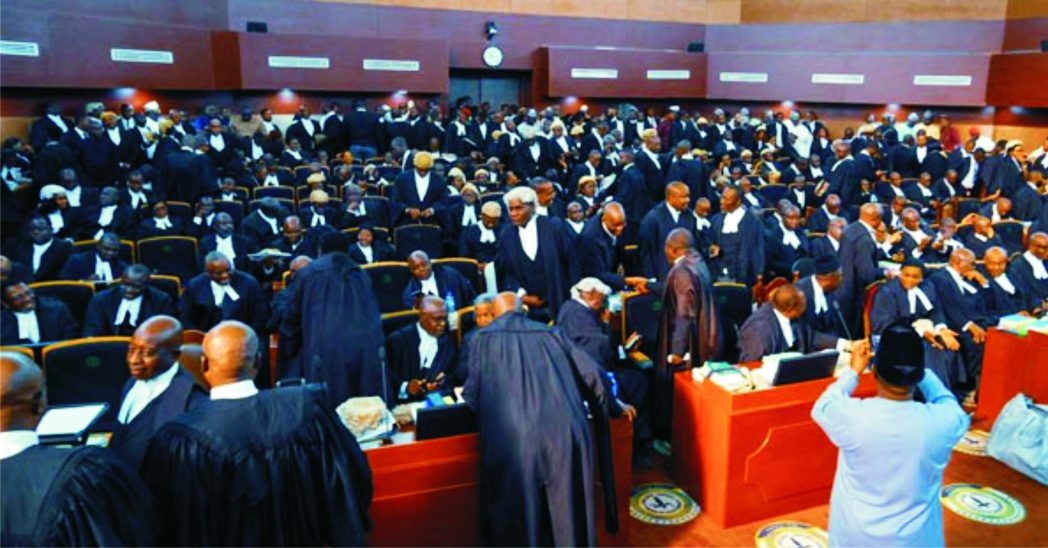
The sacked governor-elect, David Lyon and the All Progressives Congress (APC) have lost their bids to overturn the Supreme Court ruling of February 13, which sacked Lyon as the duly elected governor of Bayelsa State.
In a ruling, yesterday, the Supreme Court dismissed the applications for review of the judgment, which rendered Lyon’s election invalid because of what the five-man panel of justices attributed to the alleged certificate forgery committed by Lyon’s running mate, Senator Biobarakuma Degi-Eremienyo.
According to Justice Amina Augie, who read the judgment, the applications lacked merit, adding that the decisions of the court are final, position that may well foreshadow the outcome of other reviews pending before the apex court.
“There must be an end to litigation. Even if we review this judgment, every disaffected litigant will bring similar applications, and the finality of Supreme Court judgments will be lost,” Augie said.
She added that the applicants failed to point out errors in the February 13 judgment.
Augie then pronounced that the judgment is final for all ages and that no court on earth can review the judgment.
She added that the applications are frivolous and vexatious.
The Supreme Court panel that heard the review arguments was composed of seven justices, headed by Justice Sylvester Ngwuta.
The panel gave its judgement after listening to the submissions by lawyers.
The Supreme Court also fined Chief Afe Babalola (SAN) and Chief Wole Olanipekun (SAN) N30million each for agreeing to file an application for the review of the apex court’s judgment on Bayelsa election.
Justice Amina Augie announced the fine while reading the judgment in the applications for a review of its February 13, 2020 judgment which overturned the All Progressives Congress’ victory in the last governorship election in Bayelsa State.
With tears in her eyes, the justice regretted that “very senior” lawyers were responsible for filing the applications.
Subsequently, the apex court awarded the costs of N10million to be personally paid by David Lyon’s lawyer, Chief Afe Babalola (SAN), and APC’s lawyer, Olanipekun (SAN).
It ruled that each of the lawyers must pay the N10million to each of the three respondents – the Peoples Democratic Party, Governor Duoye Diri, and the Deputy Governor of Bayelsa State, Lawrence Ewhruojakpo, bringing the total amount to be paid to N60million.
She said the applications amounted to an invitation for the apex court to sit in appeal on its own judgment in violation of the Constitution.
A seven-man panel of the apex court led by Justice Sylvester Ngwuta, described the applications filed by the APC and its governorship candidate at the poll, Lyon, as vexatious, frivolous, and constituted a gross abuse of court process.
Justice Augie held that it would amount to violating the finality of its judgment if the applications were granted.
She said granting the applications would open a floodgate for the review of decisions of the Supreme Court.
“There must be an end to litigation,” she said, adding, “the decision of the Supreme Court is final for ages in a matter” and only legislation could change it.
Legal luminary, Afe Babalola, who represented Lyon and his deputy governor-elect, Senator Biobarakuma Degi-Eremienyo, argued that the apex court has the power to set aside its earlier judgment.
The senior advocate of Nigeria insisted that the application was not for a review of the judgment but to set aside the judgment sacking Lyon who overwhelmingly won the election.
Babalola added that the judgment of the court delivered on February 13, amounts to a denial of fair hearing, and urged the court to reverse its decision.
Another senior advocate, Chief Wole Olanipekun, who represented the APC, asked the apex court to set aside its judgment on the ground that the court had no jurisdiction to have entertained the appeal in the first place.
He explained that the suit was first filed at the Federal High Court as a pre-election matter, which is the foundation of the matter that made the appeal get to the apex court.
Olanipekun, therefore, restated his argument that the apex court lacks the jurisdiction to entertain the matter.
He added that all humans are fallible, so, it is not beyond the apex court to make a mistake.
Olanipekun also faulted the interpretation of the judgment of the court by INEC which issued a certificate of return to Senator Douye Diri of the PDP, urging the court to grant the application to set aside its earlier judgment.
Counsel to the PDP, Tayo Oyetibo, also a SAN, argued that the application by David Lyon was an invitation to violate the nation’s Constitution.
He added that it was also an invitation to the court to ‘sit in judgment’ over its earlier decision which must not be allowed while urging the court to summarily dismiss the application.
Oyetibo argued that all areas were well considered before the apex court arrived at its decision on February 13, insisting that the court cannot change the operative part of any judgment delivered by the apex court which was the final court in the land.
Citing Section 22 of the Supreme Court Act, Oyetibo said, “the court has wide powers to make any order, including the order asking INEC to withdraw the certificate issued to David Lyon. The order made by the court was not out of order.”
He explained that the facts and justice of the case warranted the decision of the court, and there was no error in it whatsoever.
He added that if any error is felt, it can only be addressed in a future case.
Oyetibo insisted that the grant of this application will engender judicial stability as people will now wait for a possible review before acting on any judgment of the apex court.
He urged the court to dismiss the application and not to disturb the status quo.
Yunus Ustaz Usman, who represented Governor Douye Diri, aligned himself with the submissions of Oyetibo, insisting that the court cannot make any order outside the judgment, especially after a full-blown trial.
He reaffirmed the finality of the court as the highest of the land, urging the court to dismiss the application in the interest of the overall survival of the country.
Counsel to Bayelsa State Deputy Governor, Senator Lawrence Ewhrudjakpo, Chris Uche, vehemently opposed the application for a review of the judgment of the apex court, and urged the court to dismiss the applications filed by Lyon and the APC for totally lacking in merit.
Uche argued that the Supreme Court lacks the power to sit on appeal over any judgment delivered by the same court.
He added that it was a case of outright abuse of court process, stating that the court must ‘jealously’ guard its judgments, otherwise; there will be a floodgate of applications for review which will lead to a bastardization of the judicial process.
He urged the court to resist the dangerous invitation to violate the nation’s Constitution.
Present to witness the proceeding was the National Chairman of the APC, Comrade Adams Oshiomhole.
It would be recalled that the Supreme Court had earlier struck out the appeal filed by the All Progressives Congress (APC) for the review of the Bayelsa Governorship election.
The court, in its ruling, said the appeal lacked merit, and as a result, struck out.
Lyon and APC, in their applications argued by Chief Afe Babalola SAN and Chief Wole Olanipekun SAN, respectively, had prayed the court to review and set aside the judgment of February 13, which voided their participation in the November 16, governorship election.
But after taking legal fireworks from parties in the matter, Justice Sylvester Ngwuta, had announced the stand down of the matter, adding that the panel would reconvene soon for its decision in the matter.
Babalola had in his submissions said that the Supreme Court has inherent decision and power to set aside its own decision because the judgment which voided the election of his client was a nullity on account of denial of fair hearing of his client.
According to him, the procedure adopted by the apex court on February 13 was wrong because there was no cause of action at the time the Supreme Court gave judgment against Lyon.
On his part, Olanipekun argued that the apex court erred in law when it invoked Section 36 of the Electoral Act to disqualify the APC’s participation in the election when the Federal High Court judgment restored by the Supreme Court did not disqualify the party’s eligibility.
He further argued that the Supreme Court cannot give consequential order on a relief not granted by a trial court except due to human error.
However, counsel to the Peoples Democratic Party (PDP), Mr Tayo Oyetibo SAN, informed the apex court that the application by APC and its governorship candidate were dangerous invitation to the Supreme Court to violate Section 285 of the 1999 Constitution, for the court to sit on appeal over its own matter.
Oyetibo argued that having delivered final judgment in the matter on merit on February 13, the court has no jurisdiction to sit on appeal in the judgment, adding that it is scandalous to ask the apex court to review the judgment.
He further stated that the apex court was right in disqualifying Lyon as the governor-elect because section 187 of the 1999 Constitution is clear and unambiguous to the effect that a governorship candidate who has no deputy candidate is not qualified to contest any governorship election in Nigeria.
“When Supreme Court gives judgment, it is deemed correct. It has never happened in the history of Supreme Court to reverse itself; its judgment is final and finality. And whatever Supreme Court says in the interpretation of the law is the law”.
His submissions were adopted by other respondents in the matter.
Reacting, the Peoples Democratic Party (PDP), yesterday, raised the alarm accusing the ruling All Progressives Congress (APC) of currently mounting pressure on the Supreme Court to restrain itself from reversing the flawed judgment on the Imo State Governorship election.
It also alleged that this clandestine move came despite obvious mistakes in the controversial judgement, which is allegedly threatening the stability of the nation.
The party, however, hailed yesterday’s verdict of the Supreme Court on Bayelsa State governorship election but noted that the grounds for the demands by the PDP and majority of Nigerians for the reversal of Imo State governorship election judgment are completely different from those of Bayelsa.
The PDP spokesman, Kola Ologbondiyan, said this in a statement made available to newsmen in Abuja, yesterday.
Further, the party explained that its demand on Imo was not in any way in contestation of the authority and finality of the Supreme Court.
It affirmed that the PDP’s position was only a patriotic effort to assist the Supreme Court to affirm its infallibility by correcting the inherent mistakes in the judgment which came as a result of misleading presentation to it by the APC.
Part of the statement reads, “It is, therefore, instructive to note that the various election matters before the Supreme Court were brought on clearly distinctive grounds and each should be treated on its merit before the law.
“The party said the only reason APC was pushing for a review of the Supreme Court’s valid and flawless judgment on the Bayelsa and Zamfara governorship elections was to cause confusion and blackmail the Supreme Court from treating the Imo case on merit.
“The PDP maintained that the grounds for the reversal of Imo judgment are unambiguously constitutional and completely distinct from APC’s attempt to blackmail the Supreme Court with their demands on the Bayelsa and Zamfara states governorship election.
“The party, therefore, urged the Supreme Court not to succumb to the threats and blackmail by APC to push it restrain itself from looking at the merit of the Imo case; correcting the mistakes and reversing the flawed judgment.”
Also reacting, the Bayelsa Governor, Senator Douye Diri, has said the Supreme Court’s ruling was only affirmation of God’s judgement on the state.
Diri, in a statement by his Acting Chief Press Secretary, Daniel Alabrah, also said that there was no victor no vanquished as the victory was for all Bayelsans regardless of party affiliation.
He commended the courage and sagacity of the apex court justices in affirming their earlier judgement of February 13, 2020.
He said: “Once again, I describe myself as a miracle governor. So, the Supreme Court just affirmed the judgement of the Almighty God, who made it possible for me to become the governor of Bayelsa State.
“For me, there is no victor no vanquished as the victory is for all Bayelsans. It is not a winner takes all.
“My message is that of reconciliation as I will run an all-inclusive government. Let everyone that is aggrieved sheathe their swords. Let us think about Bayelsa first and ourselves last. By this judgement, it is clear the final hurdle has been cleared.”
Diri said his government would bring in people that had the wherewithal to contribute to development of the state and not those who would run it down.
He urged Bayelsans whose stock in trade was to pull others down to change their ways and think about building the state.
But the All Progressives Congress (APC), yesterday, kept mum over the reaffirmation of Senator Duoye Diri as the elected governor of Bayelsa State by the Supreme Court.
The National Chairman, Comrade Adams Oshiomhole, who had earlier called for a press conference in his office at the party’s national Secretariat later called it off.
No reason was given for the call off.
The All Progressives Congress had earlier applied for a review of the February 13 judgement of the Supreme Court that disqualified its governorship candidate, Mr. David Lyon.


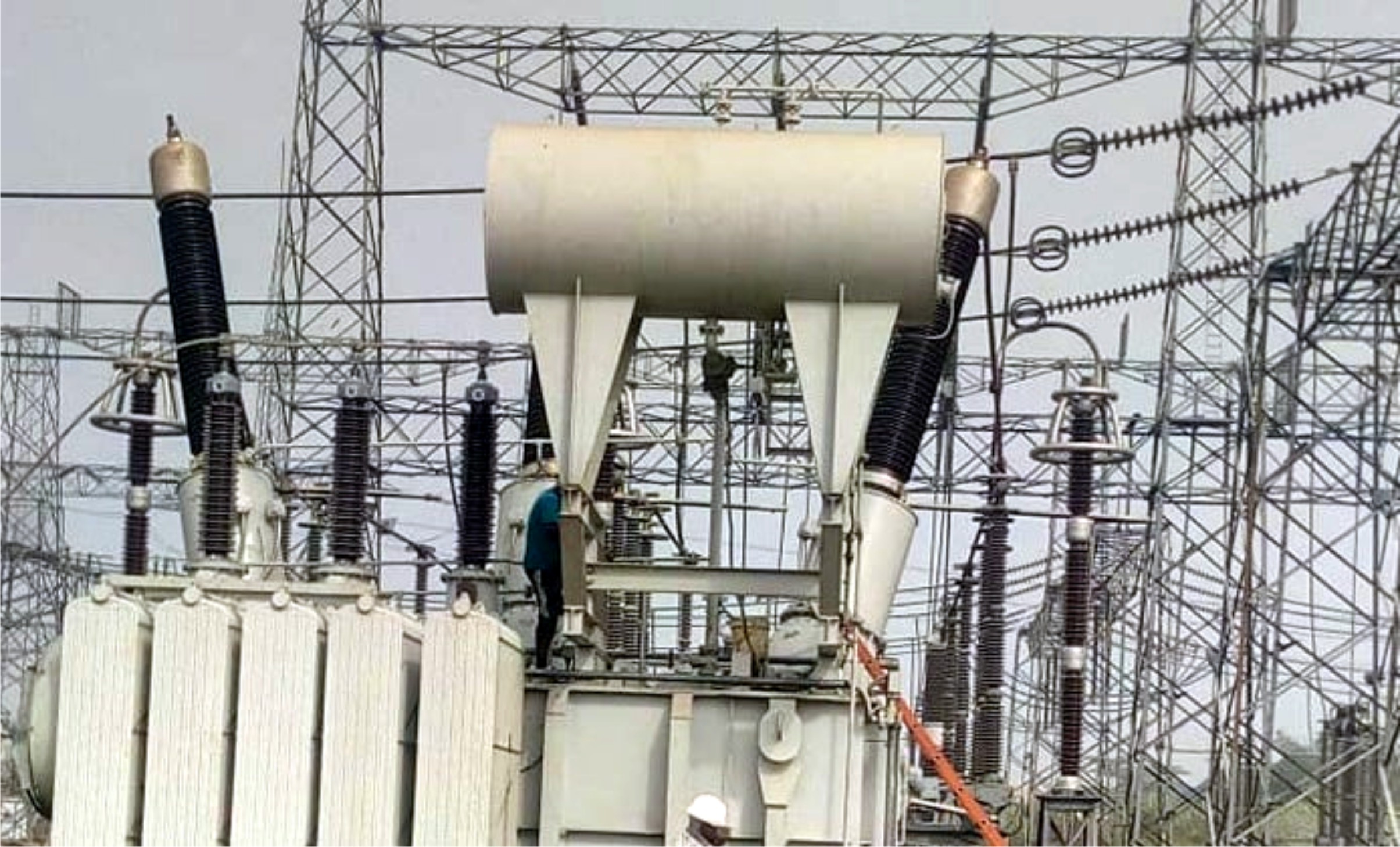
The Federal Government says it has invested more than N10tn in Nigeria’s electricity sector since its privatisation in 2013, but the intervention has yet to deliver the reliable power supply expected from the reform.
The Managing Director of FGN Power Company Limited, Kenny Anuwe, disclosed this yesterday at the sixth annual conference of the Power Correspondents Association of Nigeria, in Abuja.
The conference afforded stakeholders to examine the country’s roadmap to reliable and affordable electricity under the Federal Government’s ambition to grow the economy to $1tn by 2030.
Anuwe said the huge government spending has kept the industry afloat but stressed that public funding alone could not address the country’s electricity challenges, calling for increased private sector participation and alternative financing models to accelerate infrastructure development.
The conference was themed, “$1trn Economy: Nigeria’s Roadmap to Reliable and Affordable Power Supply.”
The disclosure raises fresh questions about the outcome of the 2013 power sector privatisation, which transferred the country’s 11 distribution companies and six generation companies to private investors, while the Federal Government retained ownership of the transmission network.
Despite successive government interventions, electricity supply has remained unstable, with inadequate generation, gas shortages, weak transmission and distribution infrastructure, mounting sector debts and poor investment continuing to undermine the industry.
Anuwe acknowledged that government funding had been significant but insufficient to meet the sector’s ambitions.
“Government has invested over N10tn in the electricity sector since the advent of privatisation. But is it enough? How much money is enough? If government didn’t invest that money, the industry would not be standing today.
“No matter how you look at it, no matter how critical you are about what government’s role is, if government did not put that money in, the industry would not be standing,” he said.
He, however, described the continued dependence on government funding as unsustainable, noting that the Federal Government was responsible for more than 95 per cent of new infrastructure investment in the sector.
“That’s not why we privatised. We have all kinds of excuses why that has happened. And a lot of them are legitimate. But it’s time for us to move from excuses to saying how do we fix it. It does not need the government to do everything. I believe that government cannot do everything,” Anuwe said.
He said the country needed simpler investment structures, predictable regulations, clear institutional responsibilities and commercially viable projects to attract private capital.
According to him, the FGN Power Company is targeting an investment structure that could attract 1bn, with the Africa Finance Corporation expected to match the amount.
He disclosed that the company’s ongoing Presidential Power Initiative projects were expected to deliver additional transmission capacity, with a target of 5,540 megawatts by 2029 and at least 60 per cent improvement in grid reliability.
The projects include a second batch of 12 Siemens substations and special projects involving Omotosho substations, which are expected to cumulatively deliver nearly 3,400MW.
Anuwe said most of the ongoing first-phase transmission substation and line projects were now expected to be completed in the first quarter of 2027, following delays.
He added that the company had secured financing for its pilot phase and was working with international technical and financial partners, including Siemens Energy, China Machinery Engineering Corporation and TBEA.
The Minister of Power, Joseph Tegbe, in his address, said the Federal Government had also developed a four-pronged roadmap to address the sector’s challenges through grid stabilisation, sector liquidity and sustainability, asset optimisation and expansion and enhancement of the national grid.
He said the government had raised N1.23tn under its N3.3tn plan to settle verified legacy debts owed to electricity generation companies.
According to him, more than 2.8 million electricity customers have been metered under the Presidential Metering Initiative, while additional transmission capacity exceeding 15,000 megavolt-amperes had been added to the national grid between 2023 and October 2026.
“Let me inform this gathering that we have developed a four-pronged roadmap to address
the power sector challenges comprehensively. These are Grid Stabilisation, Sector Liquidity
and Sustainability, Asset Optimisation, and Expansion and Enhancement of the grid. Central
to this plan is a corridor approach that prioritises major load centres for reliable, round-
the-clock electricity supply.
“A technical audit has been commissioned to establish a robust diagnostic baseline, identify critical constraints and guide the prioritisation, sequencing and
execution of interventions. The corridor approach gives this roadmap a practical industrial focus.
“In the past two months alone, I have commissioned newly installed substation equipment across Kumbotoso, Dankata, Mashi, Dan-Agundi, Apapa, Ijora, Ikeja, Biliri, Walalambe and other locations, adding over 1,300MVA to Nigeria’s transmission capacity. This has unlocked more power to the respective Distribution Companies for onward distribution to industrial and household customers,” Tegbe said.
He added that the government was adopting a corridor-based approach to improve electricity supply in major economic centres, beginning with the Lagos-Ogun axis and Abuja franchise area, which together account for more than 50 per cent of national electricity demand.
The minister said the proposed 24-hour electricity zones would align generation, transmission and distribution capacity with demand in industrial clusters, subject to technical readiness and commercial viability.
He also identified vandalism as a major threat to electricity infrastructure, disclosing that President Bola Tinubu had approved a coordinated anti-vandalism campaign involving security agencies.
Earlier, the Chairman of PCAN, Obas Esiedesa, said reliable and affordable electricity was indispensable to the country’s ambition of building a $1tn economy by 2030.
He urged stakeholders to move beyond identifying the industry’s problems and focus on practical solutions, particularly investment, infrastructure development and sustainable financing.
News
Fubara: Why We Engage Only Qualified Engineers, Indigenous Contractors On Projects …As Governor Bags NATE Platinum Award, Inducted Into Highest Membership Cadre

Governor of Rivers State, Sir Siminalayi Fubara, has stated that his administration engages indigenous contractors, qualified engineers and technologists in road and housing projects to ensure the delivery of standard and quality projects in the State.
Governor Fubara stated this yesterday while declaring open the 42nd Conference of Technologists in Engineering ( CONFOTECH) and Annual General Meeting of the Nigerian Association of Technologists in Engineering, (NATE), in Port Harcourt.
The conference saw the association conferring its Platinum Award on Governor Siminalayi Fubara and his induction into the highest membership cadre of NATE in recognition of his massive infrastructural development across Rivers State.
Governor Fubara, who was represented by his Chief of Staff, Mr. Sunny Ewule, expressed the readiness of his administration to the continued partnership and support for professional associations in promoting professionalism, building capacity and driving technological advancement.
He thanked the leadership and the entire membership of NATE for finding him worthy of their most prestigious award and honour, the NATE Platinum Award, and the accompanying induction into the highest membership cadre of the association.
“I consider this award not as a personal achievement but as a recognition of the collective effort of my administration and the good people of Rivers State in the area of infrastructure development and the deployment of engineering and technological solutions to advance the socio-economic development of the state, he said.
Governor Fubara noted that the theme of the conference: Safety, Regulation and Enforcement in Engineering: A Panacea to Industrial and Technological Growth in Nigeria, could not be more timely and relevant.
According to Fubara, no meaningful industrial growth can take place without safety, strong regulation, and enforcement, adding that it is for that reason that his administration has continued to insist on standard, quality delivery, and the engagement of qualified engineers, technologists and indigenous contractors in road construction, housing and other major developments across the state.
In his welcome address, the National President of the Nigerian Association of Technologists in Engineering (NATE), Engr. Dominic Udoatan, said the conference underscores a fundamental truth that safety, effective regulation and strict enforcement are indispensable to sustainable industrial and technological growth.
He urged government, regulatory bodies, employers and professional associations to work together to ensure competence, accountability and the protection of lives and property, while expressing the association’s sincere appreciation to Governor Fubara’s administration for its recognition of the importance of infrastructure, technical competence and technological advancement.

The Inspector-General of Police, Olatunji Disu, has warned officers of the Nigeria Police Force against engaging in partisan political activities, insisting that the Force would remain neutral before, during and after the 2027 general elections.
The IGP gave the directive during a strategic meeting with senior police officers, including Deputy Inspectors-General of Police, Assistant Inspectors- General of Police and Commissioners of Police, at the Force Headquarters, Abuja, last Wednesday.
He told the officers across the country to maintain regular interactions with journalists as part of efforts to tackle misinformation and fake news ahead of the elections.
He said sustained engagement with the media would strengthen public communication, promote transparency and help curb the spread of misleading information capable of undermining public confidence in the electoral process.
Disu assured that the Nigeria Police Force would not allow itself to be used by politicians or political parties, saying the Force remains committed to providing a level playing field for all participants in the electoral process.
“We will remain neutral, ensure the safety and security of the electorate before, during and after the election,” he said.
The Police Chief warned that any police officer found participating in partisan politics would face appropriate disciplinary and legal consequences.
On the protection of citizens’ rights, the IGP charged Commissioners of Police to ensure that all reported cases of human rights violations are properly documented, investigated and resolved within a reasonable period.
He also directed police commands and zones across the country to establish accessible and visible Complaints Response Units to enable members of the public report alleged abuses and obtain appropriate redress.
Disu emphasized the need to improve the welfare of police personnel, directing Commissioners of Police to ensure prompt payment of death benefits to families of fallen officers and personally visit such families to demonstrate the Force’s support and solidarity.
He highlighted some of the achievements recorded by the Force but maintained that more efforts were required to address prevailing security challenges, particularly banditry in parts of the country.
He also cautioned Commissioners of Police against travelling outside their respective states without obtaining express approval from his office.
The IGP thanked President Bola Tinubu for his continued support and commitment to strengthening the capacity of the police to combat crime and maintain national security.
King Onunwor
-

 Politics4 days ago
LG CITY BOY COORDINATOR HAILS WIKE’S SUPPORT FOR ONYESOH, TINUBU
-
Politics4 days ago
DIRI INAUGURATES APC CAMPAIGN COUNCIL, SETS MILLION VOTES TARGET FOR TINUBU
-

 Politics4 days ago
NDC Candidate Urges Oborevwori To Probe Asaba Political Violence
-

 News4 days ago
Army Recovers X Account After Hack Attempt
-
Business9 hours ago
‘NUJ, NPA’s Partnership Would Boost Port Producrivity, Economic Growth’
-
Politics4 days ago
2027: Oborevwori Tasks Media On Fair, Accurate Reporting
-
Politics4 days ago
2027: AKPABIO ENVISAGES TINUBU’S VICTORY IN SOUTH SOUTH REGION
-
 Business4 days ago
Nigeria Loses N17tr Yearly To Abandoned Projects