Connect with us

Nation

Unite To Achieve Dev, FG Tells Ogonis …Denies Issuing New OMLs To Firms

Published

on

In order to attract meaningful sustainable development going forward, the federal government has challenged the people of Ogoni in Rivers State, to fashion out united and dignified front with a common voice to table their problems for solutions.
The Minister of State for Petroleum Resources, Dr Ibe Kachikwu, who stated this during a roundtable dialogue with enlarged Ogoni stakeholders at the Nigerian National Petroleum Corporation (NNPC) Tower, Abuja, last Thursday, emphasised that it was only when the people form a strong team of impeccable leaders would the government take them seriously, and religiously address emerging problems hindering progress in the area.
Kachikwu explained that the age-long distrust and lack of confidence in government has negatively impacted on development in Ogoniland, reassuring that the federal government was committed to the development of Ogoni communities.
The minister noted that the government was interested in addressing all outstanding issues of concern to Ogoni people, including the holistic clean-up of Ogoniland in line with the United Nations Environment Programme (UNEP) Report Recommendations, resumption of oil exploration, inclusive participation in governance and execution of development projects in the area, stressing that the activation of all these would create jobs, unleash small and medium scale businesses to drive economic growth, and fast-track peace and development.
He specifically noted misconceptions that the federal government had issued operating license to RoboMichael to explore for hydrocarbons in Ogoniland, which had ignited perceived tension in the area, but clarified that what the government did was basically to authorise the issuance of preliminary licence to the indigenous oil firm to enable it engage the people and test its capacity to deliver mutually beneficial business interests to all stakeholders in Ogoni.
Kachikwu reminded the delegation of the importance of getting it right this time around by understanding and keying into all activities presently ongoing in Ogoniland, adding that the Ogoni question was no longer a local issue, but an international one that requires strategic partnership of all players, including Ken Saro-Wiwa Associates, traditional rulers, youth and professional groups, KAGOTE and the Movement for the Survival of Ogoni People (MOSOP) to achieve consensus on issues and meaningful development.
“I am very committed to finding solutions to these problems. There was no reason to stop oil exploration, provided it was done properly. The ideas have been met, but there is need to move forward. Oil communities must not be neglected in anyway, there are vital components, which the federal government must look into critically in addressing the issues in Ogoniland,” he added.
He reminded the leaders of Ogoni that confrontation would never solve any problems in the area in particular, and the entire Niger Delta in general, saying, “We must find a way to sincere and honest engagement. When you break pipeline, we all suffer it; so, the best option I think is to engage aggressively.
“We are compelled by the constraint of time to do the needful because oil that is not extracted for 25 years could be explosive once it finds a little window of escape,” Kachikwu said, insisting that the government was not interested in any particular oil company resuming exploration activities in Ogoniland and would only give nod to companies that have shown not just capacity to deploy best technology and global best practices but have integrity, trust and confidence of the people.
The minister expressed happiness at the success of the meeting, and promised to hold subsequent meetings in Ogoniland, admitting that the people would feel a sense of belonging when government interacts with the grassroots more regularly and delivers on agreements reached.
Earlier, the National Coordinator, Ken Saro-Wiwa Associates, Chief Gani Topba had submitted a list of demands of Ogoni people to the minister, including regular meetings to resolve issues relating to resumption of oil exploration, SPDC apology to Ogoni people on the murder of late Kenule Saro-Wiwa, federal government’s exoneration of the Ogoni Nine, connection of all Ogoni communities to the national grid, youth employment, among others.
Topba assured that once SPDC was able to apologise for the Ogoni massacre, KSWA would take the initiative to mobilize the people to ensure that SPDC resumes oil exploration in Ogoniland.
Also speaking, MOSOP President, Legborsi Pyagbara accused the federal government of causing the problem in Ogoniland, and challenged the government to implement the letters of the Ogoni Bill of Rights and the Justice Oputa Panel Report as it concerns the Ogoni question.
Pyagbara expressed the hope that a better framework would be put together to drive result-oriented engagements with the people of Ogoni going forward, and noted with regret that it took the minister so much time to do the needful in order to restore peace in Ogoni.
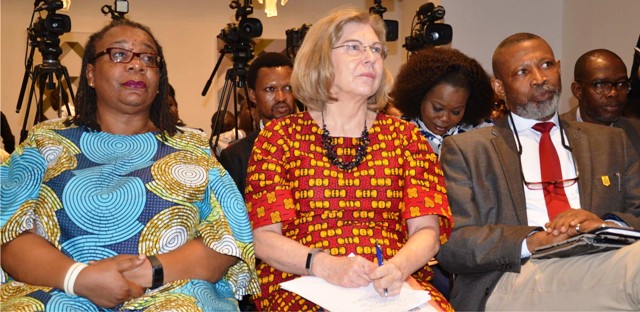
Ogoni delegation to the parley included the leadership of MOSOP, KSWA, KAGOTE, representatives of traditional rulers, youth and professional groups, among others.
In addition to the top echelon of the Ministry of Petroleum Resources and the Nigerian National Petroleum Corporation (NNPC), the other oil companies at the meeting were the Nigerian Petroleum Development Company (NPDC), a subsidiary of NNPC; SPDC; and RoboMichael.
Susan Serekara-Nwikhana
Continue Reading

Nation

HYPREP Marks 15 Years Of UNEP Report, Highlights Major Cleanup Milestones

Published

on

The Hydrocarbon Pollution Remediation Project (HYPREP) has commemorated the 15th anniversary of the release of the United Nations Environment Programme (UNEP) Environmental Assessment Report on Ogoniland, reaffirming its commitment to restoring the environment and improving the livelihoods of affected communities.

In a statement signed by the Project Coordinator, Prof Nenibarini Zabbey, to commemorate the anniversary, HYPREP described the anniversary as a significant milestone in Nigeria’s environmental restoration efforts, noting that the project has made remarkable progress in implementing the recommendations of the landmark UNEP report released on August 4, 2011.

The UNEP report had revealed extensive oil pollution across Ogoniland, severe environmental degradation, and serious public health risks resulting from decades of petroleum operations. It also recommended an initial $1 billion fund to commence the cleanup of the affected communities.

According to HYPREP, the Federal Government formally launched the Ogoni clean-up in 2016, while the Project Coordination Office was established in 2017 to drive the implementation of UNEP’s recommendations.
Zabbey said the current administration has continued to prioritise the project under the Renewed Hope Agenda.

Providing an update on the cleanup, the Project Coordinator disclosed that 30 of the 65 contaminated sites identified by UNEP have been fully remediated, while work is ongoing at several medium- and high-risk locations. It also stated that more than 1.5 million mangrove seedlings have been planted as part of what it described as the world’s largest restoration of oil-degraded mangroves, with over 1,000 hectares of shoreline already rehabilitated.

Zabbey further revealed that 49 Ogoni communities have been connected to potable water schemes through multiple water projects and booster stations aimed at providing safe drinking water across the region.

In the health sector, he said the 100-bed Ogoni Specialist Hospital in Kpite and the 43-bed Cottage Hospital in Buan are nearing completion, adding that several existing health facilities have been upgraded with modern medical equipment, while five ambulances have been donated to improve emergency healthcare services. The Project Coordinator also disclosed that a three-year human health biomonitoring study is being conducted in collaboration with the World Health Organization’s International Agency for Research on Cancer (IARC).

On economic empowerment, Zabbey stated that the Project has created more than 8,000 direct jobs and trained thousands of Ogoni youths and women in various vocational and technical skills, including software development, cybersecurity, aviation, commercial diving, seafaring, mechatronics, and creative arts. The project also reported awarding scholarships to more than 1,000 students, providing grants to small businesses, and supporting persons living with special needs through skills acquisition programmes.

The statement further highlighted ongoing legacy projects, including the Ogoni Power Project and the Centre of Excellence for Environmental Restoration, which it said is about 96 per cent complete. HYPREP also welcomed the recent designation of the Ogoni Wetland as a Ramsar Site of International Importance and pledged to continue promoting biodiversity conservation and sustainable management of the ecosystem.

Marking the anniversary, Zabbey said the progress achieved over the past 15 years demonstrates the collective commitment of government, development partners, stakeholders, and local communities to restoring Ogoniland. He called for renewed collaboration to sustain the cleanup effort, promote environmental sustainability, and support the long-term development of the region. 3

Continue Reading

Nation

REAN, SON synergise to curb fake renewable energy product

Published

on

The Renewable Energy Association of Nigeria (REAN) says it has strengthened collaboration with the Standards Organisation of Nigeria (SON) to enhance quality control and enforcement frameworks.
Mr Oisereime Lloyd-Dietake, the Head of Communications, REAN, in a statement on Tuesday in Abuja, said the collaboration would also involve stakeholder engagement on testing, certification and capacity building in Nigeria.
He said the synergy would strengthen quality control and enforcement frameworks, promote policy alignment, and ensure stronger regulation across the renewable energy value chain.
“REAN reaffirms its commitment to standardisation and quality assurance; tighter collaboration with SON is critical to eliminating fake and substandard renewable energy products from the Nigerian market.
“Enforcement and gaps in existing standards have continued to allow inferior products to circulate, undermining consumer confidence and slowing sector growth.”
Lloyd-Dietake said that at high-level discussions, REAN also highlighted the need for stronger regulatory coordination to address emerging challenges in the renewable energy space.
According to him, the issues include inconsistencies in standards, affordability issues linked to certification processes; and the increasing presence of substandard solar and renewable energy equipment in the country.
“The association further raised concerns about delays in product testing and approval, calling for the establishment of more testing laboratories and certification facilities to improve efficiency and reduce bottlenecks in the system,’’ he said.
Lloyd-Dietake urged closer collaboration among key regulatory bodies, including the Nigerian Electricity Management Services Agency, the Nigerian Electricity Regulatory Commission, and the Rural Electrification Agency.
He said such team work would ensure harmonised standards and more effective enforcement against fake renewable energy products in the Nigerian market.
In response, SON acknowledged the important role REAN continued to play in supporting standardisation within Nigeria’s renewable energy industry and reaffirmed its willingness to deepen collaboration with the association.
SON further confirmed that REAN would be actively involved in future standard review processes and upcoming stakeholder engagements related to renewable energy and electric mobility standards development.
Lloyd-Dietake said REAN affirmed its willingness to formalise the partnership through a Memorandum of Understanding (MoU).
He said the MoU is aimed at deepening cooperation, promoting quality assurance, and accelerating Nigeria’s transition towards reliable and standardised renewable energy solutions.
Continue Reading

Nation

Self Help Africa programme expands water access for 320,000 Nigerians

Published

on

The WASH Systems for Health (WS4H) Programme, implemented by Self Help Africa, has expanded access to safe water and sanitation services for more than 320,000 people in Kano and Cross River States.
The organisation disclosed this on Tuesday at the WS4H National Results and Learning Workshop in Abuja, where stakeholders reviewed achievements and lessons from the intervention.
Speaking at the event, Self Help Africa Country Director, Joy Aderele, said the programme demonstrated that sustainable WASH improvements require strong institutions, effective governance, adequate financing and collaboration.
Aderele said the UK-funded programme was designed to strengthen systems that support sustainable access to water, sanitation and hygiene services.
According to her, the intervention focused on improving governance, planning, financing, accountability and sector coordination to ensure resilient service delivery.
“More than 320,000 people now have improved or restored access to water services through programme-supported interventions,” she said.
She added that more than 5,520 household toilets were constructed in Yala and Makoda Local Government Areas, boosting sanitation, public health and efforts to end open defecation.
Aderele said the programme also strengthened public investment in WASH, with Cross River increasing its sector budget by 211 per cent in 2026 and Kano by 169.07 per cent.
She added that dedicated WASH budget lines had been established across 40 Ministries, Departments and Agencies in both states, strengthening accountability and institutional commitment.
According to her, both states reviewed and adopted updated WASH policies, while key planning documents were developed to guide future investments and service delivery.
She said Cross River also recorded a major legislative milestone through the passage of the Water Law and Open Defecation Prohibition Bill.
Aderele added that lessons from interventions in Yala LGA were already informing expansion efforts in Obubra Local Government Area.
While commending the achievements, she noted that capacity gaps, resource constraints and climate-related pressures remained challenges to sustainable WASH services.
“The sustainability of these gains will depend on continued government leadership, adequate financing, strong partnerships and investment in institutional capacity,” she said.
Also speaking, the Programme Manager of WS4H, Mr Timothy Ibeawuchi, said the intervention focused on strengthening systems needed to sustain gains and attract future investments.
According to him, the programme engages stakeholders in developing strategies that preserve achievements and support long-term service delivery.
“System strengthening work takes time because it addresses the fundamental issues responsible for sustainable and resilient service delivery,” he said.
Ibeawuchi said the programme strengthened policy development, planning, financing, monitoring and evaluation systems across the WASH sector.
He said two pilot local government areas were supported to develop WASH strategic plans outlining sector goals, targets and activities between 2026 and 2030.
According to him, the plans will guide future interventions and improve service delivery in the affected councils.
Earlier, the representative of the UK Foreign, Commonwealth and Development Office (FCDO), Chidera Chukwu, reaffirmed support for Nigeria’s development efforts in spite of the programme nearing completion.
Chukwu commended the Self Help Africa-led consortium for delivering the programme with professionalism and a strong focus on systems strengthening.
He said the consortium contributed greatly to strengthening Nigeria’s WASH sector through policy reforms, improved coordination and enhanced accountability.
“Together, we have advanced key policy and legislative reforms, including open defecation-free laws and strengthened state WASH frameworks,” he said.
According to him, the reforms represent enduring system-level changes that will continue delivering benefits beyond the programme’s lifespan.
In his remarks, Mr Jamilu Habu, Director of Water Quality Control and Sanitation, Federal Ministry of Water Resources and Sanitation, commended the programme’s achievements.
Habu, who represented the Permanent Secretary, said the intervention strengthened governance, coordination, evidence-based planning and institutional capacity in the WASH sector.
He described the workshop as an opportunity to review achievements, share lessons and identify pathways for sustaining and scaling successful interventions.
According to him, the programme’s innovations and best practices will guide future policies and investments aimed at expanding access to safe WASH services.
Habu stressed the need for continued collaboration among governments, development partners, civil society organisations, the private sector and communities.
He said stronger partnerships remained essential to achieving universal access to water, sanitation and hygiene services and meeting Sustainable Development Goal 6.
Continue Reading

Trending