
Featured
That Alarm By Gov Wike …Why Police, INEC Must Act

No sane Nigerian can dispute the fact that the country is facing tough times. Times, so challenging, nothing short of financial discipline, political tolerance, prudent management of scarce resources and indeed selfless service are required of those the people look upon to offer leadership.
It is a period that demands optimum protection and maintenance of existing infrastructure, build capacity and inspire the people to give of their best in hope that the period will merely be a phase that would soon be history.
These indeed are times when governments and the people alike must unite in fight against unnecessary controversies likely to cause insecurity, strife and indeed further destruction of an already creeping economy.
Last week, Nigeria’s Finance Minister Kemi Adeosun said the dark days are over. But no Nigerian that patronises the market place would share same sentiment, for, it amounts to telling a blind man that there is salt in his soup, when there is none.
Truth is, many states cannot pay workers’ salaries. More than a bunch is in arrears of close to eight months, while others who manage to meet their obligations to their workforce do so at great pains and at the expense of other competing needs, like the much required infrastructural update necessary to attract investments and boost internal revenue generation.
These indeed are times when, even the Federal Government borrows to pay its staff, with doubts hanging around the full implementation of the 2016 budget. With the free fall of the Naira against other major currencies, a virtually dead manufacturing sector and with inflation rate hitting an all time 17 per cent high, it should dawn on all that all is not well.
At times like this, to allow any form of insecurity, protestations and violent conflicts would be putting salt upon injury. It indeed would be a perilous voyage to encourage any miscarriage of justice or promotion of partisanship that would push those denied justice seek alternative reliefs.
This is because such can threaten security and ultimately breed insecurity. Where such insecurity holds way, where crime blossoms where injustice reins, where lawlessness replaces rule of law and where impunity takes the place of order, all other positive efforts take back seat. Investors are threatened, and the local economy at the risk of getting stalled.
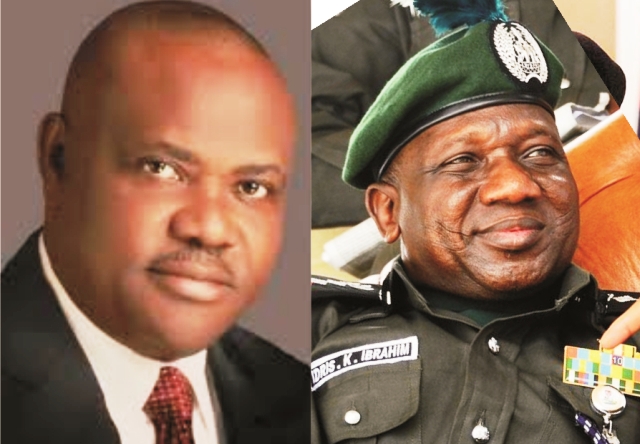
These are why none should venture any action or inaction capable of engineering chaos, crisis, insecurity and strife. These indeed are why the concerns recently expressed by Rivers State Governor Nyesom Wike concerning, ‘flawed’ police postings and ‘glaring efforts’ by the Independent National Electoral Commission (INEC) to rig the forthcoming re-run elections in Rivers State, must be addressed and fast too, to prevent the agitated from seeking alternative reliefs.
Last week, the governor pointedly accused the National Chairman of INEC, Professor Mahmud Yakubu of moves to scuttle credible re-run elections in the state by holding secret meetings with the state’s All Progressives Congress, with APC Chairman, Chief Davies Ikanya, Senator Magnus Abe and others on July 19, this year. According to the Governor, the INEC boss might have concluded plans to postpone the July 30 elections over fears of defeat expressed by the APC leadership, or rig the elections in favour of the APC.
Wondering why anyone would be happy to destroy Rivers State just because he or she wants to satisfy the politician who funded APC national elections through Rivers resources, the governor lamented:
“They are frustrating elections in Rivers State because of one man who sponsored APC. They have posted electoral officers from APC states to rig elections and they want to accede to the request of the Rivers APC to post out the Resident Electoral Commissioner.
“But the truth is that nobody can rig elections in Rivers State. The INEC Chairman only has the power to postpone elections but he has no power to rig elections here.
“As I speak to you, 7.30 to 8pm, on 19th of July, 2016, the APC Chairman, Davies Ikanya, Senator Magnus Abe and others, were with the National Chairman in his office.
“Rivers State is key to development of this country. Will they continue to deny us representation at the Senate and majority of the constituencies of the House of Representatives?”
These are serious concerns. Even more worrisome is the alarm raised by the governor over recent postings in the Police Command, which he described as politicized.
According to Governor Wike, the new Inspector General of Police (IGP) recently posted Mr. Akin Fakorede, a Police officer formerly in-charge of the state’s Special Anti-Robbery Squad and who allegedly distributed fake SARS uniforms to APC thugs during the March 19, re-run elections leading to the death of several innocent Rivers people. He also accused the same officer of embezzling N18 million meant for the rehabilitation of armoured personnel carrier before he fled the state, after the last re-run.
Governor Wike also accused the IGP of posting back to the state, one Mustapha who ran away from the state after giving false testimony at the Governorship Elections Petitions Tribunal. According to the governor, that ‘APC Witness’ has now been posted to head MOPOL 56 in Bori, one of the battle-ground locations, in the July 30, rerun elections.
He added that the Police High Command also reposted to the state, one Stephen Asin, an officer formerly in charge of the Special Anti-Robbery Squad, after same officer had allegedly declared publicly that he would destroy the security network in the state. That Asin, the governor alerted, is now to head the Police Operations Department in the state.
The governor said, ‘my interest is for the security of the state to be sustained. We are enjoying relative security in the state and I will not fold my arms and allow anyone destroy the security of the state through the posting of politicians who hide under Police uniforms’, he said.
These are serious accustations that ought to attract the urgent response of both the Police High Command and INEC. This is because one wants to resist the temptation of rushing to the natural conclusion that silence means acceptance. In this case, acceptance of the governor’s concerns as true in every material particular. Even so, I pray am wrong.
This is because, one of the greatest incentives to strife and conflict, is the attempt to impose one’s ambition on others, even when as one time United States President Abraham Lincoln once warned, ‘no one is good enough to lead another man without that other’s consent.’ The crises that characterised the elections in Bayelsa State last year, where, several lost their lives, is traceable to same conflict of interest.
Delta State is now boiling on account of renewed insurgency by a new group of militants, Bayelsa sleeps with only one eye closed, Cross River is facing challenges of criminal gangs. To push Rivers State into any form of disturbance would not be in the interest of the country, and its economy.
While one is reluctant to agree with the governor that APC leaders’ meeting with the INEC Chairman is wrong. What is wrong is the INEC chair’s refusal to grant same audience to the PDP leadership or even return the governor’s call, just as didn’t the new IGP.
Also curious is the timing of the postings and the calibre and character of those involved. The choice of officers, obviously APC-friendly, if records of the last Governorship Petitions Tribunal are any leads to go by; indeed raises eyebrows and portend a special assignment. Such job cannot be apolitical, unless INEC and the Police convince the people otherwise.
INEC in particular, must realise that once the populace loses confidence in its impartiality, it shall brew discontent which in turn gives birth to resistance. Such resistance very often rises up to become civil, even militant disobedience. As supposed umpire, INEC must resist the temptation to support one party against another or one candidate against the other.
Such would, without doubt, heat-up the polity; incite the civil populace against the institution and by extension government, a volatile scenario none should wish for. And not of all places, Rivers.
Rivers is a very strong factor in the economic equation of the country. Its peace should not be sacrificed on the altar of political compensation. The people should instead be allowed to vote according to their conscience and let the people alone determine who represents them.
In spite of what Abuja politicians may wish to accept, Rivers State has enjoyed relative peace and progress. That is why it has become a destination of choice for frontline professional bodies to hold their conferences in the state. The Nigeria Bar Association (NBA) and the Nigeria Guild of Editors (NGE) are merely two of such bodies that consider Rivers as peaceful.
This should not be sacrificed for the likely desire of a group to win the elections by hook or crook, through armed Policemen and soldiers and through fake election results. These can only elicit protests, even violence which scope and consequence cannot be predicted.
My Agony is that some politicians in Abuja still believe that election results written in hotel rooms can be declared, unpopular candidates can be made popular overnight and that elections can be rigged in Rivers State.
In my over 33 years in the business of minding others business, I have come to the conclusion that politicians can only rig successfully, where, they enjoy, at least a marginal majority of the electorate. To attempt to rig when the opposite is true, is to replay the Bayelsa governorship elections debacle. Not at these tough times, please.
Soye Wilson Jamabo



The Rivers State Government has called on stakeholders, community leaders, parents and relevant education authorities to intensify efforts to identify and enrol out-of-school children across Nigeria, stressing that every child deserves access to quality and inclusive education.
Governor Siminalayi Fubara made the call, yesterday, during the regional campaign on engaging community structures to promote the enrolment of out-of-school children and the regional flag-off of the 2026/2027 enrolment drive for southern states, held in Port Harcourt.
Represented by the Secretary to the State Government, Dr Dagogo Wokoma, Governor Fubara reaffirmed that education remains a fundamental pillar of sustainable development and emphasised the need to ensure that no child is left behind because of economic hardship, social background or other barriers to schooling.
He noted that expanding access to education was essential to promoting sustainable development, social inclusion and equal opportunities, enabling children to reach their full potential and contribute meaningfully to society.
The governor urged participating states and communities to translate their commitments into concrete and measurable actions by reaching vulnerable children, strengthening community engagement and encouraging parents and guardians to make their children’s education a priority.
He reiterated the state government’s commitment to initiatives aimed at expanding access to education, particularly for children excluded from formal schooling.
“Rivers State remains committed to supporting initiatives that expand access to inclusive and quality education, particularly for vulnerable children who may have missed the opportunity to attend formal schools,” Fubara stressed.
Also speaking, the Executive Secretary of the Universal Basic Education Commission (UBEC), Aisha Garba, described the growing number of out-of-school children as one of the major challenges confronting the education sector.
She called for a collective and collaborative approach among governments, communities, parents and other stakeholders to address the problem, stressing the need to ensure that no Nigerian child is denied the fundamental right to education.
The programme was organised by the Universal Basic Education Commission in collaboration with the Rivers State Government, as part of efforts to strengthen community participation and promote school enrolment across the southern states for the 2026/2027 academic session.

The Federation Account Allocation Committee (FAAC) has shared the sum of N2.428 trillion among the Federal Government, 36 states government and the 774 Local Government Councils (LGCs) as revenue for the month of September.
The Director, Press and Public Relations, Office of the Accountant-General of the Federation (OAGF), Mr Bawa Mokwa, said this in a statement in Abuja, yesterday.
Mokwa said the allocation was approved by FAAC at its October meeting held in Abuja.
He said the N2.428 trillion distributable revenue comprised of statutory revenue of N1.672 trillion, distributable Value Added Tax (VAT) revenue of N756.587 billion.
Mokwa quoted the FAAC communiqué as saying that total gross revenue of N3.913 trillion was available in the month of September 2026.
He said a total deduction for cost of collection was N131.758 billion while total transfers, refunds and savings of N1.352 trillion.
According to him, a gross statutory revenue of N3.096 trillion was received for the month of September 2026.
“This was higher than the sum of N2.850 trillion received in the preceeding month by N246.384 billion.
“Gross revenue of N816.872 billion was available from the Value Added Tax (VAT) in September 2026.
“This was lower than the N834.843 billion available in the month of August 2026 by N17.972 billion,” he said.
Mokwa explained that the Federal Government received N832.242 billion and the state governments received the sum of N799.872 billion.
He said the LGCs received N560.660 billion, while the sum of N236.049 billion (13% of mineral revenue) was shared to the benefiting state as derivation revenue.
Mokwa said in the N1.672 billion distributable statutory revenue, the Federal Government received N756.583 billion and the State Governments received N383.749 billion.
He said the LGCs received N295.855 billion and the sum of N236.049 billion (13% of mineral revenue) was shared to the benefiting States as derivation revenue.
The director said from the N756.587 billion distributable Value Added Tax (VAT) revenue, the Federal Government received N75.659 billion, the State Governments received N416.123 billion and the LGCs received N264.805 billion.
“In September 2026, Petroleum Profit Tax (PPT), Hydrocarbon Tax (HT), Petroleum Royalties, Import Duty, CET Levies and Excise Duty increased significantly.
“Also, Companies Income Tax (CIT), CGT & SDT, Value Added Tax (VTA), Mineral Royalties, and Gas Flared Penalty, Rental Gas Flared Fee and Misc. Oil Revenue decreased considerably,” he said.
The Nigeria Labour Congress (NLC) has given the Federal Government a two-week ultimatum to reduce the price of petrol, commence renegotiation of the national minimum wage and implement outstanding agreements with workers.
The ultimatum followed a joint meeting of the National Executive Council and Central Working Committee of the NLC held at the Olaitan Oyerinde Hall, Labour House, Abuja.
In a communiqué signed by the NLC President, Joe Ajaero, and made available to newsmen, yesterday, the union said the two-week ultimatum would commence on Friday, October 9, 2026.
It warned that failure by the government to meet its demands would compel the Congress to take further action.
The NLC specifically demanded that the government reduce the price of Premium Motor Spirit to the level it was when the current national minimum wage was signed into law in 2024.
It also demanded the immediate commencement of negotiations for a new minimum wage, implementation of the February 5, 2026, Terms of Settlement reached with the Joint Health Sector Unions and Assembly of Healthcare Professionals, and action on the demands of the Joint Public Sector Negotiating Council.
The Congress further demanded tax relief and immediate wage awards for workers, arguing that the measures were necessary to cushion the impact of rising living costs.
The NLC said, “The current national minimum wage has been rendered worthless by the relentless depreciation of the naira and the astronomical rise in the cost of living.”
It added that workers could no longer meet basic needs, including food, shelter, healthcare, transportation and education, on their current earnings.
The labour body, therefore, demanded that the Federal Government commence renegotiation of the national minimum wage before the end of October.
“NEC-in-session demands that the Federal Government commence the renegotiation of the national minimum wage before the end of this month,” the communiqué stated.
The Congress also linked the erosion of workers’ purchasing power to the high cost of petrol, saying the price of the commodity had continued to drive up transportation costs and the prices of other essential goods.
“The exorbitant pump price of petrol has had a cascading effect on the cost of transportation, food, and other essential goods, further deepening the hardship of workers and the masses,” it said.
The NLC further demanded that the government grant tax relief to workers and immediately introduce wage awards, describing the measures as “the bare minimum required to alleviate the suffering of Nigerian workers and restore a measure of dignity to their lives.”
The latest ultimatum escalates the labour movement’s pressure on the Federal Government after public-sector workers under the Joint National Public Service Negotiating Council embarked on a three-day warning strike earlier in October over rising living costs, petrol prices, wage awards and minimum wage negotiations.
The workers had demanded, among other measures, a reduction in petrol prices and the commencement of negotiations for a new minimum wage.
The NLC had also raised concerns in September over the declining purchasing power of workers, with Ajaero arguing that the N70,000 minimum wage had been overtaken by increases in the cost of food, transportation, housing, education and other essential expenses.
The current minimum wage was approved by President Bola Tinubu in July 2024 after negotiations involving the government, organised labour and the private sector.
Tinubu increased the Federal Government’s offer from N62,000 to N70,000 and agreed that the wage should be reviewed after three years rather than five years.
The NLC’s latest demand comes as the Federal Government announced fresh measures aimed at containing petrol-price pressures.
Yesterday, the Minister of Finance and Coordinating Minister of the Economy, Taiwo Oyedele, said the government was negotiating a ceiling of N1,350 per litre on the ex-gantry or landing cost of petrol, with monthly reviews, as part of measures to reduce price volatility.
The proposed ceiling does not mean petrol would necessarily sell at N1,350 per litre at filling stations.
The government also announced a 30-day discount on petrol dispensed by the Nigerian National Petroleum Company Limited (NNPCL), with priority given to public transporters.
Oyedele said the arrangement was not a return to subsidy but an effort to sell the product at cost.
However, the NLC is seeking a more substantial reduction, insisting that petrol should return to the price level that prevailed when the N70,000 minimum wage was enacted in 2024.
The Congress also called for the implementation of the agreement reached with JOHESU in February, as well as the demands presented by the Joint Public Sector Negotiating Council.
It warned that failure to respond within the two-week period would have consequences.
“Failure of which the NLC will be compelled to take remedial steps as would be directed by the relevant organs,” the communiqué said.
The union consequently directed its affiliates and allies to remain prepared for further action.
“NEC-in-session reaffirms the historical responsibility of the NLC to resist all forms of exploitation and oppression,” it stated, urging its affiliates to remain “on high alert and fully prepared to engage in decisive efforts against all anti-people policies.”
The development also comes amid fresh labour tensions in Abuja, where the FCT Council of the NLC commenced an indefinite strike on Wednesday over disputes with the FCT Administration concerning teachers’ promotion policies.
The council directed workers across public and private establishments to withdraw their services after the expiration of a seven-day ultimatum.
The latest NLC ultimatum puts renewed pressure on the Federal Government to address wage and fuel-price concerns as both sides grapple with disagreements over the implementation of previous labour agreements and measures to cushion the impact of economic reforms.
The NLC said its demands were aimed at protecting workers and the wider population from further deterioration in their standard of living, insisting that Nigerian workers must remain “resolute, organised, and uncompromising” in the struggle for improved living conditions.
-
 Education2 days ago
FCE Yola Graduates 3,555 Teachers , Seeks Upgrade to University
-

 Sports2 days ago
Nigerian Trio Target Titles At PFL Africa Finals
-
 Niger Delta2 days ago
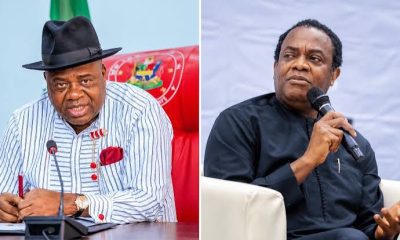
Diri Restates Stance On Lagos-Calabar Coastal Highway
-
 Niger Delta2 days ago
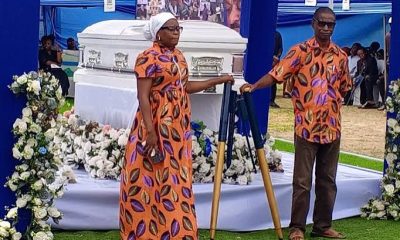
C’River, NUJ Pay Tribute To Late Guardian Editor
-
 News2 days ago
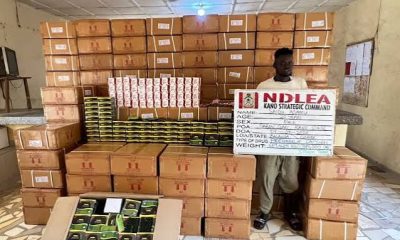
NDLEA Recovers Tons Of Illicit Drug Consignments In Nine States
-
 Opinion2 days ago
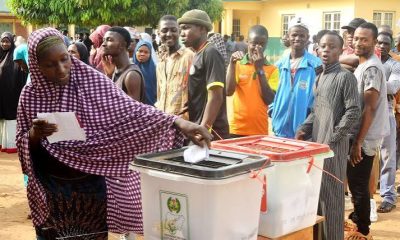
Checking Voter Apathy In Nigeria’s Electoral Process
-
 Politics2 days ago
2027: DICKSON’S EX-ALLY VOWS TO WORK AGAINST NDC INTEREST IN BAYELSA
-
 Politics2 days ago
2027: GROUP PLEDGES 40,000 SUPPORTERS FOR COALITION CANDIDATES IN RIVERS