
Rivers
Fubara’s Kinsman Denounce The Suspension Of Democratically Elected Officials

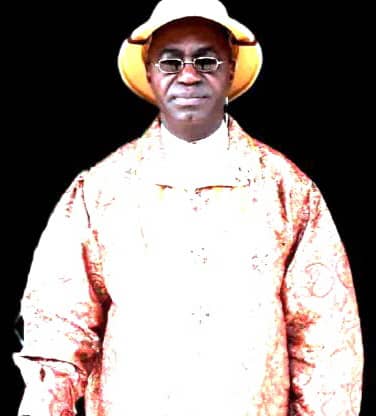
The Vice Chairman of Opobo Council of Chiefs, Alabo Edwin Cockeye Brown has joined the chorus of voices calling for an immediate end to the suspension of democratically elected officials in Rivers State.
The Opobo chiefs Council’s vice chair who was speaking on the sidelines at an emergency stakeholders’ congress of the INC held at the Ijaw House in Yenagoa last Wednesday, emphasized the gravity of the suspension of a state governor, deputy and legislators, characterizing it as an unprecedented assault on the democratic process.
He argued that suspending an elected governor and the state legislature not only undermine the mandate given by the electorate but also poses a significant threat to the political stability of the state. Brown further declared the suspension as “an aberration and travesty of the constitution.”
His words, “Even though the Nigerian Constitution grants the President powers to declare a state of emergency under Section 305, it does not authorize the suspension of democratically elected officials, such as governors or members of the legislature. The proper procedure for removing a governor is outlined in Section 188 of the Constitution, which requires legislative processes rather than executive fiat”.
Brown went on, “The unconstitutional suspension of democratically elected government officials is a Slowly but surely dismantling of democratic structures. This will not help our fledgling democracy, but will destroy all the gains so far made in this democratic dispensation”.
“This is not just about Governor Fubara; it is about every citizen of Rivers State who participated in a democratic election,” he stated. He added, “Injustice in Rivers State is injustice all over Nigeria because we are all governed by one constitution.”
He expressed concern that such actions could set a dangerous precedent, eroding public trust in the electoral system and democratic institutions across Nigeria.
He further articulated the historical context of the Ijaw struggle for
representation, highlighting the community’s long-standing grievances
regarding political marginalization.
“For over 24 years, we have fought to regain our rightful place in governance,” Brown remarked. “To have that struggle undermined by a unilateral decision from the federal government is not just
frustrating—it is an affront to our identity and aspirations as Ijaw people.”
Brown called for a united front among Ijaw leaders and communities,
urging them to resist any attempts to divide or silence their voices.
He underscored the importance of dialogue and reconciliation as vital
pathways to resolving the ongoing crisis, rather than resorting to forceful measures that could exacerbate tensions. “We must engage with
the federal government, but we will do so on our terms,” he insisted.
In closing, Brown reaffirmed his commitment to the principles of
justice and equity, emphasizing that the Ijaw people would not back down in their quest for recognition and respect.
“We are prepared to stand firm and advocate for our rights. Our
history is rich with leaders who have fought for us, and we will not
allow their sacrifices to be in vain,” he concluded, rallying support
for a peaceful resolution that honors the democratic process and the will of the Rivers people.
The high-profile one-day stakeholders’ meeting brought together
influential Ijaw leaders, including Bayelsa State Governor, Douye
Diri, his deputy, Senator Lawrence Ewhrudjakpo; former Rivers State
Governor and Amanyanabo of Twon-Brass, King Alfred Diete-Spiff; former Rivers Governor, Chief Rufus Ada-George; and former Bayelsa Deputy
Governor, Rear Admiral Gboribiogha John Jonah.
Also in attendance were the Speaker of the Bayelsa State House of
Assembly, Abraham Ingobere; National Chairman of the Pan Niger Delta
Forum (PANDEF), Dr. Boladei Igali; prominent traditional rulers from
various parts of Ijawland; the President of the Ijaw Youth Council
(IYC), Jonathan Lokpobiri and many other notable Ijaw leaders from across the Niger Delta.



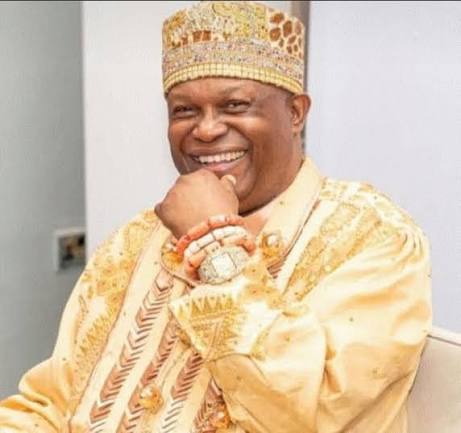
The Eze Oha Evo III of Evo Kingdom, His Majesty, King Leslie N. Eke, has pledged his support for the governorship aspiration of the All Progressives Congress (APC) candidate in Rivers State, Kingsley Ogundu Chinda.
He gave the assurance when members of the Divine Mandate Progressive Movement (DMPM), a support group for the APC governorship candidate, led by its leader, His Most Royal Eminence, Cardinal Jephthah Ikezim, paid him a courtesy visit at his palace in Woji Community, Obio/Akpor Local Government Area, Friday.
The Monarch, who also is the Eze Gbakagbaka and Chairman, Supreme Council of Ikwerre Government Recognized Traditional Rulers, said his decision to support the project was influenced by the group’s conviction that Chinda’s emergence as the next governor of Rivers State was divinely inspired.
According to him, no individual has the power to frustrate the will of God, stressing that he identified with the movement because of what he described as its divine mandate.
“As a traditional ruler overseeing 33 communities, I have my vote, and my vote is my conscience and I will vote my son”, the monarch stated.
The Eze Woji XII urged members of the group to remain steadfast and focused in pursuing their objective, warning them against distractions that could derail the vision.
He observed that any mandate, no matter how noble, could be undermined if those championing it failed to remain committed and united in purpose.
Describing Chinda as an articulate, brilliant and intelligent lawyer, King Eke, who is also the Grand patron of the group, expressed confidence that he possesses the capacity to provide purposeful leadership if elected governor of Rivers State in 2027.
Earlier, the leader of the delegation, Cardinal Jephthah Ikezim, said the group visited the monarch to seek his royal blessings and support for the governorship ambition of Chinda.
He noted that while prayers remained essential, they must be complemented with active political engagement and grassroots mobilisation to actualise the aspiration.
Cardinal Ikezim appealed to Rivers people to embrace what he described as a divinely inspired project and give it the necessary support ahead of the 2027 governorship election.
He disclosed that the Divine Mandate Progressive Movement would embark on mobilisation across the 23 local government areas of Rivers State to canvass support and votes for the APC governorship candidate.
By: King Onunwor
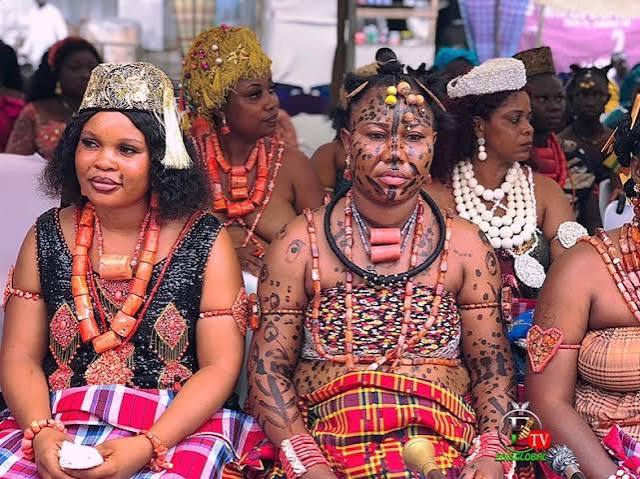
The Kalabari Renaissance Foundation, organisers of the Kalabari New Year Festival, has formally endorsed the Minama Community in the Asari-Toru Local Government of Rivers State as the host of the 2027 edition of the festival.
A statement signed by the Chairman and Secretary of the Foundation, Mr. Harry Awolayeofori Mcmorrison and Ibiba Don-Pedro, respectively, states that Minama was chosen to host immediately after Elem-Kalabari because of the special historical ties between Minama and the founding fathers of Kalabari.
According to the statement, the festival, planned for November 16, 2026, promises to be bigger because of the accessibility of the venue by road and the opportunity to revisit the history of Kalabari in its undiluted form.
The statement also notes that even more attractive are the unique spiritual and cultural contents in Minama that a lot of people would want to see and benefit from.
The Foundation used the opportunity to publicly thank the Amayanabo of Minama, HRH King, Dr. Iboroma Pokubo, Loku Xll, and the Minama Council of Chiefs, for accepting to host the new year festival this November.
To facilitate another successful outing, the Foundation called for financial support, advertising and vendors.
It also announced the appointment of a new Finance and Fundraising Committee and Contact and Mobilisation Committee.
As usual, the festival would include cultural displays, boat regatta, environmental rejuvenation and keynote speeches. Also expected are troupes from neighbouring kingdoms, the Nigerian Tourism Board, diaspora presentations, among others.

The Chief Judge of Rivers State, Hon. Justice Simeon Chibuzor Amadi, has said the Rivers State Multi-Door Courthouse (RSMDC) was primarily established to decongest the High Courts and bring justice administration closer to the people.
Speaking last recently while declaring open the 2026 RSMDC Second Statewide Settlement Week at the High Court Complex in Port Harcourt, Justice Amadi, who also chairs the RSMDC Governing Council, stressed that the fees must remain low, because low costs will encourage litigants to choose the Multi-Door Courthouse over the High Court.
“Whatever the RSMDC is doing is what the Rivers State Judiciary is doing”, he noted, adding that affordability is central to the court’s alternative dispute resolution mission.
The Chief Judge also announced a change for future exercises, saying that judges will be present at the next Settlement Week.
He advised that subsequent editions should not be scheduled during court vacation when judicial officers are away.
“As you all know, we have started our vacation and judges are on vacation. Settlement Week is not for a particular litigant, judge, lawyer, NBA branch, or magistrate”, he said, “the process, must involve all stakeholders.
“To achieve this, the next Settlement Week will be held during the legal year. That week will be declared a ‘free week’ so that lawyers will not be required to appear in any other court.”
Justice Amadi further disclosed that a new committee has been set up to review the current RSMDC fees, which he described as “very, very low”, and explained that the review aims to keep the fees accessible and further encourage litigants to use the Multi-Door Courthouse instead of the High Court and Magistrate Courts.
According to him, “The Multi-Door Courthouse was not established to make revenue for the Rivers State Government, but to help decongest the High Court and bring justice nearer to the people.”
The Chief Judge congratulated the RSMDC and the Alternative Dispute Resolution judges for successfully hosting the first RSMDC Settlement Week in September 2025.
He also commended them for the improved preparations ahead of the second edition, and thanked all volunteer mediators, conciliators, arbitrators, and neutral evaluators offering their services at no cost, and also acknowledged the support of the High Court, Customary Court, Appeal Court, and Magistrate Courts.
Amadi urged parties and their lawyers to cooperate and act responsibly before the neutrals, qhile also charging the volunteer neutrals to remain impartial and give every party and lawyer a fair hearing.
“Take the Settlement Week and your work seriously because people are watching”, he advised.
In his welcome address, the Director of RSMDC, Victor E. Nweke, explained that Section 32 of the RSMDC Law 2019 defines a Settlement Week as a period set aside by the Chief Judge for designated courts to clear case backlogs.
Cases are mandatorily referred to the RSMDC for possible resolution through mediation, arbitration, neutral evaluation, or other ADR procedures.
According to him, Section 3(h) lists Settlement Week as a periodic ADR activity. Section 18(1)(e) provides for mandatory referral, where a party applies for a matter to be referred to the RSMDC.
Although ADR is ordinarily consensual, the law empowers courts to manage their dockets with RSMDC’s assistance. The Chief Judge may also refer matters upon filing, and after resolution, assign them to an ADR judge or any other judge under Section 4(1) and (6).
Nweke said both civil and criminal matters suitable for ADR can be referred during Settlement Week.
He said, Civil matters typically include commercial and family disputes, and ADR can handle ancillary issues in divorce such as child custody, property settlement, and maintenance, while the final divorce order must come from a competent court.
For criminal matters, the RSMDC does not conduct trials but helps parties explore reconciliation where permitted, with reports sent back to court.
This year, 48 mediators and 14 arbitrators will participate, with 12 mediation panels and 3 arbitral tribunals — one more tribunal than last year.
He appealed to lawyers and litigants to cooperate with the RSMDC to strengthen the Dispute Systems Design of Rivers State through mediation, arbitration, early neutral evaluation, and hybrid processes.
In a goodwill message, Justice Adolphus Enebeli (Rtd.) also commended the Chief Judge and the RSMDC Director for their commitment to expanding access to justice.
Also speaking, the Director of the Bayelsa Multi-Door Courthouse, and the representative of the Association of Directors of the Multi-Door Courthouses in Nigeria, Nyingi Eke-Spiff, in her goodwill message, noted that the Rivers State Multi-Door Courthouse is developing rapidly, and expressed happinees over her associate with the developmental strides.
By: Kiadum Edookor