
City Crime
RIVERS PEACEFUL, CONDUCIVE FOR INVESTMENTS, REPS AFFIRM


The leaderships of the midstream and downstream sub-sectors of Nigeria’s petroleum industry have affirmed that Rivers State is peaceful, hospitable and conducive for investments, urging potential investors around the world to discountenance negative narratives about political crisis by enemies of the State, and make strategic decisions to invest in Africa’s largest hydrocarbon hub, for exciting returns on investment for shareholders and other stakeholders.
The Chairmen of the House of Representatives Joint Committee on Petroleum Resources (Downstream and Midstream), Hon Ikeagwuonu Michael Ugochinyere (PDP Ideato North/Ideato South Federal Constituency, Imo State); and Hon Prince Henry Odianosen Okojie (Esan North East/Esan South East Federal Constituency, Edo State); made the affirmation in their separate remarks at the three-day retreat of the joint committee in Port Harcourt, the Rivers State capital.
About 100 actors in the sector are participating in the retreat, out of which no fewer than 80 are legislators representing federal constituencies across the six geopolitical zones of the country, while others represented oil and gas companies, major and independent marketers, refineries and petrochemicals firms, among others.
Hon Ugochinyere said that the State is peaceful because of the good leadership and responsible governance approach adopted by the Governor, Sir Siminalayi Fubara, who has remained focused on the ball, while facilitating the ease of doing business and creating the right policies to enable investments to thrive in the State.
He added that if the State was not peaceful, the huge number of National Assembly committees on oversight functions, and the litany of investors and other corporate institutions who have visited the State over the last couple of months to explore abounding opportunities would not have been possible, and advised well-meaning Nigerians and the international community to disregard those trying to demarket the State.
Hon Ugochinyere said: “We are gathered here in Port Harcourt, united by a shared commitment to enhance our regulatory frameworks, promote transparency, and foster sustainable development in Nigeria’s oil and gas sector…
“I extend my sincere gratitude to His Excellency, Sir Siminalayi Fubara, for graciously hosting us and for his unwavering support. Your leadership and hospitality are greatly appreciated”.
Speaking earlier, he said: “Today is not a day for politics. We are here in Rivers State for development purposes. We want to appeal to the IGP (Inspector General of Police, Kayode Egbetokun), here (Rivers State) has been very peaceful. That is why our retreat is holding in Rivers State. If Rivers State is not peaceful, over 80 federal lawmakers from the midstream and downstream petroleum sector will not be coming here for their three-day retreat.
“We will want this peace to continue. That is why we are appealing to the Inspector General of Police (IGP) not to take sides in this crisis. He should allow the rule of law to prevail, and stop aiding, in any way, the other side who are from Abuja”.
Speaking further on the role of the police in the political crisis in the State, Hon Ugochinyere said: “But I must say this as a Nigerian, not because I belong to any interest or divide in the struggle: That respecting the rights of the people must be paramount to the Police Force. The Police must not act in a way that they are seen as giving undue advantage to the Abuja politician.
“The Governor (Sir Siminalayi Fubara) deserves some respect; the people of Rivers State deserve some respect. Indiscriminate arrests; indiscriminate attacks; these are things that are not welcome, and are not acceptable in any democratic setting”.
Speaking on the retreat, Hon Ugochinyere, added that the peaceful atmosphere in the State was evident in the congenial and enabling environment for fruitful dialogue and thriving investments and businesses, and a clear contrast to what detractors of the State were painting in their orchestrated political crisis.
He stated that the retreat was pivotal in changing the narratives, and provides stakeholders with robust platform to deliberate on burning issues while exploring strategic solutions for the betterment of the industry.
The leader of the G-60 lawmakers further said, “As we commence this retreat, I wish to emphasize the significance of our gathering. The Petroleum Sector remains the backbone of Nigeria’s economy, and it is incumbent upon us to ensure its efficiency, transparency and sustainability. Our discussions over the next few days will be instrumental in shaping the future of this vital industry.
“We are privileged to have an array of distinguished speakers and experts who will share their insights on various aspects of the petroleum industry, from understanding objectives and significance of the Petroleum Industry Act (PIA), to exploring the roles and responsibilities of the newly established regulatory bodies.
“Our ongoing forensic legislative investigation into the anomalies within the oil and gas sector is crucial for restoring trust and ensuring integrity in our industry. We are addressing allegations concerning the importation of substandard petroleum products, non-availability of crude oil supply to domestic refineries and other critical issues that threaten the stability and security of our petroleum sector.”
Speaking on the ease of doing business in the State, Hon Ugochinyere specifically named Indorama Eleme Petrochemicals and Fertiliser Company as one example of the litany of thriving investments in Rivers State, which shareholders are genuinely proud of, saying that more of such businesses populate the State, making it an enticing environment for investors.
In his remarks, Hon Okojie, said: “We gather here in the dynamic city of Port Harcourt, at the prestigious Presidential Hotel, under the theme; ‘Enhancing Regulatory Frameworks, Promoting Transparency, and Fostering Sustainable Development in Nigeria’s Oil and Gas Sector.’ This retreat is a critical convergence of minds and efforts aimed at addressing the pressing issues and exploring the immense opportunities within our sector”.
Represented by member representing Brass/Nembe Federal Constituency of Bayelsa State, Hon Marie Enenimiete Ebikake, Hon Okojie said, “I would like to extend my heartfelt gratitude to His Excellency, Sir Siminalayi Fubara, our host, for his unwavering support and warm hospitality. We are truly honoured to be in the presence of such distinguished leadership”.
Saying that the warm reception and hospitality was characteristic of the good people of Rivers State, he added that the story of the success of the oil and gas industry cannot be written in Nigeria without Rivers State, as a dominant hub, which has played a key role in the development and transformation of the nation’s economy.
Hon Okojie, said that deliberations from the retreat will positively impact the oil and gas industry, especially in providing clearer understanding of the Petroleum Industry Act (PIA) governance and institutional frameworks to promote growth and sustainability in the sector.
He said, “I would like to highlight the importance of our interaction with stakeholders in the midstream and downstream sub-sectors. This engagement is crucial for understanding the challenges faced by our industry, and collaboratively devising solutions that promote growth and sustainability.”
In his keynote speech, Speaker of the House of Representatives, Rt. Hon. Tajudeen Abbas, said the 10th National Assembly is committed to deploying effective legislative reforms to strengthen the operations, create competitive business-friendly environment, institutionalise transparency and sustainable development in the oil and gas industry.
Represented by the Leader of the North-West Caucus in the House, Hon. Sada Soli, the speaker also noted that the National Assembly has already commenced the processes of legislative reforms that will enhance holistic governance overhaul with a view to transforming the nation’s major economic driver and revenue earner in line with the provisions of the Petroleum Industry Act (PIA).
Rt. Hon. Abbas said that the federal lawmakers were dedicated to fostering an environment to effectively drive the objectives of the Renewed Hope agenda of President Bola Ahmed Tinubu, in promoting the key indices of ease of doing business while providing stakeholders the level playing field to participate in the sector.
He said, “The theme of this retreat speaks volume on the commitment of the 10th House towards repositioning the energy sector of our economy. Our nation’s economic power is derived and dependent on oil. Over the years, the debate over the regulation, transparency and sustainable development of the sector has dominated discussions even after the passage and coming into force of the Petroleum Industry Act in the 9th Assembly.
“This retreat is, therefore, an opportunity to reflect on the issues once again, and make recommendations to the House on the best approaches to promote transparency and sustainable development in the sector”.
Chairman of the Independent Petroleum Marketers Association of Nigeria (IPMAN), Rivers State Chapter, Comrade Tekena ThankGod Ikpaki, and the Chairman, Major Petroleum Marketers Association of Nigeria (MPMAN), Rivers State Chapter, Sir Francis Dimkpa, delivered goodwill messages at the event, where they expressed concerns over the multiplicity of regulatory bodies and fees slammed on marketers.
Speakers at the retreat include the Executive Commissioner, Corporate Services and Administration, Nigerian Upstream Regulatory Commission (NUPRC), Dr Kelechi Ofoegbu; Chairman, Dangote Group, Aliko Dangote; Director-General, Akwa Ibom State Investment Council, Obong Ibe Owodiong-Idemeko; and Chairman, Federal Inland Revenue Service (FIRS), Dr Zacchaeus Adelabu Adedeji.
Also, expert resource panellists included; Barrister Ikeagwuonu Ugochinyere; Chief Executive Officer, Nigerian Midstream and Downstream Petroleum Regulatory Authority (NMDPRA), Engr Farouk Ahmed; Chief Executive Officer, NUPRC, Gbenga Komolafe; Group Chief Executive Officer, Nigerian National Petroleum Company Limited, Mele Kolo Kyari; Comptroller General of Customs, Alhaji Bashir Adewale Adeniyi; Director General, Standard Organisation of Nigeria (SON), Ifeanyi Chukwunonso Okeke; and Chief Executive Officer of Dangote Group, Aliko Dangote.
The retreat wrapped up with a facility tour of Indorama Eleme Petrochemicals Company Limited at Eleme Local Government Area of the State. yesterday.













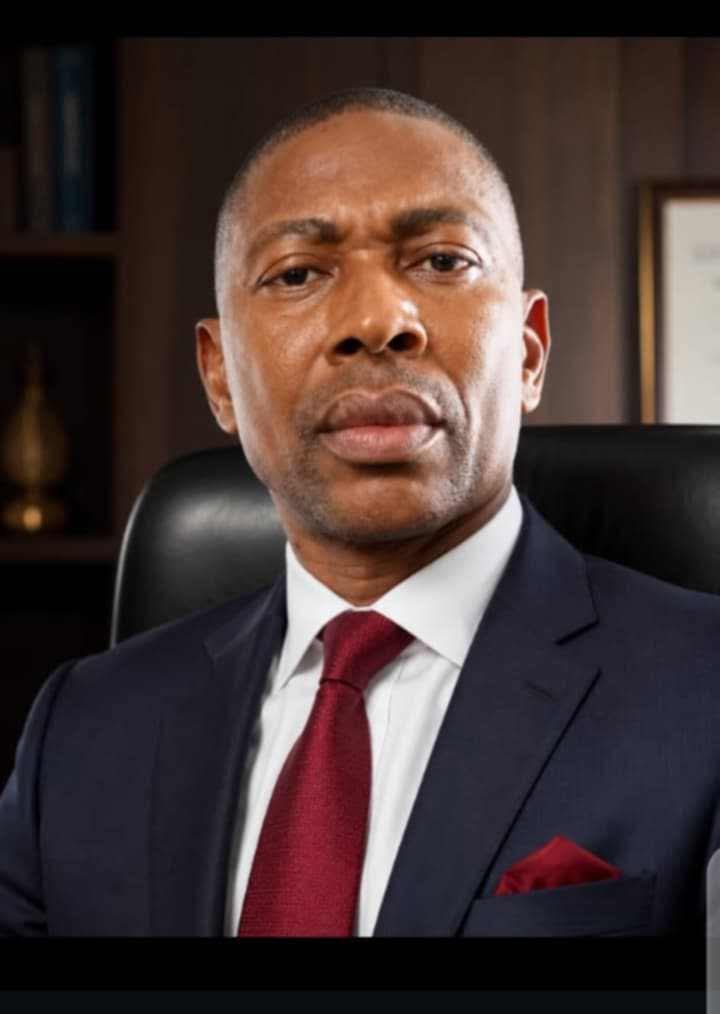
A former staff of the Rivers State Newspaper Corporation, publisher of The Tide Newspapers, Idongpee Akwaowo Reuben, has been appointed the Acting Registrar/Chief Executive Officer of Chartered Chemists of Nigeria (ICCON) by the Federal Government of Nigeria.
Akwaowo’s appointment follows the expiration of the second tenure of the former Registrar, Chemist Jwalshik Wilford.
According to a letter released from the office of the Minister of State for Health and Social Welfare dated August 5, 2026, the Minister of State for Health and Social Welfare, Dr. Iziaq Adekunle Salako, said the appointment was with immediate effect.
The minister had earlier announced Akwaowo’s appointment during a meeting with the Permanent Secretary, Heads of Departments, and Directors in June 10, 2026 in the Minister’s Conference Room.
He said the appointment was automatic and effective 1st June, 2026 following the satisfactory handover that followed the succession procedure.
The Minister nullified the earlier process put in place for a substantive appointment, citing it as a contravention of the provision of the ICCON Act.
He further directed that the appointment letter be issued without further delay.
The Minister admonished the new ICCON Chief Executive to take charge and ensure that the Institute is on the path of peace and progress to deliver her mandates.
In his response, Akwaowo thanked the the Federal Government for the appointment which, he said, has laid every uncertainty surrounding the leadership of the Institute to rest.
He pledged his unalloyed loyalty to the Federal Government and the Minister and promised to work with his Management Team to align with the policy directives of the Ministry as well as the renewed hope agenda of the Federal Government.
Akwaowo joined ICCON in 2005 as a pioneer staff, rose through the ranks and served in many capacities transcending virtually all the departments in the Institute including HOD, Administration/Accounts & Finance.
Most recently, he served as the pioneer Team Lead and the Registrar/CEO Representative in the National Chemical Personnel Audit excercise to Chemical companies and Chemistry Departments in Tertiary Institutions as part of the Institute’s regulatory mandates.
He has attended several courses and workshops and represented the Institute at various conferences and fora.
Akwaowo is a Chartered Chemist and also a member of a number of professional bodies.
He rose to the rank of Director, Scientific in 2025, and was until his appointment, the Coordinator, Zonal Offices of ICCON.
City Crime
Bayelsa Water Coys Raise Alarm Over Business Threats …Set To Resist Multiple Levies Amid High Production Cost

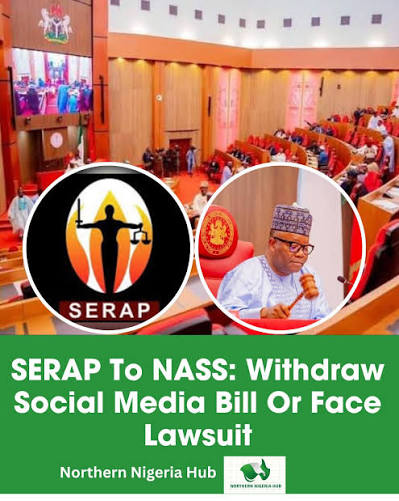
The Socio-Economic Rights and Accountability Project has asked the National Assembly to immediately withdraw the proposed Nigeria Data Protection (Amendment) Bill, 2026, describing it as a backdoor attempt to regulate social media and expand government control over online expression.
SERAP warned that it would institute legal action if the bill is passed in its current or substantially similar form.
The bill, sponsored by Senator Ned Nwoko (APC, Delta North), seeks to compel social media platforms, data controllers and data processors operating in Nigeria to establish physical offices in the country.
It also empowers the Nigeria Data Protection Commission to shut down or prohibit the operations of any entity that fails to comply within 30 days.
In a letter dated July 18, 2026, and addressed to Senate President Godswill Akpabio and Speaker of the House of Representatives Tajudeen Abbas, SERAP said the proposed amendment posed a threat to constitutionally guaranteed rights.
The letter, signed by SERAP Deputy Director Kolawole Oluwadare and issued on Sunday, read in part, “Requirements compelling technology companies to establish local offices would increase government leverage over platforms, facilitate political pressure, make censorship demands easier and expose local employees to retaliation.
“The Bill would create sweeping powers capable of shutting down or excluding social media platforms from the Nigerian market and expose millions of Nigerians to serious violations of their constitutionally and internationally guaranteed human rights.”
SERAP argued that the bill revives previous attempts to regulate social media that attracted widespread public opposition.
“The current Bill revives substantially similar proposals previously introduced by Senator Nwoko, raising renewed concerns that localisation requirements are being used as a vehicle for expanding governmental control over digital platforms and online expression,” it said.
The organisation warned that it would challenge the legislation in court if enacted.
“Should the Bill be enacted into law in its current or substantially similar form, SERAP shall promptly take all appropriate legal actions to challenge its legality in the public interest and to ensure that Nigerians’ fundamental rights are fully protected,” the letter stated.
According to SERAP, the proposed legislation would give the Nigeria Data Protection Commission excessive powers to block digital platforms without adequate procedural safeguards.
“The Bill constitutes a backdoor attempt to regulate social media and increase governmental control over online expression through corporate localisation requirements rather than through transparent and constitutionally permissible regulation,” it said.
The group argued that the bill lacks provisions for prior judicial authorisation, meaningful opportunities for compliance beyond the proposed 30-day period, and safeguards to protect the rights of millions of Nigerians who rely on digital platforms.
SERAP also cited the judgment of the ECOWAS Court of Justice on Nigeria’s suspension of Twitter, arguing that the proposed amendment could produce similar consequences by indirectly excluding social media platforms from operating in the country.
“The Bill also risks recreating the very dangers previously condemned by the ECOWAS Court of Justice. In SERAP and Others v. Federal Republic of Nigeria, the Court held that the suspension of Twitter violated the rights to freedom of expression, access to information and media freedom protected under the African Charter.
“Although the present Bill differs from the Twitter suspension in form, it creates the possibility of achieving the same result indirectly by empowering regulators to prohibit digital platforms from operating in Nigeria.
“The National Assembly should not enact legislation capable of producing, through indirect regulatory means, the very restrictions on fundamental rights that regional human rights law prohibits,” the organisation said.
It maintained that while governments have a legitimate interest in regulating digital platforms, such measures must comply with constitutional guarantees and international human rights standards.
The organisation further warned that mandatory localisation requirements would increase compliance costs for technology companies, startups, educational institutions and artificial intelligence developers.
“The proposed amendment conflicts directly with the objectives of the Nigeria Startup Act 2022 and the National Digital Economy Policy and Strategy.
“Mandatory localisation requirements substantially increase compliance costs, particularly for startups, open-source projects, educational institutions, research organisations, AI developers and smaller technology companies, while reducing Nigeria’s attractiveness as a destination for innovation and investment.
“No major democratic jurisdiction requires every social media platform to establish a physical office as a blanket precondition for providing services.”
SERAP added, “The National Assembly should immediately reject and withdraw the Bill, as it is manifestly incompatible with the Nigerian Constitution and Nigeria’s obligations under the African Charter on Human and Peoples’ Rights and the International Covenant on Civil and Political Rights.”
-

 News2 days ago
RSG Targets Nine Million Residents in Mosquito Net Distribution Campaign
-

 Oil & Energy2 days ago
Aiyedatiwa Signs New Electricity Bill
-

 Oil & Energy2 days ago
NLNG Commissions Research And Innovation Centre In RSU
-

 Maritime2 days ago
Marine Minister Commends President Tinubu On NPERA Bill Assent
-

 News2 days ago
KenPoly Holds Eight Convocations, August 29
-

 News2 days ago
RSG Begins Another Phase of Projects Commissioning Today
-

 News2 days ago
RMAFC Completes Revenue Sharing Review, Proposes New Pay
-

 Maritime2 days ago
NAGAFF Petitions IGP Over Alleged Maritime Police Harassment