
Business
AFCFTA: NAFFAC Laments Multiple Checkpoints On Int’l Routes

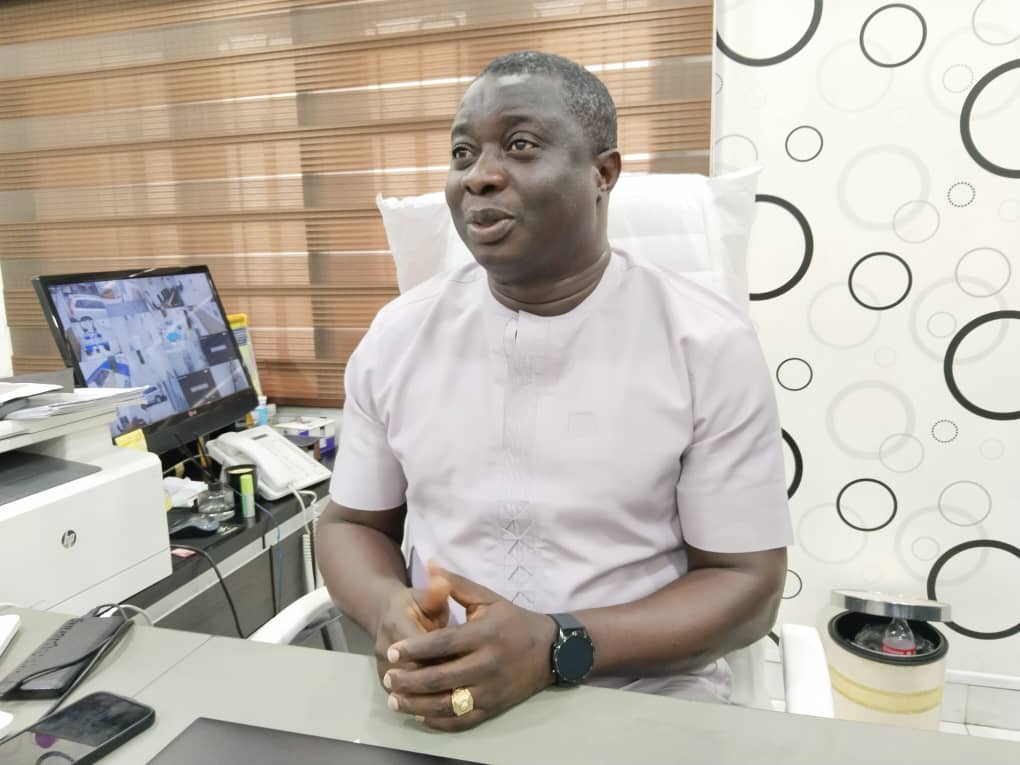
The National Association of Freight Forwarders and Consolidators (NAFFAC) has cautioned the Federal Government against multiple checkpoints along the Lagos-Badagry corridor and other entry points across the six geopolitical zones to encourage Nigeria’s participation in the Africa Continental Free Trade Area (AFCFTA) Agreement
President of the body, Mr. Adeyinka Bakare, lamented that Nigerian businesses may suffer major setbacks if government fails to resolve the bottlenecks on the movement of goods from all the entry points and international frontiers, saying that Nigerian goods and services have potentials to compete favourably in the region.
Bakare, who disclosed this on Wednesday at a roundtable meeting put together by the Association of Maritime Journalists of Nigeria (AMJON) in Lagos, expressed concerns over the multiple checkpoints manned by security agencies and touts, noting that the illegalities would further affect foreign and local investment.
According to him, NAFFAC has engaged government at all levels in furtherance to tackling the illegalities along the Lagos Abidjan corridor.
He further explained that, there are only five checkpoints between Ghana and Benin, noting that Nigeria has over 30 checkpoints manned by operatives of the government which he described as extortion of the highest order.
Bakare, who doubles as the Managing Director, De Potter Nigeria Limited, told the group of journalists that trade barriers must be eliminated for the country to participate fully in AFCFTA.
He called on the President Bola Ahmed Tinubu-led administration to reduce the number of checkpoints along the routes to encourage international trade.
The NAFFAC boss explained that Nigeria stand a chance to benefit immensely in the exportation of her commodities to other countries of the continent if well harnessed.
While reiterating the association’s commitment towards encouraging exportation, Bakare expressed that freight forwarding business is beyond import, and urged government to look inward to put in place policies to drive export.
He lamented that the poor foreign exchange rates against the Naira has also discouraged international trade, but expressed optimism that non-export would further grow the economy when government prioritize cargo exportation.
“Government needs to listen to this call because all our export are supposed to be on CIF, which is Cost Insurance and Freight, and not the other way round.
“The issue of multiple checkpoints along the entry points is killing the business, and it will affect the AFCFTA. The multiple checkpoints is not limited to Lagos Abidjan corridor alone. It is common in the northern region of the country and government is not doing anything about it”, Bakare stated.
By: Nkpemenyie Mcdominic, Lagos



“Payment of tuition fees for undergraduate/postgraduate studies shall be subject to a maximum limit of $25,000.00 per semester,” the Manual states.
The expansion of international card limits also reflects growing confidence among lenders that foreign exchange liquidity has improved enough to support retail dollar transactions.
Speaking recently at the BusinessDay 14th Annual CEO Forum in Lagos, CBN Olayemi Cardoso, governor of the CBN said buying and selling activities now increasingly determine outcomes in the foreign exchange market, unlike in the past when market participants relied heavily on routine Central Bank interventions.
According to Cardoso, Nigeria’s net foreign exchange reserves have risen from just over $3 billion at the start of the reform programme to more than $40 billion, while gross reserves have climbed to about $52 billion, providing stronger confidence for investors and enabling the Central Bank to reserve interventions for periods of market stress rather than day-to-day liquidity management.
The restoration and expansion of international naira card spending limits are increasingly being seen as one of the clearest signs that the benefits of the CBN’s foreign exchange reforms are beginning to reach households, students and businesses making legitimate cross-border payments.
The Secretary-General and Chief Executive Officer, WEC, Dr Angela Wilkinson, disclosed this in a statement, last Thursday.
“Nigeria’s participation comes at a pivotal time as the country seeks to expand energy access, strengthen energy security, accelerate gas development and mobilise the capital required for industrialisation and sustainable economic growth.
“WEC Nigeria will convene leaders from across the energy ecosystem, apply the WEC’s globally recognised Energy Trilemma framework to Nigeria’s unique context, and promote evidence-based dialogue, practical collaboration and informed policymaking.
“It will also ensure that Nigerian and broader African perspectives contribute meaningfully to global energy conversations,” she said.
Wilkinson expressed confidence that Nigeria would play a significant leadership role at the World Energy Congress scheduled for Riyadh in April 2027 and beyond.
The statement also quoted the Chairman of WEC Nigeria, Isa, as describing the country’s participation as an opportunity to deepen national and African leadership within the global energy community through practical solutions tailored to regional development priorities.
He said the platform would promote collaboration across sectors and attract sustainable investments into Nigeria’s energy sector.
The Chief Executive Officer of WEC Nigeria, Wunti, was quoted in the statement as saying that the council would connect leadership, evidence and investment to build a secure, affordable and sustainable energy system.
“This system will be capable of driving economic growth and shared prosperity.”
According to him, the platform will also connect Nigerian institutions and businesses with international knowledge, technology, partnerships and investment opportunities through the World Energy Council’s global network.
Recall that WEC, founded in 1923, is the world’s oldest independent and impartial community of energy leaders and practitioners, advancing informed, collaborative and practical action across the global energy system.
-
 Editorial3 days ago
That Oshiomhole’s Call On FG’s Road Projects
-
Education3 days ago
Environmental Education Remains Critical Tool To Address Environmental Challenges Says Experts
-

 City Crime3 days ago
Tinubu Appoints Ex-Tide Staff Registrar Of Chartered Chemists
-
Education3 days ago
UNIPORT VC Receives Probe Report on Student Union Crisis
-

 Sports3 days ago
Rivers-born Chess Player Clinches Third Position At World Amateur Rapid Chess Championship
-
Oil & Energy3 days ago
NCDMB, BOI Unveil $100m Nigerian Content Equity Fund …Set To Invest $5m In Oil Firms
-
Business3 days ago
PTDF Committed To Tinubu’s Development Plan – CEO
-
News3 days ago
RIFF 2026: RIFF Takes Film Tourism To Bonny Island