
Nation
NDLEA Arrests Artistes’ Manager Who Sells Drugs At Lagos VIP Clubs

Operatives of the National Drug Law Enforcement Agency, NDLEA, have arrested a Lekki-based artistes’ manager and his Ikoyi business accomplice who specialize in distributing illicit drugs to fun seekers at VIP night clubs and lounges in Lekki and Island axis of Lagos state.
Director of Media and Advocacy, Femi Babafemi said their arrest followed an intelligence about a shipment of Colorado, a synthetic strong strain of cannabis coming for them from Los Angeles, United States.
“Oseni Abdulraheem Ayodeji Babatunde (aka Papalampa) was the first to be arrested in his house at No. 3 Ope Daniel Taiwo Street, off Chisco Bus-Stop, Lekki area of Lagos when the consignment arrived on Sunday, 23rd July.
“During preliminary interview with the suspect, he confessed he started the illicit trade three years ago and has been selling to patrons of clubs and lounges in Lekki and Lagos Island, some of which he identified as Quilox, Silver Fox, DNA and Hot box.
“Oseni said beside the drug business, he also organizes shows for artistes around Lagos and outside Nigeria.
“A total of ten (10) parcels of Colorado weighing 2.50kg concealed inside large tins of coffee and duvets linked to Oseni were intercepted by NDLEA operatives at the Murtala Muhammed International Airport, MMIA, Ikeja.
“During a follow up search of his residence, operatives recovered some quantities of the same substance, a digital weighing scale and other paraphernalia.
“An Ikoyi based businessman, Nnadi Kingsley Ikenna, also linked to the shipment was away in South Africa when the consignment arrived.
“While operatives maintained surveillance around his 18 Okotie Eboh Close, Ikoyi residence, they also set their dragnet for him at the airport.
“He eventually arrived into the waiting arms of NDLEA officers on Thursday 27th July when he returned to the country on a Kenya Airlines flight at the Lagos airport.
“Kingsley, in his statement accepted ownership of a part of the consignment”.
In the same vein, NDLEA operatives attached to the NAHCO export shed of the MMIA intercepted a cargo going to Nairobi, Kenya.
A search of the consignment revealed that various quantities of MDMA (Ecstasy) popularly known as ‘Molly’ and Rohypnol were concealed in a bag consisting of foodstuff.
An agent, Onydem Chinwe Florence, who presented, it for export was arrested.
Also, an attempt by another suspect, Igboma Ifeanyi to export quantities of Loud, a variant of Cannabis, Tramadol and Rohypnol, all weighing 7.8kg concealed in 66 bottles of skin lightening lotion, was thwarted by vigilant operatives who intercepted him while preparing to board an Ethiopian airline flight to Muscat, Oman at the Lagos airport.
Another suspect, Ekpenisi Wisdom Pious, was equally arrested while trying to board an Ethiopian airline flight to Oman with 6.00kg skunk hidden in a bag of food stuff.
A follow up operation led to the arrest of a staff of Toprano Hotel, Ikeja, Ibigbami Temitope Oluwatobi, who was fingered in the drug trafficking scheme.
A consignment of 5.70kg codeine syrup going to the United Kingdom was on Thursday 27th July seized from a 51-year-old widow, Adewunmi Taiwo Atinuke, by NDLEA operatives at the SAHCO export shed of the MMIA Ikeja.
Equally, a consignment of 8.5kg skunk, well concealed in a vehicle engine block going to Dubai, UAE, was on Tuesday 18th July, intercepted by NDLEA officers of the Directorate of Operations and General Investigation, DOGI, attached to courier companies in Lagos.
At the Apapa seaport in Lagos, another container load of nitrous oxide popularly known as laughing gas, linked to a 30-year-old businessman, Stephen Eze, was seized on Tuesday 25th July.
Two containers of the same substance imported from China by the suspect was earlier seized on 13th July at the Apapa port.
The third shipment was intercepted during a joint examination of the container marked SUDU7431605 containing 8,336 cannisters of Nitrous Oxide and pressure release Nozzles.
In Ondo state, two suspects: Francis Diamond, 26, and Adekunle Damilola, 26, were arrested in Ita Ogbolu forest with 247.5kg cannabis while a Golf Car conveying the same substance weighing 308kg was intercepted at Airport Junction along Akure-Ogbese Road on Wednesday 26th July with a suspect Farouk Umar, 38, arrested. A 32-year-old suspect,
Chukwuma Nnaji was also arrested with 47kg skunk in a warehouse at Onuogba Eke, Ishielu LGA, Enugu state on Saturday 29th July, while 12kg of the same substance was recovered from a lock up shop during the raid.
A grandpa, Boniface Ogwurlobi, 62, and Chimezie Onyenjuru were arrested at Uli town Ihila LGA, Anambra state with a total of 49.415kg cannabis sativa, 127.7grams of methamphetamine and 15grams of cocaine during a raid operation on Friday 28th July.
Also, men of 9th Brigade, Nigerian Army transferred three suspects: Olasande Olutosin, Oleh Chiagozie and Obamuro Baiyeri arrested with 2,608.3kg cannabis sativa and the truck conveying the substance to the Lagos state Command of NDLEA on Tuesday 25th July.



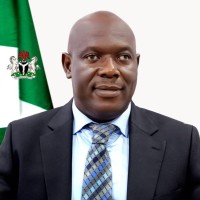
The Hydrocarbon Pollution Remediation Project (HYPREP) has commemorated the 15th anniversary of the release of the United Nations Environment Programme (UNEP) Environmental Assessment Report on Ogoniland, reaffirming its commitment to restoring the environment and improving the livelihoods of affected communities.
In a statement signed by the Project Coordinator, Prof Nenibarini Zabbey, to commemorate the anniversary, HYPREP described the anniversary as a significant milestone in Nigeria’s environmental restoration efforts, noting that the project has made remarkable progress in implementing the recommendations of the landmark UNEP report released on August 4, 2011.
The UNEP report had revealed extensive oil pollution across Ogoniland, severe environmental degradation, and serious public health risks resulting from decades of petroleum operations. It also recommended an initial $1 billion fund to commence the cleanup of the affected communities.
According to HYPREP, the Federal Government formally launched the Ogoni clean-up in 2016, while the Project Coordination Office was established in 2017 to drive the implementation of UNEP’s recommendations.
Zabbey said the current administration has continued to prioritise the project under the Renewed Hope Agenda.
Providing an update on the cleanup, the Project Coordinator disclosed that 30 of the 65 contaminated sites identified by UNEP have been fully remediated, while work is ongoing at several medium- and high-risk locations. It also stated that more than 1.5 million mangrove seedlings have been planted as part of what it described as the world’s largest restoration of oil-degraded mangroves, with over 1,000 hectares of shoreline already rehabilitated.
Zabbey further revealed that 49 Ogoni communities have been connected to potable water schemes through multiple water projects and booster stations aimed at providing safe drinking water across the region.
In the health sector, he said the 100-bed Ogoni Specialist Hospital in Kpite and the 43-bed Cottage Hospital in Buan are nearing completion, adding that several existing health facilities have been upgraded with modern medical equipment, while five ambulances have been donated to improve emergency healthcare services. The Project Coordinator also disclosed that a three-year human health biomonitoring study is being conducted in collaboration with the World Health Organization’s International Agency for Research on Cancer (IARC).
On economic empowerment, Zabbey stated that the Project has created more than 8,000 direct jobs and trained thousands of Ogoni youths and women in various vocational and technical skills, including software development, cybersecurity, aviation, commercial diving, seafaring, mechatronics, and creative arts. The project also reported awarding scholarships to more than 1,000 students, providing grants to small businesses, and supporting persons living with special needs through skills acquisition programmes.
The statement further highlighted ongoing legacy projects, including the Ogoni Power Project and the Centre of Excellence for Environmental Restoration, which it said is about 96 per cent complete. HYPREP also welcomed the recent designation of the Ogoni Wetland as a Ramsar Site of International Importance and pledged to continue promoting biodiversity conservation and sustainable management of the ecosystem.
Marking the anniversary, Zabbey said the progress achieved over the past 15 years demonstrates the collective commitment of government, development partners, stakeholders, and local communities to restoring Ogoniland. He called for renewed collaboration to sustain the cleanup effort, promote environmental sustainability, and support the long-term development of the region. 3
-

 News2 days ago
RSG Targets Nine Million Residents in Mosquito Net Distribution Campaign
-

 Oil & Energy2 days ago
Aiyedatiwa Signs New Electricity Bill
-

 Maritime2 days ago
Marine Minister Commends President Tinubu On NPERA Bill Assent
-

 Oil & Energy2 days ago
NLNG Commissions Research And Innovation Centre In RSU
-

 News2 days ago
KenPoly Holds Eight Convocations, August 29
-

 News2 days ago
RSG Begins Another Phase of Projects Commissioning Today
-

 News2 days ago
RMAFC Completes Revenue Sharing Review, Proposes New Pay
-

 Maritime2 days ago
NAGAFF Petitions IGP Over Alleged Maritime Police Harassment