
Featured
Wike Confers State Honours On 162 Distinguished Nigerians ….Says I’ve No Apologies For Commending Buhari Over 13% Derivation Arrears …Tells Opposition Parties Not To Waste Money Campaigning In Rivers

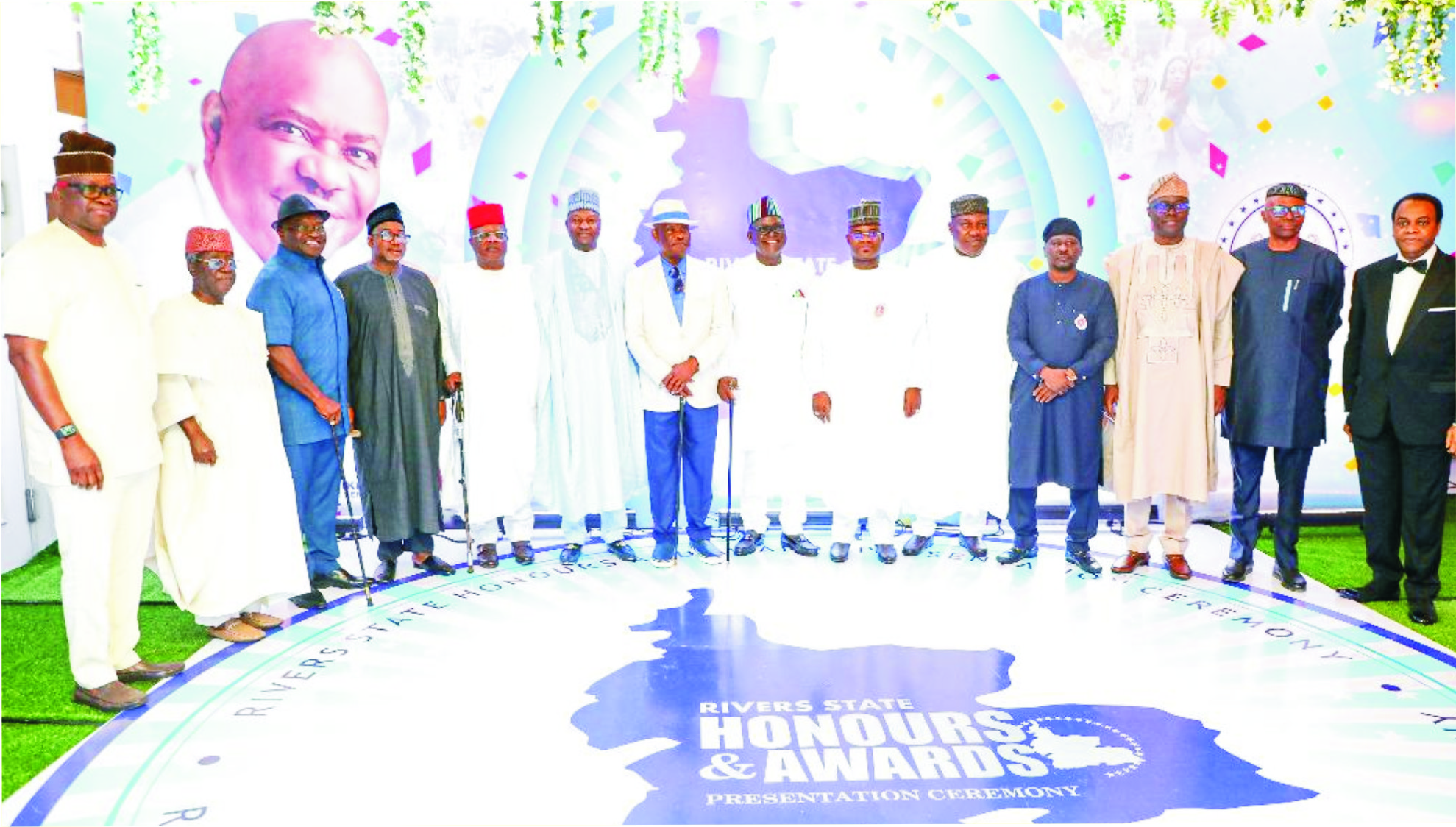
Rivers State Governor, Chief Nyesom Wike, has honoured 162 distinguished Nigerians for their inspirational achievements, impactful life and contributions to the progress of the state in particular and the nation in general.
Among those honoured are eight state governors, nine former governors of other states, lawyers and others who have demonstrated high level of loyalty to the nation, excellence in public service, commitment to equity, equality and justice in the country and love for the Government and the people of Rivers State.
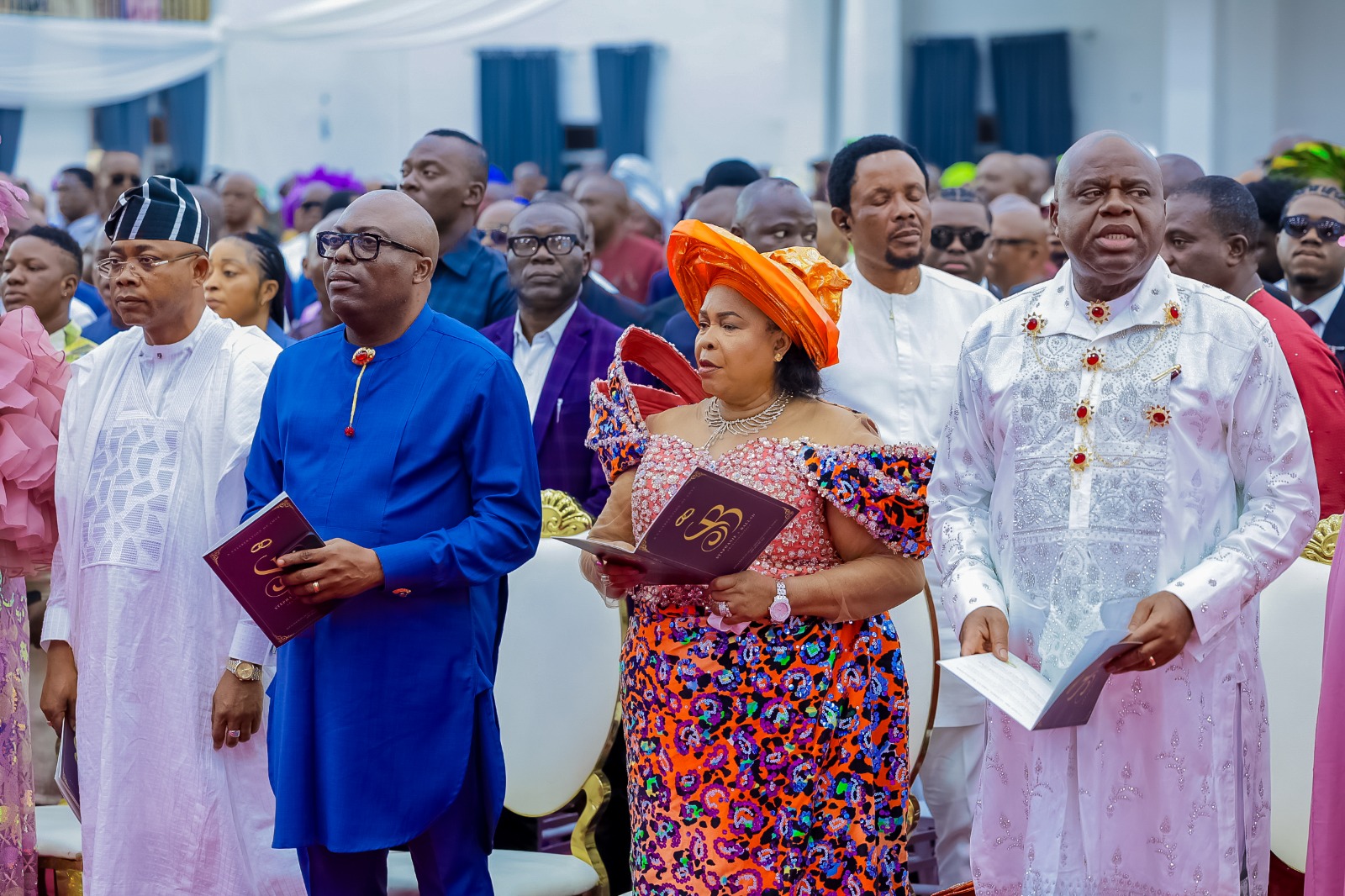
Wike presented the awards to the awardees during the State Honours and Awards ceremony 2022 which held at the Banquet Hall, Government House, Port Harcourt, last Saturday night.
The awards were in four categories, namely: the Grand Service star of Rivers State (GSSRS), the Distinguished Service State of Rivers State (DSSRS), the Governor’s Medal of Service (GMS), and the Rivers State Merit Award (RSMA).
Those conferred with Rivers’ most prestigious award, the Grand Service Star of Rivers State (GSSRS) are governors Samuel Ortom (Benue), Seyi Makinde (Oyo), Dr. Okezie Ikpeazu (Abia), Ifeanyi Ugwuanyi (Enugu), Bala Mohammed (Bauchi), Yahaya Bello (Kogi), Ahmadu Umaru Fintiri (Adamawa), and David Umahi (Ebonyi).
Others include former governors, Olabode George, Jonah Jang, Donald Duke, Ayodele Fayose, Ibrahim Idris, Olusegun Mimiko, Theodore Orji, Dr Ibrahim Dankwanbo, and Adams Oshiomhole.
Around 110 distinguished personalities were also conferred with the Distinguished Service State of Rivers State (DSSRS).
They include wives of the governors of Rivers and Oyo, Hon. Justice Eberechi Suzzette Nyesom-Wike, and Mrs. Tamunominini Makinde; wife of former governor of Cross River State, Mrs. Onari Donald-Duke, Attorney General of the Federation and Minister of Justice, Abubakar Malami, SAN.
Rivers State Chief Judge, Hon. Justice Simeon Amadi; Rivers State Attorney General and Commissioner for Justice, Prof Zacchaeus Adangor, SAN; Senator Olaka Nwogu; Sir Siminialayi Fubara; Prof. Ngozi Ordu; Chief Dan Orbih; King Dandeson Douglas Jaja; Prof. Jerry Gana; Emmauel Ukala, SAN; Chief Nnaemeka Ngige, SAN; Prof. Isa Hayatu Chiroma, SAN; and Dr Emi Membere-Otaji, among others.
Similarly, 33 personalities were presented with the Governor’s Medal of Service (GMS), and two others, Mr. Oruwuru Pere Shedrack, and Mrs. Patience Nwogu, with the Rivers State Merit Award (RSMA).
Others include Coach of Rivers United, Stanley Eguma; and other coaches including Fatai Oscho; Ndubisi Nduk; Joseph Buma; Okey Inwenya; and players and officials of 2021/2022 Nigeria Professional Football League Champions Rivers United Football Club of Port Harcourt.
Patience is a junior school teacher who was honoured for “her enviable sense of sacrifice, discipline, and honest devotion to work”.
In his remarks, Wike, who explained that the state honours and awards were solely the initiative of former governor, Dr. Peter Odili, remarked that everyone bestowed with an award, last Saturday night, had distinguished themselves by their good character, personal achievements and positive contributions to society.
The governor stated that the eight governors and former governors honoured by the state were selected from different political parties because of their love for the growth and development of Rivers State.
He said: “I want to say to all of you that, Ortom, Seyi, Ugwuanyi, Ikpeazu, Fintiri (you are not with us, you are with your uncle), in terms of principle, these young men are the people you can trust any day any time.
“Bala Mohammed is a G-1, on his own, one man riot squad. But you can trust him. Fintiri, is my friend, he is our friend. It doesn’t matter the differences. He wants his brother to be president. But we still keep our relationship, and that is the way it is supposed to be.
“I fought Umahi to the last. He never slept. But I don’t know how God is trying to help him. Most of you remember I was the one who fought Oshiomhole. Sorry that I fought you. Until you got information you have never had before, Oshio Baba sorry. But I did it for the interest of my party.”
The governor said the Honours Advisory Committee had nominated an array of Senior Advocates of Nigeria who have been at the forefront of Rivers State numerous legal battles with the Federal Government and other states.
He said their professional services, sacrifice and contributions were central to the state government successes in the various courts and the consequential economic benefits Rivers people now enjoy.
The governor said he would refrain from naming the lawyers and commending them publicly because similar gesture extended to President Muhammadu Buhari had elicited unwarranted acrimony in the Niger Delta.
He said: “Human beings instead of them to say I appreciate you, they become envious. Because I say Buhari thank you, I am having problems today. That is the country we are in. I am not a fan of Buhari.
“When a man has done well say he has done well in this area. If he has not done well you say so. I have no apologies to anybody. If Buhari did not release the money from 1999 which my party did not even release, I wouldn’t have been doing what I am doing. I say it and I don’t give a damn to anybody. I don’t care.
“I got the money; I am not a fan of Buhari. He has not done well in many areas, but this one he has done well. My party members may not be happy. But they should not be angry, because this one, he did well.
“He gave me money and I used the money to do something for people in Rivers State. This money was there. Nobody paid us. I hear somebody saying that his three kilometre road would do my 15 flyovers. No problem. Do the three kilometres first. Tell Nigerians you are doing three kilometres.”
The governor said he has advised governors of Ebonyi and Kogi states not to waste their money in supporting any governorship candidate in the state, because the Peoples Democratic Party (PDP), will win all elective positions in the 2023 general election.
“In my state, we know who is going to be our successor. I want to advise you, if you’re spending money on anybody stop. Here we have a successor. It is not by my power, but it is by what we have done in this state. It’s not that I want to impose a successor. It is not true.”
Wike advised opposition political parties, especially the All Progressives Congress (APC), to avoid wasting money for electioneering in the state, saying that the Peoples Democratic Party (PDP) was the only party to beat in next year’s general election.
He said, “As a lawyer, you must make money, but here, don’t worry yourself; nobody would win here,” urging opposition parties not to waste their resources campaigning in the state as they had nothing to show the electorate.
The governor specifically passed the message to APC chieftains present at the event, which include the Attorney-General of the Federation and Minister of Justice, Abubakar Malami, SAN; Governor Dave Umahi of Ebonyi State, and his Kogi State counterpart, Yahaya Bello, who were part of the awardees.
“I told David Umahi, Governor of Kogi, and Abubakar Malami, when they came to visit me: Don’t put money here, it won’t work; it is a ‘no-go area’,” Wike boasted.
According to the Rivers State governor, his government already has a successor, and his choice was based on the good works of his administration.
“In my state, we know who is going to be my successor. I want to advise you, if you are spending money on anybody, stop!
“Here, we have a successor. It is not by my power but by what we have done in this state. It is not that I want to impose a successor. It is not true. Bring a successor and tell people why you want to bring a successor,” Wike said.
Explaining the rationale for honouring some of the awardees, Wike said, Ibrahim Idris was honoured for his genuine commitment to the development of Kogi State and the entire country.
“For two consecutive times, we have invited the two-term Kogi Governor, Alhaji Ibrahim Idris to commission two development projects in Rivers State, one was in March, and the other was in August, 2022.
“We hold him in high esteem, and consider him as a worthy ambassador of Rivers State.
“As a stakeholder for Rivers State project, we will not hesitate both now and in the nearest future, to continue to eat into his good time for the continuous development of the state.”
The Benue State Governor, Samuel Ortom, who spoke on behalf of his colleagues, said governor Wike has demonstrated that he is a true patriot and nationalist by honouring Nigerians from the six geopolitical zones, irrespective of their religious and political persuasion.
“Today, in Nigeria as we match towards 2023, we are not looking at political parties, we are not looking at ethnicity, but we are looking at how we can salvage our country, Nigeria, and make it greater than where we are today. I thank you (Wike) for charting this course, and I believe that moving forward from here, that all of us who are here tonight will be a catalyst to how we can make Nigeria greater, economically, politically, socially, security wise, we will make it greater.”
Similarly, the Attorney General of the Federation and Minister of Justice, Abubakar Malami, SAN, who spoke on behalf of the awardees, said Wike has taken governance to the next level.
“You have indeed demonstrated what it takes to be accommodative, what it takes to be a bridge builder, a builder of bridges across the Niger. You have established a bridge, we are happy crossing over to come around for the purpose of identifying with you in the expression of excellence attributed to the service of the nation, Rivers State.”
Responding to the Rivers State honour, Idris described the event as epoch-making, considering the all-round development Governor Nyesom Wike has put in place in the state.
He expressed delight for being part of the success story of the state, advising other governors to strive to leave a good mark on the sands of time.
Chairman of the Rivers State Honours Advisory Committee, Chief Ferdinand Alabraba, said the law empowers the governor to confer honour on those who have contributed to the growth and development of the state.
This is the second edition of the conferment of state honours.
The first, still by Governor Nyesom Wike, was held in 2017 to climax the celebration of the state’s Golden Jubilee.
At that time, 127 distinguished persons who served the state meritoriously in different fields of human endeavour were honoured.
Some of the awardees were honoured post-humously for their outstanding contributions to the growth of Rivers State at different times.













Rivers State, Sir Siminalayi Fubara, has assured members of the National Youth Service Corps (NYSC) of his administration’s commitment to supporting and strengthening the scheme in the State.
Fubara gave the assurance last Friday at the NYSC permanent orientation camp, Nonwa-Gbam, Tai Local Government Area in the State, during the swearing-in ceremony of 2026 Batch B Stream II orientation course.
Represented by the Permanent Secretary, Cabinet Bureau, Office of the Secretary to the State Government, Dr. Promise Oguzie, the governor said the State Government would remain intentional in providing the necessary support to improve the NYSC scheme and enhance the experiences of corps members deployed to the state.
He charged the corps members to be role models and quality nation-builders in their service to the good people of Rivers State in particular, and Nigeria at large.
“I charge you to be exemplary, dedicated and committed in all you do. Take full advantage of all the camp programmes and activities to enrich yourselves”, he said.
In his welcome address, the State Coordinator of NYSC in Rivers State, Mr. Moses Oleghe, urged corps members to see their deployment to Rivers State as a “veritable opportunity to make meaningful contribution to the growth of the State in particular and Nigeria at large.”
He further charged them to serve with all sense of “integrity, discipline, and the fear of God, especially when they will be engaged as INEC ad-hoc staff that will conduct the 2027 general elections.”
A total of 3,584 corps members composed of 1,421 males and 2,163 females were sworn in by the Chief Judge of Rivers State, who was represented by Justice Godspower Aguma.

Governor of Rivers State, Sir Siminalayi Fubara, says Nigeria needs God-fearing leaders for the nation to move in the right direction and make meaningful progress.
The Governor stated this yesterday when he received in audience, the World President of the Seventh Day Adventist Church, Pastor Erton Kohler; his wife, Andriene Marques Kohler; daughter Mariana Marques Kohler and a retinue of ministers of the church at Government House, Port Harcourt.
Fubara who hailed the Seventh Day Adventist Church for its contributions to education and the grooming of future leaders in Nigeria, expressed delight that the Church had over the years, been investing in education at various levels and currently runs two universities in the country.
He commended the church for not only using its institutions to spread the gospel of Christianity but to groom future leaders for the country.
According to him, religion should not be just about defending one’s faith, but also making meaningful impact on the lives of the people.
He said that by floating these educational institutions, the church has demonstrated capacity to support Nigeria in the task of producing not only educated people but a breed of God-fearing leaders.
“Our country is where it is today because we lack the fear of God. If you have the fear of God, there should be a limit to what you can do because you understand the supremacy of God. But when God is not in your equation, you’ll go beyond the line and that is what has brought us to where we are today.
“So, I feel very happy that you are contributing to the development of our future leaders in this country. We need the right people being in the right place; prepared properly with good minds; that is what we need, not just in Nigeria but round the whole world.,” he said.
Governor Fubara further observed that the absence of God-fearing people in high places to take the right decisions that could impact positively on the society, has also given rise to other problems such as social inequality, poverty, corruption and criminality. According to him, Nigeria needs a system where the average parent could afford quality education for their children and a guarantee that upon graduation, the average child will have the capacity to compete favourably with anybody, anywhere in the world.
“If we have a situation where the little money that you’re being paid as wage can also afford you quality healthcare and after working at least for 15-20 years, you have a roof over your head, tell me why you should be involved in any kind of crime? At that point, you’ll feel secured and this attitude of insecurity about the future that leads to all the social vices we have today won’t be there,” he said.
Governor Fubara expressed appreciation to the delegation for the visit and for their prayers for Rivers State, assuring them of his continued support for their programmes in the state.
Leader of the delegation and World President of the Seventh Day Adventist Church, Pastor Erton Kohler said he was in Nigeria for a special conference of the church during which thousands of the church’s ministers will be undergoing an empowerment programme to further equip them for the task of herding their flocks and serving the society.
He expressed gratitude to the Governor for the warm reception accorded his entourage, saying the memory of the visit will linger in his mind for a lifetime.
Kohler disclosed that the Church has over twenty -four million (24,000,000) members and more than 182,000 places of worship, spread across 212 countries of the world.

The Rivers State House of Assembly has approved the 2026–2028 Medium Term Expenditure Framework (MTEF) submitted by Governor Siminalayi Fubara.
This reaffirms the lawmakers’ commitment to enacting laws and taking legislative actions geared towards the overall development of the State.
The Assembly gave the approval during its Second Legislative Sitting of the Fourth Session held last Friday.
Speaking on the MTEF document during plenary, the House Speaker, Rt. Hon. Martin Amaewhule, noted that by the provision of Section 10(1)(b) of the Rivers State Fiscal Responsibility Law No. 8 of 2010, the MTEF ought to have been laid before the House in September 2025.
Amaewhule explained that traditionally, the document is expected to be presented four months before the commencement of the next financial year and immediately after the expiration of every three-year fiscal cycle.
He, however, stated that in the interest of the State and its people, the House considered it necessary to deliberate on the document, describing it as a precursor to the 2026 Budget Estimates.
The Speaker expressed concern that the year had already progressed significantly before the presentation of the framework.
During deliberations on the document, members examined the assumptions and projections contained in the MTEF and observed that strict adherence to the outlined fiscal parameters would ultimately serve the interest of Rivers people.
The lawmakers maintained that effective implementation of the framework would promote prudent financial management and enhance developmental planning across the State.
Following the debate and positive consideration by members, the Speaker put the question to the House and members voted overwhelmingly in support of the approval of the MTEF.
Meanwhile, during the same sitting last Friday, the House also received a petition from the Chairman of Obio/Akpor Local Government Council, Dr. Gift Worlu.
The petition was presented by the member representing Obio/Akpor Constituency II, Hon. Emilia Amadi.
According to the petition, concerns were raised over an imminent security breach, threats to lives, destruction of property and alleged forceful takeover of property by some lawless persons within parts of the Local Government Area.
Presenting the petition before the House, Hon. Amadi appealed to the lawmakers to revisit the matter and take necessary steps aimed at safeguarding lives and property in the affected communities.
The House is expected to further deliberate on the petition and consider measures to address the concerns raised in order to sustain peace and security in the area.
King Onunwor
-

 News3 days ago
RSG Targets Nine Million Residents in Mosquito Net Distribution Campaign
-

 Oil & Energy3 days ago
Aiyedatiwa Signs New Electricity Bill
-

 Maritime3 days ago
Marine Minister Commends President Tinubu On NPERA Bill Assent
-

 Oil & Energy3 days ago
NLNG Commissions Research And Innovation Centre In RSU
-

 News3 days ago
KenPoly Holds Eight Convocations, August 29
-

 News3 days ago
RSG Begins Another Phase of Projects Commissioning Today
-

 News3 days ago
RMAFC Completes Revenue Sharing Review, Proposes New Pay
-

 Maritime3 days ago
NAGAFF Petitions IGP Over Alleged Maritime Police Harassment