Connect with us

Niger Delta

SSA Lauds Diri On Commitment To SDGs Attainment

Published

on

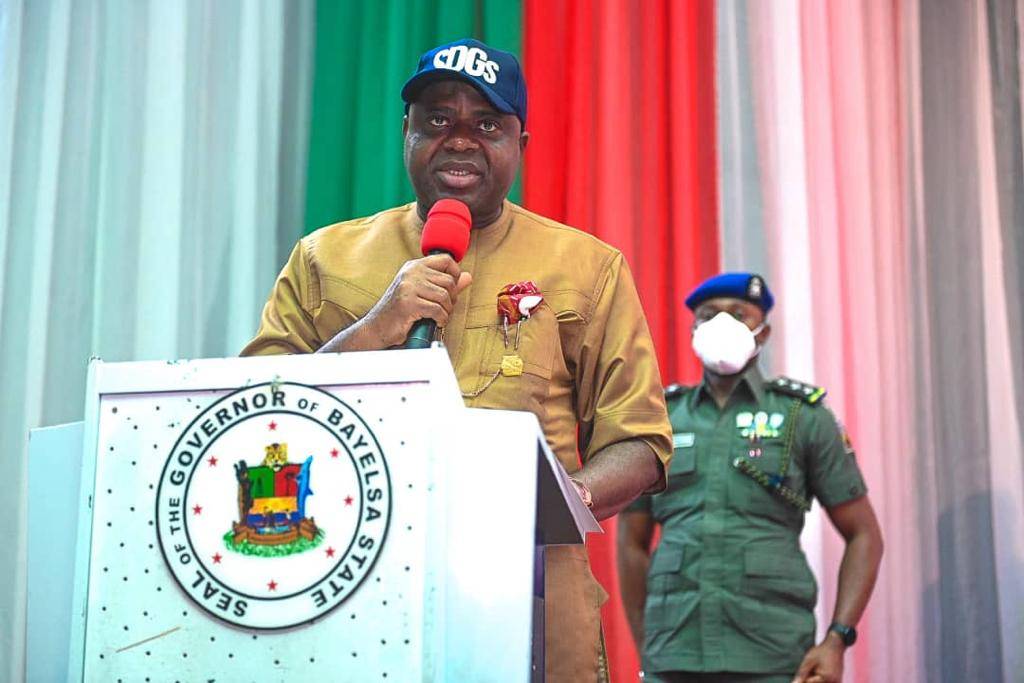
Senior Special Assistant (SSA), and Focal Person on Sustainable Development Goals (SDGs), Mr Ebiwari Wariowei, has commended Governor Douye Diri of Bayelsa State for his commitment to the attainment of the 17 SDGs in the State.
Wariowei gave the commendation following Diri’s visit to the United Nations headquarters in New York, United States.
This is contained in a statement signed on Wednesday by Mr Pereokosifa Buseni, Press Secretary to the SDGs, Bayelsa State Chapter
The Tide’s source reports that during the visit, Governor Diri met the Deputy Secretary-General, Mrs Amina Mohammed, and asked for sustained collaboration with the United Nations.
The statement continued that the SSA-SDGs said the call for collaboration with the UN was apt, timely and in the best interest of a state like Bayelsa which was desirous of growth in all frontiers.
He called on the UN and other development partners to cooperate with the Government to consolidate on the steps taken by Diri, to help speed up development in the state.
Wariowei stressed that Bayelsa was in dire need for development partners who would collaborate with Government in key areas such as education, health, women and youth empowerment, tourism, food production and processing, and environment.
He said Diri had demonstrated uncommon commitment and passion of development by building critical infrastructure that would provide great opportunities to open up the State for more investments in different sectors.
According to him, Governor Diri is using the Bayelsa SDGs Office to drive his Prosperity Agenda by implementing key projects and programmes like the distribution of 100 hospital beds, mattresses and cupboards to selected primary health centres across the eight local government areas of the State.
Other projects include award of 12.5 km rural roads to open up various local government areas, as well as the 100-bed Mother and Child Hospital built by SDGs in collaboration with the Federal Government.
He, however, urged citizens to support government’s effort to ensure the State was peaceful, stable, secured and prosperous.
He added that with less than two years left in Governor Diri’s first tenure, many laudable projects and programmes would be launched to make life meaningful for all.


Continue Reading

Niger Delta

Bayelsa Reassures AFENET, Others On Stronger Synergy 

Published

on

The Bayelsa State Government has assured the African Field Epidemiology Network (AFENET) and other development partners in the health sector of a better working relationship to further improve on healthcare delivery in the state.
The State’s Deputy Governor, Dr. Peter Akpe, gave the assurance midweek at separate meetings with a delegation of AFENET, Abuja, and the State Taskforce on Immunization at his office in Government House, Yenagoa.
In a statement by his Senior Special Assistant on Media, Mr. Doubara Atasi, the Deputy Governor was quoted as saying that the State Governor, Douye Diri-led administration was taking measures, including putting in place a legislative framework, to ensure sustainability of health projects and programmes in the state.
He expressed hope that the state Health Sector Reform Bill, when passed into law, will address funding of health projects and other critical challenges affecting healthcare delivery in Bayelsa.
The Deputy Governor, who is the Chairman of  the State Immunization Taskforce, commended members of the taskforce, AFENET, and other development partners for their efforts and support that enabled the state to achieve its current level of achievements, particularly in immunization.
He, however, urged them not to rest on their oars, stressing that the present administration was irrevocably committed to improving the maternal and child health indices of the state as well as strengthening ongoing partnerships on healthcare interventions.
“We really have to continue working together to see how we can achieve greater and better results. I don’t want our state to come down from the height we have attained.
“My team and I will always be open to your counsel and any action you (AFENET) will want to shift to us as our area of responsibility; we will always try and see what we can do about it”, he said.
He continued that “I think government co-owning projects or initiatives such as this should not be an issue we should struggle with. I believe that with the team we have, we can work it out and make it effective and beneficial to our people.
“On the issue of legislative framework, I want to assure you that we are almost there. We are working on the state Health Sector Reform Bill, which when passed into law, I believe can address the concern you have raised here.
“It will take care of the issue of sustainability of funding and other challenges affecting healthcare delivery in the state.”
Also speaking, the Commissioner for Health, Prof. Seiyefa Brisibe, disclosed that AFENET, which draws technical and financial support from the United States Center for Disease Control and Prevention, had been supporting the state’s Primary HealthCare Board since 2024.
According to the health Commissioner, the group largely collaborated with the state in the roll-out and implementation of Malaria Vaccines, optimization of outreach sessions which culminated in the immunization of over 18,000 children across the state in three cycles.
Earlier in his remarks, the National Coordinator of the African Field Epidemiology Network (AFENET), Dr. Saheed Gidado, acknowledged the state government’s achievements in healthcare delivery, especially in immunization.
While expressing AFENET’s readiness for continued collaboration, Dr. Gidado urged the state government to put in place a legislative framework to ensure sustainability for funding of the Malaria Vaccine Optimization Project and other health initiatives.
The Director, Disease Control and Immunization, Ministry of Health, Dr Gbanaibolou Orukari and her Pharmaceutical Services counterpart, Dr. Ebikapaye Okoyen, also made presentations at the meeting.
By: Ariwera Ibibo-Howells, Yenagoa
Continue Reading

Niger Delta

NDDC Foreign Scholarship: 5,986 Scale CBT  … As 2,492 Reach Final Interview Stage

Published

on

The Niger Delta Development Commission (NDDC) has disclosed that a total of 5,986 candidates have scaled through the Computer-Based Test (CBT) stage of its foreign scholarship programme out of 12,277 applicants.
Speaking during an assessment visit to the scholarship interview venue in Port Harcourt, the NDDC Managing Director, Dr. Samuel Ogbuku, assured stakeholders that the selection process remained free of bias, compromise and favoritism.
Represented by the Director of Education, Health and Social Services, Dr. Patience Ezugu, Ogbuku commended members of the interview panel for conducting what he described as a seamless exercise without complaints from candidates.
According to him, the scholarship selection process has consistently produced outstanding beneficiaries who have excelled in their respective fields abroad.
“The students who benefited from the scholarship scheme in previous years recorded distinctions in their various fields of study, and we have not received any criminal or negative reports about them”, he said.
The Commission disclosed that after the CBT stage, 2,492 candidates were shortlisted for the oral interview phase, from which successful applicants would emerge for the overseas postgraduate scholarship award.
Director of Education, Dr. Awele Chukwudifu, noted that the computer-based examination process enhanced credibility because candidates saw their scores immediately after completing the tests.
“As soon as the computer-based exams are concluded, the scores pop up instantly for candidates to see, which demonstrates transparency and integrity”, she said.
She added that beneficiaries of the scholarship would be encouraged to return and deploy their acquired knowledge toward the development of the Niger Delta region.
Chairman of the interview panel and lecturer at Niger Delta University, Prof. Beleudanyo Fente, praised the NDDC for sustaining the initiative aimed at improving educational opportunities for youths in the region.
Fente assured that the panel remained committed to selecting only the most qualified candidates, insisting there was no room for compromise in the exercise.
The consultant for the scholarship programme, Chief Godson Ideozu, described the process as dependable and hitch-free since its commencement.
He disclosed that out of the 12,277 applicants, 5,986 candidates passed the CBT stage, while 2,492 advanced to the oral interview stage.
He added that successful candidates would later be invited for a departure briefing.
One of the candidates, Mrs. Akindoyeni Oluwabukunmi, described the process as transparent and satisfactory, noting that the scholarship would help her acquire knowledge and skills needed to contribute meaningfully to the development of the Niger Delta region.
Continue Reading

Niger Delta

Advocates Tasks N’Delta Govs On Rights-Based Disability Laws Enactment 

Published

on

Some disability rights advocates have urged governors in the Niger Delta region to enact rights-based disability laws and ensure the inclusive implementation of the Petroleum Industry Act (PIA) to protect persons with disabilities (PWDs).
The call was made during a two-day workshop organised by the Centre for Citizens with Disabilities (CCD) in Port Harcourt on Friday.
Special Assistant to the Governor of Abia State on Persons with Disabilities, Mr. David Anyaele, said the training became necessary due to the exclusion of PWDs from the implementation processes of the PIA in many host communities.
Anyaele, who facilitated the workshop, said the PIA provided for host community trusts, boards of trustees, advisory councils and needs assessments, but noted that PWDs were often excluded from such structures.
According to him, excluding persons with disabilities from community needs assessments would deny them access to development projects and programmes in oil-producing communities.
He said the workshop was designed to equip participants with knowledge of the PIA and the advocacy skills needed to engage traditional rulers, host community leaders and other stakeholders.
Anyaele said the Discrimination Against Persons with Disabilities (Prohibition) Act required the inclusion of PWDs in governance and guaranteed accessibility to public infrastructure.
However, he noted that many public facilities across the country remained inaccessible, thereby limiting the participation of PWDs in education, governance and social activities.
The disability advocate urged governments at all levels to address institutional, environmental and attitudinal barriers affecting persons with disabilities.
He also described advocacy as a continuous process requiring sustained engagement, knowledge and strategic communication with relevant stakeholders.
Similarly, the Executive Director of Faecare Foundation, Freky Andrew-Essien, called for the enactment of a rights-based disability law in Rivers State and the inclusive implementation of the PIA.
Andrew-Essien is also Chairperson of the Spinal Cord Association of Nigeria, Rivers Chapter.
She said the workshop focused on building the capacity of PWDs, especially those from host communities, to understand the provisions of the PIA and advocate for their rights.
She said participants were trained on disability rights, disability-inclusive advocacy, risk assessment strategies and engagement approaches for effective participation in PIA processes.
According to her, Rivers currently operates a welfare enhancement law, which she said does not adequately protect the rights of persons with disabilities.
Andrew-Essien said disability groups and civil society organisations had continued to advocate for a rights-based law and the establishment of an autonomous disability commission with adequate powers and funding.
She also highlighted the impact of oil spills, gas flaring, flooding and poor infrastructure on persons with disabilities.
Andrew-Essien urged oil companies and host communities to ensure that development projects and interventions were accessible and inclusive from the planning stage.
Continue Reading

Trending