
Health
Seven Effective Home Remedies For Low Blood Pressure

Many people do not know that low blood pressure is dangerous, perhaps more fatal than high blood pressure. An optimal blood pressure reading is less than 120mm Hg and above 80 mm Hg. The first number indicates the systolic pressure or the pressure in the arteries when the heart beats and fills with them with blood. The second number represents the diastolic pressure which is the pressure in the arteries when the heart rests between beats. Low blood pressure or hypotension may cause inadequate blood flow to the heart, brain, and other vital organs. A sudden drop in blood pressure often occurs when someone suddenly rises from a lying down or sitting position. This is called postural hypo-tension and may cause light-headedness and dizziness. There are some home remedies for low blood pressure that you can employ in order to deal with the symptoms of erratic blood pressure. But if you’ve been feeling the following symptoms for a while, consult your doctor and get your blood pressure measured, fatigue, light-headedness, dizziness, nausea, clammy skin, loss of consciousness, blurry vision.
Once your doctor confirms that your blood pressure is low, follow his advice and take medication if required. A healthy low blood pressure diet is important for low blood pressure treatment. Along with that, here’s more homely help. Your diet plays a crucial role in maintaining your blood pressure.
1. Eat small portions frequently: Healthy snacking sessions in-between the major meals of the day to avoid long gaps. Eating small portions several times of the day helps in preventing the sudden drop in blood pressure that one may experience after meals. So, if you are eating three full meals a day, it would be better to rather have them distributed in to five small meals a day. This one’s a great home remedy for also people who have diabetes.
2. Have adequate salt: Excess salt is bad, but on the other hand it is required by your body in moderate quantities. According to the World Health Organisation, your daily diet must contain at one teaspoon of added salt besides what you derive from natural from fruits and vegetables. In summers or if you exercise daily, keep some lime water with a pinch of salt handy. Salt works like an instant pick-me-up. Make sure you do not have too much salt too that may lead to problems like water retention along with high blood pressure.
3. Drink more fluids: Drink at least two to three litres of water every day. Besides this, include drinks like coconut water, in your low blood pressure diet. These will give you the necessary electrolytes required to maintain the fluids in your body. Dehydration is a common cause of low blood pressure. Pomegranate juice is rich in antioxidants called polyphenols and may help you lower your blood pressure. One of the best ways to fight dehydration is water; so, do not forget to load up on enough water for the day.
4. Caffeine helps: Caffeinated beverages like tea or coffee may help boost your blood pressure temporarily. When your blood pressure dips suddenly, a cup of coffee or tea can get your circulation going. It causes short, but dramatic increase in your blood pressure. Although nobody knows why this happens, but it is believed to help your improve your blood pressure.
5. Scent Leaves: “A home remedy from our granny’s treasure trove. Chew five to six tulsi leaves every morning,” suggests Dr. Rupali. Tulsi leaves have high levels of potassium, magnesium and vitamin c which can help in regulating your blood pressure. It is also loaded with an antioxidant called Eugenol which keeps the blood pressure under control and lowers cholesterol levels.
6. Almond Milk: Soak 5 to 6 almonds overnight, peel them in the morning, make a paste and boil them into a drink. Drink this every day to prevent your blood pressure from falling. There is no cholesterol or saturated fat in almond milk. In fact, it is rich in healthy fats like Omega-3 fatty acids. Include this milk in your low blood pressure diet; basically, you can add it to your cereals, smoothies, et al and enjoy the goodness of the almond milk.
Adapted from NDTV Food online
By: Kevin Nengia



The Federal Government has begun a scheme to battle malnutrition in children.
Tagged, “Nutrition 774 Initiative”, the programme was unveiled by Vice President Kashim Shettima as it falls within a framework for the Federal Government’s comprehensive vision for a nationwide nutrition programme to address malnutrition and food insecurity in Nigeria.
The proposed programme, “Nutrition 774 Initiative,” aims to improve nutritional outcomes across all 774 local government areas (LGAs) in the country.
Speaking yesterday during a roundtable with development partners at the Presidential Villa, Abuja, VP Shettima said the initiative aligns with President Bola Ahmed Tinubu’s broader focus on food security and availability across Nigeria.”The priority with which His Excellency, President Bola Ahmed Tinubu, has pursued food availability has gone hand-in-hand with our commitment to eradicating malnutrition.
“Our aspiration as a nation goes beyond the mere abundance of food in our barns and warehouses. We cannot claim victory unless there is certainty that each household across Nigeria has access to the preferred and prescribed diets essential for a healthy life,” the vice president stated.
It would be recalled that the 144th meeting of the National Economic Council (NEC) had in September endorsed the Nutrition 774 programme as a primary platform for combating malnutrition within Nigerian communities.
The council encouraged development partners to provide financial and technical assistance to support this initiative.
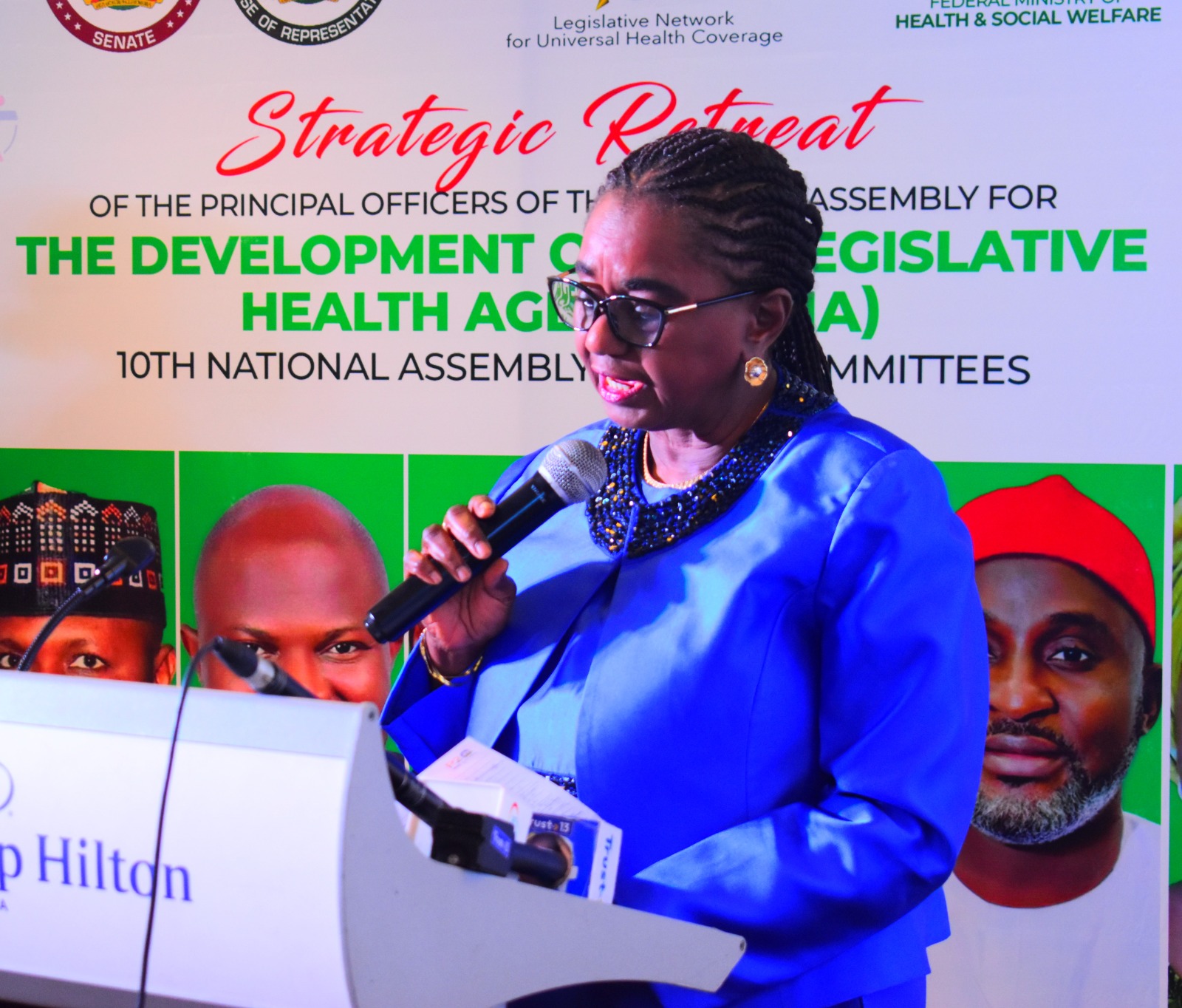
The importance of e-Health devices and digital health solutions in improving Nigeria’s healthcare system has been emphasised by Senator Ipalibo Harry Banigo, Chairman of the Senate Committee on Health, Secondary and Tertiary.
She also stressed that health is a multilayered activity and a multisectoral collaboration that requires legislators to work together to provide legislation, implement policies, and track funds effectively.
Banigo, who represents Rivers West Senatorial District in the National Assembly, made these remarks at the 5th Annual Legislative Summit on Health in Abuja, themed “Improving Legislative Stewardship and Accountability for Universal Health Coverage.”
She highlighted the potential of eHealth devices, especially given Nigeria’s large population and limited healthcare professionals.
“We can develop platforms that can be accessed through simple phones, even in remote villages, to provide health education and interventions,” she said.
“We are not talking about highfalutin things; we are talking about what will impact communities at the grassroots level, particularly pro-poor initiatives that will benefit vulnerable populations.”
Banigo also emphasized the importance of accountability and effective care, encouraging legislators to share knowledge, engage in peer reviews, and exchange information to achieve better health outcomes.
She recalled the cholera outbreak, where basic health education and interventions could have been delivered via mobile phones, preventing preventable deaths.
The 5th Annual Legislative Summit on Health brought together federal and state legislators, the Coordinating Minister of Health and Social Welfare, Prof. Muhammad Pate, the World Health Organisation’s representative in Nigeria, Dr. Walter Mulombo, and other dignitaries.
-

 News2 days ago
RSG Targets Nine Million Residents in Mosquito Net Distribution Campaign
-

 Oil & Energy1 day ago
Aiyedatiwa Signs New Electricity Bill
-

 Oil & Energy1 day ago
NLNG Commissions Research And Innovation Centre In RSU
-

 Maritime1 day ago
Marine Minister Commends President Tinubu On NPERA Bill Assent
-

 News2 days ago
KenPoly Holds Eight Convocations, August 29
-

 News2 days ago
RSG Begins Another Phase of Projects Commissioning Today
-

 News2 days ago
RMAFC Completes Revenue Sharing Review, Proposes New Pay
-

 Maritime1 day ago
NAGAFF Petitions IGP Over Alleged Maritime Police Harassment