
News
Budget Padding: Buhari Threatens Sanction Against MDAs

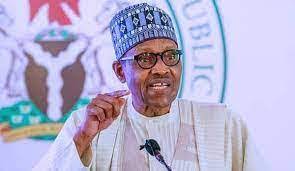
President Muhammadu Buhari has threatened that his administration would not hesitate to punish Heads of Ministries, Departments and Agencies (MDAs) that fraudulently present new projects as ongoing projects in the budget.
This is even as he warned that his administration will sanction those who bring in personnel into the public workforce by illegal recruitment, pad their payroll and retain ghost workers.
According to a statement, yesterday, by Special Adviser on Media and Publicity, Femi Adesina, Buhari made the threat at the 3rd National Summit on Diminishing Corruption in Public Sector, with the theme: ‘Corruption and Coat of Government New Imperatives for Fiscal Transparency’, organised by the Office of the Secretary to the Government of the Federation and the Independent Corrupt Practices and Other Related Offences Commission (ICPC).
According to him, “We reduced the cost of governance by maintaining our promise to complete abandoned or ongoing projects commenced by previous administrations and have ensured that MDAs do not put forward new capital projects at the expense of ongoing projects.
‘‘Government has, however, noted from the activities of the Independent Corrupt Practices and Other Related Offences Commission (ICPC) that some MDAs have devised the fraudulent practice of presenting new projects as ongoing projects.
“Necessary action and sanctions will continue against the heads of such errant MDAs. I am confident that ICPC will continue to maintain the vigilance required of her by the ICPC Act in this regard,” he said.
The president described the summit’s them as auspicious, saying that: “it reminds us of the negative impacts of unnecessary cost of governance and offers an opportunity for critical stakeholders to offer suggestions on ways to further reduce the cost of governance and promote transparency and accountability in government expenditure.
“I am delighted that the Legislative and Judicial arms of government are also under focus on managing the cost of governance because government is a collective and is not the business of the Executive branch alone.
“On August 19, 2020, the Federal Executive Council adopted the National Ethics and Integrity Policy which I launched on September 25, 2020.
“I am delighted that some public officers continue not only to demonstrate the core values of ethics, integrity and patriotism but have been identified for their sterling anti-corruption disposition in their workplace,” he said.
A highpoint of the event attended by the Chief Justice of Nigeria, Ibrahim Tanko Muhammad and a representative of the Senate President, Dr Ahmed Lawan was the presentation of the 2021 Public Service Integrity Awards to three distinguished Nigerians.
They are Deputy Director, Legal, Federal Ministry of Information and Culture, Nelson Okoronkwo; Assistant Commander of Narcotics, National Drug Law Enforcement Agency (NDLEA), Muhammad Ahmad; and a PhD student from Imo State, studying in Japan, Ikenna Nweke.
Okoronkwo, who was recognised for his consistent acts of integrity in the different ministries where he served, is a committee member on fertilizer distribution that led to the recovery of billions of naira from racketeers with collaborators within the Federal Ministry of Agriculture and Rural Development.
He was credited to have reported corrupt practices that led to the Ogoni clean-up investigation in the Federal Ministry Environment.
As chairman, Committee on Illegal Recruitment in the Federal Ministry of Information and Culture, the Deputy Director facilitated the detection and removal of over 3,000 fake employers from the service thereby saving the government millions of Naira in terms of salaries and emoluments.
The NDLEA officer, Ahmad, was recognised for demonstrating the highest ideals and standards of the public service in the discharge of his responsibilities.
Also a recipient of the Chairman/Chief Executive Award for Outstanding Performance and Integrity, Ahmad recently recovered and declared to his agency the sum of $24,500 offered to him as bribe by a drug baron to compromise an investigation of 27.950kg of cocaine, worth billions of Naira.
Nweke, the Nigerian PhD student in Japan who found a wallet containing a very large amount of money and other valuables returned it to the Japanese police.
He declined 10per cent of the money offered to him as a reward.
The Nigerian, who joined the event virtually from his base in Japan, was recognised for his act of ‘‘honesty and integrity,’’ by the president.
On Nweke, Buhari said: “I am also happy to note the ICPC special award to Ikenna Steve Nweke, a Nigerian PhD student from Imo State studying in Japan.
“He has done Nigeria proud in far-away Japan by displaying traditional Nigerian values of honesty and integrity and returning a wallet containing a very large sum of money and other valuables to the police.
“He also declined 10% of the money found as a reward offered to him.
“I join the ICPC in declaring him ICPC CITIZENS ANTI-CORRUPTION VOLUNTEER GROUP ICON.
“He is, indeed, an icon and a beacon for our youths. I also congratulate all those to be awarded the ICPC Certificate of Integrity through their agencies.”
In his remark at the occasion, Chairman of the ICPC, Prof. Bolaji Owasanoye, revealed that the Ministry of Labour and Employment and the University College Hospital (UCH), Ibadan, are among government establishments implicated in cases of illegal recruitment being investigated by the commission.
He also said the review of the 2021 Budget led to the discovery of 257 duplicated projects with a combined worth of N20.138billion.
Owasanoye, who spoke on the theme of the summit: ‘Corruption and Cost of Governance: New Imperatives for Fiscal Transparency’, expressed concern that the cost of governance in the country has perpetually been pushed up by corrupt practices, including illegal recruitments, unilateral and illegal increase of salaries and wages, procurement malpractices and budget padding by some government establishments.
According to him, the commission also uncovered a syndicate of individuals within the service who corruptly employ unsuspecting Nigerians, issue them fake letters of employment, fraudulently enroll them on IPPIS and post them to equally unsuspecting MDAs to commence work.
He disclosed that ICPC is already prosecuting one of the leaders of the syndicate from whom were retrieved several fake letters of recommendation purportedly signed by Chief of Staff to the President, Hon Ministers, Federal Civil Service Commission and other high-ranking Nigerians.
Owasanoye added that ICPC’s projects tracking covered 1,083 projects across the country with exception of Borno and Zamfara due to security challenges.
He said the exercise verified implementation of executive and zip projects of legislators, adding that so far action has been initiated against 67 contractors and forced them back to site and ensured completion of 966 projects worth N310billion some of which were hitherto abandoned.
Addressing Buhari, he stated: “ICPC is committed to supporting the programmes and projects of government one of which is restraining the spiralling cost of governance. This is why the theme of this summit is: ‘Corruption and the Cost of Governance: New Imperatives for Fiscal Transparency’.
“Your Excellency has publicly acknowledged a number of times that your government inherited a number of challenges since 2015 when you assumed office including but not limited to an empty purse and the lack of savings when the economy boomed. A major aspect was the astronomical cost of governance at the federal and sub national levels. This has continued to reflect in the huge wage bill on personnel and operational cost standing at about 70% of annual budget.
“Your Excellency sir, a major push factor on high cost of governance and rising personnel budget is illegal recruitment, illegal and unilateral increase in wages and remuneration by some MDAs, indiscriminate local and international travels, unreasonable demands by some political appointee board members of MDAs without regard for extant circulars on cost management; procurement fraud, budget padding, etc.
“ICPC investigation of some cases of illegal recruitment forwarded to us by Head of the Civil Service of the Federation has so far implicated Ministry of Labour and the University College Hospital Ibadan and a number of corrupt staff of other MDAs at a lower level. This abuse of power is consummated with complicity of compromised elements in IPPIS. These cases are currently under investigation.
“At another level, a syndicate of corrupt individuals within the service corruptly employ unsuspecting Nigerians, issue them fake letters of employment, fraudulently enroll them on IPPIS and post them to equally unsuspecting MDAs to commence work. ICPC is prosecuting one of the leaders of the syndicate from whose custody we retrieved several fake letters of recommendation purportedly signed by Chief of Staff to the President, Ministers, Federal Civil Service Commission and other high ranking Nigerians.
“Sir, the third phase of ICPC’s projects tracking covered 1083 projects across entire country with exception of Borno and Zamfara due to security challenges. The exercise verified implementation of executive and zip projects of legislators. We have so far initiated enforcement actions against 67 contractors and forced them back to site and ensured completion of 966 projects worth N310billion some of which were hitherto abandoned.
“Our findings indicate that the same malady of corruption afflicts executive as well as zip projects thus undermining government projections, escalating the cost of governance and denying Nigeria value for money. These maladies include poor needs assessment that disconnects projects from beneficiaries; false certification of uncompleted contracts as completed, deliberate under performance of contracts incessant criminal diversion and conversion of public property by civil servants, to name just a few.
“Other challenges relate to duplication of projects in the budget. ICPC review found that 257 projects amounting to N20.138billion were duplicated in the 2021 budget leading us to submit an advisory to the HMF which was promptly actioned by the minister to prevent abuse”, he said.
Owasanoye further revealed that the harmony between boards and managements of some establishments had been disrupted because of disagreements bordering on abuse of power and other malpractices
He further said: “Your Excellency, a number of MDAs have mini civil wars going on between the board and management and sometimes within the board. These squabbles revolve around abuse of power prohibited by ICPC Act and unreasonable demands by some board members for privileges contrary to extant circulars and laws and government’s resolve to minimize cost of governance.
“Your Excellency sir, let me commend government’s posture against illicit financial flows that drain resources from the nation. The time to further block leakages is now that government revenues are dwindling and practically threatened.
“ICPC is contributing to government’s efforts by its IFF focused project that has resulted in a major advisory to government with recommendations including prohibiting confidentiality clauses that facilitate fraud and money laundering, prevention of tax evasion, prohibition of illegal tax waivers and all practices that undermine government revenue projections.”
On the commission’s Ethics Compliance Scorecard of MDAs, Owasanoye said only 34.6% of the 360 establishments scaled above the average mark.
He explained: “ICPC’s Ethics Compliance Scorecard of MDAs report for 2021 shows that only 34.6% of the 360 MDAs assessed scored above average in Management Culture and Structure. This poor finding is not unrelated to unstable Boards unable to effectively oversight the institutions.”
Reacting to the ICPC disclosure, Minister of Labour and Employment, Dr. Chris Ngige, said he was the one that initiated an investigation when he discovered the employment scam in his ministry.
In a text message he sent to journalists, he said: “No it’s an ongoing investigation initiated by me. They committed the fraud between May 29, 2019, and August, 2019, when I was temporarily away as minister.
“I raised the alarm in FEC (Federal Executive Council) necessitating HOSF (Head of Service of the Federation) to do preliminary investigations and write ICPC after the internal ministry investigation committee set up by me was stalled by the then permanent secretary.
“ICPC should conclude investigation of 2019 by now…two and half years instead of making it look like a new development.”
Secretary to the Government of the Federation, Boss Mustapha, in his opening remarks said in three years the 60per cent of its overhead expenditure were on travels, maintenance, welfare and stationery in three years.
The SGF stated that it was no longer acceptable for the country’s resources to be expended on frivolities, fake projects and meaningless capital projects.
He added that the federal government is working towards reducing the cost of governance and utilising its resources efficiently.
“As I welcome all of us to the Third National Anti-Corruption Summit, I want to use this opportunity to commend all the Anti-Corruption Agencies for the progress being made in this very necessary campaign that would see Nigeria having more resources, which would have hitherto been unscrupulously diverted, to tackle our development challenges.
“In line with the theme of today’s summit, I speak on the role of the Executive arm of government to lead, as it has been doing, the constant quest for improving cost of governance by ceaselessly reinventing itself. This is imperative because we are dealing with systemic corruption and this implies that corruption has permeated the fabric of society including governance thus the institutionalization of corrupt practices in the machinery of governance must be ruthlessly rooted out.
“Systemic corruption prevents government from maximizing its potential of providing good governance for the people with available little resources especially at this time of COVID-19 pandemic.
“Government is highly worried that about 60 per cent of Federal Government’s Overhead Expenditure in three years (2012 to 2014) was spent on travels, maintenance, local and international training, welfare, office stationery / consumables, honoraria etc. Recent data from the Budget Office indicates that “actual MDAs recurrent spending is still on the rise viz. from N3.61 trillion in 2015 to N5.26 trillion in 2018 and N7.91 trillion in 2020.
“President Muhammadu Buhari’s administration, has, therefore, been unrelenting in making sure that our little resources will no longer be budgeted and/or used for frivolities, hidden in fake projects, unnecessary travel, wasteful overhead costs, meaningless capital projects and remuneration of ghost workers. We also remain focused on getting back our resources that have found their ways into the private pockets of those who fraudulently orchestrate the budget process for their selfish desires.”
The SGF said government’s concerns have always been and would always be continuously reflect and take measures to mitigate the negative consequences of unrestrained cost of governance.
He said: “It is increasingly becoming public knowledge that our anti-corruption agencies, especially ICPC, are doing a lot in the area of prevention and also recovery of diverted or stolen public funds, building the capacity of MDAs to resist corrupt practices, promoting ethical values through the National Ethics and Integrity Policy of government.
“Some of the capacity building measures include System Study and Review of operations of MDAs; Corruption Risk Assessment and the establishment of Anti-corruption Monitoring Units in all MDAs. Recoveries of public funds in recent years have no doubt demonstrated the strong resolve government to stem financial hemorrhages and promote initiatives towards curbing illicit financial flows”.
He added that the Buhari’s administration has so far demonstrated and still continues to demonstrate its determination to fight corruption and improve governance no matter what it takes and howsoever corruption fights back with the stolen resources at its disposal.
He urged Nigerians to support the anti–corruption agencies in its fight against graft, because the fight against corruption is a collective responsibility of all.
In his goodwill message, the Chief Justice of Nigeria, Tanko Muhammad, said the Nigerian Judiciary has been in the forefront in the fight against graft.
He said: “We have put in place a robust mechanism of introspecting periodically to do a self-assessment to see those areas where corruption could surreptitiously creep into the system and quickly nip it in the bud from the outset.
“The National Judicial Council has been carrying out regular disciplinary actions against erring judicial officers to effectively tame the monster within the system. It is not a hidden fact that for any nation to prosper and make meaningful progress, the judiciary must be firm, independent and insulated from any extraneous interference and orchestrated influence, either monetarily or otherwise.”
He said: “Worried by the delays associated with the trial of criminal cases by our courts, particularly those relating to corruption and financial crimes, we decided to set up the Corruption and Financial Crime Cases Trial Monitoring Committee (COTRIMCO) in 2018, with Hon. Justice Suleiman Galadima, a retired Justice of the Supreme Court, as chairman.
“The sole aim of this committee is to fast-track the trial of corruption and financial related crimes in the country; and it has since been working assiduously with various heads of courts, to bring about a significant rise in the dispensation of corruption and financial crime cases in the country.
“Even with the devastating impact of the COVID-19 pandemic in virtually the whole of 2020 and a better part of 2021, a total number of 746 corruption cases were dispensed with. Similarly, the number of forfeited non-cash recoveries made, include 51 automobiles, 16 real estates, 11 barges/tug boats and two schools.
“Between January 2, and November 14, 2021, a total number of 1,144 suspects were convicted of various corruption and financial related crimes, while the number of non-cash forfeited assets has also risen to include: eight aircrafts, seven filling stations, 48 real estates and 149 vehicles, amongst others.
“Similarly, various cash forfeitures were made in hundreds of millions of Naira. We shall not rest on our oars until every trace of corruption and undue exercise of influence to negatively secure unmerited advantage over others is stamped out of our clime.
“It is my fervent belief that if all of us work in harmony with one voice and renewed determination, corruption and allied vices will certainly be on their way out of our beloved country and our voice shall, once again, be loudly heard and respected among the comity of nations.”



The Rivers State House of Assembly has approved the 2026–2028 Medium Term Expenditure Framework (MTEF) submitted by Governor Siminalayi Fubara.
This reaffirms the lawmakers’ commitment to enacting laws and taking legislative actions geared towards the overall development of the State.
The Assembly gave the approval during its Second Legislative Sitting of the Fourth Session held last Friday.
Speaking on the MTEF document during plenary, the House Speaker, Rt. Hon. Martin Amaewhule, noted that by the provision of Section 10(1)(b) of the Rivers State Fiscal Responsibility Law No. 8 of 2010, the MTEF ought to have been laid before the House in September 2025.
Amaewhule explained that traditionally, the document is expected to be presented four months before the commencement of the next financial year and immediately after the expiration of every three-year fiscal cycle.
He, however, stated that in the interest of the State and its people, the House considered it necessary to deliberate on the document, describing it as a precursor to the 2026 Budget Estimates.
The Speaker expressed concern that the year had already progressed significantly before the presentation of the framework.
During deliberations on the document, members examined the assumptions and projections contained in the MTEF and observed that strict adherence to the outlined fiscal parameters would ultimately serve the interest of Rivers people.
The lawmakers maintained that effective implementation of the framework would promote prudent financial management and enhance developmental planning across the State.
Following the debate and positive consideration by members, the Speaker put the question to the House and members voted overwhelmingly in support of the approval of the MTEF.
Meanwhile, during the same sitting last Friday, the House also received a petition from the Chairman of Obio/Akpor Local Government Council, Dr. Gift Worlu.
The petition was presented by the member representing Obio/Akpor Constituency II, Hon. Emilia Amadi.
According to the petition, concerns were raised over an imminent security breach, threats to lives, destruction of property and alleged forceful takeover of property by some lawless persons within parts of the Local Government Area.
Presenting the petition before the House, Hon. Amadi appealed to the lawmakers to revisit the matter and take necessary steps aimed at safeguarding lives and property in the affected communities.
The House is expected to further deliberate on the petition and consider measures to address the concerns raised in order to sustain peace and security in the area.
King Onunwor
News
Fubara Reaffirms Commitment To Blue Economy, Private Sector Growth …Calls For Protection Of Marine Resources


The Rivers State Government has reaffirmed its commitment towards fostering private sector-driven economic growth and harnessing the vast opportunities within the blue economy to drive national development.
Rivers State Governor, Sir Siminalayi Fubara, made this known during the opening ceremony of the 2026 Annual General Meeting and Conference of the Nigerian Association of Chambers of Commerce, Industry, Mines and Agriculture (NACCIMA), held in Port Harcourt, last Thursday.
Represented by his deputy, Prof. Ngozi Odu, Governor Fubara described the conference theme, “The Gulf of Guinea and Blue Economy: Pathways to Trade, Investment and Security Towards a $1 Trillion Economy,” as both timely and strategic.
?
?The governor welcomed the leadership of NACCIMA, delegates from the 115 Chambers of Commerce across Nigeria, members of the diplomatic corps, captains of industry, investors, and other distinguished guests to Rivers State.
?
?He commended the National President of NACCIMA, Engr. Jani Ibrahim, for choosing Rivers State as the host of the 2026 conference, noting that the decision had drawn national attention to the immense economic opportunities embedded in the blue economy.
?
?Fubara stated that the blue economy possesses the capacity to generate revenue that could surpass earnings from the oil and gas sector if properly developed and managed.
?
?He stressed the need for Nigeria and other countries along the Gulf of Guinea to take deliberate steps toward maximizing the benefits of their maritime resources while guarding against the continued exploitation of coastal assets by foreign operators.
?
?Expressing concern over the activities of foreign fishing trawlers operating in Nigerian waters, the governor noted that many harvest seafood resources without making meaningful economic contributions to the country.
?
?He emphasized the need for stronger monitoring mechanisms and enhanced protection of Nigeria’s marine resources.
?
?”We must wake up and hit the ground running. If we do not capitalize on and utilize our blue economy, other nations will utilize it for us,” he stated.
?
?The governor thanked NACCIMA for what he described as a timely wake-up call on the importance of the blue economy and maritime security, adding that the successful hosting of the conference in Rivers State demonstrates the state’s safety, hospitality, and readiness for business and investment.
?
?Earlier in his remarks, the President of NACCIMA, Engr. Jani Ibrahim, expressed appreciation to the Rivers State Government for hosting the 66th Annual General Conference of the Association and for the warm reception accorded delegates.
?
?He noted that the state’s commitment to hosting the conference reflects its readiness for business and has helped restore investors’ confidence in its economic potential.
?
?According to him, NACCIMA highly values the cordial relationship between the Rivers State Government and the organized private sector, emphasizing that the association remains the foremost voice of the Nigerian business community.
?
?In her welcome address, the President of the Port Harcourt Chamber of Commerce, Industry, Mines and Agriculture (PHCCIMA), Dr. Chinyere Nwoga, described the conference as a historic milestone, noting that it was the first time in the Chamber’s 66-year history that it was hosting the national body of NACCIMA.
Nwoga commended the national leadership for entrusting PHCCIMA with the hosting rights and pledged the Chamber’s continued commitment to advancing the objectives of the association and promoting sustainable economic growth through private sector engagement.

Rivers State Governor, Sir Siminalayi Fubara, has ordered a complete seal-off of the site of a five-storey building which collapsed last Wednesday, killing one person and injuring several others in Port Harcourt.
Fubara gave the order during his visit to the site of the collapsed building last Thursday to assess the situation.
He said the site will remain “completely sealed off” until the government gets to the “root cause” of the incident.
He described the incident as unfortunate but observed that preliminary investigation had shown that the developer had earlier refused to subject his site to inspection by the state authorities and comply with the necessary building regulations.
The governor, who inspected the site alongside the Commissioner for Physical Planning and Urban Development, Sir Amairigha Edward Hart, and the Permanent Secretary of the Ministry of Special Duties, Dabite Sokari George, explained that he couldn’t visit the site the previous day because he was awaiting formal briefing from the relevant agency of government on the situation.
“We’re here to see for ourselves the very unfortunate incident that took place here. I didn’t come yesterday because I wanted to get the report first, and the Commissioner did brief me that the incident site, first, is not as claimed by the developer, that it’s not under the jurisdiction of the state; that it’s under the jurisdiction of the Federal Housing Authority.
“He also informed me that when the project was ongoing, they came here severally to inspect what was happening and also to see the level of compliance. But unfortunately, that the developer kept claiming that we don’t have any right to interfere,” he said.
Fubara said that the issue was no longer about interference but about the life lost to the building collapse and the collateral damage brought upon the family of the deceased.
He extended condolences to the families of the victims, insisting that the incident could have been avoided if the developer had complied with the rules guiding the engineering design and construction of such a structure in the 21st century.
“We feel very sorry and very regretful that such an incident should be happening in this 21st century because technology has advanced, engineering has developed. I wonder what kind of engineer would even allow this kind of project to go on when everything about it from inception has been faulty.
“I think that at this point, nothing is going to happen on this site any more. We are going to make sure that this place is completely sealed off until we get to the root cause of this incident,” the governor said.
-
Rivers1 day ago
Rivers Police Uncovers Firearm Concealed In Loaf Of Bread
-

 Niger Delta1 day ago
Pro-Chancellor Hands Over Okey Onuchuku Peace, Conflict Institute Building
-

 News1 day ago
Fubara Reaffirms Commitment To Blue Economy, Private Sector Growth …Calls For Protection Of Marine Resources
-
Sports1 day ago
Six Nigerians To Play For NBA Teams
-
Business1 day ago
Gas Economy: Decade of Gas, Pi-CNG/ EV Deepen Media Engagement
-
Business1 day ago
Navy Nabs 13 Black Sand Miners In Bayelsa –Impound Two Boats
-
 Business1 day ago
IPMAN Raises Concern Over Delay In Chinese Refinery Deal …Predicts Lower Fuel Prices Through Competition
-
Sports1 day ago
NPFL Warns Newly Promoted Clubs