
Politics
Onochie: A Litmus Test For The Senate

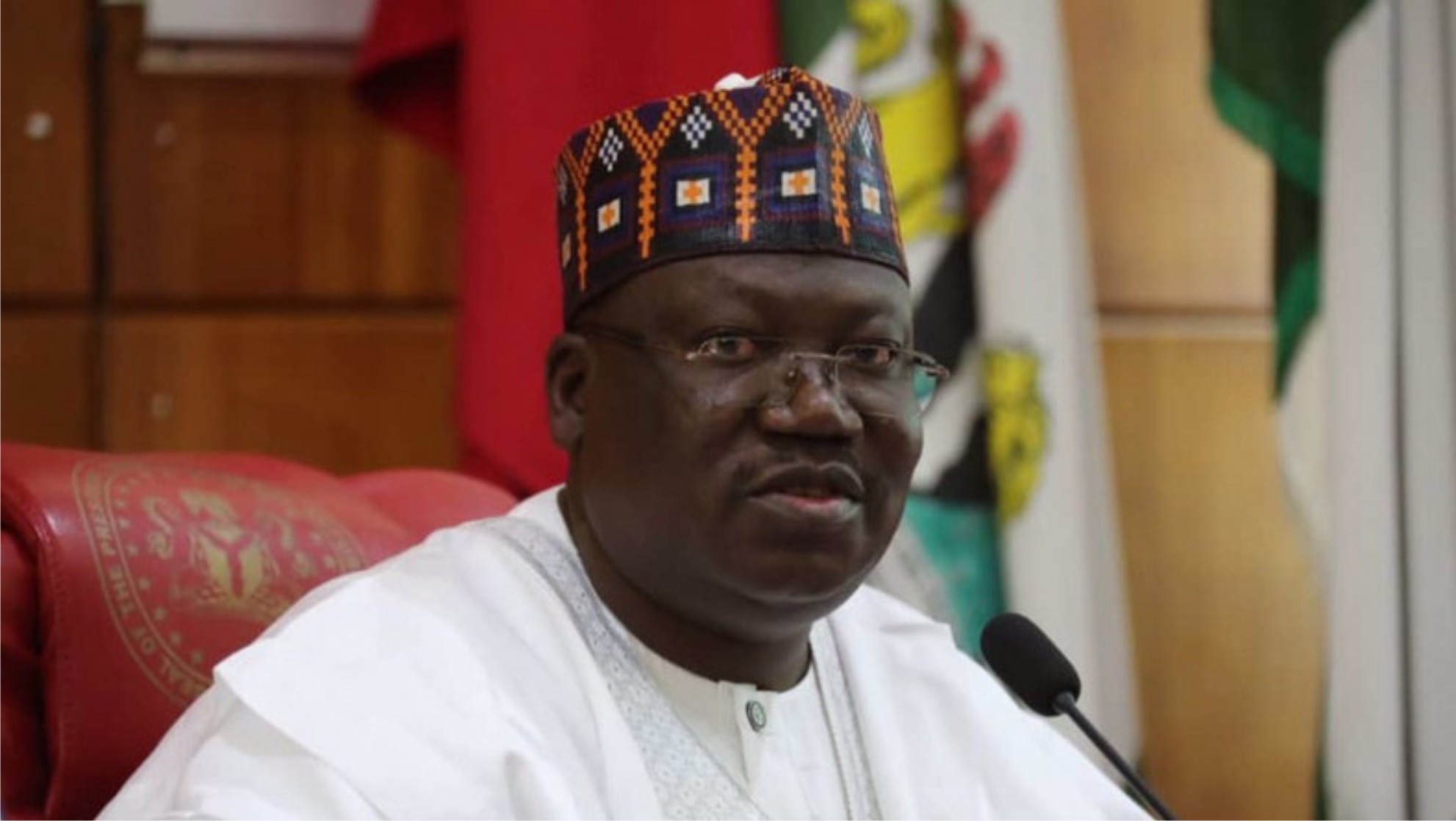
In recent times, not many issues in the public domain have raised more opprobrium, vehemence, and even angst and disgust, amongst diverse and varied competent, well-meaning and very critical stakeholder groups, individuals and organisations in the electoral process than President Muhammadu Buhari’s nomination of Ms Lauretta Onochie as federal commissioner in the Independent National Electoral Commission (INEC) to the Senate for confirmation.
On Wednesday, June 9, the senate president, Ahmad Lawan, at plenary, referred President Buhari’s request to confirm Prof. Muhammad Sani Kallah (Katsina Laureetta Onochie (Delta); Prof. Kunle Cornelius Ajayi (Ekiti); Saidu Babura Ahmad (Jigawa); Prof. Sani Muhammad Adam (North-Central) and Dr Baba Bila (North-East) as national commissioners of INEC to its committee on INEC for screening. The committee was given two weeks to conclude its assignment and report back to plenary on the request that was first sent to the senate in October, last year.
While it is not clear whether the committee delayed work on the assignment, it is manifestly evident that the committee has taken more time than was allotted and lay its report before the upper legislative chamber in plenary for final debate and confirmation.
However, there has been a floodgate of reactions from a wide range of the Nigerian public over the appearance of the name of Ms Onochie on the list of those to be considered at all. The opposition and rejection of Ms Onochie began from the floor of the senate itself when the Minority Leader, Senator Enyinaya Abaribe, whose statutory function it was to second the motion moved by the Majority Leader, Senator Yahaya Abdullahi, declared his reluctance in seconding the motion on account of the presence of the name of Ms Onochie.
Those who see the appointment of the Delta State born Ms Onochie as inappropriate and therefore unfit for the office cite the fact that the person in question is already a political office holder as the Special Assistant to the President on Social Media. To this, they add that she is also strongly believed to be a member of the ruling All Progressives Congress (APC).
The Centre for Democracy and Development (CDD), in its reaction to the issue, registered its objection to the nomination and implored the senate to reject Ms Onochie as an officer of INEC. Idayat Hassan, Director of CDD, said in a statement that Ms Onochie’s appointment to serve in such a non partisan portfolio could jeopardise Nigeria’s democratic principles if allowed by the senate.
“First, Ms Onochie is from Delta State, the same state from which Barrister May Agbamuche-Mbu, a current national commissioner, hails. Barrister Agbamuche-Mbu’s tenure is not ending until December 2021″, the statement said, adding that “Also, Mr Mike Igini, the Resident Electoral Commissioner for Akwa Ibom State, hails from the same state and his tenure will end in August 2022. Neither Mrs Agbamuche-Mbu nor Mike Igini has been removed from office”.
Consequently, the CDD argued that Ms. Onochie’s consideration for confirmation would not only contravene the Federal Character principle of the 1999 constitution, but as well constitute inequity and an unfair treatment of the other South-South states who are also qualified to be appointed into INEC.
According to the CDD, “ Secondly, Ms Onochie does not hide her partisan support for the ruling All Progressive Congress (APC) and she is likely a card-carrying member of the party.
“It is also important to realise that her partisanship is the reason she was appointed to her current role as an aide to President Muhammadu Buhari on Social Media.
“This, therefore, precludes her from being appointed into INEC. Section 156 (1)_ and item F, Paragraph 14 of the Third Schedule of the constitution of the Federal Republic of Nigeria, 1999, forbid an appointee to INEC to be a political party member or a partisan individual.
“There is no doubt that Ms Onochie will continue to protect the interest of the APC if confirmed by the Senate. Moreover, CDD believes strongly that she will represent political baggage that could damage the commission’s legitimacy. Any election she oversees will likely be subjected to multiple litigations, even in a genuine win by the APC and other parties”, the organization said among others.
On Tuesday this week, a coalition of nine civil society organisations took their opposition to Ms Onochie’s appointment a notch further by instituting a legal action against President Buhari, the Attorney-General of the Federation (AGF), the Senate and Kabiru Gaya, chairman of theSsenate committee on INEC.
The CSOs which include the International Press Centre, Centre for Citizens with Disability, Nigerian women Trust fund, Incorporated Trustees of Albino Foundation, Incorporated Trustees of Civil Society Legislative Advocacy Centre, Incorporated Trustees of Peering Advocacy and Advancement Centre in Africa, Incorporated Trustees of Centre for Media and Society and Incorporated Trustees of YIAGA Africa Initiative are praying the court to declare the nomination of Ms Onochie as “wrongful, illegal, null and void and same nullified”.
In the suit filed before a Federal High Court in Abuja and marked FHC/ABJ/CS/604/2021, the CSOs are asking the court to determine whether the president “can nominate a card-carrying member or members of his political party or any other political party in Nigeria, as a national electoral commissioner for the Independent National Electoral Commission” contrary to Sections 14 (29), 14 (3), 14 (36), 14 (4) and Section 154 (1) of the constitution of the Federal Republic of Nigeria 1999 (as amended ).
Among other reliefs, the applicants are asking the court for an order of perpetual injunction “restraining the 3rd and 4th defendants (the Senate and Kabiru Gaya) from referring, considering, screening, deliberating or confirming the nomination of Ms Lauretta Onochie”.
In the affidavits deposed to by the applicants in support of the originating summons, the CSOs insisted that “Onochie cannot be a fair and unbiased umpire to serve in the Independent National Electoral Commission” owing to her close working relationship with President Buhari and his administration.
However, in a move that appeared to be intended to undercut the progress of the case, and in brazen indifference to the massive and overwhelming outpouring of stiff, strident and unrelenting rejection of the appointment of Ms Onochie, the senate, yesterday, began the screening of the six nominations into INEC national commissionership position including the embattled presidential aide.
If, at the end of the day, Ms Onochie gets the nod of the APC dominated red chamber, there are many Nigerians who will not only feel disappointed but also register the 9th Senate as being there to serve the interest of President Muhammadu Buhari and the APC as against the more sacred interest of the Nigerian people and that of the constitution.
Yet, even if the senate rejects the nomination, Nigerians will not stop to question the rationale, the wisdom and what the president intended to achieve by his preference for such a defective, obnoxious offensive, provocative and embarrassing choice. The only way to pacify Nigerians and assure them that the entire Onochie saga was not plotted to take them for granted is for the president to render an unreserved apology to his compatriots.
By: Opaka Dokubo



The commission announced the extension in a statement issued on Saturday and signed by the National Commissioner and Chairman of its Information and Voter Education Committee, Mohammed Haruna.
According to INEC, the decision followed appeals by political parties for additional time to complete the submission process through the dedicated online portal.
“The submission window, which according to the revised Timetable and Schedule of Activities for the General Election was originally scheduled to close on Saturday, 8th August, 2026, has been extended to Tuesday, 11th August, 2026,” the commission said.
In a a related development, INEC announced the suspension of PVC collection in Osun State ahead of the August 15 governorship election.
The commission said voters who applied for replacement of lost, damaged or defaced Permanent Voter Cards would have until midnight on Sunday, August 9, to print downloadable copies of their cards.
The electoral body explained that the deadline was necessary to enable it compile data on downloaded PVCs and produce final statistics on the total number of cards collected ahead of the election.
INEC said PVC collection in Osun commenced at the Registration Area level from July 22 to 28, 2026, but was extended to July 31 following complaints about large crowds and difficulties experienced by voters at collection centres.
The exercise subsequently moved to the local government level and ran from August 1 to 7.
The commission also disclosed that replacement downloadable PVCs had been made available to voters in Odo-Otin and Ife Central Local Government Areas following the theft of cards during attacks on the two collection centres.
It stressed that the stolen cards could not be used to vote.
INEC reassured Osun residents of its preparedness for the August 15 governorship election.
“The commission reiterates that the stolen cards cannot be used to vote.
“INEC reassures the people of Osun State of its readiness to conduct a free, fair, credible and inclusive governorship election on 15th August, 2026,” the statement said.
The commission said the deadline, initially set for Saturday, 8 August, has been extended to Tuesday, 11 August 2026, following appeals from political parties for more time.
INEC also announced that the window for voters who applied to replace lost, damaged or defaced PVCs to download their replacement cards will close at midnight on Sunday, 9 August.
The move is to enable the commission compile final PVC collection figures ahead of the 15 August Osun governorship election.
INEC said replacement downloadable PVCs have also been provided to affected voters in Odo-Otin and Ife Central Local Government Areas after hoodlums carted away cards from two collection centres, stressing that the stolen cards cannot be used to vote.
The commission reaffirmed its readiness to conduct a free, fair, credible and inclusive election in Osun State.
Gov. Kefas made the remarks over the weekend at the Federal Medical Centre (FMC), Jalingo, during the flag-off of the second phase of the Renewed Hope Medical Outreach in Taraba State, organised as part of activities marking Prof. Yilwatda’s 58th birthday.
The governor commended Prof. Yilwatda for choosing to mark his birthday by providing medical care to people in need.
“What Professor Nentawe did is a powerful demonstration of what leadership should be,” Gov. Kefas said.
He assured that his administration would continue to support initiatives that complement government efforts to improve healthcare delivery and the wellbeing of residents.
Speaking at the event, Prof. Yilwatda called on Nigerian leaders to embrace the culture of giving and use their positions to touch the lives of the less privileged.
He said his decision to celebrate his 58th birthday in Taraba State was deliberate and informed by the needs of underserved communities, particularly people who face difficulties accessing healthcare because of distance and financial constraints.
According to him, the intervention followed a needs assessment and was extended across the three senatorial districts of the state.
He said the exercise commenced on August 3 at Takum General Hospital and covered the Federal University Teaching Hospital, Wukari; First Referral Hospital, Sunkani, Ardo-Kola Local Government Area; General Hospital, Bali; General Hospital, Gembu; and FMC Jalingo.
Prof. Yilwatda said the intervention provided medical services to thousands of beneficiaries, including people who required surgical procedures.
He said sustainable national development could only be achieved when strong institutions placed Nigerians at the centre of development.
“Leadership is about service,” he said, urging political and public leaders to make giving back to society an important part of their responsibilities.
He reaffirmed his commitment to serving Nigeria and its people, saying his personal vision was to make every day of his life useful to humanity.
“Every day that I live, the vision is: let it be useful to humanity,” he said.
The Taraba State Commissioner for Health, Dr. Bordiya Buma, commended the initiative, saying it was consistent with the Renewed Hope agenda and efforts to strengthen healthcare delivery in the state.
Dr Buma said the second phase followed the successful completion of the first phase, which was conducted simultaneously in six local government areas, with two LGAs selected from each of the three senatorial districts.
According to him, more than 10,000 patients were attended to during the first phase, including people with medical and surgical conditions.
He disclosed that 327 general surgeries, 71 eye surgeries and 575 dental procedures were carried out during the exercise.
The commissioner expressed appreciation to President Bola Tinubu for the Renewed Hope Medical Outreach and thanked Prof. Yilwatda for supporting the initiative and choosing Taraba State as a beneficiary.
The Minister of Health and Social Welfare, Prof. Muhammad Ali Pate, also commended Prof. Yilwatda for choosing Taraba State to mark his 58th birthday through a medical outreach.
Prof. Pate said making healthcare the centrepiece of the birthday celebration was significant because health affects everyone.
-

 News2 days ago
RSG Targets Nine Million Residents in Mosquito Net Distribution Campaign
-

 Oil & Energy2 days ago
Aiyedatiwa Signs New Electricity Bill
-

 Oil & Energy2 days ago
NLNG Commissions Research And Innovation Centre In RSU
-

 Maritime2 days ago
Marine Minister Commends President Tinubu On NPERA Bill Assent
-

 News2 days ago
KenPoly Holds Eight Convocations, August 29
-

 News2 days ago
RSG Begins Another Phase of Projects Commissioning Today
-

 News2 days ago
RMAFC Completes Revenue Sharing Review, Proposes New Pay
-

 Maritime2 days ago
NAGAFF Petitions IGP Over Alleged Maritime Police Harassment