
Environment
Flood: NESREA Urges Residents To Take Proactive Measures

The National Environmental Standards and Regulations Enforcement Agency (NESREA), has called on residents of the North-East region of the country to take proactive measures that would help them to mitigate the impact of flooding in their communities.
Mr Charles Sharah, the North-East Zonal Director of NESREA, made the call in an interview with The Tide source in Gombe.
Sharah said that the issue of flooding is not new as it had become a yearly occurrence, hence, the need for collective efforts aimed at minimising the impact, so as to safeguard the environment and prevent loss of lives.
He stated that though flooding could occur naturally due to high volume of water, human activities could also contribute to flooding and “this can be prevented to ensure that our environment is not polluted.’’
Sharah said that most residents often ignore warnings and their responsibilities toward protecting the environment, only to complain of flooding when it occurs.
He added that the devastating impact of flooding had made residents to avoid activities that could contribute to the menace such as: dumping wastes in gullies, building on water ways and indiscriminate sand dredging.
“It is part of our mandate to give advice to residents as well as create awareness on issues relating to the environment. This is why we are calling on residents not to live or build in flood-prone areas.”
According to him, it is better to be proactive on issues that concern the environment by ensuring that water channels are not blocked because “when the rains come, flowing water always finds and knows its route.’’
He said that the issue of ignorance on what is expected of residents should no longer be taken as an excuse in view of the yearly sensitisation and flood alerts from relevant stakeholders.
Sharah said that deliberate ignorance of warnings on the effect of flooding when it occurs would not be tolerated due to its damage to the agricultural sector and the economy.
He commended the governors of the north-eastern states of the country for initiating and implementing tree-planting programmes to afforest the environment and mitigate the adverse effects of environmental degradation.




The Lagos State Government has commenced installation of new pumps at the Iju Headworks and Akute water intake stations.
The Tide source reports that the project is aimed at increasing water production, improving operational efficiency and expanding access to potable water across the state.
A statement issued by the Lagos Water Corporation (LWC) over the weekend said the project was approved and funded by the state government.
It said the installation was part of the rehabilitation of the Iju Headworks and Akute Intake Station under Lots 1, 2 and 3.
According to LWC, the rehabilitation is designed to modernise water production facilities, strengthen operations and improve public water supply.
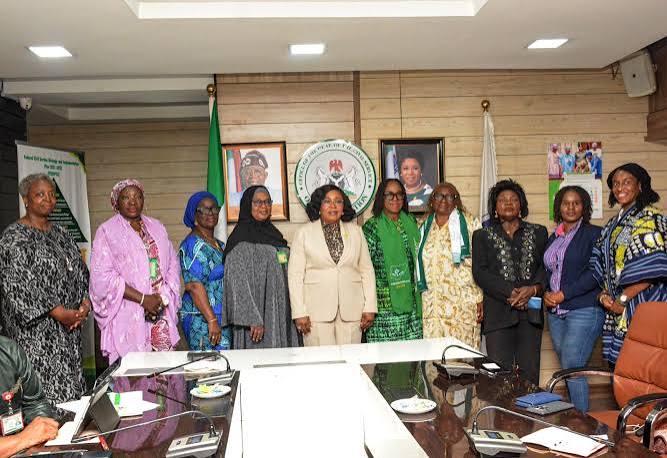
The Network of Female Professionals in Water, Sanitation and Hygiene in Nigeria (FEMinWASH) and the Office of the Head of the Civil Service of the Federation (OHCSF) are set to partner on gender-responsive systems strengthening, capacity development and WASH initiatives.
The partnership was proposed during a courtesy visit by a FEMinWASH delegation, led by its President and Convener, Dr Boluwaji Onabolu, to the Head of the Civil Service of the Federation, Mrs Didi Walson-Jack, in Abuja.
Onabolu, who conveyed greetings from FEMinWASH Patron, retired Engineer Ebele Okeke, commended Walson-Jack for upholding the Federal Civil Service’s EPIC values of Efficient, Productive, Incorruptible and Citizen-centred leadership.
She praised the HoCSF’s efforts in advancing gender inclusion in WASH and the civil service, including the development of the National Gender in Water Resources Mainstreaming Policy and mentoring programmes for women leaders.
Onabolu also highlighted the INSPIRE (Inclusive Network for Supporting Progressive Leadership, Innovation, Reform and Equity for Women) programme, aimed at strengthening women’s leadership and inclusion.
She said FEMinWASH was seeking a formal partnership and Memorandum of Understanding (MoU) with the OHCSF to support INSPIRE, WASH advocacy, capacity building and the institutionalisation of Gender-Responsive Budgeting across the Federal Civil Service.
Responding, Walson-Jack commended the diverse expertise of the FEMinWASH delegation, noting that professionals in WASH, water resources, environment, public health, town planning and education were critical to addressing development challenges.
She welcomed the proposed partnership, assuring that the OHCSF was ready to collaborate with FEMinWASH on civil service strengthening and WASH-related initiatives.
The meeting agreed to further engagements with Dr Garba, Permanent Secretary (Special Duties), and Ms Funke Baruwa, Lead for Partnerships at the OHCSF, to advance the collaboration.
The visit ended with a photo session and exchange of gifts between both parties.
The Special Adviser on Environment, Mr Olakunle Rotimi-Akodu, commended the community on the massive turn-out for sanitation.
He also appreciated the chairman and his team for their support to the ministry.
Rotimi-Akodu urged the community to continue to support the council and by extension, the government, by participating in the exercise and engaging in proper disposal of wastes.
“We have heard your appeal, and I assure you that Lagos government will do something about it.
“Although we have PSP operators in this axis, maybe they were assigned to other areas.
“However, I will ensure something is done and residents will observe the improvement.” the advisor said.
Also, the Managing Director, Lagos State Waste Management Authority (LASMA), Mr Muyiwa Gbadegesin, said that waste management was a collective exercise.
Gbadegbesin, therefore, appealed to the residents to always dispose of their wastes properly.
“You must bag your waste at home. Make sure you have a bin to keep the waste for few days, even if there is a delay by the PSP operator.
“Make sure you pay your PSP operator on time because there is no way they can provide that service if you are not paying them regularly.

The Non Governmental Organization (NGO) Go Green Nigeria Foundation, , has called for more stringent government efforts toward prohibition of illegal sand mining in Rivers, following erosion threats.
The founder of NGO Dr John Babington made the call on last Monday in Umuechem, Etche Local Government Area of Rivers, to commemorate the International Day for the Conservation of Mangrove Ecosystems.
Babington, who sensitised the community on dangers associated with crude sand mining, donated some trees as part of efforts to promote tree planting and revitalisation of the altered mangrove ecosystem.
During an interactive session with the community, the environmental expert identified various concerns and commended residents for their willingness to work together to end the excavation.
He, however, dismissed the notion that illegal sand mining was due to poverty and unemployment, saying, ”the business is a capital intensive venture that could only be operated by a rich cartel.”
He said that though the business might have provided menial jobs for few youths, it had not in any manner addressed poverty.
Presently, the landscape is altered with an artificial river encroaching a major access road and threatening public safety,” he said.
Also speaking, a senior Chief in the community, Chief Gilbert Otamiri commended the NGO for the initiative and promised to collaborate with them.
Gilbert, however, urged the government to tackle unemployment which, he said, was a major promoter of the illegal excavation
Also speaking, The Community Development Chairman (CDC) Mr Agbam Mgbechi thanked the group for the sensitisation and donation of trees.
He called on the government and concerned induviduals to emulate the group by making efforts towards salvaging the area from further environmental damage.
-

 Editorial2 days ago
That Oshiomhole’s Call On FG’s Road Projects
-
Education2 days ago
Environmental Education Remains Critical Tool To Address Environmental Challenges Says Experts
-

 City Crime2 days ago
Tinubu Appoints Ex-Tide Staff Registrar Of Chartered Chemists
-
Education2 days ago
UNIPORT VC Receives Probe Report on Student Union Crisis
-
Oil & Energy2 days ago
NCDMB, BOI Unveil $100m Nigerian Content Equity Fund …Set To Invest $5m In Oil Firms
-
Business2 days ago
PTDF Committed To Tinubu’s Development Plan – CEO
-
Politics2 days ago
Yilwatda’s Birthday Outreach Demonstrates Leadership – Kefas
-
Oil & Energy2 days ago
Civil Society Demands Accountability over N60Billion AKS Oil Producing Communities