Connect with us

City Crime

10 Reasons Why Anti-Corruption War Is Not Succeeding

Published

on

A major duty legal researchers and rule of law campaigners owe society in the practice of constitutional democracy for promotion and sustenance of responsible and responsive governance is to constantly offer legal opinions on issues of law to guide our leaders and institutions in the discharge of leadership responsibilities.
Let us call a spade by its name. If we want the fight against corruption in Nigeria to work as effectively and efficiently as similar projects work in some other countries, then, certain principles and attitudes must be in place, and honestly respected. I respectfully put forward the following suggestions, the pursuit and realisation of which, I believe, would help nip corruption in the bud in Nigeria:
 Good and inclusive governance: this has eluded Nigeria for decades. Bad governance is the worst conspirator and the most effective promoter of corruption. Our plight in Nigeria is best captured by the words of Che Guevara: “Cruel leaders are replaced only to have new leaders turn cruel.”
David Hume put it more succinctly: “The corruption of the best things gives rise to the worst.”
Until we enthrone good, transparent, inclusive and selfless governance, we might never get it right in our fight against corruption.
 Equity and equality: Political leaders and governments in Nigeria must enthrone equity and equality as their core governance principles. These extend to respect for the federal character principle and provisions of the constitution (see Chapter 2, Constitution of the Federal Republic of Nigeria, 1999), and enthrone tolerance for opposition and  dissent. Section 13(1) of the Constitution of the Federal Republic of Nigeria (CFRN), 1999 (as amended) provides that “it shall be the duty and responsibility of … government, and of all authorities and persons, exercising legislative, executive or judicial powers, to conform to, observe and apply the provisions of Chapter Two of this Constitution. Section 14(1) of Chapter Two of the CFRN, 1999 provides that “the Federal Republic of Nigeria shall be a State based on the principles of democracy and social justice” while section 14(3) states that “the composition of the Government of the Federation or any of its agencies and the conduct of its affairs shall be carried out in such a manner as to reflect the federal character of Nigeria and the need to promote national unity, and also to command national loyalty, thereby ensuring that there shall be no predominance of persons from a few States or from a few ethnic or other sectional groups in that government or in any of its agencies.”
Says section 15(2): “National integration shall be actively encouraged, whilst discrimination on the grounds of place of origin, sex, religion, status, ethnic or linguistic association or ties shall be prohibited. Finally, on this point, according to section 15(4), “the State shall foster a feeling of belonging and of involvement among the various people of the Federation, to the end that loyalty to the nation shall override sectional loyalties.”
 Modernism and modernisation  of  governance: Deployment of ICT, paperlessness, and use of the internet as a leadership tool for implementation of all government policies and programmes without any exception.
  Diversification & reduction of cost of governance: Government has no business being involved (beyond playing the role of a regulator) in telecommunication, banking, power generation and distribution, oil/minerals exploration, mining, refining and distribution, and so many others. Besides, the cost of governance in Nigeria is unacceptably huge, compared to other countries.
 Respect for human rights, rule of law & due process:  Corruption of rule of law is worse than economic corruption and financial crimes. Until strict observance of rule of law is elevated above all else, we’re going nowhere with our pretensions to fighting economic corruption.  Violation of rule of law in order to fight corruption is a much worse act of corruption than the economic corruption you purport to fight. Let’s put a legislation in place; (a)anyone who violates rule of law should be arrested and jailed. (b) any institution that violates rule of law should have its head immediately relieved of his position. In this way, we would wake up and be civil, sane, and law-abiding in our approach.
 Give corruption fight  a criminologist’s treatment: We ought to concentrate more on identifying and tackling the root/causes of corruption and stop mere scratching of the surface by unnecessarily dwelling on who aids it, and who does not; who is a realiable partner and who is not. If we remove the causes, the environment would become infertile for corruption which would then die a natural death. Let us adopt the criminologist’s approach, and let it coexist, side by side with the arrest-and-prosecute approach. As long as the causes of CORRUPTING remain, corruption would persist, no matter what we do to eliminate corruption.
 The impure cannot successfully purify the unclean: The next is illustrated in the words of President Vladimir Putin: “Those who fight corruption should be clean themselves.” Corruption cannot fight corruption. Those appointed to drive the crusade must themselves be above suspicion. “Power doesn’t corrupt people, people corrupt power,” says William Gaddis. If we elect the same corrupt politicians every time, that’s a very clear message that we don’t want a change. There’s a saying that, “Diapers and politicians should be changed often. Both for the same reason.” According to George Orwell, “A people that elect corrupt politicians, imposters, thieves and traitors are not victims… but accomplices”.
(8). The eighth is seen in the words of Eduard Shevardnadze (Georgian politician and diplomat) “Corruption has its own motivations, and one has to thoroughly study that phenomenon and eliminate the foundations that allow corruption to exist.”
 Build powerful, enduring institutions, not powerful leaders: The ninth has to do with building strong institutions and deemphasising the role of persons and personalities. To this end, Rigoberta Menchú, a Nobel Prize laureate said: “Without strong watchdog institutions, impunity becomes the very foundation upon which systems of corruption are built. And if impunity is not demolished, all efforts to bring an end to corruption are in vain.” Hear Leo Tolstoy, “since corrupt people unite among themselves to constitute a force, then honest people must do the same.”
 Rome was not built in a day: The tenth is found in Olusegun Obasanjo’s declaration that “fighting corruption is not a one-night affair.”
In conclusion, If we think of, and do ,the right thing, as is done in some other countries, we would get good results like they. If we ignore the above concepts and principles, it still boils down to the words of Steve Magee who was of the view that, corruption persists and blossoms in some countries because, in those countries, “Corrupt governments are run by corrupt politicians that run corrupt law enforcement agencies.” As an alternative to government by corrupt people, Turkish playwright and writer, Mehmet Murat ildan has the following suggestion: “Instead of politicians, let the monkeys govern the countries; at least they will steal only the bananas!”
 Udemezue is a lecturer at the Nigerian Law School, Yenagoa Campus, Bayelsa State.
By: Sylvester Udemezue with reports from King Onunwor
Continue Reading

City Crime

Nigeria’s World Cup Absence A Big Miss – Terry

Published

on

England and Chelsea legend John Terry has expressed disappointment over Nigeria’s absence from the 2026 FIFA World Cup, admitting that the Super Eagles will be sorely missed as the tournament started yesterday Tidesports source reports.

Eric Chelle’s side finished second in Group C of the CAF World Cup qualifiers behind South Africa, who secured one of the automatic qualification spots for the tournament.

The Super Eagles kept their hopes alive by defeating Gabon in the playoff semi-finals but saw their dreams shattered after losing to the Democratic Republic of Congo on penalties in the decisive playoff final.

The defeat condemned Nigeria to a second successive absence from the World Cup, having also failed to qualify for the 2022 tournament in Qatar. The Nigeria Football Federation later challenged DR Congo’s qualification, alleging the use of ineligible players during the campaign. However, the appeal was dismissed, ending any hopes of a late reprieve.

Speaking during a virtual roundtable session organised by SuperSport, the former England captain told The PUNCH that a nation with Nigeria’s football pedigree and talent deserved to be at the World Cup and would be greatly missed at the tournament.

Nigeria will be a big miss. This is a World Cup for participants who haven’t had the opportunity to play in the tournament. I would have loved to see a top team like Nigeria there because they’ve got some great individuals. They’re a great nation. So, yeah, they fall under that category for me.

“I think they are a big miss because Nigeria probably would have gone further in the competition, but unfortunately, one side’s loss is another’s gain.

“I know Mikel Obi is very upset that they’re not there. It means he can’t do more commentating on the World Cup. That’s why he was upset.”

The 2026 World Cup officially begins with co-hosts Mexico.

The historic clash, set to take place at the iconic Estadio Azteca, rekindles memories of the opening match of the 2010 FIFA World Cup, which ended 1-1. South Africa took the lead through Siphiwe Tshabalala’s stunning strike before Rafael Márquez salvaged a draw for Mexico with a 79th-minute equaliser.


Continue Reading

City Crime

Nigeria Acquires 100 Warships, Boats In 70 Years – Navy Chief

Published

on

The Nigerian Navy says it has acquired more than 100 warships and boats since its establishment 70 years ago.
Rear Adm. Ebiobowei Zipele, Flag Officer Commanding, Naval Training Command off  (NAVTRAC), disclosed this during an interdenominational church service to mark the Nigerian Navy’s 70th anniversary in Onne, Rivers.
Zipele described the anniversary as significant, noting that the navy had demonstrated resilience, dedication and commitment to its constitutional responsibilities since its inception.
He said the navy, established in 1956, had grown into an elite fighting force that had effectively protected Nigeria’s territorial waters from both domestic and foreign threats.
According to him, the Nigerian navy started in 1956 with 11 ships bequeathed by the (British) Royal Navy, but today we have over 100 ships and boats in our fleet.
He added that in spite of the successes recorded over the years, the navy was still acquiring more platforms, including warships, helicopters and drones, to further strengthen maritime security.
The naval boss revealed that the navy had successfully curtailed piracy in Nigeria’s waters and the Gulf of Guinea (GoG) for more than three years.
“The achievement has restored investor’s confidence and improved commercial activities within the maritime sector”, he said.
Zipele noted that the navy had performed creditably with available resources in protecting Nigeria’s territorial waters and maritime interests.
He said the establishment of an air arm unit had further strengthened operations aimed at securing the nation and the GoG.
According to him, although the navy has recorded notable successes, it can not secure Nigeria’s vast territorial waters alone.
He explained that the size of the nation’s maritime domain necessitated collaboration with relevant stakeholders to enhance security operations.
“The government adopted a ‘whole-of-society’ approach because the Nigerian navy cannot be everywhere at the same time”, he said.
Zipele listed the Nigerian Maritime Administration and Safety Agency (NIMASA), Nigerian Ports Authority (NPA), Nigerian Customs Service (NCS), Nigerian Immigration Service (NIS), and Tantita Security Services among agencies supporting maritime security efforts.
He commended President Bola Tinubu for supporting the navy with improved operational resources and equipment, and lauded the Chief of Naval Staff, Vice Adm. Idi Abbas, for boosting morale within the service.
The naval boss advised prospective recruits willing to join the navy to understand that military service required sacrifice and patriotism.
“There is no greater sacrifice than laying down our lives for our country”, he said.
He added that the Armed Forces remained actively engaged in operations against banditry, terrorism, oil theft and illegal bunkering across the country.
Theresa Frederick & Charity Amiso
Continue Reading

City Crime

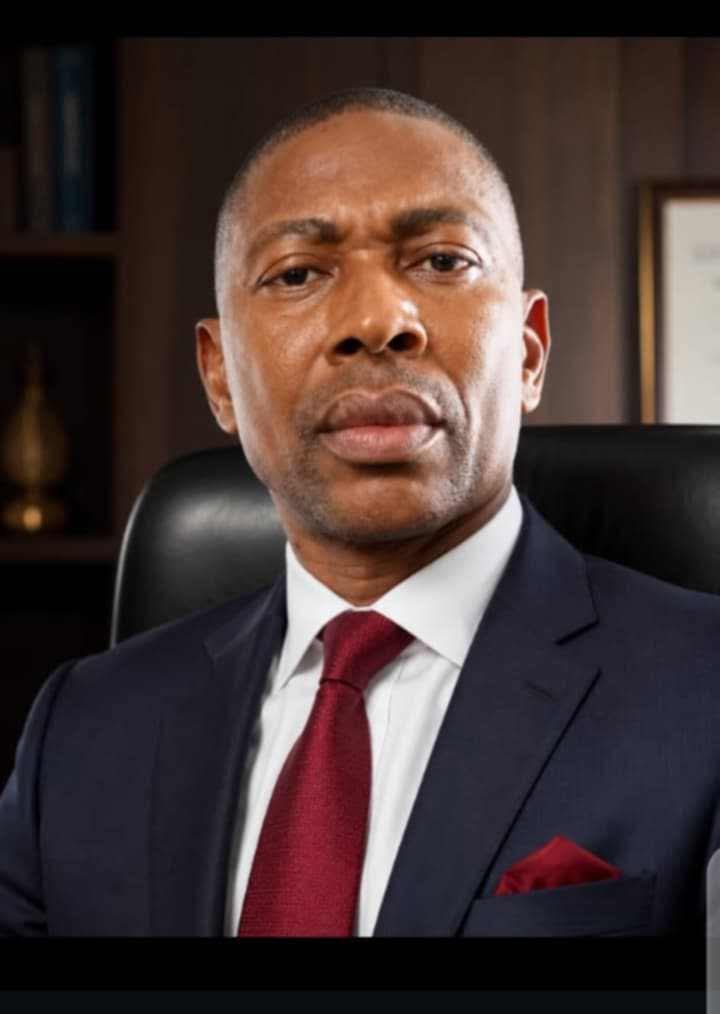
‘The Scholar of Evidence, Integrity and Community Leadership’

Published

on

In legal philosophy, silence is often romanticized as wisdom. But within the law of evidence, silence may carry a very different implication — it can amount to an admission. This thought-provoking paradox forms part of the intellectual reflections of Professor Chris C. Wigwe, SAN, an accomplished legal scholar whose contributions to legal education and jurisprudence continue to shape conversations within Nigeria’s academic and professional legal circles.
Professor Christian Chizindu Wigwe stands among the distinguished figures produced by Nigeria’s legal academy. A Senior Advocate of Nigeria and seasoned scholar, he built a reputation for intellectual rigor, disciplined scholarship, and principled leadership in the study and teaching of law.
His academic journey reflects the making of a global legal mind. Wigwe obtained his Bachelor of Laws degree from Ahmadu Bello University, Zaria, before proceeding to the Nigerian Law School where he qualified for the Nigerian Bar. His quest for deeper scholarly engagement later took him to the United Kingdom, where he earned a Master of Laws degree from Middlesex University and subsequently a PhD in Public International and Economic Law from the University of Leeds.
These academic attainments did not merely decorate his curriculum vitae; they laid the intellectual foundation for a career that has consistently bridged theory and practice within the legal profession.
Over the years, Professor Wigwe has distinguished himself in the fields of jurisprudence, international law, criminal law and the law of evidence. His scholarship reflects a deep interest in how legal systems respond to economic realities, international cooperation and evolving global norms.
Within Nigeria’s university system, his name became closely associated with the Faculty of Law at Rivers State University in Port Harcourt, where he served as Dean from 2022 until November 2025. His tenure coincided with renewed conversations about strengthening legal education and positioning the faculty for global competitiveness.
Under his watch, the faculty intensified efforts to deepen research culture, strengthen postgraduate training and pursue partnerships capable of elevating the institution’s standing among law faculties in Africa.
Professor Wigwe also consistently emphasized the importance of institutional collaboration and alumni support in sustaining academic excellence. In public engagements, he urged graduates and stakeholders to support universities in building research centres and scholarship opportunities for students.
That perspective reflects his broader understanding that legal education must go beyond classroom instruction. For Wigwe, the development of law faculties must be anchored on strong research infrastructure, vibrant intellectual discourse and international engagement.
Beyond administrative leadership, he has remained an active contributor to legal scholarship through books and research publications. His works cover diverse aspects of legal theory, international institutions and corporate law practice.
Among his notable publications are texts such as Legal Research Methodology and Practice, Introduction to Company Law and Practice, and scholarly works exploring the economic dimensions of international institutions and monetary law.
These contributions have become reference materials for students and scholars seeking a deeper understanding of legal research and the dynamics of international economic law.
What distinguishes Wigwe’s scholarship is his ability to situate legal principles within the realities of global economic systems. His writings frequently interrogate how international institutions exercise power and how developing economies can navigate complex legal frameworks within global trade and finance.
Such perspectives have increasingly become relevant in a world where international law influences domestic economic policy, cross-border transactions and global governance.
Within the classroom, colleagues and students often describe him as a meticulous teacher who believes that legal reasoning must be sharpened through intellectual discipline and ethical responsibility.
His academic philosophy emphasizes the importance of integrity in the legal profession. For him, legal education must produce not only technically competent lawyers but individuals whose character can withstand the ethical demands of justice.
This emphasis on integrity resonates strongly within the Nigerian legal system, where the credibility of institutions often rests on the moral courage of those entrusted with authority.
Indeed, Wigwe’s professional life reflects the principle that law is not merely a technical craft but a moral enterprise aimed at preserving fairness and order in society.
His elevation to the prestigious rank of Senior Advocate of Nigeria further affirmed his standing within the legal profession. The SAN rank, often regarded as the pinnacle of legal practice in the country, is reserved for practitioners and scholars whose careers demonstrate excellence and integrity.
Yet, beyond titles and accolades, his legacy lies in the countless students he has mentored over decades of teaching.
Across courtrooms, law firms, government institutions and international organizations, former students continue to carry forward the intellectual and ethical lessons instilled during their time under his tutelage.
Mentorship remains one of the most enduring contributions of any academic. Through it, knowledge is transmitted across generations, shaping the legal culture of a society.
Professor Wigwe has consistently viewed mentorship as a responsibility rather than a privilege. For him, the success of students represents the true measure of a teacher’s impact.
His leadership style within academia reflects calm authority rather than flamboyance. Colleagues often describe him as a scholar who prefers substance over spectacle, focusing on institutional growth rather than personal acclaim.
This disposition aligns with his belief that universities must remain centres of reason, inquiry and ethical reflection.
Beyond the walls of academia, Professor Wigwe’s influence extends meaningfully into community life. His dedication to secular and communal activities has earned him admiration within his hometown of Isiokpo.
Recognizing his contributions to community development, leadership and social cohesion, the people of Isiokpo honoured him with a traditional chieftaincy title — a cultural recognition reserved for individuals whose lives exemplify service and integrity.
The honour reflects the deep respect he commands not only as a scholar but as a community figure committed to the welfare and progress of his people.
Traditional institutions in many African societies remain important custodians of culture, identity and moral leadership. When communities confer chieftaincy titles, they are often acknowledging a life lived in service to collective advancement.
For Professor Wigwe, this recognition underscores a broader philosophy that scholarship should not exist in isolation from society.
Rather, knowledge must translate into service — guiding communities, strengthening institutions and inspiring future generations.
The influence of scholars like Wigwe becomes even more significant in societies navigating complex governance challenges. Legal scholars provide the intellectual frameworks through which institutions interpret constitutions, enforce rights and resolve disputes.
In this regard, the Nigerian legal system continues to benefit from the contributions of academics who combine scholarship with practical insight.
Figures such as Professor Wigwe represent a bridge between legal theory and real-world governance.
Such individuals are invaluable to both national and international institutions that require legal minds capable of navigating complex regulatory and diplomatic environments.
The global legal community increasingly recognizes that expertise in international economic law, institutional governance and evidence law is essential for addressing contemporary challenges.
From trade negotiations to international arbitration and human rights enforcement, the need for scholars with strong analytical foundations has never been greater.
Nigeria, like many developing nations, possesses a reservoir of intellectual talent within its universities. However, such expertise is often underutilized in global governance spaces.
Scholars with the depth of experience and credibility of Professor Wigwe deserve broader platforms where their insights can contribute to shaping international legal discourse.
Positions within multilateral organizations, international arbitration panels, global academic networks and legal reform commissions could greatly benefit from the perspectives of scholars who understand both local realities and global legal frameworks.
The strength of any legal system ultimately depends on the integrity and intellectual courage of those entrusted with responsibility.
When individuals who embody these virtues are elevated to positions of trust, institutions become stronger and public confidence grows.
Professor Chris C. Wigwe’s career illustrates the enduring relevance of scholarship grounded in integrity, intellectual discipline, community service and responsible leadership.
In a time when public institutions require credible voices capable of guiding policy with wisdom and ethical clarity, figures of his calibre stand out as valuable assets not only to Nigeria but to the wider international community.
Ultimately, the story of Professor Wigwe is not merely about academic achievements or professional titles. It is about the quiet but powerful influence of a scholar committed to the ideals of justice, knowledge, community service and ethical leadership.
And in the long arc of legal history, it is often such scholars — patient builders of institutions, mentors of generations, and respected sons of their communities who leave the most enduring imprint on the pursuit of justice.
King Onunwor
Continue Reading

Trending