Connect with us

Oil & Energy

This Tiny Country Could Become Europe’s Newest Oil Producer

Published

on

It is rather rare to see enthusiasm for completely new exploration projects in Europe. The overwhelming majority of OECD countries are either in terminal decline or are looking into ways how to ban exploration altogether. The less-appraised parts of Eastern Europe might still have some potential yet in the absence of oil majors such endeavors risk remaining a lifelong pipe dream. Still, the appearance of a new European frontier can rekindle upstream hopes (even if for a short period of time). Europe’s latest addition to the list of nations willing to tap into their prospective hydrocarbon resources is located in the southeast of the Old Continent, in Montenegro. The small ex-Yugoslav republic with just slightly more than 600 000 inhabitants has witnessed its first offshore well spudded on March 25, 2021. The 4118-5-1 wildcat was drilled in 100 meters of water to a total depth of 6525 meters, some 25km from the Montenegrin shore.
The first offshore Montenegrin well was spudded by the ENI-NOVATEK tandem, with the Italian major taking on the reins of operatorship. Given the geographic proximity, ENI’s interest in offshore Montenegro is quite understandable and was to be expected. In case of any discovery, ENI has the convenient option of accommodating prospective production within its system, the Italian shore is only 500km from the wildcat’s location. The first well is targeting an oil reservoir at depths of 6.5km, implying that the Italian major’s 120kbpd Taranto Refinery might be a safe backstop for any potential crude produced. Along with Total, ENI has been one of the most active drillers in the Mediterranean, marking suchsupergiant discoveries as the Egyptian Zohr or the Cypriot Calypso. Across the Adriatic from Montenegro, ENI has been developing the Aquila field offshore Brindisi,producing medium density crude of some 36° API.
The case for NOVATEK’s participation in an offshore project is much more peculiar, considering that the Russian gas producer has no assets in the Adriatic.Moreover, NOVATEK is on the US’ Sectoral Sanctions Identifications (SSI) List, meaning that equity investments and financing matters are substantially encumbered. Luckily for the Russian firm, offshore Montenegro does not fall under any of the three sanctioned areas, Russian deepwater, Arctic offshore, and shale. Domestically, NOVATEK is heavily focused on gas production on the Gydan peninsula and in the surrounding area, compelling it to seek new niches it can fill, new frontiers that could serve as bases for future growth. In a sense, NOVATEK needs to overgrow its LNG specialization and gain market-relevant competence in other segments, too.
NOVATEK’s first step into the foreign offshore segment took place in Lebanon where it landed two offshore blocks in a consortium with Total and ENI in 2018. In both cases NOVATEK did not lay claims to operatorship, focusing on building up key relationships with Europe’s leading drillers. It seems very likely that it is from the Lebanese joint experience that the Montenegrin drilling ambition branched out into a separate work track. Concurrently, although Montenegro is one of the hottest candidates for EU accession, Podgorica remains beyond the bounds of the European Union. For NOVATEK this is a great boon, as sanctions risk can be negotiated directly with the relevant national authorities, i.e. no involvement of Brussels is required.
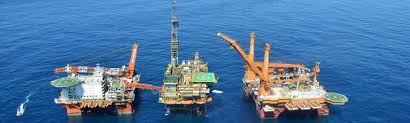
Technically,the Montenegrin offshore area has already seen exploration drilling, though that was back in the SFRY (Socialist Federal Republic of Yugoslavia) times, in 1980. Although Yugoslavia was a socialist country with all its peculiarities, it was the US major Chevron that was the operator of drilling operations. The Jadran Juzni (Southern Adria) prospect turned out to wield signs of oil and gas systems which, however, were deemed non-commercial,effectively closing Chevron’s offshore endeavors in Yugoslavia. It needs to be pointed out that the current wildcat is farther off the Montenegrin coast the Jadran Juzni well was only 3km from shore. To carry out the drilling, the ENI-NOVATEK tandem contracted the Topaz Driller, a Panama-flagged jack-up drilling rig. The contract was clinched in July 2020, for drilling operations starting in Q1 2021 and taking up to 180 days.
Up to now the work progress of ENI-NOVATEK seems fairly solid. In late 2018 their contractor has carried out a comprehensive 3D seismic survey on the 4118-5 Block, then the summer of 2019 witnessed a string of hydrophysical and geophysical surveys on the prospects. Having completed this, it was assumed that the spudding of the first well would take place in 2020, however, the coronavirus-triggered chaos upended all plans and effectively delayed the wildcat into 2021. Most probably the Italo-Russian joint venture will drill 2 wildcats. Even if the first well turns out to be completely dry or non-commercial, the second well (expected to be spudded in May-June 2021) is targeting gas plays at lower depths, i.e. the first well’s fiasco does not automatically foreshadow the failure of the second well.
According to media reports, it will take ENI 4-5 months to finalize the drilling of the wildcat and assess the results. Nevertheless, Montenegro’s offshore zone might more activity coming up in the upcoming months. The Greek Energean holds 2 license blocks (4219-26 and 4218-30) and is expected to take a decision on whether it intends to proceed with drilling exploratory wells in its acreage. The data to assess the blocks’ resource bounty is already there, Energean carried out 3D seismic surveying on both blocks in 2019 already. The spark of interest towards its off shore zone might compel the Montenegrin authorities to expedite a 2nd offshore bidding round which would presumably cover the 7 remaining unallotted blocks. There is very little probability that Podgorica will be trying to auction off onshore blocks,especially considering their history of dry wells.
Katona is a contributor.


By: Viktor Katona

Continue Reading

Oil & Energy

Rivers PETROAN Elects 12-Member Executive 

Published

on

The Petroleum Products Retail Owners Association of Nigeria (PETROAN), Rivers State Branch, has elected a 12 – member executive to steer the affairs of the association for the next four years.
The executive, elected during the Annual General Meeting (AGM) of the association, at it’s secretariat in Port Harcourt, and sworn in immediately after the election, was mandated to, among other things, tackle the adulteration of petroleum products as well as address irregularities in meter readings across the state.
The newly elected executive include, Pastor Ezekiel I. Eletuo  as  Chairman,  Kanu Addeson C. as Vice Chairman , Dr. Ejike Jonathan Nnbuihe as Secretary,  Fidelis A.Inaku as Treasurer and Lady C. N. Ekejiuba as Financial Secretary.
Others are Anaenye Anthony as Publicity Secretary, Arc. Kingsley O. Anyino as Organising Secretary, Nze Peter Ezenwa as Chief Whip, and Sunny Williams as Auditor.
Other members of the executive included Chidiebere Ronel Akwara as Welfare Officer, Ibe Chimaobi C. as Legal Adviser, and Emetoh Chizoba as Assistant Secretary.
Inaugurating the new leadership, PETROAN Zonal Chairman, High Chief Sunny G. Nkpe, charged the team to build on the achievements of the outgoing executive.
He urged them to collaborate with stakeholders in the petroleum sector to ensure industry stability and address issues of multiple taxation.
Nkpe who emphasized the need for transparency, accountability, and an open-door policy in administering the union, insisted these principles remained crucial in advancing the association’s objectives and improving members’ welfare.
The zonal chairman also commended the outgoing executive for their accomplishments during their tenure and for conducting a smooth transition process.
He further described their efforts as instrumental in strengthening the union’s standing in the state.
In his acceptance speech, the new Chairman, Pastor Ezekiel I. Eletuo, thanked members for their confidence and pledged to improve on the foundations laid by the previous administration.
He promised his leadership would be guided by transparency, accountability, fairness, unity, and integrity.
Eletuo called on all members to support the new executive in its efforts to elevate the association.
Also speaking, the immediate past Chairman, of the association, Sir Chilam Francis Dimkpa, expressed appreciation to members for their support during his administration and stressed the need for them to extend the same cooperation to the new leadership.
Dimkpa highlighted key achievements of his tenure to include capacity building for members, increased union visibility through media advocacy, and the establishment of stronger ties with stakeholders, corporate organisations, and individuals.
He also acknowledged the support of the state government, the Police, the Department of State Services (DSS) and the Nigeria Security and Civil Defence Corps (NSCDC).
Stakeholders present at the event also delivered their goodwill messages.
Highlights of the event included  administration of oath of office to the new executive and the presentation of certificates of return by the zonal chairman.    .
By: Amadi Akujobi
Continue Reading

Oil & Energy

FG Intensifies Efforts To Reposition Tourism Sector 

Published

on

The Federal Government has intensified efforts towards reposition Nigeria’s hospitality and tourism industry for global competitiveness, aimed at strengthening regulation, professionalism and workforce standards across the sector.
This was made known last week when the National Institute for Hospitality and Tourism (NIHOTOUR) conferred  fellowships, inducted professionals and inaugurated the governing boards of the Hospitality and Tourism Sector Skills Council of Nigeria (HTSSCN) in Abuja.
The high-profile event, held at Merit House, Maitama, drew senior government officials, regulators, tourism operators, cultural institutions, hospitality investors and development partners in what stakeholders described as a major institutional shift .
Government also formally inducted registered practitioners into various professional categories while also inaugurating the Board of Trustees and Board of Directors of the HTSSCN, an employer-led platform designed to align workforce competencies with industry expectations.
Speaking at the event, the Minister of Art, Culture, Tourism and the Creative Economy, Hannatu Musa Musawa, said the initiative represented a strategic intervention to strengthen accountability, standards and institutional coordination within Nigeria’s tourism and hospitality ecosystem.
According to the minister, Nigeria’s vast cultural assets, tourism destinations and creative talents can only translate into sustainable economic value through professionalism, regulation and globally accepted operational standards.
She noted that tourism and hospitality industry remains one of the fastest-growing sectors globally, contributing significantly to employment generation, foreign exchange earnings and cultural diplomacy.
Musawa explained  that NIHOTOUR Establishment Act has expanded the institute’s mandate beyond training, positioning it as a regulatory and certification authority for hospitality, tourism and travel practitioners in the country.
“No sector can attain sustainable growth without structure, standards, institutional coordination and skilled professionals,” she said, stressing the need for stronger collaboration between government agencies, operators, training institutions and private sector stakeholders.
In his keynote address, the Director-General and Chief Executive Officer of NIHOTOUR, Abisoye Fagade, described the event as a historic turning point in the formalisation of Nigeria’s tourism and hospitality industry.
Fagade said the induction of practitioners, conferment of fellowships and inauguration of the HTSSCN governing boards marked the beginning of a new era of institutional governance, professional recognition and sector-wide coordination.
“Regulation and standardisation are no longer optional; they are economic necessities if Nigeria truly intends to compete globally,” he stated.
By:  Nkpemenyie Mcdominic, Lagos
Continue Reading

Oil & Energy

Big Oil Reconsiders Previously Unattractive Destinations

Published

on

The Middle Eastern crisis has prompted a reprioritization among international oil companies. Previously unattractive drilling destinations are suddenly looking quite attractive—even Alaska.
The oldest oil and gas producing part of the United States has for years been out of the spotlight as the industry moves to cheaper and faster-growing locations. The only news of any substance about Alaska recently was the Biden administration’s approval of the Willow project, led by ConocoPhillips, which was set to boost the state’s oil output by 160,000 barrels daily, and Australian Santos’ Pikka project, set to start commercial production this year. That was years ago. Now, Big Oil is eager to drill in Alaska.
Earlier this month, a lease sale in the National Petroleum Reserve in Alaska attracted record bids, worth a total $163 million. Among the bidders were Exxon, Shell, and Repsol, with the latter already partnering with Santos on the Pikka development. And this may be just the beginning.
Related: Saudi Aramco Looks to Raise $10 Billion from Real Estate Asset Deal
The Bureau of Land Management offered 625 tracts across about 5.5 million acres for bid in the sale, revived at the end of last year by the Trump administration. No lease sales were held in the National Petroleum Reserve in Alaska under President Biden. Yet under Trump’s One Big Beautiful Bill, there will be a total of five lease sales in Alaska over the next ten years.
“With the imminent start-up of the Pikka project on the North Slope, the reversal in the decline of oil production in the great state of Alaska is going to help put more oil in the Pacific area at an important moment,” Repsol’s head of upstream operations, Francisco Gea, said as quoted by the Financial Times. Gea called Alaska “a fantastic opportunity”. The Pikka project, which has a price tag of $4.5 billion, will produce up to 80,000 barrels daily.
It is indeed a fantastic opportunity, at the very least because it is nowhere near the Middle East and as such is a highly secure energy exploration destination. Canada is in a similar position, by the way: the head of the International Energy Agency earlier this month told an industry event Canada had a golden opportunity to step in as a secure energy supplier in a world that’s currently 14 million barrels daily short on supply because of the Middle Eastern crisis.
Security, then, is what has prompted Big Oil to return to the North—even Shell, which left in 2015 after writing off as much as $7 billion on an unsuccessful drilling campaign hampered, among other things, by strong environmentalist opposition. According to the Financial Times, the supermajor’s decision to partake in the latest Alaska lease sale was surprising for analysts.
However, according to chief executive Wael Sawan, the lease sale concerns a different part of the state. “It is a very, very, very different part of Alaska that we have gone to,” he told the Financial Times. “This is an onshore exploration opportunity in a very well-established basin that has been producing for some time… So this is not offshore Alaska where we have had the challenges in the past.”
Crude oil is not the only thing drawing the energy industry to Alaska in these times of oil and gas trouble. Gas is also a magnet—in this case, in the form of the Alaska LNG project. Interest in the Alaska LNG export project has spiked since the war in the Middle East choked 20% of global LNG supply and sent Asian buyers scrambling for expensive spot cargoes.
Glenfarne Group, the majority owner and developer of the facility, aims to sign binding offtake agreements with buyers soon and advance final investment decisions to later in 2026 and early 2027, company executives told media earlier this year on the sidelines of an energy conference in Tokyo.
“There’s a real interest, particularly with everything happening in the Middle East right now. Everyone would like to get those (preliminary deals) turned into long-term agreements,” Adam Prestidge, president of Glenfarne Alaska LNG, told Reuters in March.
Alaska LNG is designed to deliver North Slope natural gas to Alaskans and export LNG to U.S. allies across the Pacific. An 800-mile pipeline is planned to transport the gas from the production centers in the North Slope to south-central Alaska for exports. In addition, multiple gas interconnection points will ensure meeting in-state gas demand.
The latest Alaska developments show clearly how the Middle East war has put energy security back in the spotlight, making previously challenging locations desirable again. With an estimated 1 billion barrels of oil supply wiped out of markets since the war began, according to Aramco’s Amin Nasser, alternative supply sources have become urgently needed, and not just for the short term. Even if the Strait of Hormuz reopens soon—which at the moment seems unlikely—energy security will in all probability remain a top priority both for energy producers and for consumers.
By Irina Slav for Oilprice.com
Continue Reading

Trending