
Politics
Wike Is My Role Model, Eke Affirms

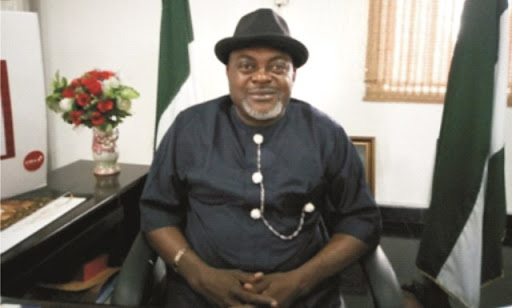
The Executive Chairman of Obio/Akpor Local Government Area of Rivers State, Hon. Solomon Abel Eke, has said that Governor Nyesom Wike is his political role model in the state and in the country.
Eke, who made this assertion during a media tour of projects in the local government, said Wike is the politician he considers as a role model because the governor does not pretend.
Outside the shores of Nigeria, Eke, however, named former South African President, Nelson Mandela as his role model.
His words, “Governor Nyesom Wike is my role model. He is my role model in the state and even in the entire country, it is Nyesom Wike. Outside the shores of Nigeria, it is Nelson Mandela. The simple reason is because we don’t pretend. These people don’t pretend.
“Me too, I don’t pretend. If you know me, you will know that I don’t pretend. Whatever I want to do, I will tell you this is the reason for it. I have told you that projects I am embarking on are projects that have impact on the people; the livelihoods of the people. My slogan is ‘service to humanity’; that is why I am in politics. I am not here to favour anybody.”
The council chairman further noted that the prudent management of funds has been the secret behind the success story of his administration so far, contending that his administration tries to leave a landmark achievement on every money that comes into the council’s coffers.
Eke further indicated that his administration has by no means surpassed the achievements of his predecessors but said, “Because we are focused, we are trailing behind them, the past administrations.”
He said while the Wike administration at the council then between 1999 and 2006 constructed eight or more roads, he (Eke) was currently struggling with two.
“The Governor, in all communities of the local government did borehole projects because they requested for them that time. Those boreholes are still there now. That is why I can say I am not doing borehole again. I have been able to do four boreholes so far based on request. The governor also built schools and built health centres. I am struggling to do those things. I have not even done it. I cannot say I have beaten them. When it comes to Timothy Nsirim, you can see the International Market built by him. He even directed that we build markets in all the 17 wards. He did about 15 roads. I am even struggling to do two. I cannot say that what they did, I have been able to do it,” Eke said.
He attributed this state of affairs to paucity of funds, as monthly allocations for the council have dropped compared to those days, made worse by the relocation of several companies out of the local government.
“The magic is that by that time; the allocation was better than what we have now. We did not have this increment in workforce. You cannot compare that time and now,” he said.
Eke said he would need a second term mandate in order to do those things he has not been able to do like sports centre, proposed school projects in Iriebe and Woji communities as well as completion of the ongoing Legislative Assembly Complex at the Council Secretariat, a fish farm, among others.
Meanwhile, state Governor, Chief Nyesom Wike, has been described as Nigeria’s democratic leadership champion of the 21st century.
Addressing journalists recently at Rumuodomaya shortly after projects assessment tour of the area, Chairman of Obio/Akpor Local Government Council, Prince Solomon Eke, said that Governor Wike was able to enhance democratic governance in the oil and gas- rich state in particular and Nigeria in general through numerous development projects spread across the length and breath of the state since 2015 to date.
He stressed that the Governor was able to strengthen democratic governance through roads construction and re-construction, rehabilitation, building of flyovers to ease traffic congestion in the state capital, the provision of security for the people both in the urban and rural communities of the state within the lifespan of this administration.
He maintained that the governor equally provided the people with good and acceptable sanitary feat, regular power and water supply in all the nooks and crannies of the state, payment of workers’ salaries and other welfare incentives as at when due, and the restoration of peace and harmony, as well as returning the lost glory of the state from Garbage to Garden City status’, among others.
Eke, who is poised for a re-election based on his performance so far, especially the envisaged projects in the 17 Wards of the LGA, said that Wike’s rural and urban development’ since the emergence of democracy in 1999 speaks volumes of him in infrastructural transformation, thereby making democracy to be meaningful, realisable and achievable, which successive administrations failed to address.
According to him, “This achievement so far of the governor will enhance electoral management in Nigeria as it will improve the lives of the people for better future”.
In his words: “Governor Nyesom Wike has done marvellously well in the provision of lasting infrastructural development in Rivers State within the six years of this dispensation, thereby strengthening democracy in the state in particular and Nigeria in general. I doff my hat for his resilience thus far in this regard,” he said, and described him, as a champion and role model”.
The council boss further urged Rivers indigenes particularly and Nigerians generally to support the governor’s quest to build better bridges of development in the last lap of this government through sacrificing their energies and ensure that detractors and enemies of good governance did not destabilise efforts of the Wike-led administration in the state.
Meanwhile, Chairman of Obio/Akpor Local Government Council, Prince Solomon Eke, has stated that the rationale behind the projects assessment tour was not to seek for second tenure, rather for the world and the people to ascertain his interest to bring good governance to the grassroots.
Eke averred: “I don’t like blowing empty trumpet, instead, the people will determine whether second term is possible or not. I am poised to offer the best to Obio/Akpor people. The places visited in the tour include, Rumuodomaya, where he built sick-bay at the council for first aid treatment of staff, Legislative Assembly Complex under construction for the accommodation of councilors, corps members’ lodge, classroom, administrative and laboratory blocks at Community Secondary School, Rumuodomaya.
Others are borehole and Information Communication Technology (ICT) with computers and other accessories at Rumuokoro Town Hall, Eliohan road, on-going jetty project at Rumuolumeni and ICT hall at Ozuoba, among other ongoing development projects of the present administration in the area.
By: Donatus Ebi & Bethel Toby



The Independent National Electoral Commission (INEC) has extended the deadline for political parties to submit the list of candidates for the 2027 governorship and state Houses of Assembly elections from Saturday, August 8, to Tuesday, August 11, 2026.
The commission announced the extension in a statement issued on Saturday and signed by the National Commissioner and Chairman of its Information and Voter Education Committee, Mohammed Haruna.
According to INEC, the decision followed appeals by political parties for additional time to complete the submission process through the dedicated online portal.
“The submission window, which according to the revised Timetable and Schedule of Activities for the General Election was originally scheduled to close on Saturday, 8th August, 2026, has been extended to Tuesday, 11th August, 2026,” the commission said.
In a a related development, INEC announced the suspension of PVC collection in Osun State ahead of the August 15 governorship election.
The commission said voters who applied for replacement of lost, damaged or defaced Permanent Voter Cards would have until midnight on Sunday, August 9, to print downloadable copies of their cards.
The electoral body explained that the deadline was necessary to enable it compile data on downloaded PVCs and produce final statistics on the total number of cards collected ahead of the election.
INEC said PVC collection in Osun commenced at the Registration Area level from July 22 to 28, 2026, but was extended to July 31 following complaints about large crowds and difficulties experienced by voters at collection centres.
The exercise subsequently moved to the local government level and ran from August 1 to 7.
The commission also disclosed that replacement downloadable PVCs had been made available to voters in Odo-Otin and Ife Central Local Government Areas following the theft of cards during attacks on the two collection centres.
It stressed that the stolen cards could not be used to vote.
INEC reassured Osun residents of its preparedness for the August 15 governorship election.
“The commission reiterates that the stolen cards cannot be used to vote.
“INEC reassures the people of Osun State of its readiness to conduct a free, fair, credible and inclusive governorship election on 15th August, 2026,” the statement said.
The commission said the deadline, initially set for Saturday, 8 August, has been extended to Tuesday, 11 August 2026, following appeals from political parties for more time.
INEC also announced that the window for voters who applied to replace lost, damaged or defaced PVCs to download their replacement cards will close at midnight on Sunday, 9 August.
The move is to enable the commission compile final PVC collection figures ahead of the 15 August Osun governorship election.
INEC said replacement downloadable PVCs have also been provided to affected voters in Odo-Otin and Ife Central Local Government Areas after hoodlums carted away cards from two collection centres, stressing that the stolen cards cannot be used to vote.
The commission reaffirmed its readiness to conduct a free, fair, credible and inclusive election in Osun State.
Gov. Kefas made the remarks over the weekend at the Federal Medical Centre (FMC), Jalingo, during the flag-off of the second phase of the Renewed Hope Medical Outreach in Taraba State, organised as part of activities marking Prof. Yilwatda’s 58th birthday.
The governor commended Prof. Yilwatda for choosing to mark his birthday by providing medical care to people in need.
“What Professor Nentawe did is a powerful demonstration of what leadership should be,” Gov. Kefas said.
He assured that his administration would continue to support initiatives that complement government efforts to improve healthcare delivery and the wellbeing of residents.
Speaking at the event, Prof. Yilwatda called on Nigerian leaders to embrace the culture of giving and use their positions to touch the lives of the less privileged.
He said his decision to celebrate his 58th birthday in Taraba State was deliberate and informed by the needs of underserved communities, particularly people who face difficulties accessing healthcare because of distance and financial constraints.
According to him, the intervention followed a needs assessment and was extended across the three senatorial districts of the state.
He said the exercise commenced on August 3 at Takum General Hospital and covered the Federal University Teaching Hospital, Wukari; First Referral Hospital, Sunkani, Ardo-Kola Local Government Area; General Hospital, Bali; General Hospital, Gembu; and FMC Jalingo.
Prof. Yilwatda said the intervention provided medical services to thousands of beneficiaries, including people who required surgical procedures.
He said sustainable national development could only be achieved when strong institutions placed Nigerians at the centre of development.
“Leadership is about service,” he said, urging political and public leaders to make giving back to society an important part of their responsibilities.
He reaffirmed his commitment to serving Nigeria and its people, saying his personal vision was to make every day of his life useful to humanity.
“Every day that I live, the vision is: let it be useful to humanity,” he said.
The Taraba State Commissioner for Health, Dr. Bordiya Buma, commended the initiative, saying it was consistent with the Renewed Hope agenda and efforts to strengthen healthcare delivery in the state.
Dr Buma said the second phase followed the successful completion of the first phase, which was conducted simultaneously in six local government areas, with two LGAs selected from each of the three senatorial districts.
According to him, more than 10,000 patients were attended to during the first phase, including people with medical and surgical conditions.
He disclosed that 327 general surgeries, 71 eye surgeries and 575 dental procedures were carried out during the exercise.
The commissioner expressed appreciation to President Bola Tinubu for the Renewed Hope Medical Outreach and thanked Prof. Yilwatda for supporting the initiative and choosing Taraba State as a beneficiary.
The Minister of Health and Social Welfare, Prof. Muhammad Ali Pate, also commended Prof. Yilwatda for choosing Taraba State to mark his 58th birthday through a medical outreach.
Prof. Pate said making healthcare the centrepiece of the birthday celebration was significant because health affects everyone.
-

 News3 days ago
RSG Targets Nine Million Residents in Mosquito Net Distribution Campaign
-

 Oil & Energy2 days ago
Aiyedatiwa Signs New Electricity Bill
-

 Maritime2 days ago
Marine Minister Commends President Tinubu On NPERA Bill Assent
-

 Oil & Energy2 days ago
NLNG Commissions Research And Innovation Centre In RSU
-

 News3 days ago
KenPoly Holds Eight Convocations, August 29
-

 News3 days ago
RSG Begins Another Phase of Projects Commissioning Today
-

 News3 days ago
RMAFC Completes Revenue Sharing Review, Proposes New Pay
-

 Maritime2 days ago
NAGAFF Petitions IGP Over Alleged Maritime Police Harassment