
News
Nigeria’s ECN brokers and their policy towards COVID-19

The coronavirus outbreak was completely unexpected as it took a toll on the entire planet in a matter of a couple of months. The spread of the infectious disease that has long been declared as a global pandemic is the biggest threat humanity has faced in almost a century. The human cost is absolutely unprecedented, yet, the economic aftermath is also expected to break records of the 20th century. It has been forecasted that the novel coronavirus pandemic will push the global economy into a major recession not witnessed since the great depression.
The novel coronavirus, later named COVID-19, initially started in China, specifically in its Hubei province which is home to more than 58 million people. Roughly the size of Italy, the virus spread within the province and later across mainland China faster than anyone would have expected. The epicenter of the country was the capital of the province – Wuhan. The city of 11 million inhabitants became the first major area to go under strick lockdown in the world.
Nevertheless, despite strict measures and suspended flights from many countries to and from China, the virus still found its way out of the country. It first entered other Asian nations followed by first European and American cases in Bordeaux, France, and the State of Washington respectively. Soon, Italy became the global epicenter of the deadly virus pandemic, infecting tens of thousands and killing more than 24,000 people. The northern region of Lombardy, the economic driving force for the nation came under particular pressure as Milan and Bergamo were the first two urban areas to go into strict lockdown.
However, the virus would not stop there as it infected hundreds of thousands all across Europe. As of now, Spain is the main hotspot on the continent with over 200,000 confirmed cases. The situation in the United Kingdom is developing fast as well with the highest number of daily cases on the continent. The country’s prime minister Boris Johnson is still recovering from the virus after testing positive and spending a few nights in intensive care. This makes the situation for Britons even more unbearable and stressful.
The United States, due to its late response, is the most affected nation globally. The country has more than 820,000 confirmed coronavirus cases while the death toll has already exceeded 45,000. The nation’s and globe’s financial center, New York, has the highest concentration of cases per 1 million inhabitants across the US. This economic powerhouse remains closed, threatening millions of jobs and income sources for Americans, as well as for people from all around the world.
Nigeria unlike countries with tens of thousands of cases remains thoroughly stable in regard to the health system. It is not yet overwhelmed as the nation of almost 200 million has only 782 infections. However, the crude oil price slump in the US put Nigeria in a very difficult economic position. The country exports the vast majority of its oil products to the United States, the sector that generates 60% of the government revenues and represents 90% of all foreign trade.
As a result, the market prices of Nigerian companies are falling. So is the Nigerian Naira, which remains stable but is expected to drop dramatically following the plunge. People are particularly sensitive to recession fears in this country which remains utterly poor. People and households with some savings are trying to do their best in an effort to avoid the devastating impact of the upcoming economic crisis. Many people are finding the best solution in purchasing foreign sovereign currencies in Forex markets. As a result, a growing number of people are approaching entities on the ECN forex brokers list here in Nigeria.
How are ECN brokers reacting to the crisis?
The Forex platforms have been an important part of the financial industry for a while now. Many influential and well-known businessmen, including the famous Hungarian philanthropist George Soros, made their wealth out of Forex trading. It is playing a major role in the financial sectors of many countries, including Nigeria.
Nigeria is becoming increasingly globalized, with more international businesses present than ever before. Thus, in this process, ECN brokers became particularly popular. What is different with them? ECN brokers are financial experts that give their clients direct access to financial markets through electronic communications networks (ECNs). They are quite efficient, convenient, and fast while not including ‘middlemen” between the two sides.
Yet, their main trait is being utterly transparent. Nigeria is quite a corrupt nation, thus, the ability to see through every transfer and operation is a major asset. Transparency is crucial for many in this nation, but ECN brokers are often quite expensive.
Nevertheless, a soaring number of people are using ECN brokers to safeguard their future amid the global crisis. Such brokers, unlike others, are not allowed to trade against their clients, adding to the safety rank. Moreover, they usually charge fixed commissions which are rather attractive for many individuals.
Now, considering the growing demand as a result of the oil crisis, Nigeria’s ECN brokers are trying to make most out of the current situation. Some of them have already increased one-time commissions sometimes to unreasonably high rates. Despite this, they are not reporting the fall in demand following the increase. However, no one knows if the price will remain at this rate after the crisis. This would be highly unlikely as ECN brokers are much more expensive than regular ones and high prices would not sustain their business during the normal demand period.
However, others are doing the complete opposite, making their service more flexible and inclusive in an attempt to attract even more customers. Many in the industry are saying that this approach could be more liquid and stable for brokers during the crisis.



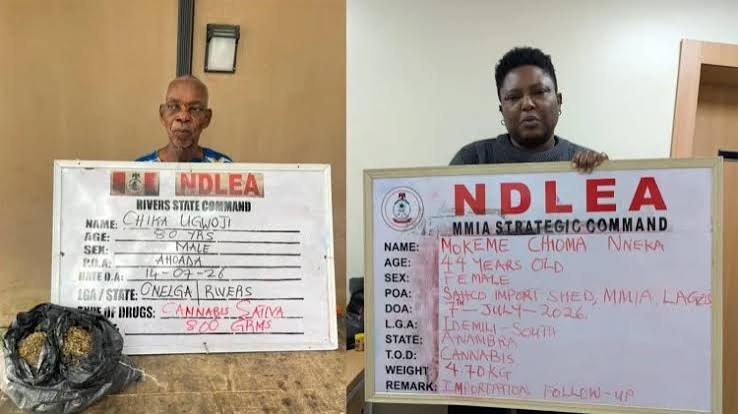
The National Drug Law Enforcement Agency (NDLEA) has intercepted 1.63 million pills of tramadol concealed in two long trailers heading for Kano as it intensified efforts to dismantle a transnational drug trafficking syndicate operating along the Togo-Benin Republic-Nigeria corridor.
The agency also arrested an 80-year-old suspected drug dealer in Rivers State, a businesswoman linked to cannabis shipments from Canada, a Chadian woman, a couple and other suspects in coordinated operations across Lagos, Edo, Kogi and Rivers states.
The NDLEA’s Director of Media and Advocacy, Femi Babafemi, disclosed this in a statement, yesterday.
According to the statement, the latest intelligence-led operation came barely one week after NDLEA operatives recovered 558,900 pills of tramadol concealed in the false-bottom compartment of a truck that entered Lagos through the Togo-Benin Republic route.
Babafemi said, “Ongoing efforts to dismantle a transnational drug trafficking syndicate smuggling tramadol from Togo, through Benin Republic into Nigeria have yielded another success with the interception of two long trailers used to move One Million Six Hundred and Thirty (1,630,000) pills of tramadol 250mg concealed in fabricated compartments of the trucks across multiple borders into Lagos.”
He added that one of the two trailers was intercepted on July 2 along the Lagos-Ibadan Expressway, where operatives recovered 853,000 pills of tramadol 250mg concealed in a fabricated compartment beneath the cargo floor.
Babafemi said, “One of the two trucks already heading to Kano was tracked and located on 2nd July 2026 along the Lagos-Ibadan Expressway where NDLEA officers recovered 853,000 pills of tramadol 250mg concealed in a fabricated compartment beneath the cargo floor of the trailer and arrested the 22-year-old driver Jabir Kabiru.”
He further disclosed that another trailer was intercepted two days later on the same route.
“Two days later, 4th July, NDLEA operatives acting on processed intelligence successfully tracked and recovered the second trailer from the Lagos-Ibadan Expressway while heading to Kano. A total of 777,000 pills of tramadol 250mg concealed in a fabricated compartment beneath the cargo floor of the truck were evacuated and the 22-year-old driver Muhammed Nuhu arrested,” the statement read.
According to Babafemi, investigations established a link between the three intercepted consignments.
He said, “Investigations revealed that all three trucks and consignments intercepted on 21st June, 2nd July and 4th July belong to the same transnational drug trafficking syndicate operating along the Togo-Benin Republic-Nigeria axis.”
The agency also intercepted 4.70 kilograms of Canadian Loud, a synthetic strain of cannabis, at the import shed of the Murtala Muhammed International Airport, Ikeja, Lagos.
Babafemi said, “Two consignments of Canadian Loud, a synthetic strain of cannabis, with a combined weight of 4.70 kilograms have been intercepted at the import shed of the Murtala Muhammed International Airport (MMIA), Ikeja, Lagos. The cargoes, which arrived the Lagos airport from Canada in cartons with ‘Odugwu’ boldly written on them, came aboard British Airways and Ethiopian Airlines flights on 24th June and 3rd July respectively.”
He said two cargo agents, Ali Rotimi Samson and Orimolade Oluwagbenga, were initially arrested in connection with the shipments, while another suspect, Edeh Onyeamachi Stanislus, was apprehended after arriving at a logistics company to take delivery of the consignments.

The Federal Ministry of Humanitarian Affairs and Poverty Reduction has denied claims that it has commenced registration for a purported ?50,000 National Support Allowance.
The ministry, in a public notice posted on its official X handle, yesterday, described messages, links and websites advertising the alleged programme as fraudulent.
It urged Nigerians to disregard such claims and verify information only through official government channels.
“The Federal Ministry of Humanitarian Affairs and Poverty Reduction has NOT commenced registration for any ?50,000 National Support Allowance,” the ministry said.
It added, “Disregard fraudulent messages, links and websites claiming otherwise. Verify any info only through official govt channels.”
The alert is in response to a circulating scam flyer that falsely claims the program is ongoing under President Bola Tinubu’s directives.
The fake advertisement, which includes text in Hausa and English, directs victims to a suspicious website (kluspz.com) for applications.
The ministry’s warning comes amid heightened concerns over digital fraud targeting vulnerable populations seeking social support.
Similar scams have previously surfaced around programs like N-Power, prompting questions from citizens in replies to the official post.
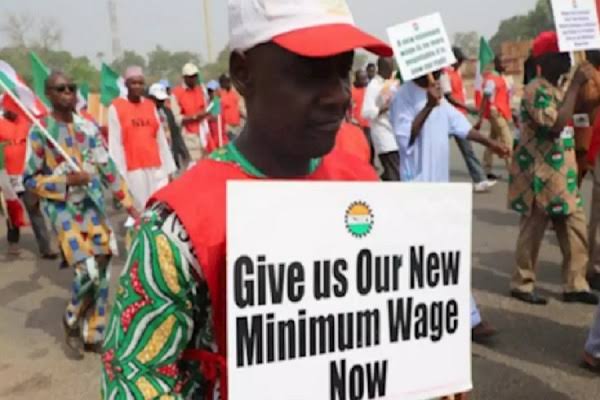
The Nigeria Labour Congress (NLC) has expressed its preparedness for a major national struggle for a comprehensive review of the national minimum wage.
NLC President, Comrade Joe Ajaero, hinted at this while making his remarks at the commissioning of the Comrade Godwin Abumisi Pensioners Legacy House and Multipurpose Hall in Abuja.
Ajaero said it is no longer acceptable to discuss the welfare of workers without also discussing the welfare of those who have completed their active years of service.
He advised workers and pensioners to get prepared for the ideological and economic battles that lie ahead.
According to the NLC president, “The Nigeria Union of Pensioners (NUP) is one of the proud affiliates of the Nigeria Labour Congress. Therefore, your struggle is our struggle, and your welfare remains a priority for the organised labour movement.
“We are currently in the preparatory stages for a major national struggle for a comprehensive review of the national minimum wage.
“However, let me state unequivocally that it is no longer acceptable to discuss the welfare of workers without also discussing the welfare of those who have completed their active years of service.
“Accordingly, the Nigeria Labour Congress will not only push for a new national minimum wage but will also demand the establishment of a national minimum pension. It is a historical injustice that men and women who devoted their youth, strength and productive years to the service of this nation should be condemned to live below the poverty line after retirement.”
Ajaero noted that the cost of living has risen astronomically as food, healthcare and transportation have become increasingly unaffordable.
“We cannot continue to allow our senior citizens to survive on pensions that have become poverty wages. Every retiree deserves to live with dignity after decades of faithful service to the nation,” he said.
He urged pensioners across the country to remain united and prepared as the process begins, adding: “This Legacy House should not merely be seen as a physical structure; it should become a centre for mobilisation, strategic engagement and solidarity as we prepare for the struggles ahead.”
The NLC president pointed out that the working class has always understood that “those who exploit workers are united in advancing their interests. We too must remain united in defending our collective interests and ensuring that government fulfils its obligations to both serving workers and retirees.”
He urged pensioners across the country to remain united and prepared as the process begins, adding: “This Legacy House should not merely be seen as a physical structure; it should become a centre for mobilisation, strategic engagement and solidarity as we prepare for the struggles ahead.”
The NLC president pointed out that the working class has always understood that “those who exploit workers are united in advancing their interests. We too must remain united in defending our collective interests and ensuring that government fulfils its obligations to both serving workers and retirees.”
He said the completion of the project should serve as a clarion call to all workers and lovers of the masses.
“We must not only build physical structures but also build a strong movement capable of compelling government to honour its commitments,” he said.
Ajaero further stated: “We will continue to demand the immediate payment of all outstanding pension arrears and the implementation of a pension regime that guarantees every retiree a life of dignity and security.
“Together, we shall continue to fight until every Nigerian worker and pensioner receives the justice, respect and welfare they deserve.”