
Featured
I’m Ready To Fight Any Battle For You, Wike Tells Rivers People …Says Good Governance Must Be Enthroned For Good Of Nigeria …Insists On Citizens’ Right To Education For Nation’s Dev

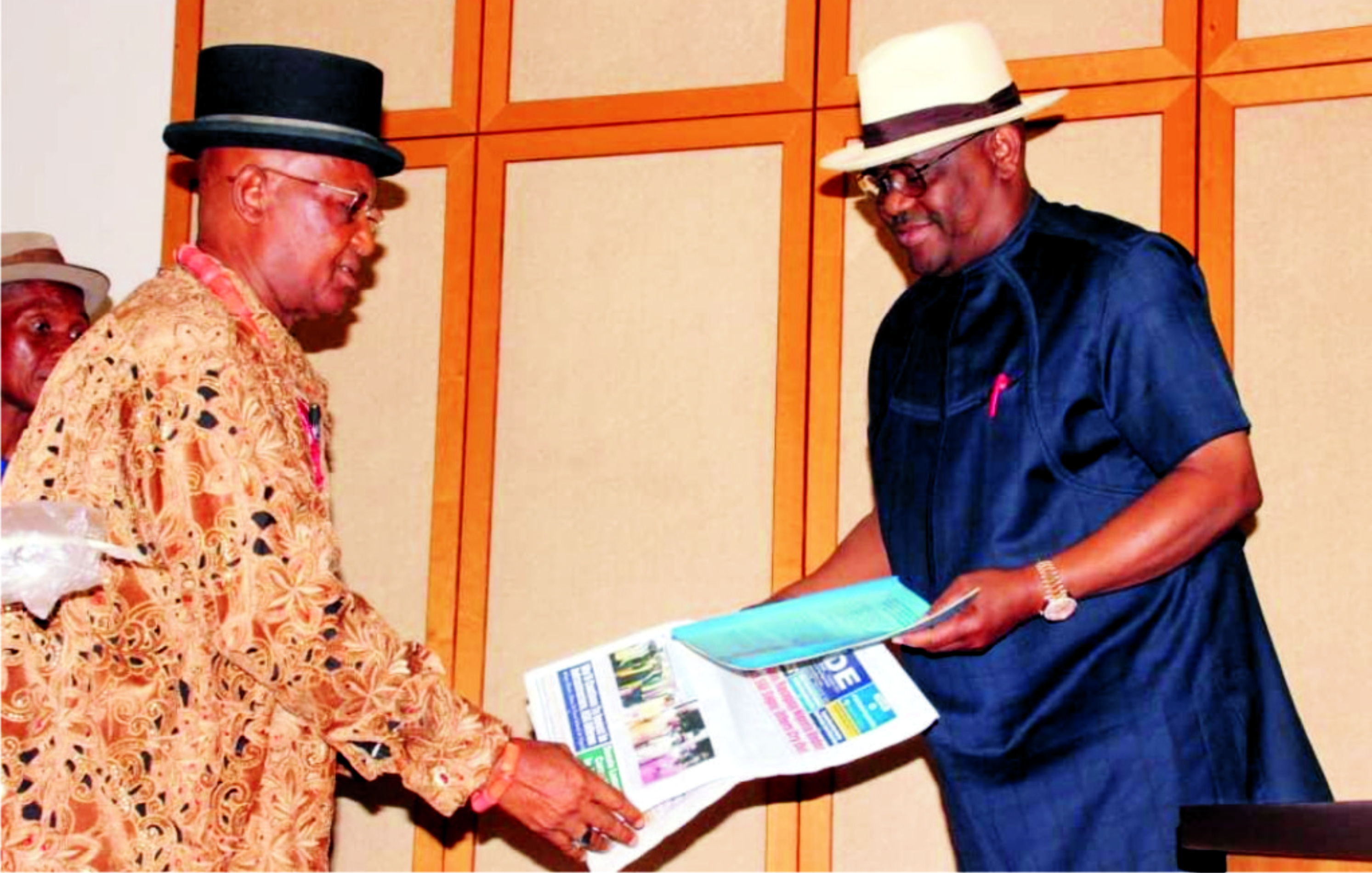
Rivers State Governor, Chief Nyesom Wike, has assured the Ejamah Community and other host communities of Oil Mining Lease (OML) 11 that the Rivers State Government will defend their right in any ensuing legal battle over the oil facility acquired by the Rivers State Government.
Wike spoke during an appreciation visit by the leaders of Ejamah Community of Eleme Local Government Area at the Government House, Port Harcourt yesterday.
The Governor commended the community for standing firm and fighting through established due process.
“While I remain Governor, one thing I will never do is sell the interest of our people.
“The property of Shell Petroleum Development Company (SPDC) were auctioned and the Rivers State Government bidded and acquired them.
“There will be legal battles. The Rivers State Government will stand for Rivers people,” he said.
He reiterated that with the acquisition of the 45 percent stakes of SPDC at OML 11, the Rivers State Government will extend some percentage to the host communities to give them a sense of belonging.
He praised Ejamah community for engaging in the legal battle for 29 years and refusing to be swayed by financial proposals by SPDC.
He said: “I am ready for the legal battle. The interest of Rivers State must be protected at all times. But for your fight, who will be talking of Rivers State Government acquiring OML 11. OML 11 is not only for Ogoni, it extends to Okrika, Andoni, Oyigbo and Ikwerre.
“Any community linked to OML 11 should be eternally grateful to you. I know some communities that only N300million will change them. You refusal to collect N7billion led to the auctioning of Shell Interest.
“If the Federal Government wants to talk, it is the Rivers State Government it should talk with, because we have acquired Shell’s interest. I am with you. God knows I have no personal interest.”
The Governor recommended the style of Ejamah Community, which is based on legal struggles to other communities. He said without violence, Ejamah community defeated SPDC in the courts.
He said no matter the schemes by SPDC, the judgment of the Supreme Court must be implemented.
The Governor commended the lawyer to the community, Lucius Nwosu (SAN) for his trustworthiness.
Governor Wike formally recognised the Traditional Ruler of Ejamah community as a second class chief. He also directed the reconstruction of Ebubu Community Secondary School.
Earlier, the Leader of the Ejamah Community, Chief George Osaro said that the people of Ejamah community are happy with the governor’s intervention in OML 11.
He said: “The people of Ejamah community do hereby express our profound gratitude to you for wading into the matter and ensuring that the Rivers State Government purchased the 45percent interest of SPDC in OML 11.”
He said that the intervention of the governor should not be misconstrued, as it in the overrall interest of the host communities. He said that the action has liberated the people.
Chief Osaro said that Ejamah Ebubu suffered one of the worst oil spill, which negatively affected their environment.
“We must understand that the Governor’s Plan is to boost the state economy, create employment and alleviate the suffering of the people, the State and the Niger Delta entirely as well as the nation”, he said.
He described Governor Wike as a pace setter, a visionary leader and emancipator of the people.
The Ejamah community conferred on Governor Wike a chieftaincy title: “Oneh Owese Oboru Ejamah.”
Meanwhile, the Rivers State Governor, Chief Nyesom Wike has stated that the time has come for unnecessary politics to be relegated and governance enthroned for the good of Nigerians.
Speaking during a courtesy visit by the Ministers of Education and Women Affairs at the Government House, Port Harcourt, last Wednesday, Wike said that Nigerians require good governance for development.
He said: “Leadership is not party affair. Leadership is about the people. It is about development. For now, governance is what our people require.
“We should relegate politics to the background. Political parties as vehicles take us to a certain point for us to disembark and face governance.”
He said rather than politicise the development process, focus should be on how to move Nigeria forward.
Wike said that Rivers people are not happy with the high level of marginalisation against the state.
He said with the conclusion of elections, Rivers State should benefit like other states.
“Honourable Minister, when you go back, inform Mr President that the people of Rivers State are not happy with the high level of marginalisation. Rivers State should benefit from projects like other states of the federation”, he said.
He warned against any attempt to run a one-party state.
“We cannot run a one-party state. If we do that, the country will collapse. You cannot take every state. It is not possible”, he said.
Wike said that even though he wished that President Muhammadu Buhari lost the last General Election, immediately the court pronounced him winner, he was left with no option but to congratulate him.
The governor advocated the promotion of girl-child education.
He said that during his days as a minister of state for education, he advanced the ideals of girl-child education.
In his remarks, Minister of Education, Malam Adamu Adamu commended the Rivers State governor for his dedication to the development of education.
He also praised the governor for supporting the hosting of the National Council on Education (NCE).
Adamu thanked the Rivers State governor for his total support for the sustenance of Federal Government agencies operating in Rivers State.
He said that the Rivers State governor left indelible marks at the Federal Ministry of Education, which the current management has struggled unsuccessfully to surpass.
The minister praised Wike’s brand of politics, which is devoid of bitterness.
He specifically lauded the governor for congratulating the President on his victory and also being on ground to welcome President Muhammadu Buhari when he returned from a medical leave.
“You play politics with fairness and without bitterness “, he said.
Also, the Rivers State Governor, Chief Nyesom Wike has stated that the nation can only attain development when the citizens are empowered with the right knowledge and appropriate skills to contribute to national growth.
Declaring open the 64th Meeting of the National Council on Education (NCE) in Port Harcourt, yesterday, Wike said that educational empowerment would equip the citizens to sustain themselves.
He said: “The reality is that no country can be politically stable, economically robust and socially secure and cohesive if the citizens are not empowered with knowledge, appropriate skills and the right values to sustain themselves and contribute meaningfully to the progress of the country.”
Wike called for the promotion of inclusive and equitable quality education to promote lifelong learning opportunities for all by 2030.
He said: “Agenda 2030 is therefore a call to action on our collective commitments to transformative education by addressing all forms of exclusion, disparities and inequities and ensuring that every child, irrespective of social background, cultural affiliation, location and family or income status is not left behind but have equal and equitable access to quality and transformative public education.
“This requires providing the enabling legal framework, adopting the right policies and programme of action, deploying adequate resources and manpower, including qualified teachers in addition to a strong political will from the government at all levels.”
He said the lack of political will by government, inadequate allocation of resources; lack of commitment and by parents, teachers and school leaders, lack of or ineffective monitoring policy implementation are some of the serious factors responsible for the deteriorated status of education across the country.
He said: ”As a former minister of state education, I am quite familiar with the NCE and what it stands for as the highest national policy organ on education. During our time and under my watch as minister, we initiated and implement several policies and programmes, such as the girl-child education programme, the Almajiri education policy and programme, and the Special Vocational/Basic Education programme for boys as well as the national policy on Albinism. We also strengthened the quality of learning with the provision of modern e-libraries for the Federal Government Colleges.
“While I am not very sure of the present status of these laudable programmes, I do believe that they are fundamental to resolving some of the age-long underlying problems with our education system that borders on lack of universal access, equity and gender inequality. And if you reflect for a moment on the state of our country – the chaos, the misery, stagnation and hopelessness among the majority of our people, you will appreciate the cost of inadequate investments in education.”
The governor stated in Rivers State, his administration has invested in the development of education for the rapid growth of the state.
He said: “Here in Rivers State, our commitment is to provide equal opportunity to all our children to attend great schools, be taught by committed and well-motivated teachers at all levels and enable them to acquire the training and skills they need to realize their full potential and be successful citizens. We have successfully renovated, expanded and equipped over 400 basic education schools while 68 new schools are under renovation with this year’s grant.
“We have rebuilt, expanded and fully equipped a number of our secondary schools across the State while many more are undergoing similar reconstruction and expansion. We have also expanded the carrying capacity of all our tertiary institutions with additional faculties and infrastructure to enable more of our youths to access tertiary education.
Besides effectively banning the collection of all forms of levies from parents in the public-school system, we have released adequate funds through the Ministry of Education to school heads for the sustainable administration of all our public schools.”
In a keynote address, Minister of Education, Mallam Adamu Adamu said that the Federal Government was working towards developing a functional educational system that would make citizens self reliant.
He said: “There is no doubt that Technical and Vocational Education and Training holds the key to the development of our country’s industrial sector, thus the challenges of youth unemployment can best be addressed through quality education that guarantees self reliance.
’Entrepreneurship education and training is globally acknowledged as an important strategy for tackling youth unemployment. In our drive to reposition education for self reliance, particular attention has been given to the development of technical, vocational and entrepreneurial skills in learners as the present administration has trained over 500 science, vocational and mathematics teachers on the use of modern equipment and new approaches in schools.”
He said that the Federal Government has granted approval for the establishment of new Federal Science and Technical Colleges in 16 states.
Adamu added that the Federal Government was improving access to quality education in different parts of the country.
Also speaking, Minister of Women Affairs, Pauline Tallen praised Wike for being a promoter of girl-child education.
Tallen said educating the girl-child would empower the family and the nation, and called on all stakeholders to work towards educating the girl-child.
Tallen stated that the Federal Ministry of Women Affairs would partner with the Federal Ministry of Education to promote girl-child education.
The Permanent Secretary, Rivers State Ministry of Education, Dagogo Adonye Hart said the National Council on Education was relevant to the development of vital policies and programmes to improve the quality of education.
The theme of the 64th National Council on Education is: “Education for Self Reliance: A Tool for Achievement of 20:30 Agenda.”
The meeting attracted education commissioners, permanent secretaries and FCT secretary of education from across the federation.















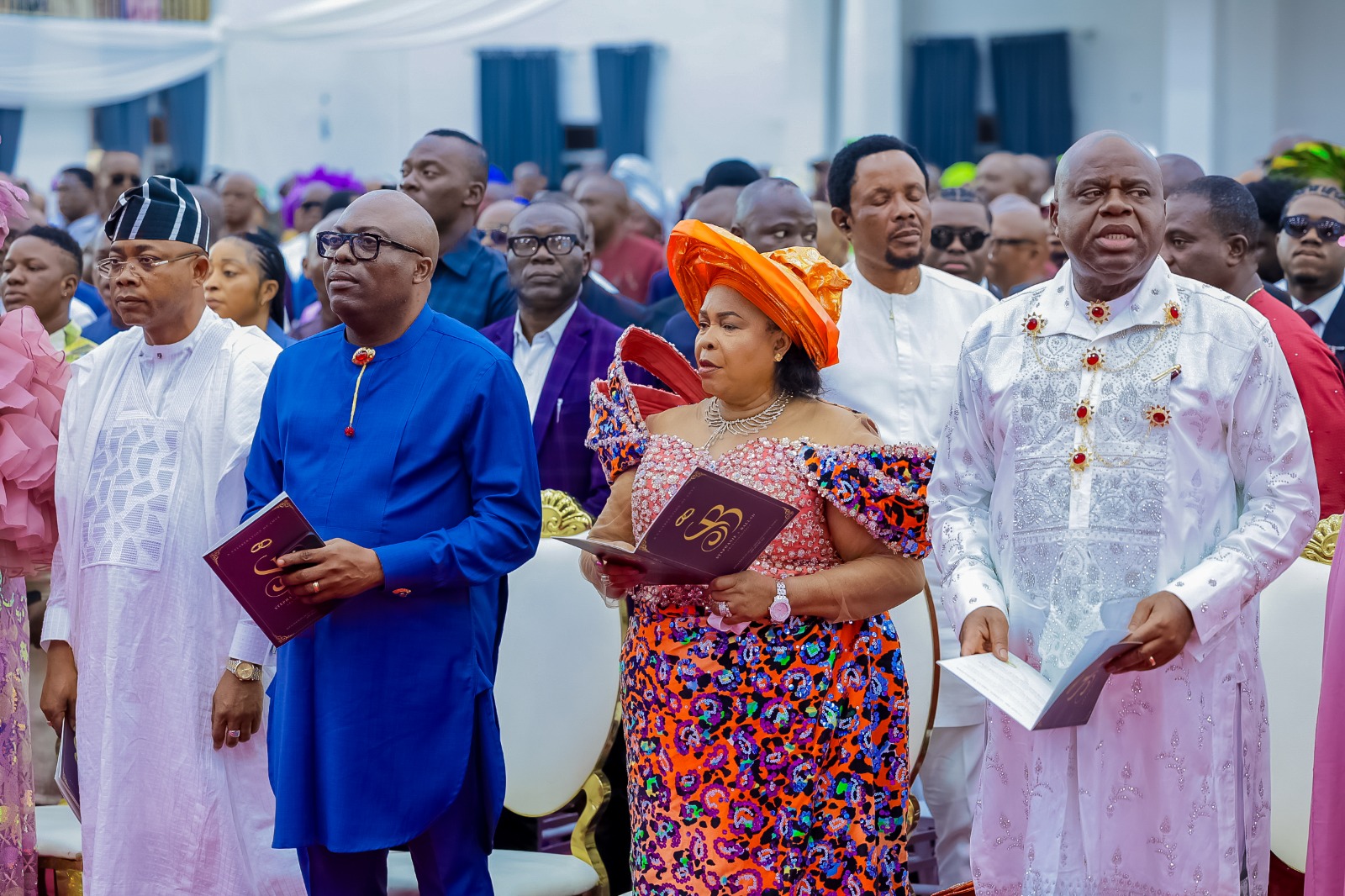
Rivers State, Sir Siminalayi Fubara, has assured members of the National Youth Service Corps (NYSC) of his administration’s commitment to supporting and strengthening the scheme in the State.
Fubara gave the assurance last Friday at the NYSC permanent orientation camp, Nonwa-Gbam, Tai Local Government Area in the State, during the swearing-in ceremony of 2026 Batch B Stream II orientation course.
Represented by the Permanent Secretary, Cabinet Bureau, Office of the Secretary to the State Government, Dr. Promise Oguzie, the governor said the State Government would remain intentional in providing the necessary support to improve the NYSC scheme and enhance the experiences of corps members deployed to the state.
He charged the corps members to be role models and quality nation-builders in their service to the good people of Rivers State in particular, and Nigeria at large.
“I charge you to be exemplary, dedicated and committed in all you do. Take full advantage of all the camp programmes and activities to enrich yourselves”, he said.
In his welcome address, the State Coordinator of NYSC in Rivers State, Mr. Moses Oleghe, urged corps members to see their deployment to Rivers State as a “veritable opportunity to make meaningful contribution to the growth of the State in particular and Nigeria at large.”
He further charged them to serve with all sense of “integrity, discipline, and the fear of God, especially when they will be engaged as INEC ad-hoc staff that will conduct the 2027 general elections.”
A total of 3,584 corps members composed of 1,421 males and 2,163 females were sworn in by the Chief Judge of Rivers State, who was represented by Justice Godspower Aguma.

Governor of Rivers State, Sir Siminalayi Fubara, says Nigeria needs God-fearing leaders for the nation to move in the right direction and make meaningful progress.
The Governor stated this yesterday when he received in audience, the World President of the Seventh Day Adventist Church, Pastor Erton Kohler; his wife, Andriene Marques Kohler; daughter Mariana Marques Kohler and a retinue of ministers of the church at Government House, Port Harcourt.
Fubara who hailed the Seventh Day Adventist Church for its contributions to education and the grooming of future leaders in Nigeria, expressed delight that the Church had over the years, been investing in education at various levels and currently runs two universities in the country.
He commended the church for not only using its institutions to spread the gospel of Christianity but to groom future leaders for the country.
According to him, religion should not be just about defending one’s faith, but also making meaningful impact on the lives of the people.
He said that by floating these educational institutions, the church has demonstrated capacity to support Nigeria in the task of producing not only educated people but a breed of God-fearing leaders.
“Our country is where it is today because we lack the fear of God. If you have the fear of God, there should be a limit to what you can do because you understand the supremacy of God. But when God is not in your equation, you’ll go beyond the line and that is what has brought us to where we are today.
“So, I feel very happy that you are contributing to the development of our future leaders in this country. We need the right people being in the right place; prepared properly with good minds; that is what we need, not just in Nigeria but round the whole world.,” he said.
Governor Fubara further observed that the absence of God-fearing people in high places to take the right decisions that could impact positively on the society, has also given rise to other problems such as social inequality, poverty, corruption and criminality. According to him, Nigeria needs a system where the average parent could afford quality education for their children and a guarantee that upon graduation, the average child will have the capacity to compete favourably with anybody, anywhere in the world.
“If we have a situation where the little money that you’re being paid as wage can also afford you quality healthcare and after working at least for 15-20 years, you have a roof over your head, tell me why you should be involved in any kind of crime? At that point, you’ll feel secured and this attitude of insecurity about the future that leads to all the social vices we have today won’t be there,” he said.
Governor Fubara expressed appreciation to the delegation for the visit and for their prayers for Rivers State, assuring them of his continued support for their programmes in the state.
Leader of the delegation and World President of the Seventh Day Adventist Church, Pastor Erton Kohler said he was in Nigeria for a special conference of the church during which thousands of the church’s ministers will be undergoing an empowerment programme to further equip them for the task of herding their flocks and serving the society.
He expressed gratitude to the Governor for the warm reception accorded his entourage, saying the memory of the visit will linger in his mind for a lifetime.
Kohler disclosed that the Church has over twenty -four million (24,000,000) members and more than 182,000 places of worship, spread across 212 countries of the world.

The Rivers State House of Assembly has approved the 2026–2028 Medium Term Expenditure Framework (MTEF) submitted by Governor Siminalayi Fubara.
This reaffirms the lawmakers’ commitment to enacting laws and taking legislative actions geared towards the overall development of the State.
The Assembly gave the approval during its Second Legislative Sitting of the Fourth Session held last Friday.
Speaking on the MTEF document during plenary, the House Speaker, Rt. Hon. Martin Amaewhule, noted that by the provision of Section 10(1)(b) of the Rivers State Fiscal Responsibility Law No. 8 of 2010, the MTEF ought to have been laid before the House in September 2025.
Amaewhule explained that traditionally, the document is expected to be presented four months before the commencement of the next financial year and immediately after the expiration of every three-year fiscal cycle.
He, however, stated that in the interest of the State and its people, the House considered it necessary to deliberate on the document, describing it as a precursor to the 2026 Budget Estimates.
The Speaker expressed concern that the year had already progressed significantly before the presentation of the framework.
During deliberations on the document, members examined the assumptions and projections contained in the MTEF and observed that strict adherence to the outlined fiscal parameters would ultimately serve the interest of Rivers people.
The lawmakers maintained that effective implementation of the framework would promote prudent financial management and enhance developmental planning across the State.
Following the debate and positive consideration by members, the Speaker put the question to the House and members voted overwhelmingly in support of the approval of the MTEF.
Meanwhile, during the same sitting last Friday, the House also received a petition from the Chairman of Obio/Akpor Local Government Council, Dr. Gift Worlu.
The petition was presented by the member representing Obio/Akpor Constituency II, Hon. Emilia Amadi.
According to the petition, concerns were raised over an imminent security breach, threats to lives, destruction of property and alleged forceful takeover of property by some lawless persons within parts of the Local Government Area.
Presenting the petition before the House, Hon. Amadi appealed to the lawmakers to revisit the matter and take necessary steps aimed at safeguarding lives and property in the affected communities.
The House is expected to further deliberate on the petition and consider measures to address the concerns raised in order to sustain peace and security in the area.
King Onunwor
-

 News3 days ago
RSG Targets Nine Million Residents in Mosquito Net Distribution Campaign
-

 Oil & Energy2 days ago
Aiyedatiwa Signs New Electricity Bill
-

 Oil & Energy2 days ago
NLNG Commissions Research And Innovation Centre In RSU
-

 Maritime2 days ago
Marine Minister Commends President Tinubu On NPERA Bill Assent
-

 News3 days ago
KenPoly Holds Eight Convocations, August 29
-

 News3 days ago
RSG Begins Another Phase of Projects Commissioning Today
-

 News3 days ago
RMAFC Completes Revenue Sharing Review, Proposes New Pay
-

 Maritime2 days ago
NAGAFF Petitions IGP Over Alleged Maritime Police Harassment