
Featured
Wike Talks Tough, Bans RevolutionNow Protest In Rivers …Disregard Calls For Protest March Today, CNG, DSS Tell Nigerians …As DSS Confirms Arrest, Transfer Of Sowore To Abuja …Invasion Of Sowore’s House, A Terrorist Midnight Arrest -Soyinka

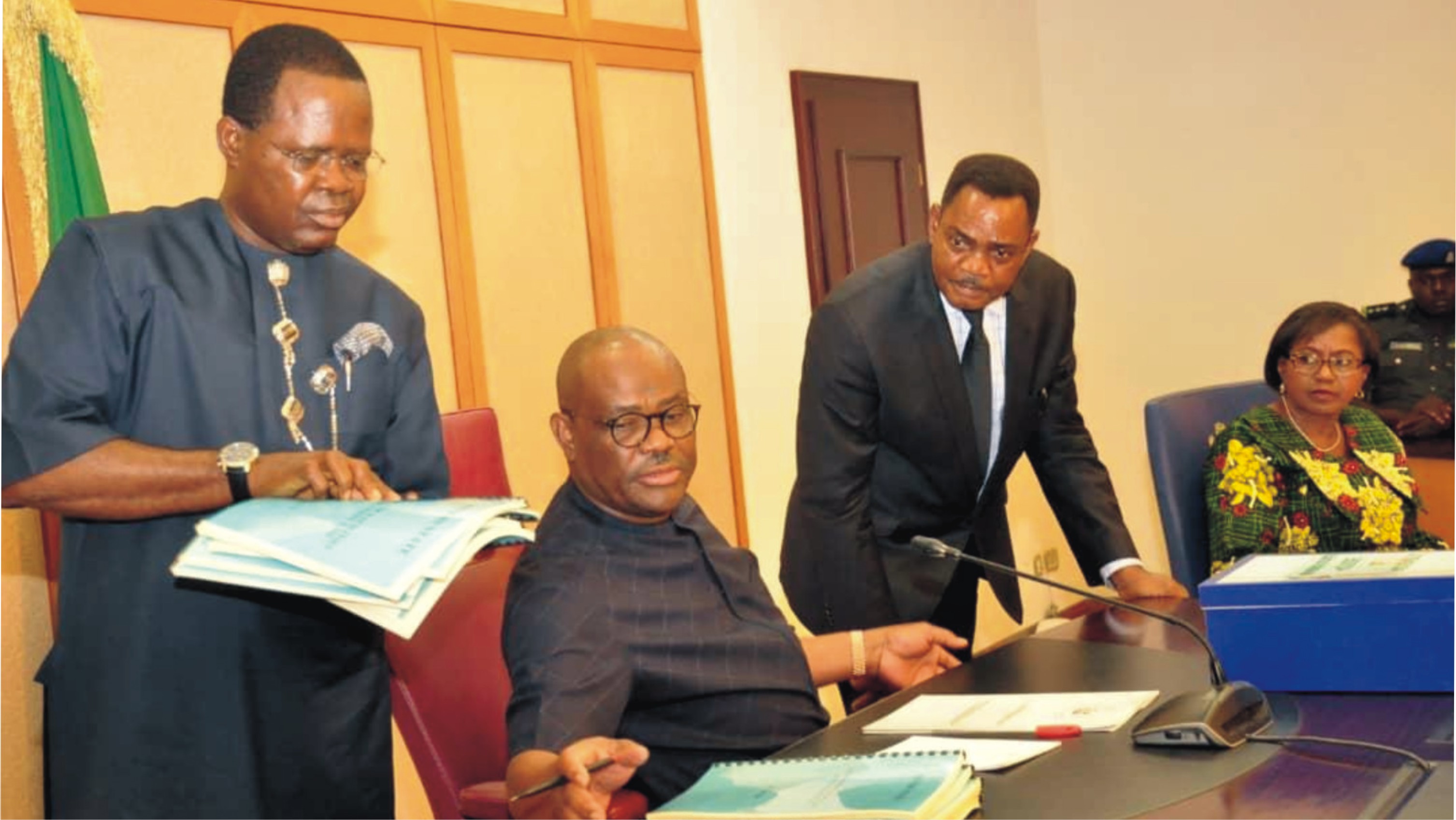
The Rivers State Governor, Chief Nyesom Wike, has declared that nobody should attempt the RevolutionNow protest in the state.
Wike said that Rivers State is not part of the RevolutionNow protest and whatever illegal agenda it seeks to pursue.
The governor said: “Rivers State does not subscribe to what the RevolutionNow protest represents and Rivers State is not part of the protest”.
He directed security agencies in the state to arrest anybody involved in the RevolutionNow protest and also take all necessary steps to prosecute such persons.
Wike urged parents to ensure that their children are not misled by agents of the march to participate in the illegal protest.
“All council chairmen are directed to be at alert. If they suspect any illegal gathering, they should report to the security agencies for immediate action”, Wike said.
Similarly, the Coalition of Northern Groups (CNGs) has distanced itself from the planned revolution march slated for Monday nationwide.
The CNG declared that those organising the protest are “couriers of foreign destabilisation plot” that are not in the interest of the North.
It, therefore, urged Northerners to disregard calls for the protest march.
Addressing a press conference at the Arewa House, Kaduna, yesterday, CNG’s spokesman, Abdul-Azeez Suleiman, said the North won’t participate in the protest.
According to him, the group will not participate, support or encourage any actions that are potentially dangerous to the region.
He, therefore, called on all northerners to shun the protest and resist any attempt of being dragged into participating in any way in a movement that turns out to the disadvantage of the region.
The CNG spokesman said: “The attention of the Coalition of Northern Groups has been called to an ongoing mobilisation by some anonymous groups for a certain “RevolutionMarch” to hold nationwide beginning Monday, 5th March, 2019.
“After carefully reviewing the calls, the CNG has arrived at the following conclusions: That the ultimate aim of the proponents of the march who are, at best, couriers of a foreign destabilisation plot, has not been clearly and satisfactorily defined, which renders the whole exercise suspect.
“CNG remains unshakable in its understanding that every civil disagreement can be resolved through honest, sincere and open discussions without unnecessary recourse to actions liable to further inflame tensions without achieving lasting results.
“We have failed to see how the interest of, particularly the northern people, can be served by a movement led by those who have been directly or remotely connected to the decades-old agenda for the emasculation of the North.
“The CNG calls on all northerners to disregard the calls and resist the temptation of being dragged into participating in any way in a movement that would turn out to the disadvantage of the region.
“The CNG categorically dissociates itself from the organisation, promotion and participation in any conduct capable of worsening the already dicey situation the country, in particular the North.”
He added: “We reassert our commitment to the propagation and protection of the rights of all northerners and never to fall into the traps set by its traditional internal and external traducers in whatever guise.
“We are quite aware of the covert and overt machinations of some western supremacists to achieve the final destabilisation of Africa by targeting some key African nations, which may not exclude Nigeria.
The similar foreign agenda that unfolded with the ugly scenarios of destruction in Libya, Syria, Sudan, Yemen, Egypt and others are very fresh for us to realise the futility of jumping on a flight without knowing its actual destination.
“For the avoidance of doubt, the North shall, at all times, remain ready to enter into any civilised and decent discussion with any part of the country for whatever intent and purpose without succumbing to temptations of exposing innocent lives to unnecessary danger.
“Up to this point, the North has maintained its position as the bulwark of respect, integrity, dignity, decorum, tradition, decency, morality, civilisation, etiquette, good behaviour, politeness, accommodation, and all other positive traits.
“In the unfolding political chess game, it is essential, therefore, that the North anticipates and checkmates the maneuvers of its self-appointed enemies in all possible and likely scenarios such as this one.”
It would be recalled that the CNG recently issued a 30-day ultimatum to governors in the North who opposed the Ruga settlement policy of the Federal Government to rescind their decision or face the wrath of the group.
The group had also issued a three-month notice to Igbo in the northern states to leave the region two years ago.
Also, the Department of State Services (DSS) has called on Nigerians to disregard threat of revolution by Mr Omoyele Sowore.
He also confirmed that Sowore, who was to lead a group known as RevolutionNow on a protest slated for August 5 was in the service’s custody.
The Public Relations Officer (PRO) of DSS, Mr Peter Afunanya, made the call while addressing newsmen, last Saturday in Abuja.
He said the arrest of Sowore was for threatening public safety, peaceful co-existence and social harmony in the country.
According to him, the service is charged with the responsibility of managing, curtailing, containing and eliminating threats against national security.
“These threats include threats of sabotage, threats of subversion; threat of terrorism and of course, ethnic agitations, separatist agitations, economic sabotage and others.
“If we are operating as a responsible security organisation and someone is calling for revolution in Nigeria, we must understand the meaning of revolution.
“Primarily, it means a revolt, it means insurrection, it means insurgency, it means forceful takeover of government and we are operating democratic system in Nigeria.
“Nigeria is not a banana republic and cannot suddenly be made one. So, the DSS will not just seat by and watch individuals or groups wanting to rise and threaten the peace and unity of the country,” he said.
He said that there was apprehension and anxiety among citizens as to what would happen next because of the threat.
“We want to use this opportunity to assure law abiding Nigerians and the world in general that come August 5 Nigeria will remain peaceful and there will be no revolution.
“We want to also reiterate that the plot by some self seeking individuals and group to cause a breakdown of law and order, cause disaffection, disrupt social and economic services will not be tolerated,” he said.
Afunanya said government had been elected democratically, adding that there would not be any forceful takeover by any individual or group.
The PRO said the DSS would work with other stakeholders to ensure that peace was maintained in the country.
He said that the service would do all it could within the law to discharge its responsibility to ensure peace and unity in Nigeria at all times.
In a related development, the leadership of the National Youth Council of Nigeria (NYCN) has said the #RevolutionNow protest planned for tomorrow is a deliberate attempt by enemies of the country and unpatriotic individuals to destabilize the country and government of President Muhammadu Buhari.
NYCN President, Almustapha Abdullahi, said these in a statement, yesterday in Abuja, the nation’s capital.
Abdullahi described the planned protest as “ill-time and uncalled for,” adding that the organization “will not be part of any unlawful gathering in the name of revolution.”
He said the youth body will not take part in the march expected to take place simultaneously in 21 cities today.
Abdullahi said exercising one’s right to freedom of speech, association and assembly should be done with decorum.
The statement reads: “RevolutionNow Movement” call for mass action across the country against the Federal Government of Nigeria is ill-time and uncalled for and that Nigerian Youth will not be part of any unlawful gathering in the name of revolution.
“This can be best described as deliberate attempt to destabilize Nigeria and government of President Muhammadu Buhari. As such, any group of persons corroborating the call for revolution protest is unpatriotic.
“At a time when Nigeria is battling with barrage of security challenges no sane or right thinking individual will be instigating the populace against the government and calling for total short down of Nigeria.
“The #RevolutionNow Protest and the convener are opposite in nature hence it became worrisome and explicitly pertinent for every concern Nigerians to ask several questions.
“We call all security agencies to take charge and not allow any dissidents and foreign agents to draw us back as a nation.”
He urged the youths in the country to be law abiding and not allow anybody or agents of the fourth columnist to use them as cannon fodder.
“This set of greedy and political jobbers who are perceived to be under sponsorship of the external enemies of our dear nation,” the statement added.
The Presidential candidate of the African Action Congress (AAC) in the 2019 general election, Omoyele Sowore, has been moved to Abuja, by the Department of the State Service (DSS).
The human rights campaigner was arrested around 1:30am on Saturday at his residence.
His arrest, according to the national legal adviser of AAC, Mr. Inibehe Effiong, was connected with his planned protest, today.
However, one of Sowore’s lawyers, Tope Akinyode, had said he visited the head office of the command in Lagos but was denied access to the activist.
His words, “As Lawyer to Mr. Omoyele Sowore, Publisher of Sahara Reporters, I visited the DSS office at CMD Road, Ketu, Lagos, together with other notable Nigerians. Mr. Sowore had been arrested in a ‘Gestapo’ manner in the early hours of today (Saturday).
“When we got to the DSS office, we were denied entrance into the Police Building arrogantly. As much as I persuaded them that the ‘accused’ has lawful right of access to his lawyer as enshrined under Section 35 (2) of the 1999 Constitution, my advice fell on the deaf ears of the Police Officers who claimed that their boss wasn’t around and I have to wait till Monday (working day) before I could be let in”.
Following his arrest, Nigerians have demanded for his immediate release, noting that his arrest was unlawful, unconstitutional and barbaric.
But the Nigerian Police through the Inspector General have warned Nigerians not to take part in the scheduled protest, noting that #RevolutionNow, a hash tag created by Sowore for the protest is a treasonable felony.
Meanwhile, the Nobel Laureate, Prof. Wole Soyinka, yesterday, described the Saturday morning arrest of human rights activist, Omoyele Sowore, by the Department of State Services, as “a terrorist midnight arrest.”
He added that it was “a travesty and violation of the fundamental rights” of citizens to congregate and make public their concerns.
Soyinka said Sowore, the presidential candidate of the African Action Congress in the February 2019 presidential election, has not engaged in any treasonable act as being claimed by the Inspector General of Police, Mohammed Adamu.
Sowore is the convener of ‘#RevolutionNow’ protests, which has been scheduled to hold nationwide, today.
Soyinka, in a statement made available, yesterday, and titled: “Surely, Not Again!!!” said the “deployment of alarmist expressions” such as “treason,” “anarchist,” and “public incitement” by security agents was predictable and banal and that the expressions have become meaningless.
The Nobel Laureate wrote, in part: “Nothing that he said to me in private engagement ever remotely approached intent to destabilise governance or bypass the normal democratic means of changing a government.
“I therefore find the reasons given by the Inspector-General for the arrest and detention of this young ex-presidential candidate totally contrived and untenable, unsupported by any shred of evidence.
“His arrest is a travesty and violation of the fundamental rights of citizens to congregate and make public their concerns.
“This is all so sadly déjà vu. How often must we go through this wearisome cycle?
“We underwent identical cynical contrivances under the late, unlamented Sani Abacha, when he sent storm-troopers to disrupt a planning session for a similar across-nation march at Tai Solarin School, Ikenne.
“This was followed up by a personalised letter that was hand delivered by the State Security Services to me under their summons, at their Abeokuta so-called ‘Annexe,’ with near identical wording to the threats contained in today’s release from the desk of the Chief of Police.
“At least, I was summoned, not subjected to a terrorist midnight arrest. Some irony!
“The same pattern Pavlovian conduct manifested itself under yet another supposed democratic ruler who personally declared that the gathering of civilians to deliberate on, and propose a constitution for the nation was ‘high treason’, and would be resisted by the full rigour of state power if we persisted.
“The Inspector-General of Police mobilized his forces and issued inflammatory proclamations, but PRONACO went ahead despite all the thundering from Aso Rock citadel. Can the police ever learn anything also their tear-gassing and brutalising of grieving mothers who marched peacefully to protest the deaths of their children in a plane crash inferno?
“Their mission, under that same regime, which was simply to deliver a letter to government house in Lagos, demanding greater safety in airline operations, yet such a rational intent, born of traumatic circumstances, was quashed on the sidewalks of a supposed twentieth century nation.
“And yet again, even a faceless cabal under yet another civilian regime refused to be left out of the insensate play of power. A march on Aso Rock calling for an end to governance by a ghostly entity was slated to be crushed, but fortunately, a conflicting balance of interests decided in favour of a reduced trajectory of protest.
“And so on and on and on, in a nation which continues to speak at once through both sides of the mouth, spewing out the same Treason monotone, as if this was a magic incantation that could substitute for the venting of mass feelings, even as collective therapy,” he said.
Soyinka urged the Inspector-General to wade through the daily journals of the past few weeks and months, read and digest the calls by numerous sectors of society – across professions and national groupings – for demonstrations against the parlous conditions of society, all identifying ills to which attention must be drawn, and urgently, through mass action.
According to him, demonstrations and processions were time honoured, democratic ways of drawing not only the attention of government to ills, but of mobilizing the public towards a proactive consciousness of their condition, and thereby exhorting civil society also to devise means of ameliorating their condition through their own efforts.
“Religious bodies have urged such remedies, so have civic associations. The ready recourse to arrests, incarceration and threats to civilians are ultimately counter-productive. They alienate the citizens, erode their confidence in governance responsiveness, and thereby advance the very extremist nightmare that security agencies believe they are acting to thwart.
“If we cannot learn from the histories and experiences of other societies, let us at least learn from ours. Freedom is not so glibly qualified. It cannot be doled out like slops of charity from soup kitchens. Let the Police stick to their task of protecting and managing protests, not attempt to place their own meaning and declaration of intent on bogey words like – revolution,” Soyinka stated.















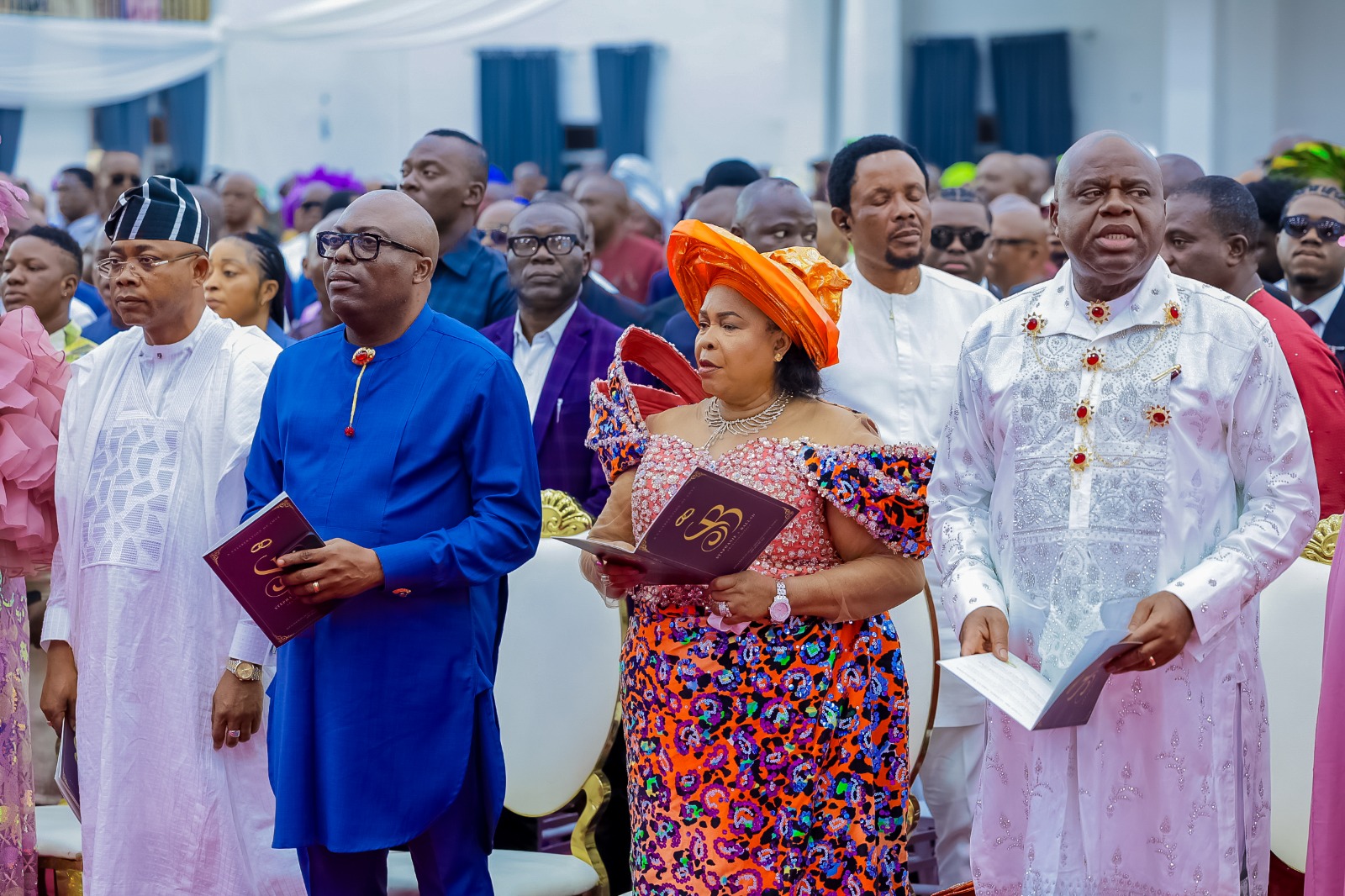
Rivers State, Sir Siminalayi Fubara, has assured members of the National Youth Service Corps (NYSC) of his administration’s commitment to supporting and strengthening the scheme in the State.
Fubara gave the assurance last Friday at the NYSC permanent orientation camp, Nonwa-Gbam, Tai Local Government Area in the State, during the swearing-in ceremony of 2026 Batch B Stream II orientation course.
Represented by the Permanent Secretary, Cabinet Bureau, Office of the Secretary to the State Government, Dr. Promise Oguzie, the governor said the State Government would remain intentional in providing the necessary support to improve the NYSC scheme and enhance the experiences of corps members deployed to the state.
He charged the corps members to be role models and quality nation-builders in their service to the good people of Rivers State in particular, and Nigeria at large.
“I charge you to be exemplary, dedicated and committed in all you do. Take full advantage of all the camp programmes and activities to enrich yourselves”, he said.
In his welcome address, the State Coordinator of NYSC in Rivers State, Mr. Moses Oleghe, urged corps members to see their deployment to Rivers State as a “veritable opportunity to make meaningful contribution to the growth of the State in particular and Nigeria at large.”
He further charged them to serve with all sense of “integrity, discipline, and the fear of God, especially when they will be engaged as INEC ad-hoc staff that will conduct the 2027 general elections.”
A total of 3,584 corps members composed of 1,421 males and 2,163 females were sworn in by the Chief Judge of Rivers State, who was represented by Justice Godspower Aguma.

Governor of Rivers State, Sir Siminalayi Fubara, says Nigeria needs God-fearing leaders for the nation to move in the right direction and make meaningful progress.
The Governor stated this yesterday when he received in audience, the World President of the Seventh Day Adventist Church, Pastor Erton Kohler; his wife, Andriene Marques Kohler; daughter Mariana Marques Kohler and a retinue of ministers of the church at Government House, Port Harcourt.
Fubara who hailed the Seventh Day Adventist Church for its contributions to education and the grooming of future leaders in Nigeria, expressed delight that the Church had over the years, been investing in education at various levels and currently runs two universities in the country.
He commended the church for not only using its institutions to spread the gospel of Christianity but to groom future leaders for the country.
According to him, religion should not be just about defending one’s faith, but also making meaningful impact on the lives of the people.
He said that by floating these educational institutions, the church has demonstrated capacity to support Nigeria in the task of producing not only educated people but a breed of God-fearing leaders.
“Our country is where it is today because we lack the fear of God. If you have the fear of God, there should be a limit to what you can do because you understand the supremacy of God. But when God is not in your equation, you’ll go beyond the line and that is what has brought us to where we are today.
“So, I feel very happy that you are contributing to the development of our future leaders in this country. We need the right people being in the right place; prepared properly with good minds; that is what we need, not just in Nigeria but round the whole world.,” he said.
Governor Fubara further observed that the absence of God-fearing people in high places to take the right decisions that could impact positively on the society, has also given rise to other problems such as social inequality, poverty, corruption and criminality. According to him, Nigeria needs a system where the average parent could afford quality education for their children and a guarantee that upon graduation, the average child will have the capacity to compete favourably with anybody, anywhere in the world.
“If we have a situation where the little money that you’re being paid as wage can also afford you quality healthcare and after working at least for 15-20 years, you have a roof over your head, tell me why you should be involved in any kind of crime? At that point, you’ll feel secured and this attitude of insecurity about the future that leads to all the social vices we have today won’t be there,” he said.
Governor Fubara expressed appreciation to the delegation for the visit and for their prayers for Rivers State, assuring them of his continued support for their programmes in the state.
Leader of the delegation and World President of the Seventh Day Adventist Church, Pastor Erton Kohler said he was in Nigeria for a special conference of the church during which thousands of the church’s ministers will be undergoing an empowerment programme to further equip them for the task of herding their flocks and serving the society.
He expressed gratitude to the Governor for the warm reception accorded his entourage, saying the memory of the visit will linger in his mind for a lifetime.
Kohler disclosed that the Church has over twenty -four million (24,000,000) members and more than 182,000 places of worship, spread across 212 countries of the world.

The Rivers State House of Assembly has approved the 2026–2028 Medium Term Expenditure Framework (MTEF) submitted by Governor Siminalayi Fubara.
This reaffirms the lawmakers’ commitment to enacting laws and taking legislative actions geared towards the overall development of the State.
The Assembly gave the approval during its Second Legislative Sitting of the Fourth Session held last Friday.
Speaking on the MTEF document during plenary, the House Speaker, Rt. Hon. Martin Amaewhule, noted that by the provision of Section 10(1)(b) of the Rivers State Fiscal Responsibility Law No. 8 of 2010, the MTEF ought to have been laid before the House in September 2025.
Amaewhule explained that traditionally, the document is expected to be presented four months before the commencement of the next financial year and immediately after the expiration of every three-year fiscal cycle.
He, however, stated that in the interest of the State and its people, the House considered it necessary to deliberate on the document, describing it as a precursor to the 2026 Budget Estimates.
The Speaker expressed concern that the year had already progressed significantly before the presentation of the framework.
During deliberations on the document, members examined the assumptions and projections contained in the MTEF and observed that strict adherence to the outlined fiscal parameters would ultimately serve the interest of Rivers people.
The lawmakers maintained that effective implementation of the framework would promote prudent financial management and enhance developmental planning across the State.
Following the debate and positive consideration by members, the Speaker put the question to the House and members voted overwhelmingly in support of the approval of the MTEF.
Meanwhile, during the same sitting last Friday, the House also received a petition from the Chairman of Obio/Akpor Local Government Council, Dr. Gift Worlu.
The petition was presented by the member representing Obio/Akpor Constituency II, Hon. Emilia Amadi.
According to the petition, concerns were raised over an imminent security breach, threats to lives, destruction of property and alleged forceful takeover of property by some lawless persons within parts of the Local Government Area.
Presenting the petition before the House, Hon. Amadi appealed to the lawmakers to revisit the matter and take necessary steps aimed at safeguarding lives and property in the affected communities.
The House is expected to further deliberate on the petition and consider measures to address the concerns raised in order to sustain peace and security in the area.
King Onunwor
-

 News2 days ago
RSG Targets Nine Million Residents in Mosquito Net Distribution Campaign
-

 Oil & Energy2 days ago
Aiyedatiwa Signs New Electricity Bill
-

 Maritime2 days ago
Marine Minister Commends President Tinubu On NPERA Bill Assent
-

 Oil & Energy2 days ago
NLNG Commissions Research And Innovation Centre In RSU
-

 News2 days ago
KenPoly Holds Eight Convocations, August 29
-

 News2 days ago
RSG Begins Another Phase of Projects Commissioning Today
-

 News2 days ago
RMAFC Completes Revenue Sharing Review, Proposes New Pay
-

 Maritime2 days ago
NAGAFF Petitions IGP Over Alleged Maritime Police Harassment