
Featured
Buhari Not Interested In Credible Polls -Atiku …As PDP Alleges Presidency, APC Hawking With 2023 …Says Buhari Lied To Nigerians On Budget


The presidential candidate of the Peoples Democratic Party, Alhaji Atiku Abubakar, has said President Muhammadu Buhari, who is also the candidate of the All Progressives Congress, is not interested in ensuring free, fair and credible elections in 2019.
Atiku’s party, the PDP, also accused the President of planning to extend the service of the Inspector General of Police , Ibrahim Idris, in order to use him to manipulate the presidential elections in favour of the APC.
Atiku said this while speaking through the spokesperson for the PDP Presidential Campaign Council, Umar Sani, at a press briefing in Lagos, yesterday.
Also, the PDP’s rejection of the IGP’s service extension was stated at the same briefing which had the National Publicity Secretary of the party, Mr Kola Ologbondiyan in attendance.
Atiku said it was evident that Buhari was not interested in credible elections because his refusal to sign the Electoral (Amendment) Bill 2018 despite the provisions in the bill to address election manipulations was a manifestation of his intention.
The PDP Presidential Campaign Council’s spokesperson said, “ Elections are usually manipulated at coalition centres and the amendments in the Electoral Bill is trying to prevent this but the President has refused to sign it.
“ When former President Goodluck Jonathan was in office, he was pressurised to extend the service of the then IGP, MD Abubakar but he did not succumb. Election was also close then and he refused to succumb to the pressure to extend his service.
“ We will not accept this now, we won’t accept anything less than what was done then. A precedent has been set, so we won’t accept anything less.”
Sani said Atiku had continued to say that he would engage younger persons with brilliant ideas and energy to drive the economy of the nation, saying an enabling environment would be created for businesses to thrive.
This, he said, would translate to job creation while stressing that Atiku, who was an entrepreneur and a good manager of humans and resources would unite the nation and reposition its economy to make life better for the people.
He explained that Atiku would also initiate the process of restructuring of the country which he had been promising in his electioneering while urging the electorate to discountenance the alleged lie of the ruling party that the PDP candidate said he would restructure the country in six months.
Sani said it was not enough to have integrity, saying Buhari had brought disaster to the economy and other aspects of the nation because he lacked the required competence to govern Nigeria.
Ologbondiyan stated that no administration in Nigeria has been found to be as corrupt as the Buhari administration. He said Buhari’s lieutenants had stolen so much from the public treasury but said the most painful thing was that the President had kept looking at another direction each time his aides were fingered in corrupt practices.
He said, “ We reject the any extension of service for the IGP. We in PDP reject this. We know what the President is planning to do by the extension of service is to use the IG to perpetrate his rigging plan.
“ We want to appeal to the IGP to insulate Nigeria Police from partisan politics. From the body language of Mr President, it is evident that he is not ready for free and fair elections in 2019.”
Meanwhile, the Peoples Democratic Party Presidential Campaign Organization (PDPPCO) has accused the Presidency and the All Progressive Congress (APC) of hawking the 2023 presidency to secure votes for next year’s election.
This followed the promised by different key officials of the administration including Vice President Yemi Osinbajo asking different regions to vote for President Muhammadu Buhari so that they may have the 2023 presidential slot.
But in a statement issued by the spokesman of the campaign organization, Kassim Afegbua in Abuja on Sunday, the PDPPCO said the move was in desperation to hang on to power despite its abysmal failure so far.
It noted that the ruling party has “resorted to trading with the lure of 2023 presidency, promising both the South East and South West respectively of the 2023 presidency in exchange for votes.”
The statement said giving out two promises has exposed the insincerity and dubious intention of the Buhari-led Federal Government with the people of the South-East and South-West geopolitical zones with empty promises of bequeathing power to the two zones at the same time in 2023.
According to the campaign spokesman, this is why Nigerians cannot take the APC and the Buhari presidency serious any longer, as we prepare for the 2019 election.
The statement recalled that speaking on behalf of President Buhari in Owerri last week, the Secretary to the Government of the Federation, Boss Mustapha, told the APC campaign that the President would hand over the reins of power to a South-Easterner while calling on the people to support Mr President.
It pointed out that meanwhile, the Vice President also told leaders of the South-West to support the re-election of President Buhari so as to get the presidency in 2023.
The statement added: “Two principal officers of the same government cannot be fooling Nigerians with vainglorious promises all in the name of re-election.
“Such discordant tunes by the first and second citizens of our dear country have exposed lack of synergy and display of double standard and double-speak by chieftains of a government that has continued to display wanton desperation to hold on to power at all cost in the face of monumental failure.
“How can the president be promising South-Easterners the Presidency when his Vice President is also promising the South-Westerners same position in 2023, all in the name of 2019 re-election?.
“This is a clear show of deceit, desperation, crass insincerity and hypocrisy of the highest order. This is a clarion call on the South-Easterners not to trust such carrot being dangled before them as it has become obvious that this government neither fulfils promises nor keeps any covenant.
“The same government cannot promise the Igbos and Yorubas at the same time if it were sincere about the shape of politics of 2023 presidency.
“This government has an uncommon reputation for deceit, lies, insincerity and hypocrisy especially when it has to do with its 2019 re-election bid.
“Nigerians are beginning to see through the pretensions and dubiety of purpose of the Buhari-led Federal Government; a government that has shown its incapacitation and leadership atrophy in the last three years and crippled the fabric of our collegiate solidarity and unity through nepotism and cronyism.
“The president cannot, on the one hand, be playing God by decreeing which zone it intends to bequeath the reins of power, while his Vice President, on the other hand, is also promising his South-West zone of the same position.
“This is a typical feature of power hawkers, in their desperation to hoodwink buyers to patronise their morbid products.
“The Nigerian public must wake up to this double-speak and vote out this inconsistent government in 2019.
“It is a responsibility that every Nigerian must buy into in order to save the country from further maladies and misgovernance.”
Also, the Peoples Democratic Party (PDP) Presidential Campaign Organisation (PPCO) has demanded for apology from President Muhammadu Buhari for allegedly making false claims in his Wednesday’s budget presentation to the National Assembly.
The Director, Media and Publicity of PPCO, Kola Ologbondiyan, said in a statement issued in Abuja last Saturday that the organisation noted with consternation, “the deliberate reliance on falsehood” by President Buhari in the 2019 budget presentation.
The campaign spokesman said Nigerians and the international community were shocked as fact-checks revealed that a large part of the claims made by Mr. President, particularly on projects he claimed to have completed, were outright falsehood, apparently designed by the Buhari Presidency to mislead the nation and the world.
He observed that the fact-checks showed that most of the projects which Mr President claimed to have been completed did not have the least attention of his administration, if they existed at all.
He added: “Of particular reference is President Buhari’s claim that he had completed the Ugwashi-Uku Dam in Delta State, a claim which casts a long shadow on his assertions, as the project had been abandoned since 2015.
“In fact, the dam, which President Buhari barefacedly said he had completed, is overgrown with weeds, while the road leading to the complex has collapsed.
“The scenario is mostly the same in other capital projects, particularly those in remote parts of the country, which, perhaps, our dear President thought Nigerians would not fact-check on.
“This explained why federal lawmakers booed him during his budget presentation, a development that is unprecedented in our national history.
“In his desperate plot to nudge up a trajectory of dismal performance, President Buhari resorted to falsification of achievements, thereby violating his oath of office, the oath of allegiance to the people of Nigeria and corrupted our national performance indices.
“This elevation of lies to a standard practice of governance is embarrassing and the PPCO completely condemns it.
“All over the world, leaders of nations are expected to be truthful in their dealings, but this is no longer the case as it concerns our dear nation.
“While we do not want to call Mr. President a liar, we urge him to tell Nigerians, in his own words, what he would call a person who claims to have done what he did not do, particularly, given his perception by a minority few as Mr. Integrity.”
The PPCO invited Nigerians to note that since fact-checks exposed the myriads of false claims in Mr. President’s budget speech, the Presidency had not offered any form of explanation.
“This goes to show that the claims were deliberate and intended to mislead,” he stated further, adding that “Nigerians will recall that the PDP had always alerted that the Buhari Presidency had nothing to offer Nigerians except lies, falsehood, deception, beguilement, intimidation, harassment, hunger, starvation and disobedience of court orders.”
The PPCO, therefore, charged President Buhari to apologise to Nigerians and get his handlers to turn a new leaf “and save his reputation from further nose-diving within the few months he has left in office as the President.”



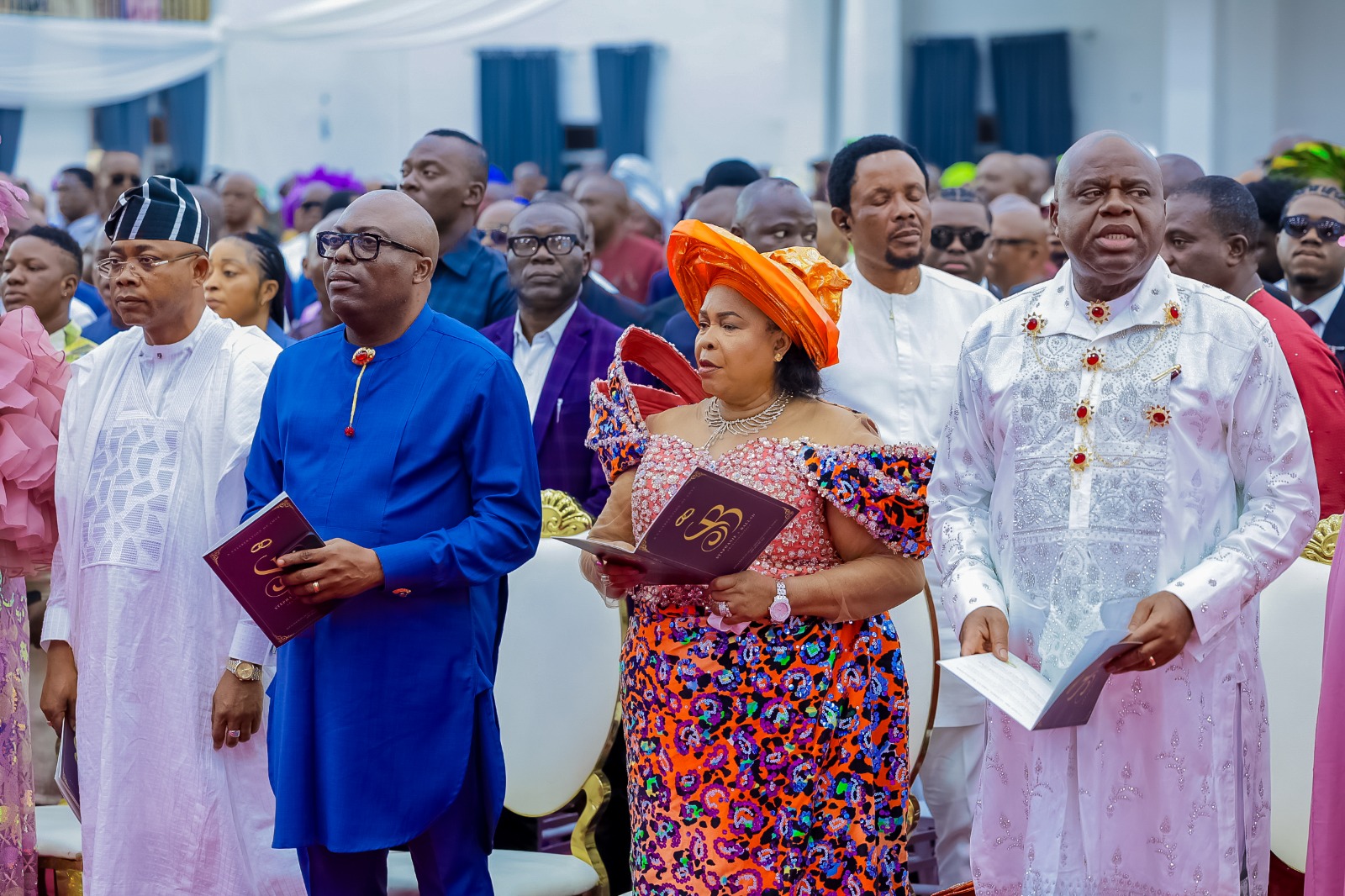
Rivers State, Sir Siminalayi Fubara, has assured members of the National Youth Service Corps (NYSC) of his administration’s commitment to supporting and strengthening the scheme in the State.
Fubara gave the assurance last Friday at the NYSC permanent orientation camp, Nonwa-Gbam, Tai Local Government Area in the State, during the swearing-in ceremony of 2026 Batch B Stream II orientation course.
Represented by the Permanent Secretary, Cabinet Bureau, Office of the Secretary to the State Government, Dr. Promise Oguzie, the governor said the State Government would remain intentional in providing the necessary support to improve the NYSC scheme and enhance the experiences of corps members deployed to the state.
He charged the corps members to be role models and quality nation-builders in their service to the good people of Rivers State in particular, and Nigeria at large.
“I charge you to be exemplary, dedicated and committed in all you do. Take full advantage of all the camp programmes and activities to enrich yourselves”, he said.
In his welcome address, the State Coordinator of NYSC in Rivers State, Mr. Moses Oleghe, urged corps members to see their deployment to Rivers State as a “veritable opportunity to make meaningful contribution to the growth of the State in particular and Nigeria at large.”
He further charged them to serve with all sense of “integrity, discipline, and the fear of God, especially when they will be engaged as INEC ad-hoc staff that will conduct the 2027 general elections.”
A total of 3,584 corps members composed of 1,421 males and 2,163 females were sworn in by the Chief Judge of Rivers State, who was represented by Justice Godspower Aguma.

Governor of Rivers State, Sir Siminalayi Fubara, says Nigeria needs God-fearing leaders for the nation to move in the right direction and make meaningful progress.
The Governor stated this yesterday when he received in audience, the World President of the Seventh Day Adventist Church, Pastor Erton Kohler; his wife, Andriene Marques Kohler; daughter Mariana Marques Kohler and a retinue of ministers of the church at Government House, Port Harcourt.
Fubara who hailed the Seventh Day Adventist Church for its contributions to education and the grooming of future leaders in Nigeria, expressed delight that the Church had over the years, been investing in education at various levels and currently runs two universities in the country.
He commended the church for not only using its institutions to spread the gospel of Christianity but to groom future leaders for the country.
According to him, religion should not be just about defending one’s faith, but also making meaningful impact on the lives of the people.
He said that by floating these educational institutions, the church has demonstrated capacity to support Nigeria in the task of producing not only educated people but a breed of God-fearing leaders.
“Our country is where it is today because we lack the fear of God. If you have the fear of God, there should be a limit to what you can do because you understand the supremacy of God. But when God is not in your equation, you’ll go beyond the line and that is what has brought us to where we are today.
“So, I feel very happy that you are contributing to the development of our future leaders in this country. We need the right people being in the right place; prepared properly with good minds; that is what we need, not just in Nigeria but round the whole world.,” he said.
Governor Fubara further observed that the absence of God-fearing people in high places to take the right decisions that could impact positively on the society, has also given rise to other problems such as social inequality, poverty, corruption and criminality. According to him, Nigeria needs a system where the average parent could afford quality education for their children and a guarantee that upon graduation, the average child will have the capacity to compete favourably with anybody, anywhere in the world.
“If we have a situation where the little money that you’re being paid as wage can also afford you quality healthcare and after working at least for 15-20 years, you have a roof over your head, tell me why you should be involved in any kind of crime? At that point, you’ll feel secured and this attitude of insecurity about the future that leads to all the social vices we have today won’t be there,” he said.
Governor Fubara expressed appreciation to the delegation for the visit and for their prayers for Rivers State, assuring them of his continued support for their programmes in the state.
Leader of the delegation and World President of the Seventh Day Adventist Church, Pastor Erton Kohler said he was in Nigeria for a special conference of the church during which thousands of the church’s ministers will be undergoing an empowerment programme to further equip them for the task of herding their flocks and serving the society.
He expressed gratitude to the Governor for the warm reception accorded his entourage, saying the memory of the visit will linger in his mind for a lifetime.
Kohler disclosed that the Church has over twenty -four million (24,000,000) members and more than 182,000 places of worship, spread across 212 countries of the world.

The Rivers State House of Assembly has approved the 2026–2028 Medium Term Expenditure Framework (MTEF) submitted by Governor Siminalayi Fubara.
This reaffirms the lawmakers’ commitment to enacting laws and taking legislative actions geared towards the overall development of the State.
The Assembly gave the approval during its Second Legislative Sitting of the Fourth Session held last Friday.
Speaking on the MTEF document during plenary, the House Speaker, Rt. Hon. Martin Amaewhule, noted that by the provision of Section 10(1)(b) of the Rivers State Fiscal Responsibility Law No. 8 of 2010, the MTEF ought to have been laid before the House in September 2025.
Amaewhule explained that traditionally, the document is expected to be presented four months before the commencement of the next financial year and immediately after the expiration of every three-year fiscal cycle.
He, however, stated that in the interest of the State and its people, the House considered it necessary to deliberate on the document, describing it as a precursor to the 2026 Budget Estimates.
The Speaker expressed concern that the year had already progressed significantly before the presentation of the framework.
During deliberations on the document, members examined the assumptions and projections contained in the MTEF and observed that strict adherence to the outlined fiscal parameters would ultimately serve the interest of Rivers people.
The lawmakers maintained that effective implementation of the framework would promote prudent financial management and enhance developmental planning across the State.
Following the debate and positive consideration by members, the Speaker put the question to the House and members voted overwhelmingly in support of the approval of the MTEF.
Meanwhile, during the same sitting last Friday, the House also received a petition from the Chairman of Obio/Akpor Local Government Council, Dr. Gift Worlu.
The petition was presented by the member representing Obio/Akpor Constituency II, Hon. Emilia Amadi.
According to the petition, concerns were raised over an imminent security breach, threats to lives, destruction of property and alleged forceful takeover of property by some lawless persons within parts of the Local Government Area.
Presenting the petition before the House, Hon. Amadi appealed to the lawmakers to revisit the matter and take necessary steps aimed at safeguarding lives and property in the affected communities.
The House is expected to further deliberate on the petition and consider measures to address the concerns raised in order to sustain peace and security in the area.
King Onunwor
-

 News2 days ago
RSG Targets Nine Million Residents in Mosquito Net Distribution Campaign
-

 Oil & Energy2 days ago
Aiyedatiwa Signs New Electricity Bill
-

 Oil & Energy2 days ago
NLNG Commissions Research And Innovation Centre In RSU
-

 Maritime2 days ago
Marine Minister Commends President Tinubu On NPERA Bill Assent
-

 News2 days ago
KenPoly Holds Eight Convocations, August 29
-

 News2 days ago
RSG Begins Another Phase of Projects Commissioning Today
-

 News2 days ago
RMAFC Completes Revenue Sharing Review, Proposes New Pay
-

 Maritime2 days ago
NAGAFF Petitions IGP Over Alleged Maritime Police Harassment