
Sports
African Players Thank, Celebrate Wenger

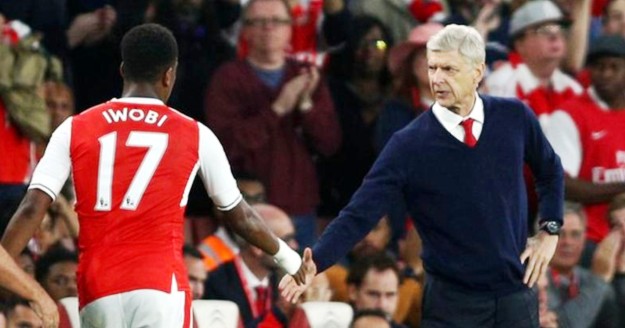
As news broke that Arsene Wenger is to leave English club Arsenal at the end of the season, there was an immediate outpouring of affection for the manager from African fans and players alike.
From current Liberia President George Weah at Monaco to Wenger’s last signing at Arsenal – Gabon’s Pierre-Emerick Aubameyang – the Frenchman has been a strong supporter of African players.
His knack of signing and nurturing some of the continent’s biggest names has been a distinguishable feature of his 22 years at the helm.
It therefore comes as no surprise that all 16 African footballers to have played in the colours of Arsenal all made their appearances under Wenger.
The unconditional love affair started in Africa when Wenger was manager of French side Monaco.
He discovered Liberia’s George Weah through a friend and signed him from Cameroonian side Tonnerre Yaoundé in 1988, becoming a father figure to the young striker.
Weah went on to become the only player to win the African, European and World footballer of the year titles in one season – in 1995.
The former Monaco, PSG, Milan, Chelsea and Marseille striker, who remains the only African to be voted as the world’s top player, has a lot to thank Wenger for.
“Every time I go on the pitch, playing for Arsene Wenger, I wanted him to know the ways I could pay him back. I could break my knee, my face, my hand for him – just to win a game.”
“He took care of me like his son, I could not believe it. When racism was at its peak, this is a man who showed me love.
“Besides God, I think that without Arsene, there was no way I would have made it in Europe,” Weah recalled to Tidesports source.
And when Wenger became Arsenal boss in September 1996 following Bruce Rioch’s departure, Weah’s cousin Christopher Wreh was Wenger’s first African signing.
Snapped up from his last French club Monaco in August 1997, Wreh scored three important goals in 28 appearances.
During his time at Highbury, Wreh won the Premier League and FA Cup double in the 1997/98 campaign and also lifted the FA Charity Shield.
Wreh is one of 16 African footballers to have played for Arsenal in the Premier League since it began in 1992, all making their appearances under the Frenchman.
Those numbers are only half the story. As friends, families and fans rocked up to support the team, the Frenchman’s impeccable faith in signing African players further attracted legions of fans on the continent.
Much of the Gunners’ popularity in Africa can be put down to the “Invincibles”, the record-breaking team of the 2003-04 season which won the league without losing a single match, as part of a 49-game unbeaten run.
Arsenal’s march to that incredible feat would not have been possible without the valuable contributions of three African stars. All three played starring roles at different moments, and none fluffed their lines.
A strong showing of Ivorian Kolo Toure, Cameroon defender Lauren and Nigerian Nwankwo Kanu made them even more popular. Kanu is surely one of the main reasons for Arsenal’s popularity in Nigeria as well.
Kanu, who helped Arsenal to two Premier League and FA Cup titles in a five-year stint at Arsenal, paid tribute to Wenger’s great service to the club, his career and the continent.
“Big shoes for anyone to fill, playing for Arsenal under Arsene was one of the best period of my career, two Premiership, two FA cups, The invincibles, playing with some of the best assembled players, influencing millions of fans in Africa to support this great club,” Kanu wrote on Twitter.
Lauren played 159 league games for Arsenal between 2000 and 2007 and also picked up two league titles and three FA Cups. He swiftly followed suit by highlighting his legacy.
“An emotional day. Arsene took English football to a different level and pushed me to become the player I never thought I’d be. Let’s cherish the memories and his legacy, which will always remain.
“We must thank him for giving his all to make Arsenal such a great club,” Lauren tweeted.
Nigerian youngster Alex Iwobi was not even born when Wenger took over the club, but the Super Eagle has risen from the academy to become a first team player under Wenger.
The 20-year-old also took to social media to reflect on Wenger’s influence.
“For everything you’ve done for Arsenal Football Club, for trusting me as a teenager, for giving me the opportunity to express myself and grow both as a footballer and as a person. I will forever be grateful to you boss. Thank You So Much!,” he said.
Notably, Wenger often divided opinion on the continent due to the timing of the Africa Cup of Nations – which was traditionally played during January and February.
He stressed in 2004 that the timing was beginning to harm the prospects of African players signing for major European clubs – because teams had reservations about losing players for a month in the middle of the season.
But as other Premier League managers continued to criticise the poor timing of the tournament, Wenger won the hearts of millions around the continent by consistently signing and standing by African players.
Since then, Wenger’s desire for the Nations Cup tournament to be held in June has finally been approved.
Gabon’s Pierre-Emerick Aubameyang shone brilliantly in France, matured as a top footballer in Germany, but failed to attract other top European clubs. However Wenger brought him to the Premier League by making him his last Arsenal signing in January.
Aubameyang could not have put it more succinctly when he posted on Twitter: “I’m your last signing but since I’m here, I’m proud to be your player Boss thanks for everything.”
Culled from BBC Sport



The Normalisation Committee to spearhead major reform in Nigerian football has yet to be announced because several of the committee members recommended did not scale the FIFA integrity test.
The NFF announced in an official statement on October 22 that world football governing body FIFA have approved a Normalisation Committee to reorganise football in the country following the resignation of the NFF executive committee led by Ibrahim Gusau.
The statement pointed out that the committee members will be jointly appointed by FIFA and CAF.
Since then not much has been reported on this development.
A top source has now informed that the delay in the announcement of this committee has been held back because several of the
proposed members did not pass the integrity test conducted by FIFA.
“Some of those recommended for the committee did not pass the FIFA test, that is partly why the committee is not yet in place, ” a top source said.
“However, I wouldn’t want to give out the names of those who did not scale through.”
It was further gathered that the committee will have between seven and nine members with strong indications that there could be as many as two non-Nigerians on it.
Meanwhile, a former NFF general secretary as well as a one-time highly influential NFF executive committee member are among those lobbying to head the Normalisation Committee.
The committee will be expected to round up by May 31, 2027.
The Director-General of the National Sports Commission, Bukola Olopade, has insisted that the 23rd National Sports Festival will hold as scheduled, with key facilities in Enugu nearing completion ahead of the November 28 opening ceremony.
Olopade gave the assurance after inspecting the Nnamdi Azikiwe Stadium and other venues earmarked for the event in the Coal City. He expressed satisfaction with the progress of work and said funding and equipment for the festival had been secured as preparations enter the final phase.
He disclosed that the swimming pool would be ready by November 18.
“In the coming days, the tartan track will be laid, and buses to move the athletes are ready,” he said.
Responding to suggestions that the festival could be postponed, Olopade criticised the speculation and said the authorities had already made their position known.
“When Lagos asked for postponement, we came out confidently to tell the public. Heaven did not fall,” he said.
“Suggesting that it will be postponed after announcement from Enugu State and NSC suggests that we are deceiving the nation. Not nice at all.”
The NSC boss also said the Enugu 2026 edition was projected to become the highest-sponsored National Sports Festival in history, with sponsorship expected to reach between ?12bn and ?15bn.
President Bola Tinubu is expected to declare the festival open on November 28, while about 12,000 athletes and officials are scheduled to arrive in Enugu from November 26.
Athletes from the 36 states of the federation and the Federal Capital Territory will compete in various disciplines.
Olopade commended Enugu State Governor, Peter Mbah, for his commitment to hosting the event, describing the state as a secure and welcoming destination for athletes and other stakeholders.
The 2026 Youth Olympic Games, the first Olympics ever to be held on African soil, opened Saturday in the Senegalese capital marking an historic moment for the continent.
Signs proclaiming “Africa welcomes, Dakar celebrates” are abundant across Dakar, which is hosting some 2,665 young competitors aged 14 to 17 from around the world.
The event marks the return of Russian athletes to the Olympics and also includes a refugee team. Overall, the athletes will compete across 25 sports and 153 medal events.
“We’ve got people from around the world that maybe had a very different idea about Africa and they’re going to leave, hopefully, with something really positive in mind”, International Olympic Committee (IOC) President Kirsty Coventry, a former Zimbabwean swimmer, said last week during a press conference in Dakar.
“I think that is really important for our continent”, she said.
Events ranging from athletics to beach wrestling, rugby sevens to breaking, will be held across eight venues in three locations.
Dakar, the nearby suburb of Diamniadio and the beach town of Saly located some 80 kilometres (50 miles) from the capital, will all host events.
An opening ceremony held on Saturday evening in Diamniadio kicked off the Games.
A total of 136 Senegalese athletes will participate in the Youth Olympics, with some 6,000 volunteers from Senegal helping put on the event.
The west African nation is renowned for its sports culture, including its football team, traditional wrestling and surf scene.
Football enthusiasts and young people often organise impromptu matches in the evenings or weekends on the beach or in village squares.
And as the day cools, hundreds of people flock to Dakar’s iconic coastal road, the Corniche, to run, do strength training or take part in group exercise.
While a sense of excitement is being stirred in the capital, the fourth summer edition of the Youth Olympics has struggled to stoke wild enthusiasm across Senegal.
Many are more concerned with the high cost of living, unemployment and economic hardship.
“Once the youth Olympic Games in Senegal begin, Dakar will become the capital of African youth,” Senegal Prime Minister Ahmadou Al Aminou Lo had said in an interview last week.
“Africa hosting the (Youth) Olympic Games, it’s a symbol”, he said.
With the IOC effectively lifting the Russian Olympic Committee’s (ROC) suspension in July, the Youth Games mark the first Olympic competition since Russia’s invasion of Ukraine in early 2022 in which Russian athletes are allowed to compete under their own flag and colours.
According to the ROC, 13 Russian athletes will participate and 10 coaches will accompany them to Senegal.
“The kids are excited, it’s good that our legitimate right to participate with the national anthem and Russian flag has been restored”, Anzor Gaunov, who coaches Anastasia Dobrovolskaya in judo, told Tidesports source in Moscow.
However, it is up to each sport’s international federation whether to authorise the Russian athletes’ participation.
The Dakar Youth Games will also welcome a refugee Olympic team, composed primarily of athletes based in Africa.
The IOC has called the Dakar Games an important milestone for the continent and an opportunity to showcase Senegal’s cultural richness and Africa’s growing role within the Olympics.
South Africa could potentially become the first African nation to host the Olympic Games, having already paved the way by hosting the men’s FIFA World Cup in 2010. The country is officially in the running for the 2036 Summer Olympics.
-
 Politics4 days ago
LG CITY BOY COORDINATOR HAILS WIKE’S SUPPORT FOR ONYESOH, TINUBU
-
Politics4 days ago
DIRI INAUGURATES APC CAMPAIGN COUNCIL, SETS MILLION VOTES TARGET FOR TINUBU
-
 Politics4 days ago
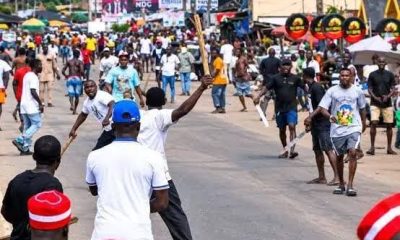
NDC Candidate Urges Oborevwori To Probe Asaba Political Violence
-
 News4 days ago
Army Recovers X Account After Hack Attempt
-
Politics4 days ago
2027: Oborevwori Tasks Media On Fair, Accurate Reporting
-
 Business4 days ago
Nigeria Loses N17tr Yearly To Abandoned Projects
-
Politics4 days ago
2027: AKPABIO ENVISAGES TINUBU’S VICTORY IN SOUTH SOUTH REGION
-
Politics4 days ago
Asaba Political Violence: Police Confirm One Dead, Delta Govt Urges Probe