
Featured
Buhari Has Lost Popularity In Strongholds …Wants President Quit As Petroleum Minister – PDP …Says Nigerians Tired Of Fuel Scarcity

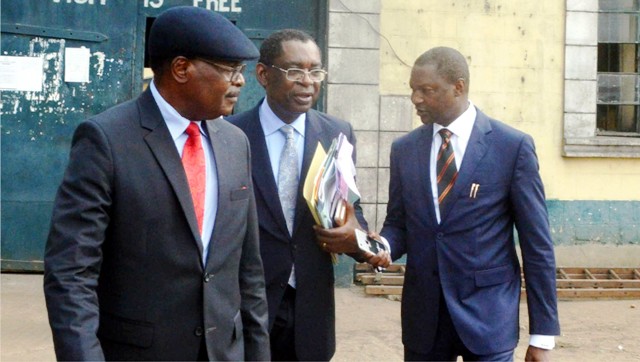
The Peoples Democratic Party (PDP) says the popularity of President Muhammadu Buhari is waning, saying the deployment of heavily armed security forces in last Saturday’s House of Representatives bye- election in Katsina State was intended to muscle votes for the ruling All Progressives Congress (APC).
The party also described the last Saturday’s Kano State local council election, as shameful even as it alleged that the exercise was characterised by outright cheating, open under-aged voting and ballot stuffing amongst sundry malpractices. National Publicity Secretary of the party, Kola Ologbondiyan in a statement yesterday said the use of brute force and allocation of ballots to gain votes in the bye-election in Mashi/Dutsi Federal Constituency, which ordinarily a walk in the park, being President Buhari’s constituency, shows that the party (APC) has pathetically lost it all.
The PDP said the fact that it was able to garner a total of 22,690 votes against the 30,719 fraudulently allocated to the APC, despite the use of force and other brazen infractions by the APC, shows that PDP is the natural winner of the election. “The APC is corrupting security officials to use maximum force as a desperate measure to save President Buhari, whose popularity had dipped across our nation.
“We invite Nigerians and the international community to mark how the APC and its controlled Federal Government are corrupting our electoral system, by using force to intimidate the people and steal their votes.
“In their desperation to help the President, the APC in cahoots with the inept Presidency, declared war on the people by ensuring the deployment of over 1000 heavily armed and hostile security operatives for an election that held in only 15 polling units within two local governments of Katsina State,” the statement read in part.
The further expressed its determination to expose electoral infractions allegedly committed by the ruling party, noting that the process has commenced.
“The PDP is compiling a comprehensive documentary evidence of infractions and irregularities including barring of legitimate voters from accessing polling centers, assigning of polling units to APC government functionaries, indiscriminate arrests of opposition members and supporters, underaged voting and allocation of votes for APC as well as conflict between results from the polling units and collation centers among others. “Also being compiled is the identity of the security and electoral officials used by the APC to subvert the will of the people, which will be made public while ensuring that they are prosecuted.
“The clear message to the APC is that the will of the people will prevail in 2019 as Nigerians will never allow the shameful impunity and suppression witnessed in Katsina and Kano during last Saturday’s election as they will be fully rallied to resist such across board”, the party added.
Meanwhile,the Peoples Democratic Party (PDP) has called on President Muhammadu Buhari to save Nigerians the trauma of sleeping in fuel stations by quitting as minister of petroleum resources, and allow competent hands to manage its affairs.
The party described as unpardonable, the failure of the Buhari Presidency to resolve its self-inflicted unabated fuel crisis, which had brought untold hardship to Nigerians.
In a statement in Abuja, yesterday, PDP National Publicity Secretary, Kola Ologbondiyan, said it was disheartening that instead of being remorseful for its failures, the All Progressives Congress (APC)-controlled Federal Government was busy dishing out lies and fabricated indices in an attempt to give Nigerians false hope on issues related to the fuel crisis and the collapsing national economy.
It said President Buhari, as minister of petroleum, must directly accept responsibility for the manifest failure in the oil sector, even as his government should be held responsible for the exacerbated economic and security situation in the country under its watch.
The PDP said if Buhari had accepted wise counsel from well-meaning Nigerians, since last year, to quit office as the minister of petroleum and allow a more competent and knowledgeable person to run the ministry, the situation would not have degenerated to excruciating pains Nigerians suffer today.
The party said the fact that the Presidency has unapologetically failed to fix a national problem, which it last December promised to resolve within one week, shows it has no solution but intends to continue to hold the nation to ransom.
According to the PDP, the fact that there were inherent poor coordination, inefficiency and reported heavy sleazes in a sector that was under the direct supervision of the President, raises a lot of issues and speaks volumes of the evident mismanagement of the system for which the economy was now in complete shambles.
“It is an appalling height of insensitivity that the President, as the minister of petroleum resources, has failed to take any decisive steps to arrest the situation, which has remained unabated since the last Yuletide.
“Rather, the sector has been delivered to an APC cabal, whose mission, particularly, the desperate re-election bid, largely account for the biting fuel situation and the economic misery Nigerians suffer today.
“It is instructive to state that the Presidency has refused to offer any explanation on the allegations linking the fuel crisis to the exposed siphoning of billions of naira through shady oil subsidy deals and the illegal lifting of crude oil worth trillions of naira, ostensibly to service APC interests ahead of the 2019 general elections.
“The point is that owing to the ineptitude of the Buhari Presidency and the desperation to remain in power, millions of Nigerians are languishing.
“As we speak, the economy has further dipped in the last two months of this harrowing fuel situation; more businesses have folded up, prices of essential goods are skyrocketing and families are, more than ever before, under intense pressure of meeting economic demands.
“Currently, marauders have chased farmers away from farmlands while Buhari Presidency continues to wax lip sermons on serious issues of insecurity.
“We call on President Buhari to quit this all important ministry of petroleum resources and allow competent hands to save our people from the anguish and pains they have been subjected to in the last few months,” the party said.
Similiarly, ahead of 2019 general elections, the Catholic Bishop of Osogbo Diocese, Most Reverend Akin Oyejola yesterday cautioned Nigerians against selling their voters’ cards to desperate politicians, saying that is the only weapon they possess to elect leaders of their choice in the polls.
He said the electorate should resist the temptations from some desperate politicians, who may entice them with money to buy over their Permanent Voters Cards (PVC) to perpetrate electoral fraud in the 2019 general elections.
Oyejola, who spoke while addressing a multitude of Nigerians, who converged on Oke Maria Mountain, Otan Ayegbaju in Boluwaduro local government area of Osun State for the annual pilgrimage said: “don’t sell your voter’s card, it is your power to vote a right candidate during the election.”
Describing sales of voters card as a mortal sin against God and humanity, the clergy maintained that electoral malpractice would bring hardship and poverty to the society, stressing that politicians would soon be lurking around to buy voter’s cards as a tool to elect ungodly candidates, who will squander the socio-economic resources of the country.
According to Oyejola, “we encourage you to go and register in order to enable you to perform your civic responsibilities, cast your votes for candidates of your choice, but don’t sell your voter’s cards, if you do that, it is a mortal sin that could send the owners to hell”.
While welcoming former deputy governor of Osun State, Senator Iyiola Omisore, senator, representing Osun East Senatorial District, Senator Babajide Omoworare and other politicians, who thronged the prayer mountain, the clergy tasked them to be good ambassadors of the church in their political activities and desist from compromising their Catholic faith in the pursuit of political ambitions.
Oyejola averred that “I want to welcome Senator Iyiola Omisore, Senator Babajide Omoworare and other Catholics who are politicians on this mountain. I pray that God grant your heart desires, but please represent us well in politics, don’t compromise your faith. I know that politics is a risk, but Christianity itself is a risk and you must discipline yourself to succeed in your political careers. Don’t embarrass the church, let your Catholic faith guide you in your political careers, as we shall also continue to pray for you”.



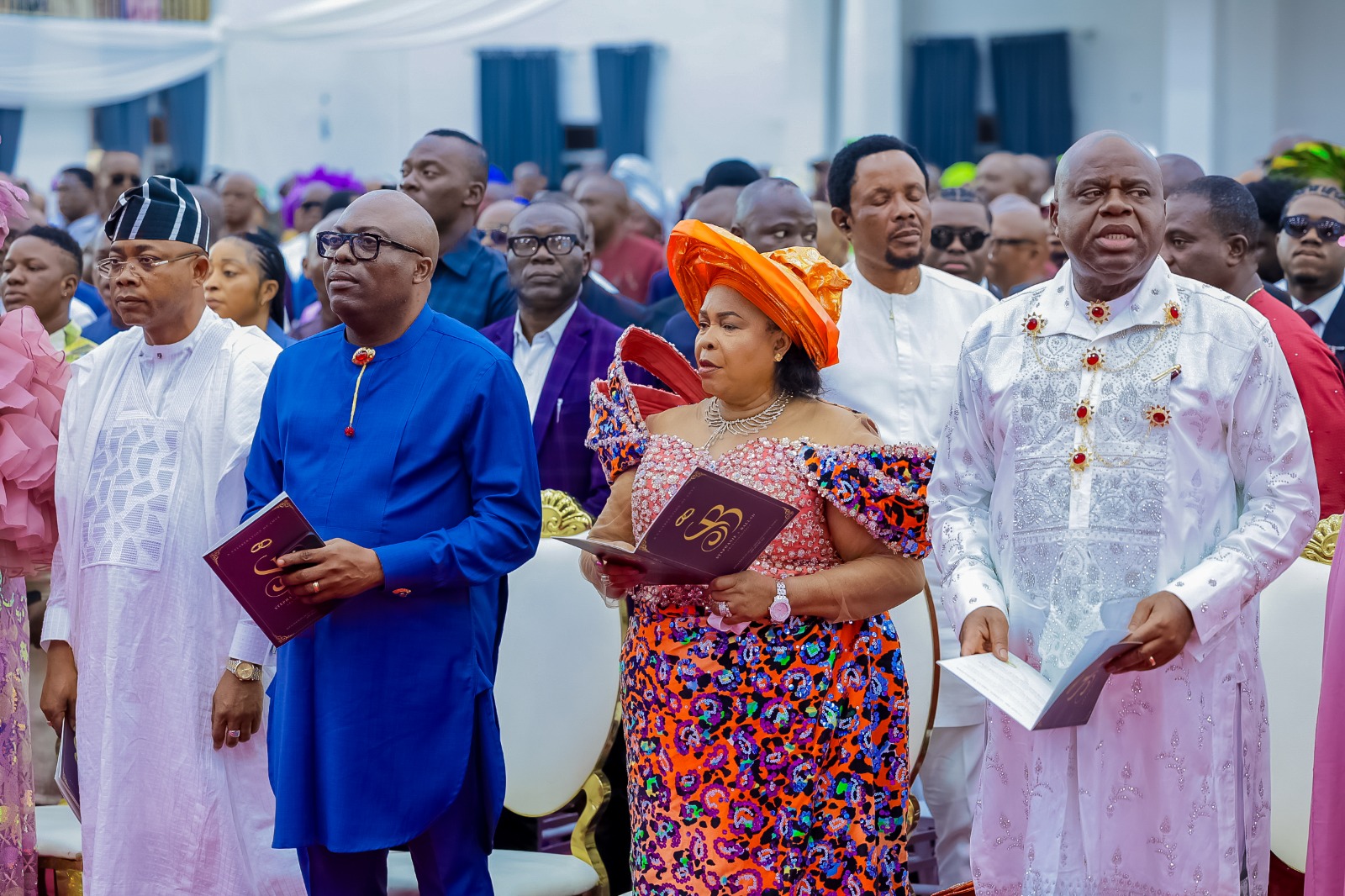
Rivers State, Sir Siminalayi Fubara, has assured members of the National Youth Service Corps (NYSC) of his administration’s commitment to supporting and strengthening the scheme in the State.
Fubara gave the assurance last Friday at the NYSC permanent orientation camp, Nonwa-Gbam, Tai Local Government Area in the State, during the swearing-in ceremony of 2026 Batch B Stream II orientation course.
Represented by the Permanent Secretary, Cabinet Bureau, Office of the Secretary to the State Government, Dr. Promise Oguzie, the governor said the State Government would remain intentional in providing the necessary support to improve the NYSC scheme and enhance the experiences of corps members deployed to the state.
He charged the corps members to be role models and quality nation-builders in their service to the good people of Rivers State in particular, and Nigeria at large.
“I charge you to be exemplary, dedicated and committed in all you do. Take full advantage of all the camp programmes and activities to enrich yourselves”, he said.
In his welcome address, the State Coordinator of NYSC in Rivers State, Mr. Moses Oleghe, urged corps members to see their deployment to Rivers State as a “veritable opportunity to make meaningful contribution to the growth of the State in particular and Nigeria at large.”
He further charged them to serve with all sense of “integrity, discipline, and the fear of God, especially when they will be engaged as INEC ad-hoc staff that will conduct the 2027 general elections.”
A total of 3,584 corps members composed of 1,421 males and 2,163 females were sworn in by the Chief Judge of Rivers State, who was represented by Justice Godspower Aguma.

Governor of Rivers State, Sir Siminalayi Fubara, says Nigeria needs God-fearing leaders for the nation to move in the right direction and make meaningful progress.
The Governor stated this yesterday when he received in audience, the World President of the Seventh Day Adventist Church, Pastor Erton Kohler; his wife, Andriene Marques Kohler; daughter Mariana Marques Kohler and a retinue of ministers of the church at Government House, Port Harcourt.
Fubara who hailed the Seventh Day Adventist Church for its contributions to education and the grooming of future leaders in Nigeria, expressed delight that the Church had over the years, been investing in education at various levels and currently runs two universities in the country.
He commended the church for not only using its institutions to spread the gospel of Christianity but to groom future leaders for the country.
According to him, religion should not be just about defending one’s faith, but also making meaningful impact on the lives of the people.
He said that by floating these educational institutions, the church has demonstrated capacity to support Nigeria in the task of producing not only educated people but a breed of God-fearing leaders.
“Our country is where it is today because we lack the fear of God. If you have the fear of God, there should be a limit to what you can do because you understand the supremacy of God. But when God is not in your equation, you’ll go beyond the line and that is what has brought us to where we are today.
“So, I feel very happy that you are contributing to the development of our future leaders in this country. We need the right people being in the right place; prepared properly with good minds; that is what we need, not just in Nigeria but round the whole world.,” he said.
Governor Fubara further observed that the absence of God-fearing people in high places to take the right decisions that could impact positively on the society, has also given rise to other problems such as social inequality, poverty, corruption and criminality. According to him, Nigeria needs a system where the average parent could afford quality education for their children and a guarantee that upon graduation, the average child will have the capacity to compete favourably with anybody, anywhere in the world.
“If we have a situation where the little money that you’re being paid as wage can also afford you quality healthcare and after working at least for 15-20 years, you have a roof over your head, tell me why you should be involved in any kind of crime? At that point, you’ll feel secured and this attitude of insecurity about the future that leads to all the social vices we have today won’t be there,” he said.
Governor Fubara expressed appreciation to the delegation for the visit and for their prayers for Rivers State, assuring them of his continued support for their programmes in the state.
Leader of the delegation and World President of the Seventh Day Adventist Church, Pastor Erton Kohler said he was in Nigeria for a special conference of the church during which thousands of the church’s ministers will be undergoing an empowerment programme to further equip them for the task of herding their flocks and serving the society.
He expressed gratitude to the Governor for the warm reception accorded his entourage, saying the memory of the visit will linger in his mind for a lifetime.
Kohler disclosed that the Church has over twenty -four million (24,000,000) members and more than 182,000 places of worship, spread across 212 countries of the world.

The Rivers State House of Assembly has approved the 2026–2028 Medium Term Expenditure Framework (MTEF) submitted by Governor Siminalayi Fubara.
This reaffirms the lawmakers’ commitment to enacting laws and taking legislative actions geared towards the overall development of the State.
The Assembly gave the approval during its Second Legislative Sitting of the Fourth Session held last Friday.
Speaking on the MTEF document during plenary, the House Speaker, Rt. Hon. Martin Amaewhule, noted that by the provision of Section 10(1)(b) of the Rivers State Fiscal Responsibility Law No. 8 of 2010, the MTEF ought to have been laid before the House in September 2025.
Amaewhule explained that traditionally, the document is expected to be presented four months before the commencement of the next financial year and immediately after the expiration of every three-year fiscal cycle.
He, however, stated that in the interest of the State and its people, the House considered it necessary to deliberate on the document, describing it as a precursor to the 2026 Budget Estimates.
The Speaker expressed concern that the year had already progressed significantly before the presentation of the framework.
During deliberations on the document, members examined the assumptions and projections contained in the MTEF and observed that strict adherence to the outlined fiscal parameters would ultimately serve the interest of Rivers people.
The lawmakers maintained that effective implementation of the framework would promote prudent financial management and enhance developmental planning across the State.
Following the debate and positive consideration by members, the Speaker put the question to the House and members voted overwhelmingly in support of the approval of the MTEF.
Meanwhile, during the same sitting last Friday, the House also received a petition from the Chairman of Obio/Akpor Local Government Council, Dr. Gift Worlu.
The petition was presented by the member representing Obio/Akpor Constituency II, Hon. Emilia Amadi.
According to the petition, concerns were raised over an imminent security breach, threats to lives, destruction of property and alleged forceful takeover of property by some lawless persons within parts of the Local Government Area.
Presenting the petition before the House, Hon. Amadi appealed to the lawmakers to revisit the matter and take necessary steps aimed at safeguarding lives and property in the affected communities.
The House is expected to further deliberate on the petition and consider measures to address the concerns raised in order to sustain peace and security in the area.
King Onunwor
-

 News4 days ago
RSG Targets Nine Million Residents in Mosquito Net Distribution Campaign
-

 Oil & Energy4 days ago
Aiyedatiwa Signs New Electricity Bill
-

 Oil & Energy4 days ago
NLNG Commissions Research And Innovation Centre In RSU
-

 Maritime4 days ago
Marine Minister Commends President Tinubu On NPERA Bill Assent
-

 News4 days ago
KenPoly Holds Eight Convocations, August 29
-

 News4 days ago
RMAFC Completes Revenue Sharing Review, Proposes New Pay
-

 News4 days ago
RSG Begins Another Phase of Projects Commissioning Today
-

 Maritime4 days ago
NAGAFF Petitions IGP Over Alleged Maritime Police Harassment