
Featured
NIGERIA AT 57: A Union Under Threat?

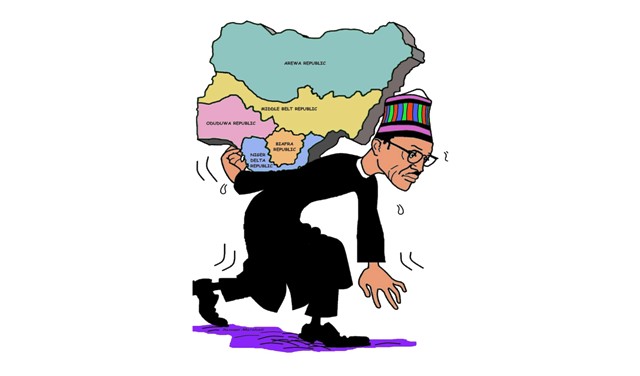
As Nigeria marks 57 years of political Independence today, the union appears to be facing threats to its unity, territorial integrity and sovereignty. These threats have become increasingly palpable with the crescendo of rising agitations from various ethnic nationalities and aggrieved groups across the country reaching almost breaking point. And never in the history of this union since the amalgamation of the federating protectorates in 1914, has Nigeria witnessed this level of pressure and threat to its corporate existence.
From the Niger Delta militants to the Odua Peoples Congress (OPC) and from the Boko Haram insurgents to the new Biafra forerunners, Movement for the Actualisation of the Sovereign State of Biafra (MASSOB) and the Indigenous People of Biafra (IPOB), the plethora of anti-state, anti-unity voices is accelerating to the rooftop, and not only posing serious irritation to, but also exerting enormous pressure on governance and the economy. And honestly, all the restive groups have different agenda for their agitation.
While the Niger Delta militants merely revived pre-independence fears of neglect marginalization by the dominant ethnic groups, and insist on resource control, fair share of the commonwealth and political inclusion; the OPC has promoted radical interest aimed at asserting the stranglehold of the Yoruba on the economy, and to a very large extent, the political firmament. Indeed, since their emergence, both Niger Delta militants and the forebears of the OPC never nursed the ambition of cessation from the Nigerian state, until most recently when the violent agitations of Boko Haram and IPOB jolted the national livewire like a farcical hurricane.
In contrast, however, the Boko Haram terrorists have opaque, aggressive and violent approach to their demands: abolition of Western education, establishment of Islamic Caliphate and forceful conversion of all non-Moslems to Islam, annihilation of non-conformists to their ideology, abandonment of democracy as a form of government and reversion to primitive oligarchy, abduction, rape, arson, drug trafficking, and murderous campaign against innocent civilian population, and of course, the state, resulting in hundreds of thousands of deaths while millions have been displaced.
Similarly, IPOB has re-enacted the old and long defeated Biafra’s quest for own identity. Although with ambiguous messaging and mixed dance steps, IPOB’s baptism of hate and violence against other Nigerians appears to be the icing that has revived national discourse on referendum to wit cessation, restructuring, and if you like, fiscal federalism. The radical momentum brought to bear on the agitation for self-determination by IPOB has suddenly changed the citizens’ psyche and understanding of unity and cohesion. And this is already causing incremental irritation for the Federal Government. Indeed, IPOB’s agenda seems to juxtapose that of MASSOB, which presently is at odd with the violent momentum wrapped around the Biafra agitation.
As Nigerians celebrate this epochal landmark, The Tide explores the various strands of this discordant collective on peace and unity that appears to have threatened national coexistence from various fronts. Stakeholders from different backgrounds, creeds, tribes and religions, adumbrate their take on the thread holding Nigeria together, and what could be done to consolidate on this unity and peace that so dearly bind citizens as one indivisible.
A former Director, News/Current Affairs, Rivers State Broadcasting Corporation (RSBC) and a retired civil servant, Dame Lizzy Wilfred Fombo, said: “Actually, any threat to lives and property in any society is not an easy thing, and does not calm any nerves at all. So, let me first of all commend the Governor of Rivers State, Chief Nyesom Wike for his giant strides in enhancing the security architecture of the state. I listened to him attentively when he was addressing the 12th Edition of the General Synod of the Church of Nigeria (Anglican Communion), and he did mention the lofty and robust efforts he has made to address the security challenges in Rivers State. I think those efforts are commendable.
“On the other hand, restructuring means different thing to different zones. For instance, the South-East is clamouring and talking of marginalization, no proper representation at the centre. They are talking about inequality, injustice, among others, which has led to this IPOB that has just been disbanded.
“My advice is that those clamouring for restructuring of the nation should exercise restraint and pursue the path of dialogue; just as the retired president of Nigeria, former President Olusegun Obasanjo said: ‘I think I support they should toe the path of dialogue’.
“My advice for the Federal Government is that using force will not solve the issue. I remember the case of late Kenule Saro-Wiwa of blessed memory, who died, trying to make sure that human and environmental rights were actually respected, but today, the militancy assumed a different dimension. If not for the amnesty offered by our former president, late Umaru Musa Yar’Adua, Nigeria would have been different today. I think the Federal Government should listen to the agitators, and look at the report of the 2014 National Conference. Even though the Presidency has asked the National Assembly to handle the issue of restructuring, but I think both the Executive and Legislative Arms of government should work as a team with a view to stemming the tide of endless agitations in Nigeria.
“Also, our democracy is still fragile, and all that the executive needs to do is to toe the path of dialogue, listen to the people; call them to a roundtable to discuss the thorny issues agitating the various sections of the population. I think that when you are able to address the grievances, the unity of the nation would no longer be under threat.
“I also strongly add my voice to those of others who call on the Army to pull out from the South-East. ‘The Operation Python Dance II,’ should be withdrawn to stem the rising tide of tension in that region. I also think that there is no need for the proposed ‘Operation Crocodile Smile 11’ being brandied by the military for the South-South. It would not help matters at all.”
Sir Chuks Boms said: “This is the time for us to be more united than ever. I hear some groups talk about restructuring, but I think that for us to move forward, we must be one indivisible entity, so that our economy and everything about us can improve.
“I am not in support of those clamouring for division of Nigeria. It is not necessary. It is not our problem, but what I think as the major thing we need to do for ourselves is ensure unity. If we are united, we will achieve a lot of things in this country. All of us would be happy at last.
“Yes, Nigeria is a union under threat definitely, because it is housing people from different political, ethnic, and religious leanings. There is no structure that houses different groups of people that will not be prone to threat. So, if you say threat in that perspective, yes because of our divergent backgrounds.
“On the activities of Boko Haram, IPOB, MASSOB, Niger Delta militancy, OPC, among others, I would describe them as disgruntled elements, because I have not seen a clear vision of what they want. You cannot just wake up and begin to kill people or say you want this and that! And if you don’t get what you want, you start killing people. It doesn’t happen like that. No sane leader of a sovereign nation would listen to such people!
“What are your reasons for killing people? For instance, if they have come out to give their reasons by saying we are doing this because we want this to happen, and we are fighting to achieve that, it is understandable. But for people to take the laws into their hands, and just kill innocent people? No. I think it is wrong and the government must not let that happen. I like to advise these groups that feel agitated, to clearly define their goals and objectives, and state clear roadmap for achieving their goals, generally agreed by majority of the people affected.
“It is so discouraging that these groups of people have caused more harm than good to the society. Take the militancy in the Niger Delta for instance. In fact, Rivers State is suffering it so much because the multinational companies have left the state due to increasing unfriendly operating environment.
“For good businesses to thrive, we must have the enabling environment. But the activities of these militants are to our detriment as a people because millions of youth no longer have good jobs because of insecurity, armed robbery and kidnapping. Agitations must have a focus: present your issue and when that is done, you follow it with dialogue.”
Ven. Simeon Ariye, Diocese of Western Izon: “If you remember the atrocities of the Civil War that began in 1966 in Nigeria, no one would expect any agitation for breakaway today. This country has fought an annihilating war that took millions of people’s lives, and I don’t think we want to go through that hallowing experience again in our lifetime. I am not in support of cessation. I am not in support of those clamouring and agitating for disintegration of the country.
“All we need to do is to come to a common understanding as people united by one destiny. If we are able to do that, then we would move the nation forward. But if we are able to identify what is causing this disunity and we come together, it will help us go forward. We should also know that whatever we do now is not just for ourselves, but for generations yet unborn. This is the reason why everyone should continue to fight for the unity of Nigeria, and not its break-up.
“I would advise that the groups causing threat to the unity of the country should seek for ways of sorting out their challenges. Also, I suggest that those greedy Nigerians who, at all times, indulge in efforts to sabotage the good intentions of government should be cautioned to look for alternative ways of enriching themselves by doing meaningful things that would not negatively affect the generality of the people.
“If this class of people can put self interest aside, and think of building an egalitarian and non-violent society, I think this country would be good for all of us. So, I still insist that the unity of Nigeria is non-negotiable.”
Reverend Canon Gideon Genka: “Yes, actually Nigeria is a union under threat, but I think the church has a great role to play in ensuring that Nigeria does not break-up. This is because the church, based on its focus on the word of God, there is no Jewish and there is no Greek. So, the church gives us a platform that reminds us that there is no division in humanity. As Christians, therefore, we should hold unto that. I think there is still hope for Nigeria’s unity.
“The church has a big role to play in ensuring that these groups agitating for breakaway or restructuring have peace by providing them with the needed platforms. Now, one thing that is missing in the church today is discipleship. People are not propagating the word of God. If you see Christians of old, they brought up their younger ones in the way of the Lord, and the younger ones grew with that mentality. But now, there is a gap in discipleship, and that gap has created what we are facing today.
“So, if as Christians, we hold onto the teachings of our fathers, no matter where we find ourselves, we can transmit it to the oncoming generation. Also, another thing that is important too is sports. If the church can come together to provide avenues for sporting activities, it will bring about unity among the people.
‘I would advice that the restive groups look unto God for guidance and direction. If we do that, the much talked about injustice and inequality will fizzle out, and we won’t be worried about the need for separation.’
President, Anglican Communion, Children Ministry, Rev’d Canon Umegbewe Eugene Jerome: “All the threats Nigeria is undergoing now are usual and normal. It is part of the development process. Just like an infant, the process of growing teeth and new dentition can be problematic. Our political process is in its nascent stage, and most of our problems are being over-exaggerated. To tell the truth, our politicians are not helping us. Here in Nigeria, we don’t have national disasters such as hurricane, tornado, or earthquake, but what politicians are doing to people is creating artificial disaster and dislocation in the system.
“I must tell you that the agitations are illegal. If there are problems or challenges, what I think they should do for peace to reign is for them to pass their grievances through the National Assembly instead of causing tension and unleashing violence on the society.
“As we all know, the church is not in support of instability and acts of destibilisation of the polity. As the body of Christ is humble, peace-loving and respectful, we support a heavenly agenda that guarantees peace and unity of Nigeria.
“Also, if you look at all these agitators, how many of them are educated or have good paying job? No child of God or engineer, doctor, oil worker, professor in the university, nurse, teacher, among others, would be ready to give his/her life up as suicide bomber or violent protester on the streets asking for Biafra or whatever.
“My candid advice to them is that our youth should go to school and look for meaningful things to do to eke out a living. Some of them are not experts on social issues, they are just politicians looking for vulnerable people to deceive, but end up creating more problems. Like the issue of IPOB and people dying because of street protests and acts of civil disobedience. It is not the fault of the soldiers because the military respects authority. A people following an aimless and purposeless person as leader should expect to die carelessly.
“If we have influential people, let them give scholarship to our people. All these affluent people should help the people in need. It is not everything that government will do.
“In the Niger Delta, all our wealthy men should stop building big hotels and start generating employment by building factories that would massively employ the youth. So, we should focus more on internal unity. Also, most of these areas seeking for cessation and break-up of this country, don’t even love themselves as they are not united. Lets tell ourselves the truth, we need more of education and exposure than break-up. Nigeria’s problem is more of spiritual than physical. We need intellectual reawakening. So, our youth should go to school and stop behaving like hooligans and rascals.”
A business man in the state, Mr. Chijoke Nwalozie Ebereonwu says the various dissenting actions in the county have affected the development and wellbeing of every Nigerian. He opined that the reason the economy is in recession is as a result of the destabilising actions of the various insurgent groups across the country.
According to him, the militants in the Niger Delta region, the Indigenous People of Biafra (IPOB), the Odua Peoples’ Congress as well as the Boko Haram in the North-East have crippled the economic activities in these respective zones. The business mogul, however, urged the Federal Government to urgently do something in other to ensure that economic activities are restored across the country.
“The oil is gotten from the Niger Delta region, the food the country almost come from the North the East occupy majority in the commercial activities all these put together make Nigeria great”, he stated.
Also speaking, a businessman, Mr. Benjamin Nwata, said that one of the reasons for the social vices in Nigeria is unemployment. “Unemployment leads to militancy, robbery, kidnapping, cultism to mention but a few,” he said, adding that people are afraid to say the truth because of insecurity in the country.
He said that “The activities of these gangs are affecting the economic growth of the country, since they are destroying things that are fetching the country money. Government should provide job opportunities for the youth so that they will not have chance to engage in social vices.”
In his contributions, Mr. Chima Obi, said that “The agitations by these people are a disservice to the economy of the country. The Niger Delta militants started this problem. Then, Boko Haram joined them. Today, IPOB has worsened the situation.
“Although the militants are fighting for their rights, just to get what belongs to them”, the Boko Haram and IPOB are just nuisance causing problem for the country. The Federal Government should promote equity because that is the only way to restore peace and security in the country”, he added.



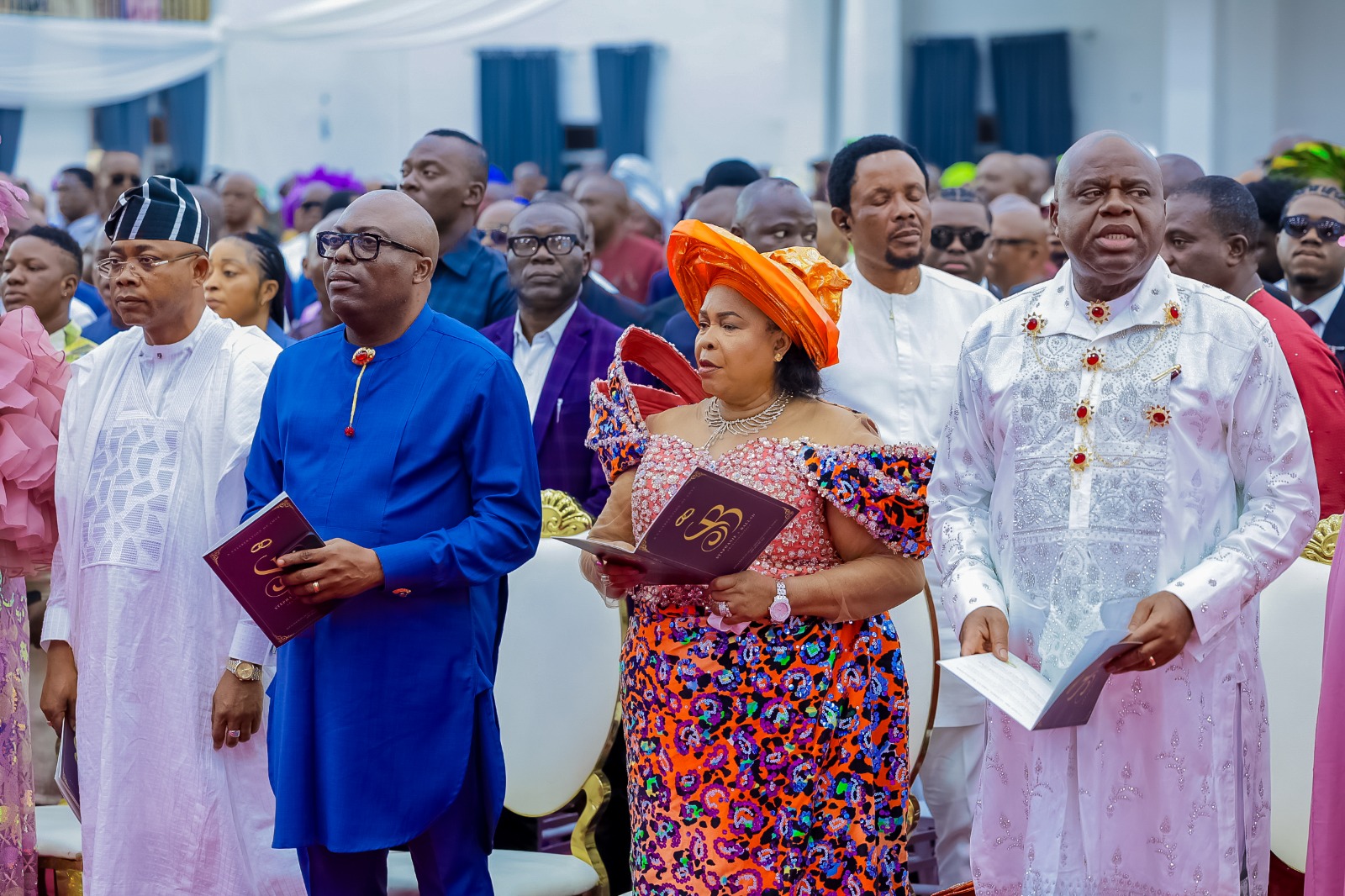
Rivers State, Sir Siminalayi Fubara, has assured members of the National Youth Service Corps (NYSC) of his administration’s commitment to supporting and strengthening the scheme in the State.
Fubara gave the assurance last Friday at the NYSC permanent orientation camp, Nonwa-Gbam, Tai Local Government Area in the State, during the swearing-in ceremony of 2026 Batch B Stream II orientation course.
Represented by the Permanent Secretary, Cabinet Bureau, Office of the Secretary to the State Government, Dr. Promise Oguzie, the governor said the State Government would remain intentional in providing the necessary support to improve the NYSC scheme and enhance the experiences of corps members deployed to the state.
He charged the corps members to be role models and quality nation-builders in their service to the good people of Rivers State in particular, and Nigeria at large.
“I charge you to be exemplary, dedicated and committed in all you do. Take full advantage of all the camp programmes and activities to enrich yourselves”, he said.
In his welcome address, the State Coordinator of NYSC in Rivers State, Mr. Moses Oleghe, urged corps members to see their deployment to Rivers State as a “veritable opportunity to make meaningful contribution to the growth of the State in particular and Nigeria at large.”
He further charged them to serve with all sense of “integrity, discipline, and the fear of God, especially when they will be engaged as INEC ad-hoc staff that will conduct the 2027 general elections.”
A total of 3,584 corps members composed of 1,421 males and 2,163 females were sworn in by the Chief Judge of Rivers State, who was represented by Justice Godspower Aguma.

Governor of Rivers State, Sir Siminalayi Fubara, says Nigeria needs God-fearing leaders for the nation to move in the right direction and make meaningful progress.
The Governor stated this yesterday when he received in audience, the World President of the Seventh Day Adventist Church, Pastor Erton Kohler; his wife, Andriene Marques Kohler; daughter Mariana Marques Kohler and a retinue of ministers of the church at Government House, Port Harcourt.
Fubara who hailed the Seventh Day Adventist Church for its contributions to education and the grooming of future leaders in Nigeria, expressed delight that the Church had over the years, been investing in education at various levels and currently runs two universities in the country.
He commended the church for not only using its institutions to spread the gospel of Christianity but to groom future leaders for the country.
According to him, religion should not be just about defending one’s faith, but also making meaningful impact on the lives of the people.
He said that by floating these educational institutions, the church has demonstrated capacity to support Nigeria in the task of producing not only educated people but a breed of God-fearing leaders.
“Our country is where it is today because we lack the fear of God. If you have the fear of God, there should be a limit to what you can do because you understand the supremacy of God. But when God is not in your equation, you’ll go beyond the line and that is what has brought us to where we are today.
“So, I feel very happy that you are contributing to the development of our future leaders in this country. We need the right people being in the right place; prepared properly with good minds; that is what we need, not just in Nigeria but round the whole world.,” he said.
Governor Fubara further observed that the absence of God-fearing people in high places to take the right decisions that could impact positively on the society, has also given rise to other problems such as social inequality, poverty, corruption and criminality. According to him, Nigeria needs a system where the average parent could afford quality education for their children and a guarantee that upon graduation, the average child will have the capacity to compete favourably with anybody, anywhere in the world.
“If we have a situation where the little money that you’re being paid as wage can also afford you quality healthcare and after working at least for 15-20 years, you have a roof over your head, tell me why you should be involved in any kind of crime? At that point, you’ll feel secured and this attitude of insecurity about the future that leads to all the social vices we have today won’t be there,” he said.
Governor Fubara expressed appreciation to the delegation for the visit and for their prayers for Rivers State, assuring them of his continued support for their programmes in the state.
Leader of the delegation and World President of the Seventh Day Adventist Church, Pastor Erton Kohler said he was in Nigeria for a special conference of the church during which thousands of the church’s ministers will be undergoing an empowerment programme to further equip them for the task of herding their flocks and serving the society.
He expressed gratitude to the Governor for the warm reception accorded his entourage, saying the memory of the visit will linger in his mind for a lifetime.
Kohler disclosed that the Church has over twenty -four million (24,000,000) members and more than 182,000 places of worship, spread across 212 countries of the world.

The Rivers State House of Assembly has approved the 2026–2028 Medium Term Expenditure Framework (MTEF) submitted by Governor Siminalayi Fubara.
This reaffirms the lawmakers’ commitment to enacting laws and taking legislative actions geared towards the overall development of the State.
The Assembly gave the approval during its Second Legislative Sitting of the Fourth Session held last Friday.
Speaking on the MTEF document during plenary, the House Speaker, Rt. Hon. Martin Amaewhule, noted that by the provision of Section 10(1)(b) of the Rivers State Fiscal Responsibility Law No. 8 of 2010, the MTEF ought to have been laid before the House in September 2025.
Amaewhule explained that traditionally, the document is expected to be presented four months before the commencement of the next financial year and immediately after the expiration of every three-year fiscal cycle.
He, however, stated that in the interest of the State and its people, the House considered it necessary to deliberate on the document, describing it as a precursor to the 2026 Budget Estimates.
The Speaker expressed concern that the year had already progressed significantly before the presentation of the framework.
During deliberations on the document, members examined the assumptions and projections contained in the MTEF and observed that strict adherence to the outlined fiscal parameters would ultimately serve the interest of Rivers people.
The lawmakers maintained that effective implementation of the framework would promote prudent financial management and enhance developmental planning across the State.
Following the debate and positive consideration by members, the Speaker put the question to the House and members voted overwhelmingly in support of the approval of the MTEF.
Meanwhile, during the same sitting last Friday, the House also received a petition from the Chairman of Obio/Akpor Local Government Council, Dr. Gift Worlu.
The petition was presented by the member representing Obio/Akpor Constituency II, Hon. Emilia Amadi.
According to the petition, concerns were raised over an imminent security breach, threats to lives, destruction of property and alleged forceful takeover of property by some lawless persons within parts of the Local Government Area.
Presenting the petition before the House, Hon. Amadi appealed to the lawmakers to revisit the matter and take necessary steps aimed at safeguarding lives and property in the affected communities.
The House is expected to further deliberate on the petition and consider measures to address the concerns raised in order to sustain peace and security in the area.
King Onunwor
-

 News1 day ago
RSG Targets Nine Million Residents in Mosquito Net Distribution Campaign
-

 Oil & Energy1 day ago
Aiyedatiwa Signs New Electricity Bill
-

 Maritime1 day ago
Marine Minister Commends President Tinubu On NPERA Bill Assent
-

 Oil & Energy1 day ago
NLNG Commissions Research And Innovation Centre In RSU
-

 News1 day ago
KenPoly Holds Eight Convocations, August 29
-

 News1 day ago
RSG Begins Another Phase of Projects Commissioning Today
-

 News1 day ago
RMAFC Completes Revenue Sharing Review, Proposes New Pay
-

 Maritime1 day ago
NAGAFF Petitions IGP Over Alleged Maritime Police Harassment