
News
Nigeria Loses N90bn To Attacks In N’ Delta

The revenue allocation to federal, states and local governments for September dropped by about N90.27 billion, as they shared a total of N420 billion for the month.
About N510.2 billion was shared at the Federation Account Allocation Committee (FAAC) meeting in August.
The permanent secretary, Federal Ministry of Finance, Mahmoud Isa-Dutse, said the total revenue available for distribution for the month was N420 billion.
This consists of earnings from statutory sources, N250.95 billion; value added tax (VAT) N64.27 billion; exchange gain, N41.4 billion; excess petroleum profit tax, N63.39 billion and Nigerian National Petroleum Corporation NNPC) refund to the Federal Government N6.33 billion.
“The gross statutory revenue of N279.75 billion received for the month was lower than the N319.05 billion received in the previous month by N35.29billion,” Mr. Dutse said.
He blamed the situation on attacks on oil facilities by vandals in the Niger Delta and the negative impact of declining global oil prices of crude oil in the international market.
“We need to do everything possible to normalize things in the Niger Delta region,” Mr. Dutse said.
He said the decline was also attributed to the Force Majeure declared at both the Bonny and Forcados crude oil exporting terminals as well as the shut-in of crude oil production and shut-down of pipelines for routine repairs and maintenance in the region.
Force Majeure is declared by a company when it is unable to meet agreed obligations, due to unforeseen circumstances beyond its control.
Besides, he said there were decreases in the volume of dutiable import receipts from Joint Venture Cash Call, Foreign Companies Income and Value Added Tax.
Details of the allocations showed that about N120.351 billion was disbursed as statutory share to the federal government, N61.044 billion to the state governments, while local governments received N47.062 billion. The mineral producing states got N13.729 billion.
In addition, the three tiers of government shared a total of N61.694 billion from VAT with the federal government receiving N9.254 billion; state governments, N30.847 billion and local governments, N21.593 billion.
Apart from the disbursements, the permanent secretary said the Excess crude oil revenue Account has a balance of $2.454 billion.
He was optimistic Nigeria’s potential for growth remained positive in view of the recent pronouncement by the International Monetary Fund (IMF) that the country’s economy was now larger than South Africa’s.
“This will make us a major destination for investors and it shows that Nigeria is on the path of growth,” Mr. Dutse said.
The Accountant General of the Federation, (ÀGF), Idris Ahmed, attributed Nigeria’s economy overtaking South Africa’s to the massive capital investment by the federal government.
He assured the country would soon come out of the economic recession the country was experiencing, as all indices and parameters were pointing to this.
The Edo state commissioner for finance and chairman finance commissioners forum, John Inegbedion, criticised the cost of collection usually deducted by revenue generating agencies, like the Nigeria Customs Service (NCS), Federal Inland Revenue Service (FIRS) and the Department of Petroleum Resources (DPR) were unconstitutional.
Under the current arrangement, both DPR and FIRS receive 4 per cent of their total revenue collection each as cost of collection every month, while Customs is paid 7 per cent for a similar purpose.
Mr. Inegbedion however said it was agreed politically by all stakeholders that the agencies should go ahead and receive cost of collection since the federal government was not able to fund them properly.


News
Fubara Hails Team Rivers For Winning Tinubu Inter-Schools Debate Championship …Describes Victory As Great Feat For Rivers

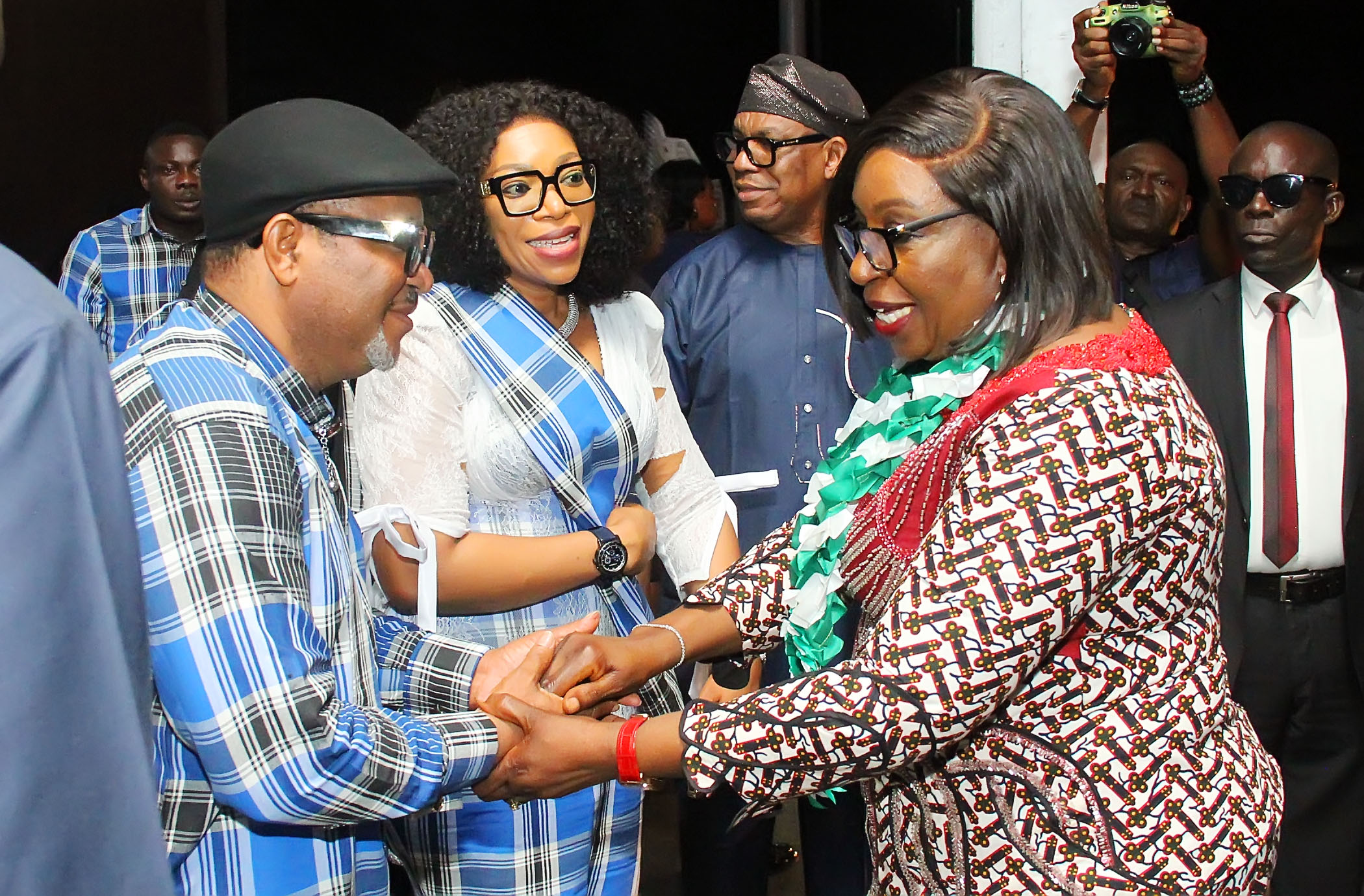
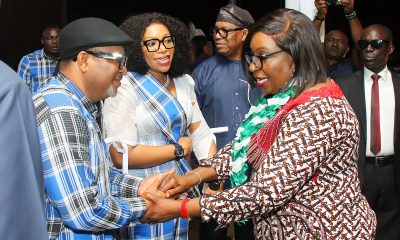
Rivers State Governor, Sir Siminalayi Fubara, has congratulated Team Rivers for emerging champions at the grand finale of the President Bola Ahmed Tinubu Inter-Senior Secondary Schools Debate Championship.
The governor, who was represented by his deputy, Prof. Ngozi Odu, described the students’ victory as “a great feat” and a clear demonstration of the intellectual capacity, brilliance, confidence, and preparedness of Rivers children to compete and excel at the national level.
The Tide reports that the finals of the Presidential Debate Championship held last Thursday at the Obi Wali International Conference Centre, Port Harcourt, Rivers State.
Fubara commended the students for their eloquence, critical thinking, and teamwork, while also appreciating their teachers, coaches, and the Rivers State Ministry of Education for the guidance and support that led to the outstanding performance.
“This victory is a source of immense pride to all Rivers people. It shows that our investment in education and human capital development is yielding results. Our children have once again proven that they are among the best in the country.
“We are proud of you and we will continue to support programmes that build the minds of our young people,” he stated.
The governor assured that his administration would continue to create an enabling environment and provide necessary support for academic and extra-curricular activities in schools across the State to help the youths to excel in future competitions.
He further urged other students across the State to draw inspiration from Team Rivers and strive for excellence in all their endeavors.
Fubara expressed profound appreciation to the Grand Patron of the championship and Nigeria’s First Lady, Senator Oluremi Tinubu, for her steadfast support and commitment to initiatives that promote education, youth development, and the empowerment of the Nigerian child.
?While congratulating Team Rivers for coming out on top, Fubara told the participants that they were all winners, irrespective of the outcome, stressing that their courage to stand before an audience and articulate their ideas demonstrated that the future of Nigeria remains intellectually vibrant and full of promise.
He also commended the organisers of the championship for creating a platform where young Nigerians could develop the confidence, discipline, critical thinking and communication skills required to participate meaningfully in national development.
?He reaffirmed the commitment of the State Government to supporting initiatives that advance academic excellence, innovation, discipline and opportunities for young people.
The governor dedicated an award presented to him to the people of Rivers State, the state’s education system, young Nigerians, and all those contributing to the development of the State.
?In his welcome address, the Chairman of the National Advisory Board, President’s Schools Debate, Hon. Usman Muhammed, said the championship was aimed at raising articulate, informed and responsible young Nigerians committed to democracy, good governance and nation-building.
?He commended the governor and the people of Rivers State for hosting the event, stressing that debate promotes critical thinking, tolerance and responsible citizenship.
?On his part, the State Commissioner for Education, Dr Peters Nwagor, explained that the essence of the championship was to train and develop youth, especially students, on how to get to leadership positions, saying it takes a sound mind to be able to come out to speak publicly and come to defend the opinion in a public setting.
?The Tide reports that while Team Rivers came first, Team Kwara emerged second, while Team Sokoto took the third position.
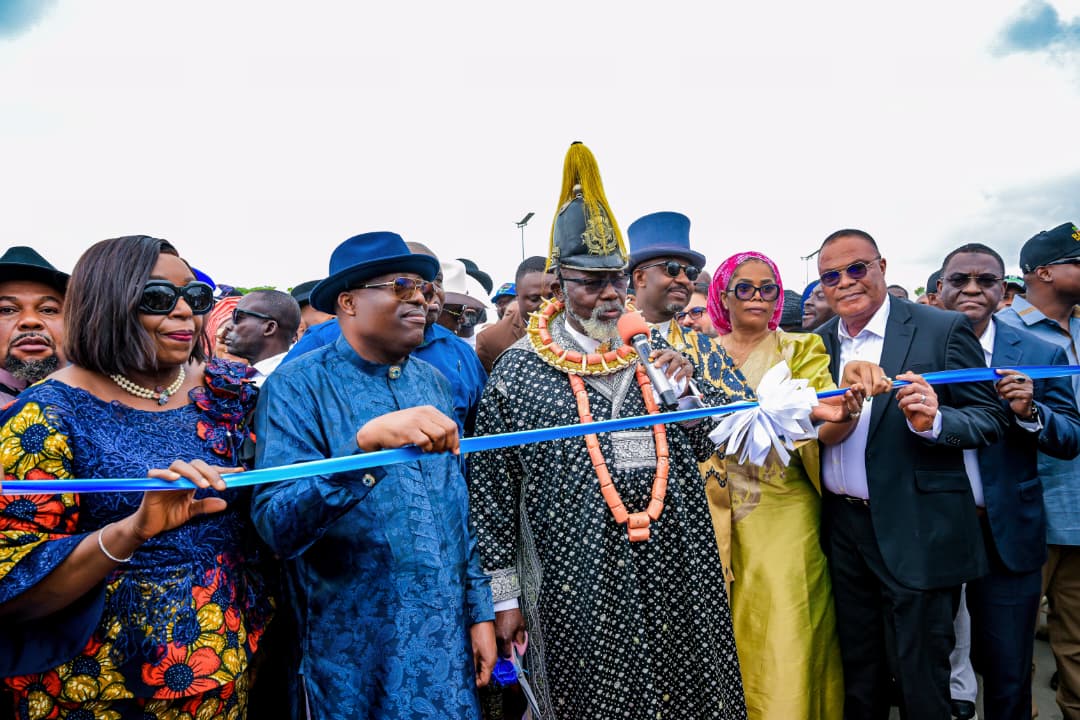
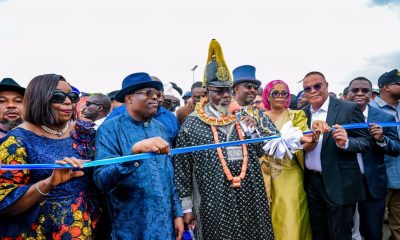
Rivers State Governor, Sir Siminalayi Fubara, has unveiled the reconstructed Buguma-Degema-Abonnema Road, a major transport corridor linking communities across the Asari-Toru, Degema, and Akuku-Toru Local Government Areas of the State.
The project, a 19.79 kilometre road was executed by Julius Berger Nigeria PLC, brings to an end the nightmares of man-hour losses and insecurity associated with the route.
The long stretch of the road was in a very deplorable condition before the Fubara administration awarded the contract for its rehabilitation in September 2024.
Fubara disclosed that the completion of the project in record time was a fulfillment of a personal commitment made after witnessing the severe degradation of the road during a previous visit to the area.
“It is a road that you must pass if you’re going to Abonnema. It is a road that because of its state, a lot of evil activities was taking place there. But to the glory of God today, I don’t think those negative acts can even be imagined or be carried out along that corridor again.
“I made a promise to myself that day that even if it is remaining one week, we must make sure that we fix this road. Today, to the glory of God, the road has been fixed.
“I am happy that today, we are all here gathered happily that this particular dream has come to reality,” he said.
The governor reiterated that his desire for the State is not just about embarking on projects but in doing those things that will touch the lives of the people positively.
He reaffirmed the commitment of his administration to complete the Trans-Kalabari Highway, another major road project linking several coastal communities in the State.
He expressed appreciation to the people for their love and cooperation especially for allowing the contractors to do their jobs without hitches.
“You have shown me so much love. Nobody can take that away. One particular project that cannot be denied is the Trans- Kalabari Road that we are doing. I want to beg you that if I cannot meet all you requests today, don’t worry, my successor will continue from where I will stop,” he said.
Special Guest of Honour, the Amanyanabo of Abonnema Kingdom, King Desrael Gbobo Bob-Manuel, who officially commissioned the project, commended the state government for its rapid infrastructure development, noted that the rehabilitation of the roa has drastically improved travel time, safety and the living conditions of the people.
“In the past, for you to leave any of our communities to Port Harcourt, you must, as a matter of fact, go into a one-day fasting and prayers the previous day. Otherwise, you are not sure you will get to your destination.
“Today, I can leave my palace in Abonnema by 10:00 AM, and I will be wherever I want to be in Port Harcourt before 11:00 AM,” the royal father said.
King Bob-Manuel stated that the reconstructed road would not only enable the local fishermen to transport their catch directly to urban markets in Port Harcourt for better profit margins, but will open the riverine communities to new investments.
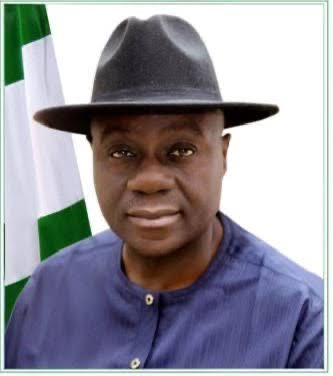
President Bola Tinubu has appointed Mr Abel Olumuyiwa Enitan as the Head of the Civil Service of the Federation, effective August 27, 2026.
Enitan succeeds Mrs Didi Esther Walson-Jack, who will retire soon from the Federal Civil Service upon attaining the statutory retirement age of 60.
Mr Enitan, from Osun State, is the most senior Permanent Secretary in the Federal Civil Service.
He has served as Permanent Secretary for seven years and seven months, working at the Ministry of Police Affairs, the Ministry of Humanitarian Affairs, and the Office of the Vice President. He is currently the Permanent Secretary in the Federal Ministry of Education.
Enitan, according to a statement by Special Adviser to the President on Information and Strategy, Bayo Onanuga, brings considerable institutional experience and a deep understanding of how the Federal Civil Service works to his new responsibility.
Tinubu expressed his profound appreciation to Mrs Walson-Jack for her distinguished service to the nation and for the reforms, impact and innovations witnessed in the Civil Service during her tenure.
“The President wishes her a fulfilling and successful life after service and conveys the nation’s gratitude for her years of dedicated and impactful public service,” the statement added.
Tinubu charged the incoming Head of the Civil Service of the Federation to consolidate on the reforms and innovations already underway, deepen professionalism and efficiency across the service, and build a more effective and responsive Civil Service capable of delivering on the administration’s Renewed Hope Agenda.
The President further urged Enitan to lead a Civil Service that is professional, merit-driven, accountable, innovative, and responsive to Nigerians’ needs and aspirations.
Enitan was born on December 12, 1966. He had his secondary education at Ajibode Grammar School, Ibadan and the College of Arts and Science, Ile-Ife. He later attended the University of Lagos and graduated in 1988 with a B.Sc. in Finance and Banking.
In 2015, Enitan obtained an M.Sc. in Public Policy Analysis from Nasarawa State University, Keffi.
-
Sports9 hours ago
Arsenal Want Osimhen To Take Pay Cut
-
 Editorial8 hours ago
Sustaining Legacies Of Rivers-Owned Media Outfits
-
Sports10 hours ago
Nigerian Keepers Show Impressive Forms In Europe
-
 News5 hours ago
Fubara Unveils Reconstructed Buguma-Degema-Abonnema Road
-
News8 hours ago
FG Designates Bonny Island As Premier Tourism Destination
-
Sports10 hours ago
PH TO HOST NPBL PLAYOFFS
-
 News5 hours ago
Fubara Hails Team Rivers For Winning Tinubu Inter-Schools Debate Championship …Describes Victory As Great Feat For Rivers
-
Business9 hours ago
Foundation Unveils New Digital Medical Facilities