
Nation
THE STATES

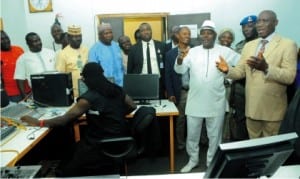
Deputy Governor of Plateau State/Commissioner overseeing Tertiary Education, Prof. Sonni Tyoden (2nd right) inspecting the Plateau State Polytechnic Rock FM Studio, during a visit to the institution in Jos, yesterday. With him are the Rector, Mr Dauda Gyemang (right) and other dignitaries.
Bauchi
The sum of N4.66 million was realised at the Bauchi State
chapter of the Armed Forces Remembrance and launching of Emblem Appeal Week for 2016.
Our correspondent reports that the Bauchi State Government and Governor Mohammed Abubakar gave the highest donation of N2 million and N1 million, respectively.
Mr Nuhu Gidado, the Deputy Governor of the state ranked third with the donation of N250,000, while the balance came from other government functionaries, military, para-military and other sister security agencies.
Addressing the gathering, Abubakar described the retired military men as heroes who have sacrificed their lives to protect the territorial integrity of the country.
Borno
Governor Kashim Shettima of Borno State has approved
a N20 million bonus for members of the vigilantee group working with the military in the anti-insurgency operations in the North East.
Shettima announced the donation to the volunteers, popularly known as ‘the Civilian JTF’, at a meeting with members of the group in Government House in Maiduguri.
Our correspondent reports that the governor described his gesture as an appreciation for their efforts in the war against Boko Haram.
The governor’s Special Adviser on Communication and Strategy, Malam Isa Gusau, gave the details of the gesture in a statement in Maiduguri.
Ekiti
No fewer than 39,765 farmers have registered with the
Ekiti State Government in its effort to ascertain genuine farmers who would benefit from its support programmes.
Mr Olumide Fatoba, the General Manager of the State Agricultural Development Programme (ADP) said this at a public forum in Ado-Ekiti.
Our correspondent reports that the figure was generated from 15 out of the 16 local government areas of the state.
Fatoba, however, said that the figure was still low, compared to active farmers who constituted close to 70 per cent of the state’s population.
Fatoba who spoke through a senior official of the ADP, Mr Yomi Ogunrinde, said Ido-Osi Local Government had the highest figure of 4,815 farmers, while Ise/Orun Local Government came next with 3,866.
Kaduna
The Federal Road Safety Corps (FRSC), Kaduna State
Sector Command said that the command recorded 463 road traffic accidents in the state in 2015.
Mr Francis Udoma, FRSC Sector Commander in the state, told newsmen in Kaduna that this was as against 610 recorded in 2014, indicating 7 per cent drop in crashes.
He also said that of the 3,226 people involved in the accidents last year, 329 died, as against 513 deaths recorded in 2014, representing a decrease of 16.9 per cent.
“The number of vehicles involved in road traffic crashes reduced by 7 per cent, from 610 vehicles in 2014, to 570 in 2015.
“There was also 15.4 per cent drop in the number of people involved in accidents, from 3,724 in 2014, to 3,226 last year.
Kano
A Sharia Court sitting at Sabon Gari, Kano, has, remanded
a businessman, Aliyu Abbas, 30, and a housewife, Zainab Adamu, 23, in prison custody for allegedly enticing each other.
The first accused, Abbas, was charged with enticing a married woman and intentional insult.
The Prosecutor, Cpl Ahmed Magawata, told the court that one Malam Saidu Musa of Tudun Yola Quarters in Kano reported the case at the Gwale Police Division on Dec. 29.
Magawata said Musa said that he saw his wife, Zainab, and Abbas of Gaida Quarters in his matrimonial room.
He said that on sighting the complainant, the accused even insulted Musa simply because he asked him what brought him to his house.
Kwara
The Kwara Governor, Mr Abdulfatah Ahmed, has called
on elders of Tsaragi in Edu Local Government Area and Share in Ifelodun Local Government Area of the state to be advocates of peace rather than war.
Ahmed made the call in separate interactions with the elders of the two communities on how to ensure lasting peace in the communities.
He said that the elders, as opinion moulders in their respective communities, should pass the value of unity that could endure to the youth.
He advised the elders to take advantage of their closeness to each other to bring infrastructure development to their communities rather than resort to clashes and violence.
“As a people, we are bound to find those who will want to pursue very narrow, personal agenda that do not serve general interest.
Nasarawa
The Nasarawa State House of Assembly has passed the
state’s supplementary budget of N2.7 billion to Governor Tanko Al-Makura for assent.
Alhaji Ibrahim Balarabe, the Speaker of the House, announced the passage of the bill during the House plenary in Lafia.
Mr Tanko Tunga (APC-Awe North), the Majority Leader of the House, had moved a motion for the speedy passage of the supplementary budget bill to enable the state government discharge its duties effectively.
He said: “My colleagues, I want to call on you to give speedy passage to this supplementary budget submitted to the House by Al-Makura for approval to enable him deliver dividends of democracy to the people.
Niger
Governor Abubakar Bello of Niger State, has presented
the 2016 Appropriation Bill of N74.74 billion to the state House of Assembly.
Our correspondent reports that the recurrent expenditure stood at N39. 5 billion representing 52.85 per cent while capital expenditure was N35.2 billion indicating 47.15 per cent.
Bello said that the budget would cater for the most pressing needs of the population through the creation of jobs.
“ We budgeted to spend N4.29 billion on Education, N3.59 billion on infrastructural development, N2.61 billion on health, N2.53 billion on agriculture and rural development and N2.38 billion on water resources,” he said.
Bello said that the budget would be financed through statutory allocation, Value-Added Tax (VAT), Internally Generated Revenue and capital receipts.
Lagos
The Women Entrepreneurs Association of Nigeria
(WEAN), an NGO, has stressed the need for life skills to be instilled in Nigeria youths, for a better society.
The Executive Director of WEAN, Mrs Angela Daniels, said in Lagos that the acquisition of life skills would aid the youths to become responsible.
She said: “There is lack of life skills amongst majority of our young people, both boys and girls, for them to grow up right.
“Life skills are those skills that are required to enable us make the most out of life; they are usually associated with managing and living a better quality of life.
“With these skills, which include good manners, communication skills, writing skills, assertiveness, soft skills, critical thinking, creative thinking, study skills and independence, our youths will do better in the society.
Sokoto
The Sokoto State Independent Electoral Commission
(SIEC) has announced the postponement of the local government councils election it had earlier planned for Jan. 9, 2016.
Our correspondent reports that the Chairman of the commission, Alhaji Usman Abubakar announced the postponement at a news briefing in Sokoto.
‘’ The postponement was due to the non receipt of the card readers we wanted to borrow from our sister agency, the Independent National Electoral Commision, INEC.
‘’ This was also due to bye-election which the commission would conduct in Bayelsa on January 9, 2016.
Yobe
The Yobe State Emergency Management Agency
(SEMA) said it has concluded arrangements to get 50 internally displaced children circumcised at the Pompomari Internally Displaced Persons (IDPs) camp in Damaturu.
The Executive Secretary of the Agency, Alhaji Musa Idi, made the disclosure in an interview with newsmen in Damaturu.
Idi said that the 50 children would be circumcised and celebrated with cultural fanfare.
He explained that a date would soon be fixed for the event, noting that some of the children were orphans who lost their parents to the Boko Haram insurgency, while some others were living with their parents at the camp.
He said “the children are at the Pompomari Internally Displaced Persons (IDPs) camp in Damaturu; the Agency organised the circumcision ceremony to uplift their physical and psychological spirits.



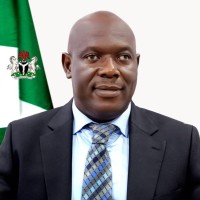
The Hydrocarbon Pollution Remediation Project (HYPREP) has commemorated the 15th anniversary of the release of the United Nations Environment Programme (UNEP) Environmental Assessment Report on Ogoniland, reaffirming its commitment to restoring the environment and improving the livelihoods of affected communities.
In a statement signed by the Project Coordinator, Prof Nenibarini Zabbey, to commemorate the anniversary, HYPREP described the anniversary as a significant milestone in Nigeria’s environmental restoration efforts, noting that the project has made remarkable progress in implementing the recommendations of the landmark UNEP report released on August 4, 2011.
The UNEP report had revealed extensive oil pollution across Ogoniland, severe environmental degradation, and serious public health risks resulting from decades of petroleum operations. It also recommended an initial $1 billion fund to commence the cleanup of the affected communities.
According to HYPREP, the Federal Government formally launched the Ogoni clean-up in 2016, while the Project Coordination Office was established in 2017 to drive the implementation of UNEP’s recommendations.
Zabbey said the current administration has continued to prioritise the project under the Renewed Hope Agenda.
Providing an update on the cleanup, the Project Coordinator disclosed that 30 of the 65 contaminated sites identified by UNEP have been fully remediated, while work is ongoing at several medium- and high-risk locations. It also stated that more than 1.5 million mangrove seedlings have been planted as part of what it described as the world’s largest restoration of oil-degraded mangroves, with over 1,000 hectares of shoreline already rehabilitated.
Zabbey further revealed that 49 Ogoni communities have been connected to potable water schemes through multiple water projects and booster stations aimed at providing safe drinking water across the region.
In the health sector, he said the 100-bed Ogoni Specialist Hospital in Kpite and the 43-bed Cottage Hospital in Buan are nearing completion, adding that several existing health facilities have been upgraded with modern medical equipment, while five ambulances have been donated to improve emergency healthcare services. The Project Coordinator also disclosed that a three-year human health biomonitoring study is being conducted in collaboration with the World Health Organization’s International Agency for Research on Cancer (IARC).
On economic empowerment, Zabbey stated that the Project has created more than 8,000 direct jobs and trained thousands of Ogoni youths and women in various vocational and technical skills, including software development, cybersecurity, aviation, commercial diving, seafaring, mechatronics, and creative arts. The project also reported awarding scholarships to more than 1,000 students, providing grants to small businesses, and supporting persons living with special needs through skills acquisition programmes.
The statement further highlighted ongoing legacy projects, including the Ogoni Power Project and the Centre of Excellence for Environmental Restoration, which it said is about 96 per cent complete. HYPREP also welcomed the recent designation of the Ogoni Wetland as a Ramsar Site of International Importance and pledged to continue promoting biodiversity conservation and sustainable management of the ecosystem.
Marking the anniversary, Zabbey said the progress achieved over the past 15 years demonstrates the collective commitment of government, development partners, stakeholders, and local communities to restoring Ogoniland. He called for renewed collaboration to sustain the cleanup effort, promote environmental sustainability, and support the long-term development of the region. 3
-

 News2 days ago
RSG Targets Nine Million Residents in Mosquito Net Distribution Campaign
-

 Oil & Energy2 days ago
Aiyedatiwa Signs New Electricity Bill
-

 Maritime2 days ago
Marine Minister Commends President Tinubu On NPERA Bill Assent
-

 Oil & Energy2 days ago
NLNG Commissions Research And Innovation Centre In RSU
-

 News2 days ago
KenPoly Holds Eight Convocations, August 29
-

 News2 days ago
RSG Begins Another Phase of Projects Commissioning Today
-

 News2 days ago
RMAFC Completes Revenue Sharing Review, Proposes New Pay
-

 Maritime2 days ago
NAGAFF Petitions IGP Over Alleged Maritime Police Harassment