
Politics
We Need To Finetune Our Electoral Act – Thompson

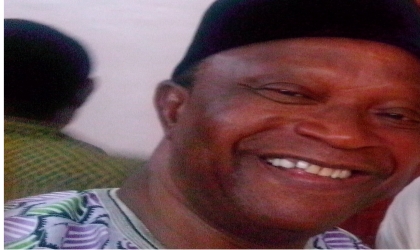
Tunde Thompson
This is the concluding part of the interview with Mr. Babatunde Ozemoya Thompson, veteran journalist and now stalwart of the All Progressives Congress and member of the media team of President Mohammadu Buhari. He spoke with Opaka Dokubo in Asaba, Delta State. The first part of the chat was published on Monday, last week.
What Is your assessment of INEC under the new leadership, especially after the conduct of the Kogi and Bayelsa elections?
Let me tell you,
despite all the negative comments people in different parties have been making, INEC has proved that it has come to stay to do the right thing at the right time for the people of this country in maintaining a wholesome democratic process. Kogi shows that INEC has lived up to the expectation that this is the time to build institutions, powerful institutions not powerful people.
Whatever INEC said in Kogi, it was an institution put in charge to do certain things and it did what it had to do and offered its opinion. Whoever you are, I’m afraid, go to court and challenge it. PDP shouted, APC shouted. People should know that INEC’s job is not an easy job to do. It’s like being a judge in a land where there is no rule of law. That rule of law has to be established otherwise we’re all ruined. So, INEC has lived up to expectation in both elections.
Of course, Bayelsa matter is yet to be concluded and by the time they hold election in Southern Ijaw, we will see what happens.
But let us enforce the rules in the Electoral Act that nobody shall carry guns, nobody shall carry machets, nobody shall carry cutlasses and axes and all that. And that anybody who sponsors the procurement of such materials is not fit to be a candidate in Nigerian political contest.
You see, people commit offences during electoral activities and they’re not punished. You too you know that the failure of the enforcement of the law is one of the reasons for the disrespect for the rule of law in Nigeria.
The APC candidate’s protest in Bayelsa
Well, Mr Sylva is capable of expressing his own views, I was not there, he was the man there and cannot judge for him. All I am saying is that anybody who supports violence and procures equipment of violence should not be allowed in the democratic process.
I may be in the APC but I’m not a person who will support the destruction of lives and property, just because I want the APC to win. APC members are for progress, they’re for progressive approaches to governance. They cannot be in support of retrogressive, unpopular, man eating practices, society demolishing tendencies (and) pretending to be democratic. That’s not my vision for the APC. My vision for the APC is not a party where the truth does not matter. Go tell it on the mountain, tell it in the valleys that where there’s no respect for godly ways to life, the devil shall take over. And if you don’t want the devil to win (he has already been winning for too many years) we shouldn’t give him more quarters in our parties. We cannot stop extreme behaviour, by authorising or allowing inacceptable behaviours
Did you consider that Delta is a PDP State while agreeing to deliver a lecture on the vision of the governor?
When I was invited by the NUJ of the Delta State Council to prepare to speak on something the governor has declared as his own philosophy of governance called SMART, since I’m not a politician, it was not my business to consider PDP or no PDP. It was to be looking at ways SMART could be rendered or knocked off all together if people were to be partisan in their thinking. And the way to stay straight is to stay ethical and professional. I find that most governments do not work because people do not face the rule of law, people did not remain ethically conscious and focused. So, I said that the major problem it will have is if reporters, editors, correspondents, even cartoonists choose to see the SMART programme introduced by the governor as something they could destroy on partisan lines, using partisan arguments.
I think the SMART programme is a creative and thoughtful way of serving the people. How to serve people is what politics is out to do and politicians have found ways of achieving that purpose – that goal of serving the people. So, Dr Ifeanyi Athur Okowa has come up with an idea and you don’t because you’re in APC, APGA or something else, begin to throw sand on that SMART Programme.
Even as a member of the APC, how do you see the state of opposition politics in Nigeria?
It is not right for opposition parties just to keep criticising everything, running down people in authority just because they want to be noticed as being in opposition. There are times you have to be sincere to yourself. Imagine the election that has been concluded in Kogi State now, eeh they’re going to rig, eeh everybody is trying to rig…
They accused the party in authority at the centre of wanting to do one evil or the other. That’s too much. Some of the accusations are untested, they are unsubstantiated. We’ve finished Kogi and we have had Bayelsa and you can see that the rivalry in Bayelsa has always been there. I can say, undemocratically so because some of them decided to put their trust in weapons of mass destruction instead of social intercourse, democratic interrelationship, persuasion, convincing people that you’re a better candidate, debates and so on.
They’re not thinking of positive democratic ways of winning votes; there must be weapons, there must be weapons, there must be axes, there must be guns.
We need to fine tune our Electoral Act. Anybody whose supporter is found carrying a gun, a cutlass, an axe, must be removed from the democratic process because if those people who are carrying those weapons of mass destruction had not been funded, where could they have got the money? All those who put their trust on destroying their opponents must be destroyed out of the system.
You might say it’s not democratic to exclude them but what’s the law there for? Are we to encourage violence, negative fanaticism, wrong accusations, manipulative dispositions by people who want power at all cost? No way let us think of ways of discouraging negative tendencies like that in our politics.
So, I agree with you that we must stop the draconian people from polluting our democratic process. Draconian is not only related to the military.
There are people who are democratically disposed to being violent. They think they’re democrats but their ways are anything but democratic. In fact, there are people who don’t even go to the party headquarters; they are too big to report for meetings. Tell them that I said so. Democracy calls for humility. You should not feel too big to go into your party headquarters and discuss with A to Z. among the populace, you’re to be able to show them what you mean, you can do well and you care about them. Most of our political parties have a problem of internal democracy. The big shots don’t want to tell the small people anything to convince them; they want to order them around. But the world is changing. Those that were ordering them around should check themselves otherwise they’d be given the red card.



The Independent National Electoral Commission (INEC) has extended the deadline for political parties to submit the list of candidates for the 2027 governorship and state Houses of Assembly elections from Saturday, August 8, to Tuesday, August 11, 2026.
The commission announced the extension in a statement issued on Saturday and signed by the National Commissioner and Chairman of its Information and Voter Education Committee, Mohammed Haruna.
According to INEC, the decision followed appeals by political parties for additional time to complete the submission process through the dedicated online portal.
“The submission window, which according to the revised Timetable and Schedule of Activities for the General Election was originally scheduled to close on Saturday, 8th August, 2026, has been extended to Tuesday, 11th August, 2026,” the commission said.
In a a related development, INEC announced the suspension of PVC collection in Osun State ahead of the August 15 governorship election.
The commission said voters who applied for replacement of lost, damaged or defaced Permanent Voter Cards would have until midnight on Sunday, August 9, to print downloadable copies of their cards.
The electoral body explained that the deadline was necessary to enable it compile data on downloaded PVCs and produce final statistics on the total number of cards collected ahead of the election.
INEC said PVC collection in Osun commenced at the Registration Area level from July 22 to 28, 2026, but was extended to July 31 following complaints about large crowds and difficulties experienced by voters at collection centres.
The exercise subsequently moved to the local government level and ran from August 1 to 7.
The commission also disclosed that replacement downloadable PVCs had been made available to voters in Odo-Otin and Ife Central Local Government Areas following the theft of cards during attacks on the two collection centres.
It stressed that the stolen cards could not be used to vote.
INEC reassured Osun residents of its preparedness for the August 15 governorship election.
“The commission reiterates that the stolen cards cannot be used to vote.
“INEC reassures the people of Osun State of its readiness to conduct a free, fair, credible and inclusive governorship election on 15th August, 2026,” the statement said.
The commission said the deadline, initially set for Saturday, 8 August, has been extended to Tuesday, 11 August 2026, following appeals from political parties for more time.
INEC also announced that the window for voters who applied to replace lost, damaged or defaced PVCs to download their replacement cards will close at midnight on Sunday, 9 August.
The move is to enable the commission compile final PVC collection figures ahead of the 15 August Osun governorship election.
INEC said replacement downloadable PVCs have also been provided to affected voters in Odo-Otin and Ife Central Local Government Areas after hoodlums carted away cards from two collection centres, stressing that the stolen cards cannot be used to vote.
The commission reaffirmed its readiness to conduct a free, fair, credible and inclusive election in Osun State.
Gov. Kefas made the remarks over the weekend at the Federal Medical Centre (FMC), Jalingo, during the flag-off of the second phase of the Renewed Hope Medical Outreach in Taraba State, organised as part of activities marking Prof. Yilwatda’s 58th birthday.
The governor commended Prof. Yilwatda for choosing to mark his birthday by providing medical care to people in need.
“What Professor Nentawe did is a powerful demonstration of what leadership should be,” Gov. Kefas said.
He assured that his administration would continue to support initiatives that complement government efforts to improve healthcare delivery and the wellbeing of residents.
Speaking at the event, Prof. Yilwatda called on Nigerian leaders to embrace the culture of giving and use their positions to touch the lives of the less privileged.
He said his decision to celebrate his 58th birthday in Taraba State was deliberate and informed by the needs of underserved communities, particularly people who face difficulties accessing healthcare because of distance and financial constraints.
According to him, the intervention followed a needs assessment and was extended across the three senatorial districts of the state.
He said the exercise commenced on August 3 at Takum General Hospital and covered the Federal University Teaching Hospital, Wukari; First Referral Hospital, Sunkani, Ardo-Kola Local Government Area; General Hospital, Bali; General Hospital, Gembu; and FMC Jalingo.
Prof. Yilwatda said the intervention provided medical services to thousands of beneficiaries, including people who required surgical procedures.
He said sustainable national development could only be achieved when strong institutions placed Nigerians at the centre of development.
“Leadership is about service,” he said, urging political and public leaders to make giving back to society an important part of their responsibilities.
He reaffirmed his commitment to serving Nigeria and its people, saying his personal vision was to make every day of his life useful to humanity.
“Every day that I live, the vision is: let it be useful to humanity,” he said.
The Taraba State Commissioner for Health, Dr. Bordiya Buma, commended the initiative, saying it was consistent with the Renewed Hope agenda and efforts to strengthen healthcare delivery in the state.
Dr Buma said the second phase followed the successful completion of the first phase, which was conducted simultaneously in six local government areas, with two LGAs selected from each of the three senatorial districts.
According to him, more than 10,000 patients were attended to during the first phase, including people with medical and surgical conditions.
He disclosed that 327 general surgeries, 71 eye surgeries and 575 dental procedures were carried out during the exercise.
The commissioner expressed appreciation to President Bola Tinubu for the Renewed Hope Medical Outreach and thanked Prof. Yilwatda for supporting the initiative and choosing Taraba State as a beneficiary.
The Minister of Health and Social Welfare, Prof. Muhammad Ali Pate, also commended Prof. Yilwatda for choosing Taraba State to mark his 58th birthday through a medical outreach.
Prof. Pate said making healthcare the centrepiece of the birthday celebration was significant because health affects everyone.
-

 News2 days ago
RSG Targets Nine Million Residents in Mosquito Net Distribution Campaign
-

 Oil & Energy2 days ago
Aiyedatiwa Signs New Electricity Bill
-

 Oil & Energy2 days ago
NLNG Commissions Research And Innovation Centre In RSU
-

 Maritime2 days ago
Marine Minister Commends President Tinubu On NPERA Bill Assent
-

 News2 days ago
KenPoly Holds Eight Convocations, August 29
-

 News2 days ago
RSG Begins Another Phase of Projects Commissioning Today
-

 News2 days ago
RMAFC Completes Revenue Sharing Review, Proposes New Pay
-

 Maritime2 days ago
NAGAFF Petitions IGP Over Alleged Maritime Police Harassment